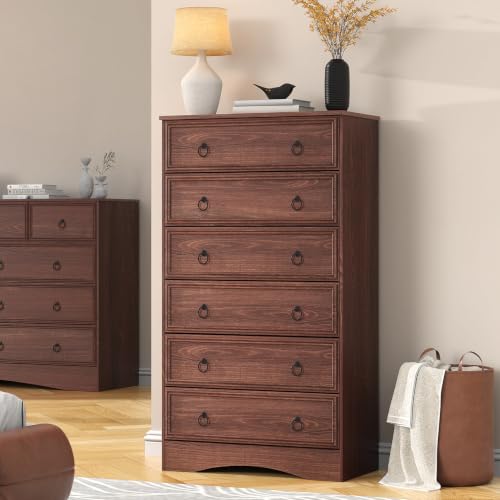
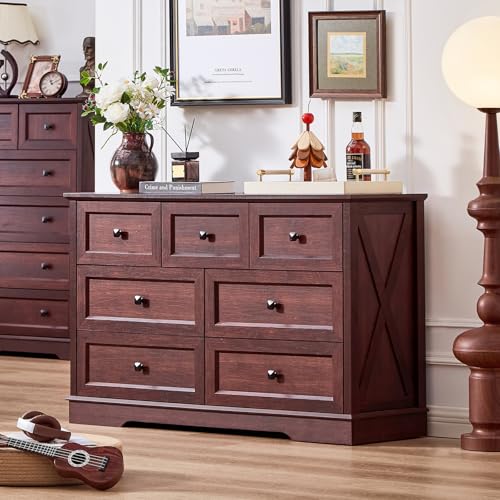
Cherry Wood Chest of Drawers: The Complete Buyer's Guide
Cherry is one of the most sought-after hardwoods in bedroom furniture, prized for its warm tone, tight grain, and the way it matures over time. This guide explains what makes a cherry chest worth owning, how to evaluate construction, and how to choose the right size and configuration for your space.
Why this guide matters: If you have already decided that a cherry wood chest of drawers is the piece you want, the remaining questions are practical ones. Which drawer count fits your wardrobe? Is solid cherry different from cherry veneer? What joinery should you look for? The sections below answer those questions so you can buy with confidence rather than guesswork.
Why Cherry Wood Stands Out for Bedroom Storage
Cherry belongs to the hardwood family and is valued for its density and stability. Unlike softer woods that dent under daily wear, cherry holds its shape and surface well. It machines cleanly, which means drawer fronts and edges can be shaped with precision, and it accepts stains and clear finishes evenly.
The most distinctive quality of cherry is its response to light. Freshly cut cherry starts as a light reddish-brown and gradually deepens into a rich auburn patina when exposed to natural daylight. This means a cherry chest you buy today will look noticeably different in a year, in a good way. Many buyers treat this as a feature rather than a flaw, because the piece gains character rather than showing age.
If you are comparing options, our guide to cherry dressers covers the broader category, while this page focuses specifically on the chest format and its storage advantages.
Chest of Drawers vs Dresser: Which Format Suits You?
The terms are often used interchangeably, but the distinction matters when you are shopping. A chest of drawers is typically taller than it is wide, with stacked drawers that make efficient use of vertical space. A dresser is usually wider and lower, offering a larger top surface for display or a mirror.
A cherry chest is the better choice when floor space is limited but you still need substantial storage. It also works well as a standalone piece in a smaller bedroom, a guest room, or a walk-in closet. If you need a wide surface for a mirror or decorative arrangement, a lower dresser may serve you better. Our article on the chest dresser for bedroom format explains how the two types differ in practice.
| Configuration | Best For | Typical Placement |
|---|---|---|
| Four-drawer chest | Single adult, guest room | Bedside wall, alcove |
| Five-drawer chest | Couples, knitwear and linens | Against a full wall |
| Six-drawer tall chest | Compact bedrooms, closets | Corner or narrow wall |
| Low and wide chest | Mirror placement, display top | Opposite the bed |
Solid Cherry vs Cherry Veneer: What You Are Actually Buying
Not every chest described as cherry is solid cherry throughout. There are three common constructions, and understanding them helps you judge quality.
Solid cherry: The drawer fronts, top, and side panels are all solid hardwood. This is the highest tier of construction. Solid cherry is heavy, stable, and can be sanded and refinished decades later if needed. Expect this in the premium and luxury tiers of the market.
Cherry veneer over engineered core: Thin slices of real cherry are bonded to a plywood or MDF core. This is a legitimate and often well-made approach. It delivers the cherry look with greater dimensional stability and lighter weight. Quality depends entirely on the core and the bonding process, so check the drawer box material separately.
Cherry finish on another wood: Some pieces are made from a less costly hardwood and stained to resemble cherry. These can look convincing at first but will not develop the same patina. If the grain pattern looks painted on rather than continuous, ask the seller directly what the substrate is.
For a wider comparison of materials across the category, see our cherry chest of drawers overview.
Construction Checklist Before You Buy
Cherry is an investment material, and the construction around it determines whether the piece lasts a decade or a lifetime. Use this checklist when comparing listings.
Drawer joinery
Look for dovetail joints at the drawer corners. English dovetails at the front and French dovetails at the back are a sign of professional-grade construction. Stapled or nailed drawer boxes are common in entry-level furniture and will loosen over time under regular use.
Drawer glides
Side-mounted roller glides are the standard in entry-level and mid-range pieces. Undermount soft-close glides are the norm in mid-tier and above. Full-extension glides let you reach the back of the drawer, which matters on a deep chest. Check the weight rating if you plan to store heavy items like denim or bedding.
Dust panels and back panel
A dust panel between drawer tiers keeps clothes clean and adds rigidity. A solid back panel, rather than a thin stapled fiberboard sheet, indicates a sturdier carcass.
Finish
A catalyzed lacquer or conversion varnish offers better moisture and scratch resistance than a basic oil finish. Clear finishes preserve the natural cherry tone; tinted finishes may be used to even out color variation between boards, which is normal in cherry.
Hardware
Solid metal pulls with machine-thread screws outlast pot-metal hardware with wood screws. If you plan to change the pulls later, confirm the hole spacing is a standard size so you are not locked into one look.
Choosing the Right Size for Your Room
Measure twice before ordering, especially if you are buying online. Three measurements matter most.
Floor footprint: Mark the intended position on the floor with painter's tape. Leave at least 24 inches of clearance in front of the chest so drawers can open fully. A deep drawer needs more clearance than a shallow one.
Height: As a rule of thumb, the top of the chest should sit near hip or waist height for comfortable access. Tall six-drawer chests are efficient but require reaching overhead for the top drawer, which may not suit everyone.
Doorway and stair clearance: Check the diagonal depth of the packaging against your tightest doorway. A solid cherry chest is heavy and does not flex, so a piece that is an inch too wide simply will not go through.
If space is genuinely tight, a low and wide chest of drawers can be a better fit than a tall narrow model. Conversely, for a compact room, a tall chest of drawers maximizes storage per square foot of floor space.
Living With Cherry: Care and Long-Term Appearance
Cherry is forgiving but not indestructible. A few habits keep it looking its best.
Keep the chest out of direct, sustained sunlight if you want to slow the darkening process, or rotate decorative objects on top so the surface patinas evenly. Wipe with a soft, slightly damp cloth and dry immediately. Avoid silicone-based polishes, which can build up and dull the finish. Use coasters under plants and lamps, since water rings are harder to remove from cherry than from painted surfaces.
Small scratches can often be blended with a touch of clear furniture wax. Because cherry is a hardwood, a professional refinish decades down the line is entirely feasible, which is part of what makes it a long-term investment.
For a broader look at how cherry pieces fit into a full bedroom setup, see our cherry wood dresser and nightstand set guide, and if you want a mirror on top, the cherry wood dresser with mirror article covers the matching approach.
Frequently Asked Questions
Is cherry wood a good choice for a chest of drawers?
Yes. Cherry is a dense, close-grained hardwood that resists warping and takes finishes beautifully. It is a long-term investment piece that deepens in color over time, making it well suited to bedroom furniture that sees daily use.
Does cherry wood darken over time?
Cherry is photosensitive. When exposed to natural light, it gradually shifts from a light reddish-brown to a deeper, richer auburn tone. This patina develops over months and years and is considered a desirable characteristic rather than a defect.
How many drawers should a cherry wood chest have?
It depends on your storage needs. A four-drawer chest works well for a single adult, while five- and six-drawer models suit couples or anyone storing bulky knitwear and linens. Tall narrow chests with five or six drawers fit compact bedrooms.
What should I check before ordering a cherry chest online?
Confirm the drawer box material and joinery, check the weight rating and glide type, verify the finish warranty, and measure your floor space and doorway clearance. Ask whether the piece ships fully assembled or flat-packed.
A cherry wood chest of drawers is one of the few bedroom purchases that improves with age. Once you have settled on a drawer count, a construction tier, and a footprint that fits your room, the decision becomes straightforward. Use the checklist above, and compare features across the recommended options below before you commit.