Chest Dresser for Bedroom
Everything you need to choose a tall, space-efficient chest of drawers that fits your bedroom, your wardrobe, and the way you actually live.
Explore the Buying FactorsWhy a chest dresser deserves your attention: If your bedroom floor space is limited but your folded-clothing needs keep growing, a chest dresser is often the most practical answer. This guide walks you through drawer layouts, dimensions, materials, and placement so you can choose with confidence.
What Exactly Is a Chest Dresser?
A chest dresser, sometimes called a tallboy or a tall chest of drawers, is a storage piece built taller than it is wide. Instead of spreading drawers horizontally across a broad frame, it stacks them vertically. Most bedroom models stand between four and five feet tall and measure roughly 30 to 40 inches across.
That vertical design matters. A chest dresser gives you the same drawer capacity as a wider piece while occupying less floor space, which is why it suits smaller bedrooms, apartments, and shared rooms particularly well. If you are still weighing the two formats, our comparison of dresser versus chest of drawers breaks down the trade-offs in detail.
The trade-off is a smaller top surface. A wide dresser gives you room for a lamp, a mirror, and decorative pieces; a chest typically offers just enough for a small tray or a table lamp. For many bedroom layouts, that is a fair exchange for the floor space you recover.
Sizes and Drawer Layouts
Drawer configuration has a bigger effect on daily usability than most buyers expect. A chest with six shallow drawers feels very different from one with four deep drawers, even when the outer dimensions are nearly identical.
Common Bedroom Configurations
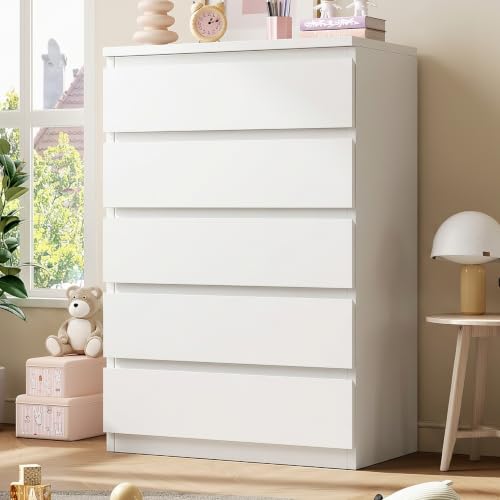
- Four-drawer chest: Typically three full-width drawers plus one split top row. A solid choice for couples who divide storage or for anyone who folds clothes in larger stacks.
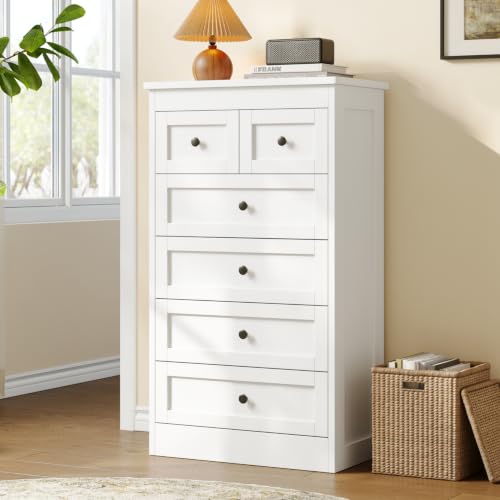
- Five-drawer chest: Often three wide drawers and two narrower upper drawers. The smaller top drawers are well suited to socks, accessories, and small items that would otherwise get lost.
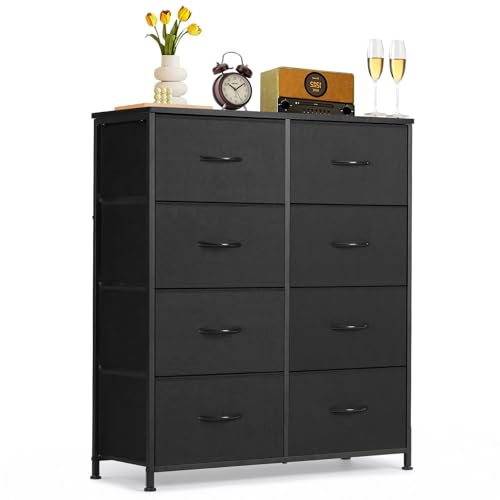
- Six-drawer chest: Usually two columns of three drawers or six full-width drawers. This layout offers the most separation and works well for people with varied wardrobe needs.
Depth matters as much as count. Standard bedroom chest drawers run about 15 to 18 inches deep. If you store bulky knitwear or bedding, look for models that advertise deeper drawers; our guide to chest dressers with deep drawers covers what to check. For a broad overview of sizing across all dresser styles, see the dresser size guide.
Materials and Construction Quality
Material choice determines how long your chest dresser lasts and how well it holds up to daily use. Rather than ranking options by any monetary measure, it helps to think in terms of market tiers and construction quality.
Solid Wood
Solid wood chests in oak, maple, walnut, or pine represent the top-tier and premium segments. They can be sanded and refinished, handle humidity changes reasonably well when properly sealed, and often become heirloom pieces. Look for dovetail drawer joints and corner blocks for a durable build.
Engineered Wood with Veneer
Mid-range chest dressers frequently use engineered wood panels finished with a wood veneer. This offers a stable, well-specified option with a consistent finish. Quality varies: thicker veneer and reinforced drawer boxes separate the better examples from the entry-level ones.
Entry-Level Options
At the entry-level tier, you will find particleboard or MDF frames with laminated finishes. These can serve well as starter pieces for a guest room, dorm, or first apartment. Check weight ratings and drawer glide quality, as these are the parts that wear first.
For a deeper dive into finishes and wood types, browse our materials and finishes section, or explore specific options like oak dressers and walnut dressers.
How Chest Dressers Compare Across Market Tiers
The following table groups bedroom chest dressers by market tier and highlights the construction traits that typically define each group. Use it to calibrate your expectations before you shop.
| Tier | Typical Construction | Best For |
|---|---|---|
| Entry-level | Engineered wood frame, laminated finish, basic metal glides | Guest rooms, dorm rooms, first apartments |
| Mid-range | Engineered wood with veneer, reinforced drawer boxes, smooth side-mounted or ball-bearing glides | Primary bedrooms, everyday family use |
| Premium | Solid wood case, dovetail joints, quality hardware, hand-finished surfaces | Long-term use, design-forward bedrooms |
| Luxury | Hardwood construction, custom hardware, artisanal detailing, refined interior drawer linings | High-end interiors, collector-grade furniture |
Entry-level and mid-range models often account for the bulk of bedroom chest dressers on the market. Premium and luxury tiers focus on joinery and material longevity rather than extra features.
Key Buying Factors Before You Commit
Measure Twice
Record the height, width, and depth of your intended wall space, plus the clearance needed for drawers to open. A chest dresser typically needs about 24 inches of open floor in front of it for full drawer extension. Also note the path from your front door to the bedroom, including stairways and tight corners.
Match Your Clothing Volume
Estimate what you will actually store: folded shirts, jeans, knitwear, linens, or accessories. A four-drawer chest handles a moderate wardrobe; six drawers suit larger or shared collections. If you also need hanging space, compare options in our bedroom storage section.
Check Drawer Glides and Stops
Ball-bearing glides or side-mounted slides with built-in stops are worth prioritizing for daily use. Soft-close mechanisms are a nice addition in the mid-range and premium tiers.
Consider Safety
Tall furniture should be anchored to the wall, especially in homes with children. Look for chests that include or support an anti-tip kit. Our broader buying guides cover safety checks across dresser types.
Popular Styles for Bedroom Chest Dressers
Style is where a functional piece becomes part of your room's design story. Here are the most common directions:
Modern
Clean lines, flat drawer fronts, minimal hardware. Modern chests integrate easily into contemporary bedrooms.
Mid-Century
Tapered legs, warm wood tones, and subtle angled details. A versatile option for bedrooms with mixed-era decor.
Farmhouse
Planked details, painted finishes, and cup or bar pulls. Farmhouse chests bring texture and a relaxed feel.
Rustic
Reclaimed-looking surfaces and heavier hardware. Suits cabins, lodges, and rooms with natural materials.
If you are drawn to painted pieces, our white dressers and black dressers collections show how finish changes the visual weight of a chest. For a softer, textured look, consider cane dressers or rattan dressers.
Placement and Styling Tips
Where you put the chest matters as much as which one you buy. Keep these guidelines in mind:
- Leave at least 24 inches of clearance in front of the chest so drawers can open fully.
- Avoid placing tall pieces directly beside a doorway or in a tight corner where access is awkward.
- Secure the chest to a wall stud using an anti-tip strap, particularly in homes with young children.
- Use the small top surface deliberately: a low-profile lamp, a tray for daily items, or a single framed piece usually works better than a crowded display.
For layout inspiration, browse our bedroom dresser ideas collection, and if you are pairing furniture, our dresser and nightstand sets guide can help you coordinate.
A Quick Pre-Purchase Checklist
Before you order, run through this short list:
- Measured the wall space and confirmed drawer clearance
- Matched drawer count to your actual clothing volume
- Checked glides, stops, and drawer box construction
- Confirmed the chest can be anchored to the wall
- Verified delivery path dimensions, including stairs and doorways
- Chosen a finish and style that fits the room's existing palette
Still exploring alternatives? Compare options in our chest of drawers category, or look at tall chests of drawers if height is your priority.
Frequently Asked Questions
What is the difference between a chest dresser and a wide dresser?
A chest dresser is taller than it is wide, stacking four to six drawers vertically to save floor space. A wide dresser spreads drawers horizontally, offering a broader top surface. For bedrooms with limited floor area, a chest dresser is usually the more efficient choice.
How many drawers should a bedroom chest dresser have?
Most bedroom chest dressers offer four to six drawers. A four-drawer chest suits couples who split storage or individuals with modest wardrobes. A five or six-drawer model gives extra separation for folded clothing, linens, and accessories without taking up more floor space.
Which material is best for a bedroom chest of drawers?
Solid wood, such as oak, maple, or walnut, offers the most durable construction and can be refinished over time. Engineered wood with a quality veneer provides a stable, well-specified option at the mid-range tier. For long-term investment, solid wood with dovetail joints remains the top-tier choice.
Where should I place a chest dresser in a bedroom?
Place a chest dresser against a wall with enough clearance to open every drawer fully. Keep it away from heating vents and direct sunlight. In smaller rooms, a corner placement or the wall opposite the bed often works best for both access and visual balance.