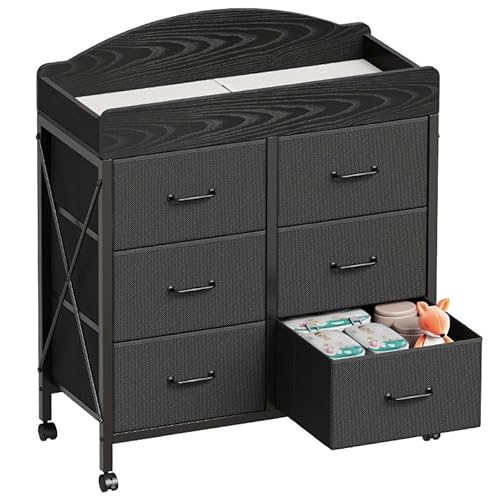
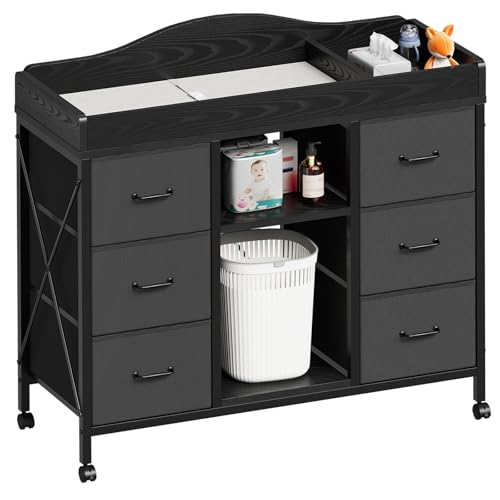
Black Nursery Dresser Changing Table: The Complete Guide
Everything you need to know before choosing a black nursery dresser with a changing table topper. Sizes, safety, storage, and style — all in one place.
Explore OptionsIf you are searching for a black nursery dresser changing table, you are likely in the final stage of planning your baby's room. You already know you want a dark, gender-neutral finish and a piece that does double duty: dresser storage plus a safe, comfortable changing surface. What you probably still need is clarity on dimensions, safety standards, topper compatibility, and how a black finish holds up in a nursery environment.
This guide walks you through everything a first-time or experienced parent needs to make a confident decision. We will cover the difference between a true changing-table dresser and a standard dresser with a removable topper, how to match a black nursery dresser with other bedroom pieces, and which features matter most for daily use. By the end, you will know exactly which configuration fits your space, your routine, and your long-term plans for the room.
Quick summary: A black nursery dresser changing table is typically a 6-drawer or 7-drawer dresser between 30 and 36 inches tall, fitted with a removable contour changing pad. Choose a model with a wall-anchoring kit, drawer stops, and a topper that is secured rather than resting loose on the dresser top.
What Exactly Is a Black Nursery Dresser Changing Table?
The term describes a nursery storage piece that combines a full dresser with a dedicated changing surface. There are two common formats:
- Integrated changing table dresser — the changing station is built into the top, often with raised sides and a recessed tray for the pad. These are usually a single unit.
- Standard dresser plus removable topper — a conventional dresser (for example, a black tall dresser with deep drawers or a black wide dresser) paired with a contoured changing pad and a safety strap or topper frame.
Both formats work. The integrated version is more convenient from day one, while the dresser-plus-topper version gives you a piece you can convert into a plain dresser once diapering years are over. If you plan for the room to grow with your child, the convertible approach is usually the smarter long-term choice.
Why Choose a Black Finish for a Nursery?
Black nursery furniture has moved well beyond the traditional white-and-pastel nursery palette. A black finish offers practical and design advantages that matter in a room used around the clock:
- Hides everyday marks. Crayon smudges, sticky fingerprints, and the occasional spit-up are less visible on a dark surface than on white or light wood.
- Gender-neutral and timeless. Black works equally well for a boy's room, a girl's room, or a shared space, and it does not date the way themed colors can.
- Anchors the room. A dark dresser grounds a light-walled nursery and pairs naturally with black nightstands set of 2, black cribs, and neutral textiles.
- Easy to coordinate. Black hardware, black knobs for dresser drawers, and black metal or wood frames create a cohesive look without matching every piece exactly.
One caveat: black finishes show dust more readily than mid-tone wood. A quick weekly wipe with a microfiber cloth keeps the surface looking clean, and matte or satin finishes hide dust better than high-gloss lacquer.
Types of Black Nursery Dresser Changing Tables
1. Six-Drawer Double Dresser with Topper
This is the most popular configuration. A wide, low double dresser gives you a broad, stable top for the changing pad and generous drawer space below. Six drawers typically split into two columns of three, which makes sorting clothes, diapers, and bedding straightforward. A black long dresser for bedroom style works well here because the extra width keeps the changing area comfortable without crowding.
2. Tall Chest with Side Changing Station
A black tallboy drawers unit or a black tall narrow chest of drawers saves floor space in a small nursery. Because the top is higher and narrower, the changing pad usually sits on a separate low surface or a detachable side tray. This layout suits narrow rooms but requires more careful positioning so the pad is never at an awkward height.
3. Convertible Crib-and-Dresser Sets
Many parents coordinate the dresser with the crib. A black wood dresser paired with a black wood crib creates a matched look, and some collections include a black full bedroom set if the nursery will later become a guest or child's room. Matching sets simplify styling but limit flexibility if you want to mix finishes later.
4. Metal and Mixed-Material Options
A black metal dresser offers a lighter visual weight and often a more industrial or modern feel. Metal bodies are typically sturdy and easy to wipe down, though the top surface should be checked for stability before adding a changing pad. For a softer look, a black velvet dresser adds texture but needs more careful cleaning around the changing area.
Size and Height Guide
Getting the height right is the single most important ergonomic decision. The changing surface should sit roughly at your waist or slightly below so you are not bending or reaching while supporting a baby.
| Configuration | Typical Dresser Height | Best For | Notes |
|---|---|---|---|
| Low double dresser + topper | 30–33 inches | Average-height parents, standard nurseries | Most comfortable changing height for daily use |
| Standard dresser + topper | 33–36 inches | Taller parents, larger rooms | Confirm the topper adds minimal extra height |
| Tall chest + separate pad | 40+ inches | Very small rooms | Pad should not sit on a tall chest top; use a low surface |
Width matters too. A double dresser of 50–60 inches gives a comfortable changing zone plus room for wipes, cream, and a small basket. If floor space is tight, a black small dresser for bedroom can work with a contoured pad that overhangs slightly, but always verify the pad cannot slide.
Safety Features That Are Non-Negotiable
Nursery furniture safety is not optional. Before buying any black nursery dresser changing table, confirm the following:
- Wall anchoring kit included. Dressers tip over. Every nursery dresser must be secured to the wall with the provided anti-tip strap or bracket. This is the most important safety step you will take.
- Drawer stops or interlock. Drawers should not pull completely free, and only one drawer should open at a time on taller units to reduce tipping risk.
- Stable, level top. The changing surface must be flat and level. Avoid dressers with a curved or bow front if you plan to place a pad directly on top; a bow front dresser is beautiful but needs a fitted topper frame.
- Contoured pad with safety strap. A flat pad is not enough. Use a contoured pad with a raised rim and a strap, and never leave a baby unattended on the changing surface.
- Non-toxic finish. Look for low-VOC or water-based finishes, especially in a room where a baby sleeps.
- Secure topper. If using a removable topper, it should clip or bolt to the dresser rather than rest loose.
For deeper guidance on drawer mechanisms and hardware quality, see our notes on heavy-duty bottom drawer slides and bureau drawer knobs, both of which affect daily durability in a nursery.
Storage Layout: How Many Drawers Do You Actually Need?
Nursery storage needs change fast. Newborn clothes are small, but by twelve months the volume of sleepers, blankets, and toys grows considerably. A practical layout:
- Top drawers: diapers, wipes, cream, and changing essentials within arm's reach of the pad.
- Middle drawers: onesies, sleepers, and daily outfits.
- Bottom drawers: bedding, blankets, out-of-season clothes, and larger items.
Six drawers is the sweet spot for most families. If you are also storing linens or toys, consider pairing the dresser with a black mid-century dresser in a second room or adding a black wooden chest of drawers for overflow. Deep bottom drawers are especially useful for sleep sacks and swaddle blankets.
Materials and Finish Quality
Black nursery dressers come in several material tiers, and the difference shows up in stability, drawer glide smoothness, and how the finish ages:
- Entry-level tier: engineered wood with laminated finish. Adequate for a short nursery lifespan, but check the anchoring kit and drawer stops carefully.
- Mid-range tier: solid wood frames with engineered panels and metal drawer glides. A good balance of stability and smooth operation for daily changing use.
- Premium tier: solid wood construction, dovetail joints, soft-close glides, and a hand-finished or water-based black finish. These pieces often convert into long-term bedroom furniture.
- Luxury tier: hardwood with premium hardware, reinforced joinery, and a finish designed to resist chipping. A black solid wood dresser in this tier is a long-term investment that outlasts the nursery years.
If you prefer a wood-grain look under the black stain, a black oak dresser shows texture through the finish and tends to hide scratches better than a flat painted surface.
Styling a Black Nursery Dresser Changing Table
A black dresser can feel heavy if it is the only dark element in the room. Balance it with:
- Light walls and textiles. Soft white, warm cream, or pale sage walls keep the room bright while the black dresser anchors it.
- Warm hardware. If the dresser has black hardware dressers styling, brass or gold knobs add warmth without changing the overall dark tone.
- A mirror above the dresser. A black mirrored dresser style or a simple round mirror reflects light and makes the changing area feel larger.
- Coordinated storage. A black mid-century modern dresser silhouette pairs well with a black modern nightstand set of 2 or a black rattan nightstand set of 2 for a cohesive, textured look.
Keep the changing surface clear. A small basket for diapers and a single closed container for cream is enough; clutter on the pad area is both a safety and a sanity issue at 3 a.m.
Room Planning: Making It Fit
Before you order, measure three things: the wall space where the dresser will sit, the distance to the crib, and the clearance in front of the drawers. You need at least 24 inches of open floor in front of a fully open drawer, and the changing station should be within arm's reach of a diaper supply without leaving the pad.
If the nursery is part of a larger suite, coordinate with the rest of the furniture. A black queen bedroom sets collection or a black king bedroom sets grouping can inform the finish and hardware style you choose for the nursery dresser, especially if the rooms are adjacent. For a future transition to a child's room, a black queen bed frame with storage or a black twin bed frame can match the dresser later.
Buying Checklist
Before you click buy, confirm:
- Changing surface height is at or slightly below your waist.
- Wall anchoring kit is included and you have the tools to install it.
- Drawers have stops and glide smoothly when loaded.
- Topper or pad is contoured and secured, not loose.
- Finish is low-VOC or water-based.
- Drawer count and layout match your storage plan.
- The piece can convert to a standard dresser after diapering years.
Frequently Asked Questions
Can I use a regular black dresser as a changing table?
Yes, provided you add a contoured changing pad with a safety strap and secure it so it cannot slide. The dresser top must be flat, stable, and at a comfortable height, and the dresser must be anchored to the wall. A dedicated topper frame is safer than a loose pad.
What height should a nursery changing table be?
Aim for a changing surface at roughly waist height for the primary caregiver, typically 30 to 36 inches including the pad. This reduces back strain during frequent changes.
Is black furniture suitable for a nursery?
Absolutely. Black is gender-neutral, hides everyday marks well, and pairs easily with light walls and neutral textiles. It does show dust more than mid-tone wood, so plan on a quick weekly wipe-down.
How many drawers do I need?
Six drawers is the most practical layout for a nursery: top drawers for diapering supplies, middle drawers for daily clothes, and bottom drawers for bedding and out-of-season items. Tall narrow chests work in small rooms but need a separate low changing surface.
When should I stop using the changing table topper?
Most parents transition away from the changing table when the child can roll or push up reliably, often around six to nine months, or when the child outgrows the pad. At that point, remove the topper and the dresser becomes standard bedroom storage.
Do I need to anchor the dresser to the wall?
Yes. Wall anchoring is the single most important safety step for any nursery dresser. Use the included anti-tip kit and follow the manufacturer's installation instructions.
Ready to Choose Your Black Nursery Dresser Changing Table?
Browse recommended options below, compare features, and pick the configuration that fits your room and routine.
View Recommended Options