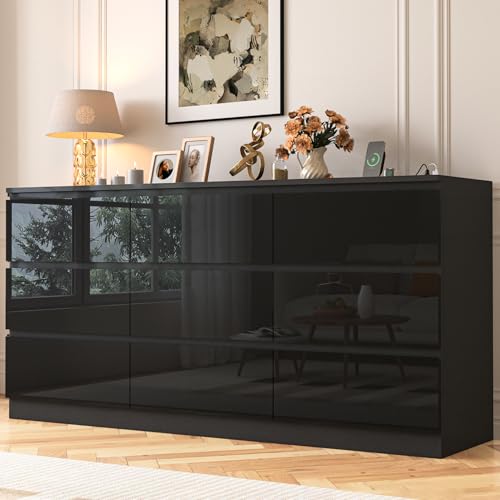
Black Mirrored Dresser: The Complete Buying Guide
Everything you need to know about choosing, styling, and maintaining a stunning black mirrored dresser. From glass quality to drawer construction, we cover it all.
Explore the GuideWhy a black mirrored dresser? Few furniture pieces command attention like a black mirrored dresser. The combination of deep, dramatic color with reflective glass surfaces creates a sophisticated focal point that brightens a room while adding a touch of glamour. Whether you are drawn to Hollywood Regency style, modern minimalism, or transitional design, a black mirrored dresser delivers visual impact and practical storage in one statement piece.
What Exactly Is a Black Mirrored Dresser?
A black mirrored dresser is a storage piece where the drawer fronts, top surface, or entire body is faced with mirror panels set against a black frame or backing. The mirror is typically beveled and mounted with small gaps or decorative trim between panels, creating a distinctive tiled or paneled look. The black base color — whether painted wood, lacquered MDF, or metal — provides a bold contrast that makes the mirrored surfaces pop.
Unlike a simple black wood dresser, which relies on texture and finish for visual interest, a black mirrored dresser uses reflection as its primary design element. This means the piece effectively disappears into its surroundings in certain lighting while standing out dramatically in others. That chameleon-like quality is precisely what makes it so versatile across different interior styles.
Key Factors When Choosing a Black Mirrored Dresser
Not all mirrored dressers are created equal. The quality of the mirror, the construction of the frame, and the drawer mechanism all determine how the piece performs over years of daily use.
Mirror Quality & Thickness
High-grade mirrors use thicker glass (typically 4mm to 6mm) with a uniform silver backing. Thinner mirrors can distort reflections and are more prone to cracking. Look for beveled edges — not only do they look more refined, but they also add structural integrity to each panel.
Frame Construction
The black frame or backing behind the mirror should be solid and moisture-resistant. Engineered wood with a lacquered finish is common in mid-range pieces, while solid wood frames represent the premium tier. Check that the mirror panels are securely adhered — no rattling or flexing when you press gently on the surface.
Drawer Glides & Mechanism
Entry-level mirrored dressers often use basic metal roller glides. Mid-range and premium models upgrade to ball-bearing side-mount or undermount glides with soft-close functionality. Test the drawers in person if possible — they should glide smoothly without wobbling or sticking, even when fully loaded.
Drawer Box & Joints
The drawer box itself matters as much as the front. English dovetail joints signal quality construction; stapled or glued boxes are a sign of entry-level build. The drawer bottom should be at least 3mm thick and set into a groove, not simply stapled to the bottom edge.
Black Finish Durability
Black finishes range from matte lacquer to high-gloss polyester. High-gloss finishes show fingerprints more readily but resist scratching better than matte paints. Whatever the finish, check that the black areas are evenly coated with no thin spots or overspray on the mirror panels.
Hardware & Details
Knobs and pulls on mirrored dressers are often crystal, chrome, or brushed nickel. These should feel solid and be attached with machine screws rather than wood screws for longevity. Some designs use no visible hardware at all, relying on finger pulls or integrated grooves — clean but potentially less convenient.
Popular Styles of Black Mirrored Dressers
The mirrored dresser category spans several distinct aesthetic directions. Understanding these styles helps you match the piece to your existing bedroom decor and personal taste.
Glam & Hollywood Regency
This is the classic interpretation: full mirror facing on all drawer fronts and the top surface, often with beveled edges and crystal or chrome hardware. Glam mirrored dressers embrace maximalism — they are meant to be seen and admired. These pieces work beautifully in bedrooms with soft color palettes, plush fabrics, and metallic accents. The reflective surfaces amplify light and create a sense of spaciousness that benefits smaller rooms.
Modern & Contemporary
Modern black mirrored dressers tend to be more restrained. They might feature mirror only on the drawer fronts with a matte black frame and top, or use smoked or tinted mirror for a subtler effect. Clean lines, minimal hardware, and flush drawer fronts define this style. If you prefer a sleek, uncluttered bedroom, a modern mirrored dresser strikes the right balance between drama and discipline.
Transitional & Antique-Inspired
Transitional designs blend mirrored surfaces with classic furniture silhouettes — think bow-front shapes, bracket feet, and decorative molding. Some pieces mix mirror panels with black wood sections, creating a patchwork effect that feels curated and collected over time. Antique-inspired black mirrored dressers often feature antiqued or distressed mirror glass that softens the reflection and adds vintage character.
Minimalist & Architectural
At the minimalist end of the spectrum, you will find dressers where mirror is used sparingly — perhaps a single mirrored panel on the top surface or a thin mirrored band across the drawer fronts. These pieces appeal to those who want the light-enhancing benefits of mirror without the full glam statement. The black frame does most of the visual work here, with mirror serving as an accent rather than the main event.
Quality Tiers: What to Expect at Each Level
The mirrored dresser market segments into distinct quality tiers. Understanding what each tier delivers helps you set realistic expectations and identify the right piece for your needs.
| Tier | Mirror & Finish | Construction | Drawer Mechanism | Best For |
|---|---|---|---|---|
| Entry-Level | Standard mirror glass, painted black finish | Engineered wood frame, stapled drawer boxes | Basic roller glides, no soft-close | Guest rooms, light-use spaces |
| Mid-Range | Beveled mirror, lacquered or painted finish | Solid wood frame elements, dovetail joints | Ball-bearing glides, soft-close on some drawers | Primary bedrooms, daily use |
| Premium | Thick beveled mirror, high-gloss lacquer finish | Solid wood construction throughout, reinforced corners | Full-extension undermount glides, soft-close all drawers | Master suites, design-forward spaces |
| Luxury | Antiqued or custom-cut mirror, hand-finished black lacquer | Hardwood frame, mortise-and-tenon joinery, dust-proofed drawers | Premium undermount glides, self-closing, weight-rated for heavy loads | Luxury bedrooms, statement furniture collections |
As you move up the tiers, the differences are most noticeable in the drawer feel and the mirror clarity. An entry-level piece may look similar to a premium one in photographs, but the experience of opening and closing drawers, the sharpness of reflection, and the durability of the finish separate them significantly. Mid-range models typically offer the most balanced combination of visual appeal and construction quality for most households.
Pros and Cons of Black Mirrored Dressers
Every furniture choice involves trade-offs. Here is an honest assessment of what you gain and what you sacrifice with a mirrored dresser.
✓ Advantages
- Visual space expansion: Mirrors bounce light around the room, making even compact bedrooms feel more open and airy.
- Built-in focal point: The reflective surface draws the eye and anchors the room's design without requiring additional artwork.
- Style versatility: Black mirrored dressers work in glam, modern, transitional, and even industrial interiors depending on the surrounding decor.
- Doubles as a mirror: Full-length or large mirrored surfaces provide a practical dressing mirror, reducing the need for a separate vanity mirror.
- Hides surface imperfections: The smooth mirror surface doesn't show wood grain variations or minor scratches the way solid wood finishes can.
✗ Considerations
- Fingerprint visibility: Mirrored surfaces show smudges and fingerprints readily, especially in high-traffic areas or children's rooms.
- Cleaning routine: Regular glass cleaner and a lint-free cloth are necessary to maintain clarity. Textured or antiqued mirror requires gentler care.
- Breakage risk: Mirror panels can crack or shatter if struck. In households with young children or pets, consider anchoring the dresser and choosing tempered or safety-backed mirror.
- Reflection management: A large mirrored surface will reflect whatever is in front of it — including clutter, an unmade bed, or a less-than-ideal wall. Placement matters.
- Weight: Mirrored dressers are heavier than their wood-only counterparts, which can complicate moving and may require wall anchoring for safety.
How to Style a Black Mirrored Dresser in Your Bedroom
A mirrored dresser is a statement piece, but it needs the right surrounding elements to look intentional rather than out of place. Here are styling approaches that work.
- Keep the top surface minimal. Because the surface is reflective, anything placed on it is visually doubled. A single sculptural object, a small tray for jewelry, or a slim vase with fresh flowers is often enough. Clutter on a mirrored top looks twice as busy.
- Layer lighting strategically. A table lamp on or near the dresser will create beautiful ambient reflection. Choose a lamp with a metallic or glass base that complements the mirror rather than competing with it. Wall sconces flanking the dresser also work well.
- Anchor with a rug or runner. If the dresser sits on hardwood or tile, a small area rug or runner in front of it prevents the piece from feeling like it is floating. Textured natural fibers — jute, wool, or a flatweave — provide a nice contrast to the smooth mirror.
- Balance with soft textures. Mirrored surfaces are hard and cool; balance them with upholstered seating, velvet curtains, or a plush throw draped over a nearby chair. This soft-versus-hard interplay makes the room feel layered and inviting.
- Use art or a wall mirror thoughtfully. Hanging a second mirror above a mirrored dresser can create an infinite reflection effect that some love and others find disorienting. If you want art above the dresser, choose a piece with warm colors or matte texture to temper the reflections.
- Coordinate hardware with other metals. If your black mirrored dresser has chrome or nickel hardware, echo that metal in curtain rods, lamp bases, or picture frames. For crystal knobs, consider a small crystal chandelier or decorative glass objects nearby.
Placement and Room-Fit Considerations
Measure First, Decide Second
Before falling in love with a specific black mirrored dresser, measure your available wall space, the height of adjacent furniture, and the clearance needed for drawers to open fully. A common mistake is choosing a dresser that looks proportionate online but overwhelms a small bedroom or feels lost against a large wall. As a rule of thumb, the dresser width should be roughly two-thirds the width of the wall it occupies, or centered with breathing room on both sides.
Lighting and Reflection Direction
The direction of natural light matters. A dresser placed opposite a window will reflect daylight back into the room, brightening the space significantly. If placed opposite a bed, the mirror will reflect the bed — which can look elegant when neatly made but less appealing when not. Consider what will be in the mirror's line of sight before committing to placement. You can also angle the dresser slightly to change the reflection angle.
Matching Existing Furniture
A black mirrored dresser can stand alone as an accent piece or coordinate with other dark furniture. If you have a black wood bed frame, the mirrored dresser creates a cohesive monochromatic scheme with an extra layer of shine. If your bed is upholstered or light-colored, the dresser becomes the dramatic counterpoint. Avoid pairing it with another large mirrored surface (like a mirrored nightstand set) unless you are intentionally leaning into a full glam aesthetic — a single mirrored piece usually suffices.
Safety and Anchoring
Because dressers can tip if a child climbs on open drawers, anchoring the unit to the wall is strongly recommended. This is especially important for mirrored pieces, as falling glass poses additional hazards. Most quality dressers include anti-tip hardware, but always confirm before purchase. Also consider floor protection — the weight of a mirrored dresser can dent softwood floors over time, so felt pads under the feet are a simple safeguard.
Caring for Your Black Mirrored Dresser
Mirrored furniture requires a straightforward but consistent care routine. Here is how to keep the glass clear and the black finish looking its best.
Cleaning the Mirror
Use a commercial glass cleaner or a mixture of equal parts water and white vinegar. Spray onto a lint-free microfiber cloth rather than directly onto the mirror — this prevents liquid from seeping behind the glass panels and damaging the backing. Wipe in a circular motion, then buff with a dry section of the cloth. For beveled edges, use a soft toothbrush to remove dust from the grooves.
Protecting the Black Finish
Dust the black frame or painted areas weekly with a dry microfiber cloth. For matte finishes, avoid oil-based polishes that can leave a sheen. For high-gloss lacquer, a slightly damp cloth followed by a dry buff is sufficient. Promptly blot up spills — black finishes, especially painted ones, can stain if liquid sits for extended periods.
Managing Fingerprints
If you have children or frequently handle the drawer fronts, keep a small microfiber cloth in the top drawer for quick touch-ups. Avoid using paper towels on mirrors, as they can leave lint and micro-scratches over time.
Long-Term Maintenance
Check the mirror panels every few months for any signs of separation from the backing. If a panel begins to lift, a small amount of mirror adhesive can re-secure it — but address the issue promptly to prevent moisture infiltration. For drawers, lubricate metal glides annually with a silicone-based lubricant (not oil, which attracts dust).
Frequently Asked Questions
Yes, and it can be an excellent choice. The reflective surfaces visually expand the space by bouncing light and creating the illusion of depth. In a small bedroom, place the dresser opposite a window if possible to maximize daylight reflection. Keep the surrounding area uncluttered and choose a dresser with a relatively compact footprint — a 3-drawer or 4-drawer width rather than an oversized 6-drawer piece.
Not necessarily. The black frame provides contrast and drama, but the mirror surfaces themselves reflect light and brighten the room. The key is the lighting in the room and the surrounding color palette. In a room with white or light-colored walls and adequate natural or artificial light, the dresser will not make the space feel dark. In a very dim room with dark walls, however, a black mirrored dresser might blend into the shadows — in that case, consider adding a lamp or sconce near the dresser.
For the mirrored surfaces: spray a glass cleaner onto a microfiber cloth (never directly on the mirror) and wipe gently, then buff dry. For the black frame: dust with a dry cloth. For the drawer interiors: vacuum with a brush attachment to remove dust and debris, then wipe with a barely damp cloth if needed. Avoid getting moisture near the mirror edges, as it can degrade the backing over time.
They can be, with precautions. Always anchor the dresser to the wall using the provided anti-tip kit or aftermarket wall straps. Choose models with tempered or safety-backed mirror if available — these are designed to crumble into relatively safe pieces rather than shattering into sharp shards if broken. Avoid placing heavy objects on top of the dresser that a child might pull down. For nursery or young child's rooms, a non-mirrored dresser may be a more worry-free choice, but a securely anchored mirrored dresser is not inherently unsafe.
Absolutely. Mirrored dressers have migrated well beyond the bedroom and are increasingly used as buffet servers in dining rooms, console alternatives in entryways, and media storage in living rooms. The black finish and reflective surfaces make them versatile accent pieces in any room where you need closed storage and a touch of glamour. Just ensure the style coordinates with the surrounding furniture — a high-glam mirrored dresser in a rustic living room can create intentional contrast, but it should look curated rather than accidental.
A mirrored dresser uses actual mirror — glass with a reflective silver or aluminum backing — for its surfaces. A black glass dresser uses tinted or painted glass that is not necessarily reflective in the same way. Mirrored surfaces provide clear reflections and bounce light; black glass is typically opaque and decorative, offering a sleek look without the functional reflection of a mirror. The care and visual impact differ significantly, so choose based on whether you want the light-enhancing and reflective qualities of mirror or the solid, glossy appearance of black glass.