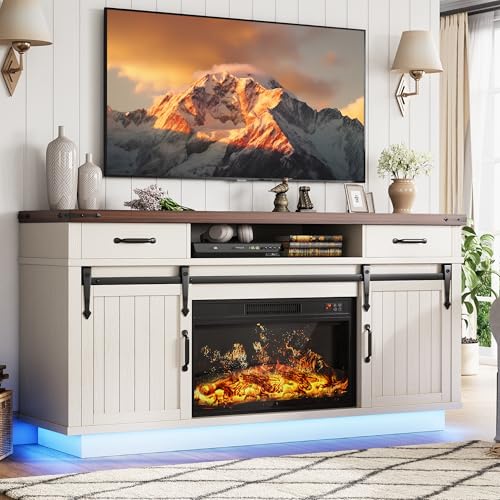
Bedroom Dresser With Electric Fireplace: The Complete Research Guide
A fireplace dresser combines drawer storage with a built-in electric fire, giving your bedroom a focal point without the complexity of a traditional hearth. This guide explains how these units work, what to check before choosing one, and how to match a model to your room, routines, and style.
1. What a Bedroom Dresser With Electric Fireplace Actually Is
A fireplace dresser is a storage cabinet built around an electric fireplace insert. The insert is typically housed in a central bay or a dedicated side section, with drawers above, below, or alongside it. The result is a single piece of furniture that handles clothing storage and adds a visual anchor to the room.
These units belong to the broader family of multi-function bedroom furniture, similar in spirit to a bedroom dresser entertainment center or a bed frame with built-in dresser. The key difference is the heating element: an electric insert that produces flame visuals and, in most models, fan-forced warm air.
Unlike a wood-burning or gas fireplace, an electric insert does not need a chimney, flue, or gas line. It plugs into a standard outlet, which makes it practical for apartments, rented homes, and bedrooms where structural changes are not an option. If you are comparing storage formats more broadly, our guide to bedroom dressers with deep drawers explains how drawer depth affects everyday usability.
2. How the Electric Fireplace Insert Works
Most inserts use one of two visual technologies. Understanding the difference helps you set realistic expectations before you compare models.
LED and flame-effect inserts
These use LED lighting, rotating rods, or reflective surfaces to simulate flames. They are the most common type in furniture-integrated units. They produce no real combustion, run cool at the surface of the flame panel, and usually offer a flame-only mode for ambiance.
Water-vapor and mist inserts
These create a flame-like effect using water mist and colored lighting. They tend to look more dimensional than basic LED effects, and many include a refillable reservoir. They still produce no combustion, but they need occasional water refills and cleaning.
Infrared and fan-forced heaters
The heating element is separate from the flame display. Fan-forced models push warm air into the room through a vent; infrared models radiate heat toward nearby surfaces. Both are supplementary heat sources, not replacements for a room's primary heating system. Look for adjustable thermostat settings and a timer if you plan to use the heat function regularly.
| Insert type | Visual realism | Maintenance | Best for |
|---|---|---|---|
| LED flame effect | Good, stylized | Minimal | Everyday ambiance, low-maintenance routines |
| Water-vapor mist | High, dimensional | Periodic water refill and cleaning | Buyers who want a more lifelike flame |
| Infrared heater | Varies by insert | Minimal | Targeted warmth in a seating or reading corner |
| Fan-forced heater | Varies by insert | Minimal; keep vents dust-free | Even warmth distribution across the bedroom |
3. Why Choose a Fireplace Dresser for the Bedroom
For buyers in the research stage, the appeal usually comes down to four practical benefits.
- Consolidated function: One piece covers storage and a focal point, which matters in smaller rooms where a separate fireplace or media console would crowd the layout.
- Year-round ambiance: Flame-only mode means the visual effect is available even in warm months, when the heater stays off.
- No structural work: Plug-in operation avoids chimney installation, venting, and permits.
- Design cohesion: The insert and cabinet are designed together, so proportions and finishes already match.
There is a trade-off to weigh honestly: the insert bay consumes storage volume that a plain dresser would use for drawers. If maximum drawer capacity is your priority, a conventional bedroom dresser or a dresser and chest combination may serve you better. If you want a statement piece with adequate storage, the fireplace dresser is the stronger fit.
4. Sizing and Placement: The Measurements That Matter
Fireplace dressers are deeper than standard dressers because the insert and heater need room. Measure your space before comparing models, and use these checkpoints.
- Wall length: Confirm the cabinet width plus clearance on both sides. A unit that fits exactly wall-to-wall leaves no room for airflow or visual breathing space.
- Depth: Account for the cabinet depth, the insert housing, and the plug position. Check that the unit does not block walking paths or closet doors.
- Front clearance: Leave open floor space in front of the heater vent. This is both a safety requirement and a comfort consideration.
- Outlet access: Confirm a grounded outlet is reachable without an extension cord running across a doorway.
- Height relative to the bed: A tall fireplace dresser can visually overpower a low bed frame. Check the sightline from the doorway and from the bed itself.
If your room is tight, compare against deep-drawer dresser layouts that prioritize storage density, and consider whether a narrower fireplace unit plus a separate dresser and nightstand set gives you a better overall arrangement.
5. Materials, Finishes, and Build Quality Tiers
Build quality determines how the unit holds up to heat cycles, drawer use, and daily life. Instead of chasing a single specification, compare models by tier.
Entry-level tier
Engineered wood panels with a laminated finish. These units are lighter and easier to move, and they suit guest rooms or low-traffic bedrooms. Drawer slides are typically basic; expect simpler joinery.
Mid-range tier
Thicker engineered panels or a solid-wood frame with veneered surfaces. Drawer slides are smoother, and the insert housing is better insulated against vibration. This tier usually offers the most balanced combination of durability and design choice.
Premium and luxury tiers
Solid hardwood construction, dovetail or reinforced drawer boxes, and high-grade hardware. The insert bay is often lined or ventilated more carefully, and finishes are more resistant to heat and humidity. These are long-term investments intended to stay in service for many years.
Finish choice matters near a heat source. Painted and lacquered surfaces are common and easy to wipe down; natural wood finishes show grain but may need occasional conditioning. Whichever you choose, confirm the manufacturer specifies the finish as suitable for use around the insert. For wider material comparisons, see our marble-top dresser guide and general bedroom dresser and nightstand coverage.
6. Smart Features Worth Checking
Feature lists can look similar at a glance. These are the ones that affect daily use.
- Flame-only mode: Lets you run the visual effect without heat, which is the most-used setting in most bedrooms.
- Adjustable thermostat: Maintains a consistent temperature instead of cycling between too warm and too cool.
- Timer and sleep setting: Useful if you like the flame effect while falling asleep.
- Remote or app control: Convenient when the unit sits across the room from the bed.
- Adjustable flame brightness and color: Helps match the effect to the room's lighting at different times of day.
- Overheat protection: A safety cutoff that shuts the heater down if internal temperatures rise too high.
- Soft-close drawers: Reduces noise and wear, especially in a room used for rest.
If you plan to place a television above the unit, check the manufacturer's clearance guidance first. Some inserts direct heat forward and are compatible with wall-mounted screens above; others are not. A related layout option is a dedicated dresser entertainment center, which is designed with media equipment in mind.
7. Safety and Installation Essentials
Electric fireplace inserts are generally straightforward to install, but the details matter.
- Follow clearance guidance: Respect the minimum distances from walls, bedding, curtains, and other furniture stated in the manual.
- Use a grounded outlet: Avoid extension cords and power strips for the heater circuit. If the cord must reach across a walkway, rethink the placement.
- Keep combustibles clear: Do not drape blankets or clothing over the unit or place them directly in front of the vent.
- Anchor the furniture: Dressers should be secured to the wall, especially in homes with children or pets. This applies to fireplace dressers as well.
- Supervise around children: The heater vent and surrounding surfaces can become warm. Choose a model with a cool-touch front panel if young children share the room.
- Keep vents dust-free: Dust buildup affects performance and is a common cause of overheating cutoffs.
Always verify that the unit carries relevant safety certification for your region, and read the full installation guide before assembly.
8. Styling a Fireplace Dresser in the Bedroom
The insert becomes the visual anchor, so keep the surrounding decor deliberate.
- Keep the top surface edited: A few well-chosen objects read better than a crowded arrangement, and less clutter near the insert is safer.
- Use the mantel line: If the unit has a mantel shelf, treat it as a display ledge for art or a small mirror rather than a storage surface.
- Coordinate lighting: Pair the flame effect with warm-toned bedside lamps so the room does not feel split between cool and warm light.
- Respect the vent: Do not place furniture or floor decor directly in front of the heater outlet.
- Match the bed frame: A fireplace dresser often pairs well with a coordinated bed frame and matching dresser arrangement, or with a dresser and end table set for a unified look.
9. Buying Checklist and Final Verification
Before you commit to a model, run through this checklist. It is designed for research-stage buyers who already know they want a fireplace dresser and need to confirm the details.
| Checkpoint | What to confirm | Why it matters |
|---|---|---|
| Footprint | Width, depth, height against your taped floor outline | Prevents layout and walking-path problems |
| Drawer capacity | Number and depth of drawers, slide type | Balances storage against the insert bay |
| Insert type | LED, mist, infrared, or fan-forced; flame-only mode | Determines realism, maintenance, and heat style |
| Build tier | Entry-level, mid-range, premium, or luxury construction | Sets expectations for longevity and finish durability |
| Safety features | Overheat cutoff, cool-touch panel, certification | Core requirements in a room used for sleep |
| Controls | Thermostat, timer, remote or app | Affects day-to-day convenience |
| Assembly and anchoring | Wall-anchor kit included, assembly effort | Stability and safe installation |
10. Frequently Asked Questions
Does a bedroom dresser with electric fireplace need ventilation?
Electric inserts do not produce combustion gases, so no chimney or flue is required. However, the unit needs the clearance around vents specified by the manufacturer, and the surrounding surfaces should tolerate heat. Follow the installation guide for minimum distances.
Can the fireplace run without heat?
Most models include a flame-only mode that shows the fire effect without producing heat. This is the setting many owners use most often, and it draws far less power than the heating mode.
How much space does a fireplace dresser need?
Because these units are deeper than standard dressers, plan for extra depth behind and in front of the cabinet. Leave clear space in front of the heater vent and enough room to open drawers fully without obstruction.
Is a fireplace dresser a good fit for a small bedroom?
It can be, because it consolidates storage and a focal point into one piece. The constraint is depth and front clearance, so measure carefully. In very tight rooms, compare against a narrower bedroom dresser plus a separate nightstand arrangement.
You have the framework: sizing, insert type, build tier, safety, and styling. The next step is comparing specific models against your checklist.
Compare Fireplace Dresser Options