
Bedroom Dressers and Chests: Complete Buying Guide
Everything you need to know before choosing a dresser or chest of drawers for your bedroom — sizes, materials, drawer configurations, and styling considerations, explained clearly.
Explore Top PicksWhy this guide matters: A bedroom dresser or chest is one of the most-used pieces of furniture in your home. It holds your daily wardrobe, shapes your morning routine, and defines the visual tone of your bedroom. Choosing the wrong size, drawer layout, or material can lead to years of frustration — while the right one can last decades. This guide walks you through every decision point so you can buy with confidence.
Dresser vs. Chest of Drawers: What's the Difference?
Before you shop, it helps to understand the terminology. The two terms are often used interchangeably, but they refer to different furniture forms — and each suits a different bedroom layout and storage need.
Dresser
A dresser is typically wider than it is tall, with a horizontal orientation. It usually offers a broad top surface for decor, a mirror, or a television. Dressers are ideal for bedrooms with wide wall space and for anyone who prefers to see their clothing laid out across multiple side-by-side drawers.
Chest of Drawers
A chest of drawers is taller than it is wide, with a vertical stack of drawers. It occupies less floor space and is a strong choice for smaller bedrooms, narrow walls, or alongside a bed. Chests often include deeper drawers and are better suited to folded clothing than to display items on top.
If you are still unsure which form fits your room, our detailed comparison of a dresser versus a chest of drawers breaks down dimensions, storage capacity, and placement scenarios. For a broader look at vertical storage options, browse our bedroom chest of drawers collection guide.
Choosing the Right Size for Your Bedroom
Size is the single most important factor in a dresser purchase. A piece that is too large will crowd your room and block walkways; one that is too small will leave you short on storage within months. Measure your space carefully before you shop.
Key measurements to take
- Wall width available: Leave at least 2–3 feet of clearance on either side if the dresser sits against a wall with doorways or furniture nearby.
- Walking clearance: Aim for at least 30 inches of open floor space in front of drawers so they can open fully without obstruction.
- Height relative to the bed: A dresser used as a nightstand alternative should sit within a few inches of mattress height for comfortable reach.
- Ceiling height: Tall chests look best in rooms with standard or higher ceilings; a very tall chest in a low-ceiling room can feel oppressive.
- Door swing and closet clearance: Confirm that bedroom doors and closet doors can open fully with the dresser in place.
Standard size categories
| Category | Typical Width | Best For |
|---|---|---|
| Small / Narrow | Under 36 inches | Small bedrooms, apartments, guest rooms, tight wall spaces |
| Standard / Mid-Size | 36–60 inches | Most primary bedrooms, shared rooms, balanced layouts |
| Wide / Large | 60–72 inches and above | Spacious bedrooms, rooms needing maximum storage, dressers with mirrors |
| Tall Chest | 30–40 inches wide, 45–60 inches tall | Narrow walls, small footprints, vertical storage needs |
For rooms with limited floor space, explore our guide to small dressers and narrow dressers that maximize storage without overwhelming the room. If you have a generous bedroom, a wide dresser or a large dresser may serve you better.
Drawer Count and Layout: How Much Storage Do You Need?
Drawer count is about more than capacity — it determines how you organize your clothing. A 3-drawer dresser with deep drawers works well for bulky items like sweaters, while a 6- or 9-drawer unit gives you the flexibility to separate categories like socks, undergarments, shirts, and activewear.
3–4 Drawers
Best for guest rooms, children's rooms, or as a secondary storage piece. Fewer drawers mean larger individual compartments, so this layout suits folded sweaters, jeans, and linens.
5–6 Drawers
The most common configuration for primary bedrooms. A mix of drawer sizes lets you separate daily clothing from occasional items. Look for at least one deep drawer for bulky items.
7–9+ Drawers
Ideal for shared bedrooms or anyone with an extensive wardrobe. High drawer counts work best in tall chests or wide dressers where every drawer remains accessible.
Consider the depth as well as the count. Standard drawers are 14–18 inches deep, while deep drawers of 20 inches or more suit bedding and bulky knitwear. Our guides to 3-drawer dressers, 5-drawer dressers, and 9-drawer dressers explore each configuration in detail.
Materials and Construction: What to Look For
The material of a dresser affects its durability, weight, appearance, and how well it resists wear over time. Construction quality matters just as much as the outer finish — drawer joints, glides, and back panels are where cheaper pieces cut corners.
Common material options
- Solid wood: The most durable option and a long-term investment. Oak, walnut, maple, and mahogany are common choices. Solid wood can be refinished and repaired, extending its lifespan considerably. Explore our solid wood chests guide.
- Engineered wood (MDF, particleboard): More consistent in appearance and generally lighter. Mid-range and entry-level pieces often use engineered wood with a wood veneer. Quality varies widely — look for thick panels and reinforced drawer bottoms.
- Metal: Durable and easy to clean, often used in industrial or modern styles. Metal dressers are less common in traditional bedrooms but work well in contemporary spaces.
- Rattan and bamboo: Lightweight, visually warm, and suited to coastal, bohemian, and Scandinavian interiors. Browse our rattan dressers and bamboo dressers collections.
Construction details that matter
- Drawer joints: Dovetail joints are a mark of quality construction. Box joints and stapled joints are more common in entry-level pieces.
- Drawer glides: Metal ball-bearing glides offer smooth, quiet operation. Wood-on-wood glides are traditional but require periodic waxing and can stick over time.
- Drawer bottoms: Thin drawer bottoms sag under weight. Look for reinforced bottoms or at least 1/4-inch thickness.
- Back panel: A solid back panel adds structural rigidity. Some entry-level pieces use thin cardboard or omit the back entirely.
- Finish: A quality finish resists moisture, scratches, and fading. Painted finishes should be even with no drips or thin spots.
Open and close every drawer several times. A well-built drawer should glide smoothly without wobbling, and should close flush with the frame. If shopping online, check reviews for mentions of drawer glide quality and assembly issues.
Matching Your Bedroom's Style
A dresser is a large visual element in the bedroom, so its style should complement your existing furniture and the overall mood of the room. Here are the main style families to consider:
Modern & Minimalist
Clean lines, flat fronts, and minimal hardware. Often finished in white, black, gray, or natural wood tones. Suits contemporary and Scandinavian interiors. Browse modern dressers.
Mid-Century Modern
Tapered legs, warm wood tones, and understated hardware. A versatile style that bridges traditional and contemporary rooms. See our mid-century dressers guide.
Farmhouse & Rustic
Weathered finishes, plank details, and simple metal hardware. Warm and inviting, suited to relaxed, family-oriented bedrooms. Explore farmhouse dressers and rustic dressers.
Traditional & Antique
Ornate detailing, carved elements, and rich wood finishes. Antique pieces add character and history to a bedroom. Read about antique dressers and vintage dressers.
Dresser Sets vs. Standalone Pieces
Buying a matching dresser and nightstand set creates a cohesive look with minimal effort. Sets are especially useful for primary bedrooms and guest rooms where visual harmony matters. However, a standalone dresser gives you more flexibility to mix styles and upgrade pieces individually over time.
If you prefer a coordinated bedroom, explore our bedroom dresser and nightstand sets and bedroom dresser sets guides. For those who already have a bed frame and want a matching look, our bed frame and matching dresser guide can help.
A dresser set purchased for a nursery may not suit a teenager's room. If you plan to keep the furniture through multiple life stages, choose neutral finishes and timeless styles over trend-driven designs.
Organizing Your Bedroom Dresser for Maximum Efficiency
Once you have chosen the right dresser, how you organize it determines how useful it really is. A well-organized dresser saves time every morning and keeps clothing visible and accessible.
- Assign categories to drawers: Keep daily items in the top drawers and less-used items below. This minimizes bending and reaching.
- Use drawer dividers: Dividers keep socks, undergarments, and accessories neatly separated. Our drawer dividers guide covers options for every drawer size.
- Fold vertically: Filing folding (standing items upright) lets you see everything at a glance and prevents piles from collapsing. Learn more in our folding clothes tips article.
- Rotate seasonally: Store off-season clothing in under-bed bins or higher shelves. See our seasonal clothing storage guide.
- Keep the top surface intentional: Use the top of the dresser for a few decor items, a mirror, or a lamp — not as a catch-all. Our dresser styling tips offer practical ideas.
For a full step-by-step approach, read our complete dresser organization guide and our broader drawer organization ideas collection.
Safety Considerations for Bedroom Dressers
Dresser tip-over accidents are a real risk, especially in homes with children. Most furniture safety standards require dressers to be anchored to the wall, and many manufacturers include anti-tip kits with their products.
- Always use the anti-tip strap: Even a stable-looking dresser can tip if a child climbs on open drawers.
- Avoid overloading top drawers: Heavy items stored high increase the risk of tipping.
- Check the stability of tall chests: Tall chests have a higher center of gravity and should be anchored securely.
- Keep items children might climb on off the top: Toys, remote controls, and interesting objects can tempt children to climb.
Nursery dressers require additional attention to safety. Our nursery dressers guide covers changing-table attachments, anchor requirements, and safe storage heights for infants and toddlers.
Bedroom Dresser Ideas and Placement
Where you place your dresser affects both function and visual balance. Here are the most common and effective placements:
- Opposite the bed: The most traditional placement. Provides a focal point and leaves a clear walkway around the bed.
- Along the longest wall: Makes a wide dresser feel proportional and leaves the rest of the room open.
- Beside the bed: Works well for narrow dressers or chests, especially in small rooms where a nightstand is not feasible.
- In a closet or dressing area: Some homeowners place a dresser inside a walk-in closet for a dedicated dressing space. See our dressers for closet guide.
- In a guest room or nursery: A smaller dresser or chest keeps the room functional without crowding. Browse nursery dresser ideas for inspiration.
For more visual inspiration, explore our bedroom dresser ideas and dresser wall decor guides, which cover mirror placement, lighting, and styling.
Top Bedroom Dressers and Chests to Consider
⚠️ AFFILIATE DISCLOSURE: This website contains affiliate links. As an Amazon Associate, we earn from qualifying purchases. If you make a purchase through these links, we may receive a small commission at no additional cost to you. Read our full affiliate policy.

Jocoevol Black 5 Drawer Dresser for Bedroom, 15" D x 23.7" W x 40.4" H in Simply Chest of Drawers, Wood Storage Dresser with Drawers for Living Room Hallway Entryway, Black
Check price on Amazon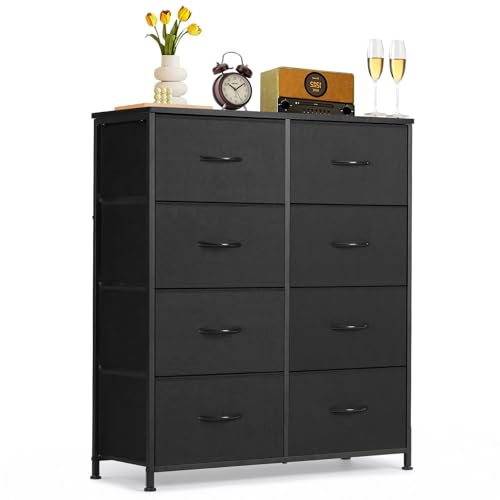
8-Drawer Dresser for Bedroom, Anti-Tip Tall Storage Organizer | Chest of Drawers with Wooden Top and Metal Frame Fabric Bins for Closet, Living Room, Hallway, Entryway, Black
Check price on Amazon
WLIVE 12 Drawer Tall Fabric Dresser Bedroom Storage Chest, Rustic Brown | 12-drawer tall fabric dresser with wood top and steel frame, P2 grade board, ideal for bedroom closet living room storage
Check price on Amazon
SONGMICS Dresser for Bedroom, Wide Dresser with 9 Fabric Drawers | Chest of Drawers with Steel Frame, for Closet & Entryway, Ink Black and Ebony Black, BELLAH Collection ULGS324B01S
Check price on Amazon
SONGMICS Dresser for Bedroom, Wide Dresser with 5 Fabric Drawers | Chest of Drawers with Steel Frame, for Closet & Entryway, Ink Black and Ebony Black, BELLAH Collection ULGS322B01S
Check price on Amazon
Shahoo Black Dresser for Bedroom with 6 Drawers, 47.2" Wood Dresser | Chests of Drawers, Anti-tip, Storage Organizer, Closet, Hallway, Dormitory
Check price on Amazon
VASAGLE 6-Drawer Dresser, Chest of Drawers, 46.9 x 15.8 x 30.7 Inches | Storage Tower Unit, Modern Basic Style, for Bedroom, Closet, Living Room, Cloud White, CUSTOS Collection ULTS416WB01S
Check price on AmazonFrequently Asked Questions
Measure the available wall width and the floor depth from the wall to the nearest obstacle (bed, doorway, or closet). Allow at least 30 inches of clearance in front of the dresser so drawers can open fully. Also measure the path from your door to the dresser location to ensure the piece can be delivered and moved into place. A dresser size guide can help you translate room measurements into the right furniture dimensions.
In most small bedrooms, a tall chest of drawers is the better choice because it occupies less floor space while offering comparable storage. A narrow dresser can also work well if placed along a wall with sufficient walking clearance. The key is to prioritize vertical storage when floor area is limited. See our small dressers and tall dressers guides for specific recommendations.
Solid wood is the most durable and long-lasting material, and it can be refinished if it becomes scratched or worn. However, high-quality engineered wood with a wood veneer is a solid choice at the mid-range tier and is often more stable in humid conditions. For a complete breakdown of materials, read our materials and finishes guide and our comparison of solid wood vs engineered wood.
For a single adult, a 5- or 6-drawer dresser is usually sufficient. Couples sharing a dresser may prefer 6–9 drawers or two separate dressers. If you store bedding, sweaters, or off-season clothing in your dresser, prioritize at least one deep drawer rather than a higher total count. Our guides to 5-drawer dressers, 6-drawer dressers, and 9-drawer dressers explain the trade-offs.
Yes. Furniture safety standards recommend anchoring all dressers and chests to the wall, especially in homes with children or pets. Most dressers include anti-tip hardware, and installing it takes only a few minutes. Tall chests and dressers with multiple open drawers are at higher risk of tipping. For nursery-specific guidance, see our nursery dressers article.
Absolutely. Dressers are versatile storage pieces and work well in living rooms, hallways, dining rooms, and bathrooms. A low dresser can serve as a sideboard or media console; a chest can function as a linen cabinet in a bathroom. Browse our living room dresser ideas and bathroom dresser ideas for creative placement options.
Ready to Choose Your Bedroom Dresser?
Use the guidance in this article to narrow down your options, then explore our curated selection of bedroom dressers and chests to find the right piece for your space and storage needs.
View Recommended Dressers