
Antique Sewing Machine Drawers For Sale: The Complete Buyer's Guide
Everything you need to know before sourcing authentic antique sewing machine drawers — wood species, joint construction, condition grading, restoration considerations, and smart repurposing ideas for storage and decor.
Browse Available PiecesWhy antique sewing machine drawers deserve a closer look: Originally built as part of treadle sewing machine cabinets, these small drawers were engineered to hold thread, bobbins, needles, and notions. Today they are sought after as compact storage solutions, decorative accent pieces, and restoration projects. This guide walks you through what to inspect, which wood species to prioritize, and how to distinguish genuine period pieces from later reproductions — so you can source with confidence.
What Are Antique Sewing Machine Drawers?
Antique sewing machine drawers are the small, shallow drawers that were fitted into treadle and hand-crank sewing machine cabinets during the late 19th and early 20th centuries. Most cabinets featured three to five drawers arranged on either side of the machine head, often with a central bank of narrower drawers for notions. These drawers were typically constructed from solid hardwoods and finished with hand-cut joinery, making them remarkably durable compared to modern mass-produced equivalents.
When the sewing machine itself was discarded or the cabinet damaged, the drawers frequently survived intact. This is why today you can find individual drawers, matched sets, and complete drawer banks offered as standalone storage pieces. Many buyers pair them with antique wooden chest of drawers pieces or use them alongside antique dresser furniture to create a cohesive vintage look.
Common Cabinet Configurations
- Three-drawer side banks: One bank on each side of the machine, typical of Singer and White treadle cabinets.
- Five-drawer central stacks: Narrower drawers stacked vertically, often with a mix of shallow and deep compartments.
- Combination banks: Wider lower drawers paired with smaller upper drawers for thread and notions.
- Drop-leaf cabinet drawers: Drawers integrated into cabinets with folding work surfaces, common in parlor-style machines.
Wood Species and Construction Quality
The wood species and joinery tell you a great deal about the quality and age of a drawer. Period pieces from reputable makers used solid hardwoods and hand-cut dovetails, while later reproductions often rely on stapled joints and veneered particle board.
| Wood Species | Typical Era | Characteristics | Best For |
|---|---|---|---|
| Oak | Late 1800s–1930s | Heavy, open grain, excellent durability | Everyday storage, restoration projects |
| Walnut | 1880s–1920s | Rich dark tone, tight grain, takes polish well | Decorative display, living room accents |
| Mahogany | 1890s–1930s | Warm reddish-brown, fine grain, premium feel | High-end interiors, collector pieces |
| Pine | 1900s–1940s | Lighter tone, softer wood, easy to refinish | Painted finishes, casual decor |
| Cherry | 1890s–1920s | Deepens with age, smooth grain | Fine furniture matching, heirloom pieces |
Pay close attention to the joinery. Hand-cut dovetails with slightly irregular spacing indicate genuine period construction. Machine-cut dovetails with uniform spacing suggest mid-20th-century production. Staples, Phillips-head screws, and particle board indicate modern reproduction and should be treated as decorative only.
Market Tiers and What They Signal
Rather than focusing on arbitrary figures, it helps to understand the market tiers that antique sewing machine drawers occupy. Each tier reflects construction quality, rarity, and condition.
Entry-Level Tier
Single drawers with cosmetic wear, mismatched hardware, or minor veneer loss. Often sourced from damaged cabinets. Suitable for craft storage, painted projects, and beginner restoration.
Mid-Range Tier
Matched pairs or small banks in solid oak or walnut with original hardware and sound joints. Ideal for repurposing as jewelry or entryway organizers.
Premium / Top-Tier
Complete drawer banks in mahogany or cherry with hand-cut dovetails, original finish, and documented maker marks. Collector-grade pieces suited to fine interior settings.
Condition Grading: What to Inspect Before You Buy
Condition grading is the single most important factor in evaluating antique sewing machine drawers. Use the following checklist when reviewing a piece in person or through an online listing.
- Drawer bottoms: Check for warping, splitting, or separation from the sides. A sound bottom is essential for any functional use.
- Dovetail joints: Look for tight, intact joints. Loose or repaired dovetails reduce structural integrity.
- Runners and guides: Wooden runners should be smooth and free of heavy grooving. Deep wear indicates frequent use but may require re-facing.
- Hardware: Original pulls, escutcheons, and locks add value. Mismatched hardware is acceptable for entry-level pieces but reduces collector appeal.
- Finish: Original patina is desirable. Aggressive sanding or heavy refinishing reduces authenticity.
- Woodworm and rot: Inspect for fresh frass (wood dust) and soft spots, especially in pine and lower-grade oak.
- Odor: Musty or smoke odors can be difficult to remove and may indicate long-term damp storage.
- Maker marks: Stamps, labels, or stencils from Singer, White, Domestic, and other manufacturers confirm provenance.
Authenticity: How to Spot Reproductions
Reproduction drawers are increasingly common in the antique market. While they can serve decorative purposes, they should not be represented as period pieces. The following signals help distinguish authentic antique sewing machine drawers from modern copies:
- Hand-cut dovetails show slight irregularity; machine-cut dovetails are perfectly uniform.
- Period screws are slotted; Phillips-head screws appeared in the mid-20th century.
- Original finish shows uneven wear, especially around pulls and drawer fronts.
- Authentic drawers often carry faint pencil marks or maker stamps on the underside.
- Reproductions frequently use uniform thickness, perfectly square corners, and factory-applied distressing.
If provenance matters to you, ask sellers for close-up photographs of joints, hardware, and any stamps. Reputable dealers will provide these without hesitation. For related period pieces, see our guide to antique dressers from the early 1900s.
Repurposing Ideas for Antique Sewing Machine Drawers
One of the reasons these drawers remain popular is their versatility. Their compact size and shallow depth make them ideal for spaces where full-size furniture will not fit.
Storage and Organization
- Jewelry and accessories: Line drawers with felt or velvet to protect rings, necklaces, and watches.
- Craft and sewing storage: Return the drawers to their original purpose by organizing thread, bobbins, and notions.
- Entryway catch-all: Mount a bank of drawers near the door for keys, mail, and small everyday items.
- Bathroom vanity storage: Use shallow drawers for cosmetics, brushes, and small toiletries.
- Desk organizers: Place a single drawer on a desktop for pens, clips, and stationery.
Decorative and Furniture Integration
- Wall-mounted display: Attach drawers to a wall as a sculptural storage feature.
- Side table conversion: Stack drawers into a small side table with a glass or wood top.
- Bedroom accent: Pair a drawer bank with an antique narrow chest of drawers for a layered vintage bedroom look.
- Nursery storage: Use a low drawer bank for baby items, paired with nursery dressers for larger storage.
Restoration and Care Basics
Restoration should always begin with the least invasive approach. Many antique sewing machine drawers only need cleaning and waxing to remain functional for decades.
- Clean gently: Use a soft brush and a damp cloth with mild soap. Avoid soaking the wood.
- Stabilize loose joints: Apply hide glue or a reversible wood adhesive to loose dovetails; avoid permanent epoxy on collector pieces.
- Preserve original finish: Apply paste wax to nourish the wood without altering patina.
- Address woodworm: Treat with a woodworm fluid approved for antique furniture and monitor for recurrence.
- Replace hardware carefully: Keep original hardware even if you swap it out for daily use; store it for resale value.
Where to Source Antique Sewing Machine Drawers
Antique sewing machine drawers turn up in a range of settings. Knowing where to look improves your chances of finding matched sets at fair market positioning.
- Estate sales and auctions: Often the best source for matched drawer banks with original hardware.
- Antique fairs and flea markets: Good for single drawers and entry-level pieces suitable for restoration.
- Online marketplaces: Broad selection but requires careful vetting of photographs and seller history.
- Salvage and architectural reclaim yards: Frequently stock drawers removed from damaged cabinets.
- Restoration specialists: Best for premium-tier pieces with documented provenance.
When buying online, request additional photographs of drawer bottoms, dovetails, and hardware from multiple angles. Ask specific questions about odor, woodworm history, and whether the drawers have been refinished. Sellers who answer clearly and promptly are generally more reliable.
Antique Sewing Machine Drawers vs. Other Antique Storage
Buyers often compare sewing machine drawers with other antique storage pieces. The following table clarifies the main differences.
| Storage Type | Typical Scale | Best Use Case | Notes |
|---|---|---|---|
| Sewing machine drawers | Compact, shallow | Small items, jewelry, notions, decor | Often sold as individual drawers or small banks |
| Antique miniature chest of drawers | Small furniture scale | Bedside storage, display | Fully assembled furniture piece |
| Antique highboy dresser | Full-height furniture | Bedroom clothing storage | Tall silhouette with multiple drawer tiers |
| Antique lowboy dresser with mirror | Low, wide furniture | Bedroom or hallway storage | Often paired with a mirror for grooming |
| Apothecary cabinet with drawers | Multiple small drawers | Collector display, craft storage | Many uniform drawers in a single cabinet |
Frequently Asked Questions
What are antique sewing machine drawers used for today?
They are commonly repurposed as jewelry storage, craft organizers, entryway catch-alls, and decorative accent pieces. Many buyers mount them on walls or use them on tabletops as compact organizers.
How can I tell if antique sewing machine drawers are authentic?
Look for hand-cut dovetail joints, solid wood construction, period-appropriate slotted screws, original patina, and maker stamps. Uniform machine-cut dovetails and Phillips-head screws suggest later reproduction.
What wood species are common in these drawers?
Oak and walnut are most common in American cabinets, while mahogany appears in higher-end British and French pieces. Pine and cherry are also found in specific regional makers.
Are they safe for storing valuable items?
Yes, provided the drawer bottoms are sound and the wood is not warped. Add a felt or velvet liner to protect delicate items and reduce movement inside the drawer.
Should I refinish antique sewing machine drawers?
Refinishing should be a last resort. Cleaning and waxing preserve patina and value. For premium-tier pieces with original finish, consult a furniture conservator before making changes.
Final Buying Checklist
- Confirm dovetail type and joint tightness with close-up photographs.
- Inspect drawer bottoms for warping, splitting, or separation.
- Verify hardware originality and function.
- Ask about odor, woodworm history, and previous restoration.
- Request maker marks or stamps for provenance confirmation.
- Decide whether you need a matched set or a single drawer for your project.
- Plan your repurposing use case before purchase to avoid unnecessary restoration.
Recommended Antique Sewing Machine Drawers and Vintage Storage
⚠️ AFFILIATE DISCLOSURE: This website contains affiliate links. As an Amazon Associate, we earn from qualifying purchases. If you make a purchase through these links, we may receive a small commission at no additional cost to you. Read our full affiliate policy.

Vintage Sewing Machine Antique Foot Pedal Sewing Machine Manual Retro Household Desktop Sewing Machine Cast Iron Material with Wooden Table Home Decor Collectible No Electricity Required
Check price on Amazon
Vintage Mini Sewing Machine Music Box, Brown Plastic Table Decoration, Retro Style Desk Toy Gift
Check price on Amazon
Arrow Classic Sewing Furniture Alice Compact Mid-Size Sewing Cabinet with Hydraulic Machine Lift, Drawers, Expandable Leaves, Locking Wheels - Teak
Check price on Amazon
Industrial Sewing Machine Table Drawer Sewing Cabinets Under Desk Sliding Drawer Storage Box Easy Assembly
Check price on Amazon
Artyea Vintage Mini Sewing Machine Style Plastic Music Box Table Desk Decoration Toy Gift for Kid Children, brown
Check price on Amazon
Eicher's Furniture Oak Cabinet and Treadle, Sewing Machine Not Included
Check price on Amazon
Vintage Treadle Sewing Machine with Wooden Table, Fully Functional Manual Sewing Machine Non-Electric, Heavy Duty Cast Iron Body for Home Tailoring & Quilting
Check price on Amazon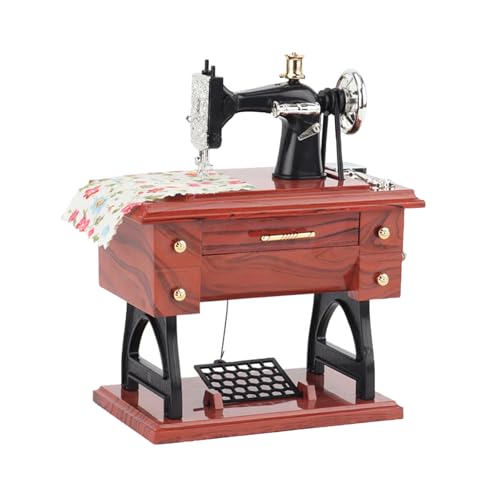
Vintage Sewing Machine Music Box, Mini Wind-Up Music Box with Drawer | Retro Wood Grain Look with Moving Sewing Machine Details and a Storage Drawer for Desk Decor and Thoughtful Gifts
Check price on AmazonDisclaimer
The information provided on DresserAdvisor is for educational and informational purposes only. We are not furniture professionals, and our content should not replace professional advice from qualified furniture makers, interior designers, or safety experts. Some content may use AI assistance. Always check product safety standards and certifications before purchasing. If you do not agree, please do not use this website. Read the full disclaimer.