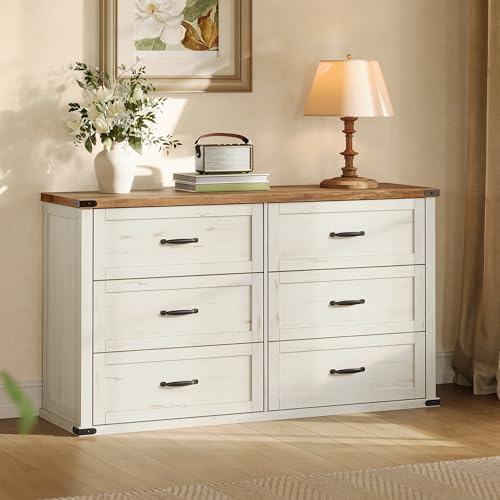
60 Inch Wide Dresser: The Complete Buying Guide
A 60 inch wide dresser is the sweet spot between generous storage and balanced bedroom proportions. This guide walks you through sizing, drawer layouts, materials, and styling so you can choose with confidence before you buy.
Explore the GuideWhy a 60 inch wide dresser deserves your attention: It offers roughly 25 percent more horizontal storage than a typical 48 inch unit, yet it still fits comfortably along most bedroom walls. For couples, it delivers enough drawer capacity to keep clothing separated. For solo owners, it doubles as a display surface and a statement piece. Below, we break down everything you need to know before committing.
What Exactly Is a 60 Inch Wide Dresser?
A 60 inch wide dresser measures approximately 60 inches across its front face, excluding any decorative overhang. Depth usually falls between 16 and 20 inches, and height commonly ranges from 30 to 38 inches for standard models, though taller configurations exist. This width places it in the large dresser category, above the 50 inch and 55 inch sizes but below 70 inch and 80 inch statement pieces.
The width itself is the defining feature. Because the front face is longer, manufacturers can fit more drawers side by side. Most 60 inch models use a six-drawer double-column layout or a nine-drawer three-column layout. That extra width also means a longer top surface, which becomes useful for displaying decor, a mirror, or a small seating arrangement in front of it.
Why Choose a 60 Inch Wide Dresser?
The 60 inch width is popular for several practical reasons. First, it gives you more storage without requiring a tall, narrow footprint that can feel top-heavy in smaller rooms. Second, it distributes weight across a wider base, which generally improves stability. Third, the long top surface serves as a natural focal point for bedroom styling.
- Shared storage: Enough capacity for two people to keep everyday clothing organized without mixing everything together.
- Balanced proportions: Wide and low designs anchor a bedroom wall better than narrow, tall chests.
- Display surface: The extended top accommodates a mirror, lamps, plants, and decorative trays without crowding.
- Stability: A wider base reduces tipping risk compared with tall, narrow units, though anchoring is still recommended.
- Versatile placement: Fits along a long wall, under a window with proper clearance, or even in a walk-in closet.
Size and Space Considerations Before You Buy
A 60 inch wide dresser is not a small piece of furniture, so measure your room carefully. You need at least 60 inches of clear wall width plus a few inches on each side so the piece does not feel crammed against adjacent furniture. In front, aim for roughly 30 to 36 inches of clearance so drawers can open fully and you can stand comfortably while using it.
If your bedroom is on the smaller side, measure the longest uninterrupted wall first. A 60 inch unit can still work in a compact room when placed on that wall, especially if you choose a shallower depth of around 16 inches. Avoid placing it in a corner where a door swing or closet access would be blocked.
Drawer Layouts: Six-Drawer vs. Nine-Drawer Configurations
Most 60 inch wide dressers fall into two layout families. Each serves a different organizing style, so match the layout to how you actually store clothing.
Six-Drawer Double Layout
Two columns of three drawers each. The drawers tend to be wide, which works well for folded shirts, jeans, and bedding. This layout is easier to keep tidy because each drawer holds a single category comfortably.
Nine-Drawer Triple Layout
Three columns of three drawers. Drawers are narrower, which suits smaller items like socks, underwear, and accessories. This layout is ideal for couples who want clearly separated personal storage zones.
Combination Layout
Some 60 inch models mix drawer sizes, pairing deep drawers on one side with shallower ones on the other. This hybrid layout is flexible but requires more deliberate planning to keep everything organized.
| Feature | Six-Drawer Layout | Nine-Drawer Layout |
|---|---|---|
| Best For | Folded clothing, bedding, shared use | Accessories, socks, separated personal zones |
| Drawer Width | Wide, roughly half the front face | Narrow, roughly one-third the front face |
| Organization Style | Category-based stacking | Item-based sorting |
| Typical Depth | Standard to deep | Standard |
| Ideal For | Couples sharing a dresser | Detailed organizers and accessory collectors |
Materials and Build Quality
Because a 60 inch wide dresser spans a longer distance, build quality matters more than on a smaller unit. The longer frame experiences more flex under load, so material choice and joinery directly affect how long the piece stays solid.
Solid Wood
Solid wood construction, such as oak, walnut, maple, or pine, offers the most durable long-term performance. A solid wood 60 inch dresser resists warping and holds screws and joinery securely over decades. These models sit in the premium and luxury tiers and are a worthwhile long-term investment for anyone furnishing a permanent home.
Engineered Wood
Engineered wood, including MDF and particleboard with veneer, dominates the entry-level and mid-range tiers. Modern engineered panels are stable and consistent, and quality veneers can look convincingly like solid timber. The trade-off is that repeated disassembly and heavy loading can loosen hardware over time, so check for reinforced joints and solid drawer bottoms.
Metal and Mixed Media
Metal-framed dressers with wood or glass drawer fronts are a niche option that suits industrial and modern aesthetics. These are typically mid-tier to high-end tier pieces. Metal frames are strong and resistant to humidity changes, though the drawer interiors still need adequate support for heavy loads.
Styles That Suit a 60 Inch Wide Dresser
Because of its visual weight, a 60 inch dresser sets the tone for the bedroom. Choose a style that aligns with your existing furniture rather than competing with it.
- Mid-century modern: Tapered legs, clean lines, and a low profile. The wide form looks especially balanced in this style.
- Farmhouse: Slatted or paneled fronts, painted finishes, and simple hardware. Works well in relaxed, textured bedrooms.
- Contemporary: Handleless drawers, matte finishes, and floating bases. Keeps a large piece visually light.
- Traditional: Molded edges, bracket feet, and ornate pulls. Suits formal bedrooms with classic architecture.
- Rustic: Reclaimed wood textures and visible grain. The width showcases the material character beautifully.
Placement and Room Layout Tips
A 60 inch wide dresser performs best when it has room to breathe. Here are practical placement strategies for different bedroom shapes.
- Long wall anchor: Center the dresser on the longest wall opposite the bed. This creates a balanced focal point and leaves symmetrical space on both sides.
- Under a window: Only place it under a window if the sill height exceeds the dresser height. Otherwise, the top surface becomes unusable.
- Paired with a mirror: A wide mirror above a 60 inch dresser amplifies light and makes the room feel larger, but ensure the mirror width does not exceed the dresser width.
- In a walk-in closet: A 60 inch unit can serve as the primary storage hub in a dressing room, freeing the bedroom for seating or display.
- Avoid tight corners: Leave at least a few inches on each side. A dresser wedged into a corner feels cramped and makes the end drawers harder to access.
Buying Criteria Checklist
Before you finalize a purchase, run through this checklist. It covers the details that separate a satisfying long-term purchase from a frustrating one.
- Exact width: Confirm the 60 inch measurement refers to the cabinet body, not including hardware or overhang.
- Depth: Choose 16 to 18 inches for smaller rooms; 18 to 20 inches for maximum drawer volume.
- Height: Standard height suits most adults; taller models require more reach but add storage.
- Drawer glides: Look for smooth, rated glides, ideally with soft-close or full-extension operation.
- Joinery: Dovetail or reinforced joints outperform stapled or glued-only construction.
- Safety: Anti-tip hardware is essential, especially in homes with children or pets.
- Finish: Check that surfaces are sealed and resistant to everyday wear, especially on the top panel.
- Assembly: Some models arrive fully assembled; others require significant setup. Factor this into your decision.
Understanding Product Tiers
To help you compare models without relying on fluctuating figures, we use a consistent tier system. This reflects relative market position and build quality rather than any specific amount.
Essential Tier
Engineered wood construction with basic glides. Suitable for guest rooms, temporary setups, or first apartments where the dresser may be replaced within a few years.
Balanced Tier
Improved materials, smoother glides, and better joinery. This tier offers a solid choice for most households and delivers reliable everyday performance.
High-End Tier
Solid wood or high-grade veneers, premium hardware, and thoughtful details. A long-term investment that ages well and holds its structure.
Flagship Tier
Hand-finished solid timber, custom joinery, and designer hardware. These pieces are built to be heirlooms and suit formal, design-led bedrooms.
How to Organize a 60 Inch Wide Dresser
A wider dresser gives you more room to organize, but it also invites clutter if you do not plan the drawer contents. A simple approach is to assign each column a purpose.
- Top drawers: Accessories, socks, underwear, and small items that benefit from frequent access.
- Middle drawers: Folded shirts, t-shirts, and lightweight garments.
- Bottom drawers: Jeans, sweaters, and bulkier items that are heavier and accessed less often.
- Column separation: In a shared dresser, dedicate one column to each person to avoid mixing belongings.
- Drawer dividers: Use dividers in wide drawers to prevent items from sliding and to keep categories distinct.
Frequently Asked Questions
Is a 60 inch wide dresser big enough for two people?
Yes, it is an excellent shared storage solution for couples. With typically six to nine drawers, it provides enough room for two people to organize clothing separately while keeping the bedroom tidy.
How much wall space does a 60 inch wide dresser need?
Allow at least 60 inches of clear wall width plus a few inches on each side for breathing room. You should also leave roughly 30 to 36 inches of clearance in front so drawers can open fully without obstruction.
What is the difference between a 60 inch wide dresser and a standard dresser?
A standard dresser is usually around 40 to 50 inches wide, while a 60 inch wide dresser offers extra horizontal storage. The additional width typically means more drawers, a longer top surface for display, and a stronger visual anchor for larger bedrooms.
Can a 60 inch wide dresser fit in a small bedroom?
It can work in a small bedroom if the room has one long, uninterrupted wall. Measure carefully and choose a model with a shallow depth of around 16 to 18 inches to preserve floor space and walking clearance.
Related Reading
If you are still comparing widths, these guides help you weigh nearby sizes and layouts.
- 60 inch dresser overview for a broader look at this size category.
- 60 wide dresser for alternate layout variations.
- 50 inch wide dresser if you need a slightly more compact option.
- 55 inch dresser as a middle ground between standard and wide.
- 6 drawer dresser 60 inches wide for a double-column layout guide.
- 6 drawer dresser for general drawer-count comparisons.
- 65 inch dresser if you want even more horizontal storage.
- 70 inch dresser for the next size step up.
- 60 inch heavy duty drawer slides if you are upgrading hardware.
- 9 drawer dressers for triple-column organization options.
- 6 drawer wood dresser for solid wood construction options.
- Dresser buying guide for the complete category overview.