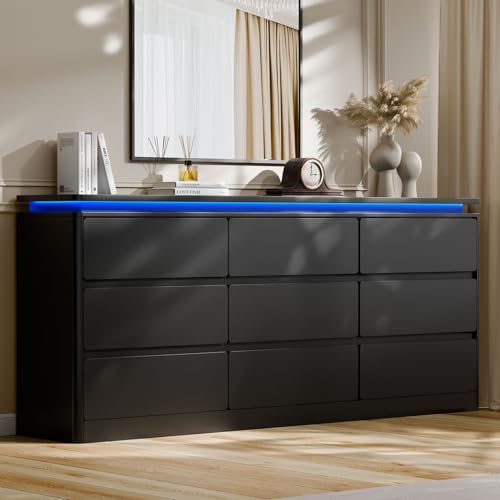
60 Inch Dresser: The Complete Wide Storage Guide
Everything you need to know about 60 inch dressers — sizing, drawer layouts, materials, styles, and room fit — so you can choose a wide bedroom storage piece with complete confidence.
What Is a 60 Inch Dresser?
A 60 inch dresser is a wide-format storage piece that measures roughly five feet across its front face. It is one of the most popular wide dresser sizes because it offers generous drawer capacity without overwhelming a typical bedroom. Most models are designed as double dressers, meaning two side-by-side columns of drawers, which makes organizing clothing by category far easier than in a single narrow column.
Because a 60 inch dresser is wide rather than tall, it places storage at an easy-to-reach height and leaves the wall above free for art, mirrors, or lighting. This horizontal footprint works especially well in rooms where vertical space is limited or where you want to keep sightlines open. If you are comparing widths, our guide to a 50 inch wide dresser shows how a slightly narrower footprint changes room fit and drawer volume.
Quick definition: A 60 inch dresser is approximately 60 inches (about 5 feet) wide, typically 18–20 inches deep, and 30–36 inches tall. It usually contains 6 to 9 drawers in a double-dresser arrangement.
Size and Room Fit: Will a 60 Inch Dresser Work in Your Bedroom?
Before choosing a wide dresser, measure the wall where it will stand and account for clearance. A 60 inch dresser needs a wall section of at least 6 feet to look balanced, and you should leave roughly 30 inches of open floor in front so drawers can fully extend without blocking walkways. For a deeper look at how different widths compare, see our breakdown of the 60 inch wide dresser format.
Typical dimensions at a glance
| Dimension | Typical Range | Why It Matters |
|---|---|---|
| Width | 58–62 inches | Determines wall space needed and drawer volume |
| Depth | 18–20 inches | Affects walkway clearance and drawer extension |
| Height | 30–36 inches (up to 40 for tall models) | Impacts top-surface usability and visual weight |
| Drawer count | 6–9 drawers | Defines organization flexibility |
Room placement tips
- Primary wall: Place the dresser opposite or adjacent to the bed so it is easy to access each morning.
- Walkway clearance: Keep at least 30 inches in front of the dresser for open drawers.
- Symmetry: A 60 inch dresser pairs well with a centered mirror or a pair of lamps for balanced styling.
- Small rooms: In tighter spaces, consider a narrower option such as a 54 inch dresser or a 52 inch dresser to preserve walkway width.
Drawer Layouts Explained
The internal layout of a 60 inch dresser matters as much as its exterior width. A well-planned layout separates shallow drawers for smaller items from deeper drawers for bulky clothing. The most common configuration is a double dresser with two columns, but the drawer count and drawer heights vary significantly across the market.
Common configurations
- 6-drawer double dresser: Two columns of three drawers each; the most popular 60 inch layout for general bedroom storage.
- 7–8 drawer dresser: Adds a split top row or a combination of shallow and deep drawers for finer organization.
- 9-drawer dresser: Maximizes segmentation, ideal for couples sharing a single piece.
If you prefer a specific drawer count, explore our guides to a 6 drawer dresser 60 inches wide and a 60 wide dresser to compare internal arrangements side by side.
Organization tip: Assign the top row to socks, undergarments, and accessories; the middle row to folded shirts; and the bottom row to bulkier items such as sweaters or linens.
Materials and Construction Quality
Construction quality determines how smoothly drawers glide, how well the finish holds up, and how long the piece lasts. Use the tier system below to compare options within their class rather than by any numeric figure.
| Tier | Materials | Best For |
|---|---|---|
| Entry-level | Engineered wood, particleboard, laminate finish | Guest rooms, first apartments, light-duty use |
| Mid-range | MDF with wood veneer, solid wood fronts, metal glides | Primary bedrooms with regular daily use |
| Premium | Solid oak, maple, or walnut, dovetail joints, soft-close slides | Long-term investment pieces and shared bedrooms |
| Luxury | Hardwood solids, hand-finished surfaces, premium hardware | Design-focused interiors and heirloom-quality furniture |
Solid wood construction is the benchmark for durability, but a well-made engineered piece with quality veneer and reinforced drawer slides can be a solid choice within the mid-range tier. If you want to explore wood-specific options, our guide to an acacia wood dresser covers grain patterns and durability in detail.
Drawer hardware to look for
- Metal ball-bearing slides for smooth, quiet operation.
- Dovetail or reinforced corner joints for load-bearing strength.
- Soft-close mechanisms to reduce wear and noise.
- Sturdy drawer boxes that resist sagging over time.
Popular Styles and Finishes
A 60 inch dresser is a prominent piece of furniture, so its style should complement the rest of the bedroom. Finishes range from natural wood tones to painted surfaces, and each creates a distinct mood.
Style directions
- Modern: Clean lines, minimal hardware, and flat fronts for a streamlined look.
- Mid-century modern: Tapered legs, warm wood tones, and angled drawer pulls.
- Farmhouse: Painted finishes, beadboard detail, and cup pulls for a relaxed feel.
- Scandinavian: Light woods, simple silhouettes, and functional hardware.
- Traditional: Molded edges, bracket feet, and decorative hardware.
Finish choice matters for maintenance as well. Painted surfaces are easy to touch up, while natural wood finishes show grain character and can be refreshed with polish. For a full look at painted options, browse our collection of white dressers and black dressers.
60 Inch Dresser vs Other Widths
Width is the most important dimension when matching a dresser to a wall. The comparison below helps you understand how a 60 inch dresser sits within the wider range of standard sizes.
| Width Category | Typical Use | Best For |
|---|---|---|
| 50–55 inches | Compact wide dresser | Smaller bedrooms and tighter walls |
| 60 inches | Standard wide double dresser | Most primary bedrooms and shared rooms |
| 65–72 inches | Extra-wide dresser | Large bedrooms and luxury suites |
| 80+ inches | Dresser-and-cabinet combinations | Spacious rooms needing maximum storage |
A 60 inch dresser hits a sweet spot: wide enough for generous drawer volume, yet compact enough for most standard bedrooms. If your room is larger, a 65 inch dresser or a 70 inch dresser may better fill the wall. In smaller rooms, compare against a 55 inch dresser.
Buying Checklist for a 60 Inch Dresser
Use this checklist before committing to a purchase so you avoid the most common mistakes:
- Measure twice: Confirm wall width, ceiling height, and walkway clearance, including door swings and closet access.
- Check drawer action: Look for smooth metal slides and full-extension drawers where possible.
- Verify the layout: Match drawer sizes to the items you store most, such as folded shirts, sweaters, or linens.
- Assess stability: Choose a model with a sturdy base and, for taller children's rooms, an anti-tip kit.
- Review the finish: Consider how the surface will hold up in your room's light and humidity.
- Confirm assembly needs: Check whether the dresser arrives assembled or requires self-assembly, and plan the tools and time needed.
- Plan delivery: A 60 inch dresser is heavy; confirm doorway widths and delivery access before ordering.
For a broader framework that applies to any dresser size, read our complete dresser buying guide and our dresser size guide.
Frequently Asked Questions
What is the standard height of a 60 inch dresser?
Most 60 inch dressers stand between 30 and 36 inches tall, though tall models can reach 40 inches. The height should allow you to see and reach the top surface comfortably while standing.
How many drawers does a 60 inch dresser usually have?
A 60 inch dresser typically has between 6 and 9 drawers, with the most common layout being a 6-drawer double dresser featuring two columns of three drawers each.
Does a 60 inch dresser fit in a standard bedroom?
Yes, a 60 inch dresser fits comfortably in most standard bedrooms when placed against a wall of at least 6 feet. Leave roughly 30 inches of clearance in front for opening drawers.
What materials are best for a 60 inch dresser?
Solid wood such as oak, maple, or walnut offers the most durable construction. Engineered wood with quality veneers provides a solid mid-range option, while MDF and particleboard suit entry-level tiers.
Should I choose a 60 inch dresser or a chest of drawers?
A 60 inch dresser offers a wide, low profile suited to bedrooms, while a chest of drawers is taller and narrower. The right choice depends on your wall width, room layout, and whether you prefer horizontal or vertical storage.
Ready to Choose Your 60 Inch Dresser?
Compare our recommended wide dressers below, review drawer layouts and materials, and pick the piece that fits your bedroom perfectly. Each option is selected for quality and practical storage value within its tier.