55 Inch Dresser: The Complete Buying Guide
Everything you need to know about choosing a 55 inch dresser — dimensions, drawer layouts, materials, and how to pick the right model for your bedroom.
START READINGQuick Answer: A 55 inch dresser is a wide-format storage piece that offers generous drawer space without the footprint of a 60 inch or larger model. It's one of the most versatile sizes for master bedrooms, guest rooms, and larger kids' rooms — wide enough for a substantial top surface, yet compact enough to fit most wall spaces.
What Is a 55 Inch Dresser?
A 55 inch dresser refers to a bedroom storage unit that is approximately 55 inches wide (measured across the front face). This width places it in the mid-to-large category of dressers — wider than a compact 40–48 inch model, but more space-efficient than a 60 or 70 inch unit.
The 55 inch width is popular because it hits a practical sweet spot. It provides enough drawer width to store folded clothing, linens, and accessories comfortably, while still leaving room for nightstands and walking clearance in a standard bedroom. Many buyers searching for a 54 inch dresser or a 52 inch dresser end up considering 55 inch models, since the difference of a few inches rarely affects placement.
Unlike a chest of drawers, which is typically taller and narrower, a 55 inch dresser is generally lower in height (usually 30 to 38 inches) and designed with a broad top surface. That surface doubles as a display area for decor, a mirror, or a television — making the dresser a functional focal point rather than just storage.
For a broader comparison of storage furniture categories, explore our guide to 5 drawer dressers and how they differ from wider models.
Dimensions & Fit: Will a 55 Inch Dresser Work in Your Room?
Width is only part of the equation. Before committing to a 55 inch dresser, confirm the depth and height, and measure your room's clearances. Typical 55 inch dressers measure:
| Dimension | Typical Range | What It Means for You |
|---|---|---|
| Width | 54–56 inches | Front-face measurement; the primary fit constraint along a wall |
| Depth | 16–20 inches | Distance from wall to front; deeper units hold more but protrude further |
| Height | 30–38 inches | Affects top-surface usability and visual weight in the room |
| Drawer clearance | ~18–24 inches | Space needed in front for drawers to open fully |
Measuring Your Space
- Wall length: Measure the wall where the dresser will sit. Leave at least 24 inches on each side if you plan to place nightstands or want visual breathing room.
- Walking clearance: Aim for 30–36 inches of open floor between the dresser front and the bed or opposing furniture.
- Door and window swings: Confirm the dresser won't block closet doors, room doors, or window access.
- Delivery path: Check that stairwells, hallways, and doorways can accommodate the packaged dimensions.
Fit tip: In a smaller bedroom, a 55 inch dresser placed on the longest uninterrupted wall usually works well. If wall space is tight, consider a taller 6 drawer dresser tall configuration that trades width for vertical storage.
If you're comparing adjacent sizes, our guides to the 50 inch wide dresser and the 60 inch dresser can help you weigh the trade-offs between width and floor space.
Drawer Configurations: What to Expect at 55 Inches
The 55 inch width allows for several drawer layouts. The right choice depends on what you store and how you prefer to organize it.
Common Layouts
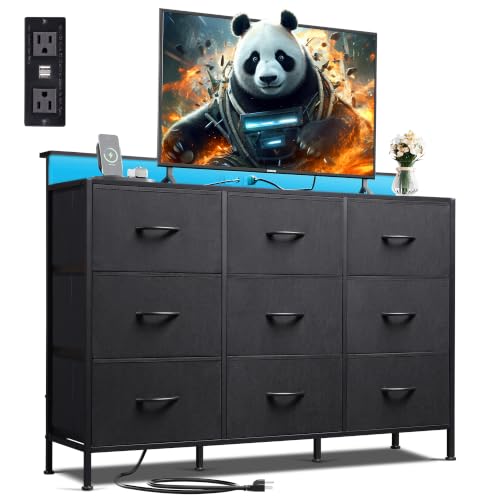
- 6-drawer layout (two columns of three): The most common configuration. Each drawer is moderately wide, suitable for folded clothing, and the layout keeps drawers light enough for smooth operation. See our 6 drawer dresser guide for details.
- 7-drawer layout (mixed sizes): Often includes a combination of wide and narrow drawers, with smaller drawers ideal for accessories, socks, or jewelry.
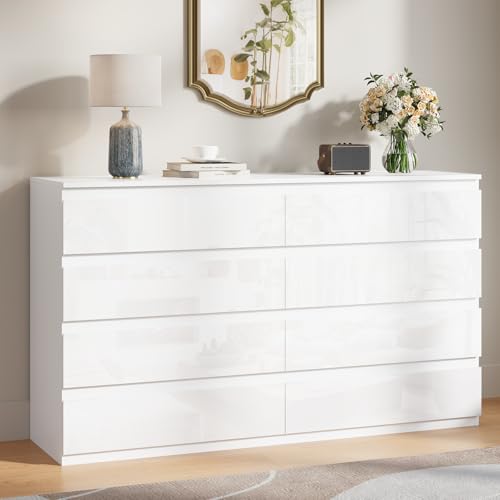
- 8-drawer layout (four columns of two): Provides more separation between categories but each drawer is narrower. Popular in 8 drawer dresser designs.
- 5-drawer layout (wide, deep drawers): Fewer but larger drawers. Good for bulky items like sweaters and bedding.
Drawer Mechanics to Look For
- Metal ball-bearing slides: Smoother and more durable than basic roller slides. Commonly found in mid-range and premium models.
- Full-extension slides: Allow the drawer to pull out completely, giving access to the back of the drawer.
- Soft-close dampers: Prevent slamming and reduce wear over time. Typically a premium-tier feature.
- Dovetail joints: A sign of solid drawer box construction, especially in solid wood dressers.
- Drawer stops: Prevent drawers from pulling out accidentally — a small but meaningful safety detail.
For a deeper look at drawer design and capacity, browse our collection of 5 drawer chest of drawers options, which share many of the same construction principles.
Materials & Construction: What a 55 Inch Dresser Is Made Of
The material determines durability, weight, maintenance needs, and how the dresser ages. Here's how the main options compare.
| Material | Durability | Best For | Considerations |
|---|---|---|---|
| Solid oak | Very high | Long-term investment pieces; heavy use | Heavy; distinctive grain; may need periodic oiling |
| Solid maple | Very high | Bedrooms needing a smooth, dense hardwood | Heavy; finishes well; limited grain contrast |
| Solid pine | Moderate to high | Rustic and farmhouse styles | Softer wood; prone to dents; takes paint well |
| Walnut | High | Premium, modern, and mid-century interiors | Rich color; typically a top-tier material |
| Engineered wood with veneer | Moderate | Balanced mid-range options with consistent finish | Edge care matters; avoid prolonged moisture |
| MDF / particleboard | Entry-level | Light-use rooms, starter furniture | Heavier per unit strength; check hardware attachment |
Construction Details That Matter
- Corner blocks and braces: Reinforce the frame and reduce wobble over time.
- Dust panels: Thin boards between drawer rows that keep stored items clean.
- Anti-tip hardware: A wall-anchoring strap or bracket is essential, especially in homes with children.
- Back panel: A solid or well-fitted back panel adds rigidity and protects against dust.
- Finish: Look for sealed or lacquered surfaces that resist moisture and everyday wear.
For solid wood options in this size class, explore our 5 drawer wood chest of drawers and 5 drawer oak chest of drawers guides.
Quality Tiers Explained
Dressers in the 55 inch class span the full range of the market. Rather than focusing on numbers, it helps to understand where a model sits relative to the category. We use four consistent tiers throughout this guide:
Essential Tier
Entry-level construction, typically engineered wood with basic roller slides. Suitable for guest rooms, starter apartments, and light daily use.
Balanced Tier
Mid-range models with sturdier frames, better drawer slides, and veneer or mixed solid-wood construction. The most common choice for primary bedrooms.
Premium Tier
Solid wood construction, dovetail drawer boxes, full-extension soft-close slides, and refined finishes. Built for long-term daily use.
Flagship Tier
Top-of-category craftsmanship: premium hardwoods, hand-finished surfaces, and hardware designed to last decades. A long-term investment piece.
Within each tier, the differences between models often come down to drawer mechanics, hardware quality, and finish consistency. A balanced-tier dresser with full-extension slides can feel noticeably smoother than an essential-tier model with basic slides — a difference that becomes obvious with daily use.
Style & Finish Options for 55 Inch Dressers
The 55 inch format is available across nearly every design language. Your choice should align with the room's existing furniture and the overall mood you want to create.
Popular Styles
- Modern and contemporary: Clean lines, minimal hardware, and flat fronts. Often paired with matte finishes.
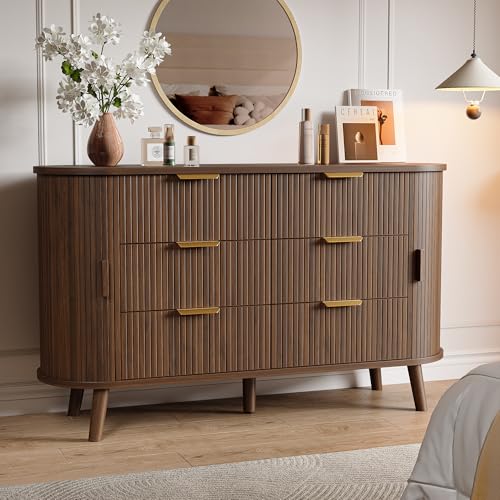
- Mid-century modern: Tapered legs, warm wood tones, and angled details. See our 6 drawer dresser mid-century modern collection for reference.
- Farmhouse and rustic: Distressed finishes, plank detailing, and sturdy silhouettes. Explore 5 drawer pine chest of drawers options for the farmhouse look.
- Traditional: Molded edges, decorative hardware, and rich wood finishes.
- Scandinavian: Light woods, simple forms, and functional minimalism.
Finish Considerations
- Painted finishes hide grain and suit modern or farmhouse rooms; check for a sealed topcoat to resist chipping.
- Stained wood shows grain and suits traditional and mid-century styles; look for even color and sealed surfaces.
- Two-tone designs (e.g., wood body with painted drawer fronts) add visual interest without overwhelming a room.
To compare finishes and materials more broadly, visit our materials and finishes section.
Room-by-Room Placement Ideas
A 55 inch dresser is versatile enough for several rooms. Here's how to make it work in different spaces.
Master Bedroom
Place the dresser opposite the bed or along the longest wall. A 55 inch width leaves room for nightstands on either side of the bed and provides a generous top surface for a mirror, lamp, and decor. Pair it with a matching 6 drawer dresser and nightstand set for a cohesive look.
Guest Room
Guest rooms benefit from a dresser that offers empty drawers for visitors. A balanced-tier 55 inch model provides ample space without dominating a smaller guest room.
Kids' and Teen Rooms
The width supports organized storage for growing wardrobes. Always anchor the dresser to the wall and choose models with drawer stops. For nursery-age children, see our 6 drawer changing table dresser options.
Entryway or Hallway
A 55 inch dresser can serve as a console in wide hallways or entryways, storing gloves, scarves, and everyday items while providing a surface for keys and decor.
Buying Checklist: Before You Choose
Use this checklist to evaluate any 55 inch dresser you're considering.
- Measure twice: Confirm width, depth, height, and drawer clearance against your room.
- Check the drawer slides: Look for metal ball-bearing or full-extension slides in mid-range and premium models.
- Inspect the drawer boxes: Dovetail joints and solid wood sides indicate better construction.
- Verify anti-tip hardware: Essential for safety, especially in homes with children or pets.
- Consider the finish: Sealed surfaces resist moisture and everyday wear better than unfinished wood.
- Plan the top surface: Decide whether you need space for a mirror, TV, or decor before finalizing height.
- Check assembly requirements: Some models ship fully assembled; others require significant assembly. See our 6 drawer dresser already assembled guide for options that arrive ready to use.
- Review the return policy: Large furniture is difficult to return; confirm the policy before ordering.
Frequently Asked Questions
Is a 55 inch dresser a good size for a standard bedroom?
How many drawers does a typical 55 inch dresser have?
What materials are best for a 55 inch dresser?
Can a 55 inch dresser fit in a small bedroom?
What is the difference between a 55 inch dresser and a chest of drawers?
Should I anchor my 55 inch dresser to the wall?
Ready to compare models? Use the recommendations below to explore 55 inch dresser options across quality tiers and styles. Each listing includes details on drawer configuration, materials, and features to help you shortlist the right fit for your bedroom.