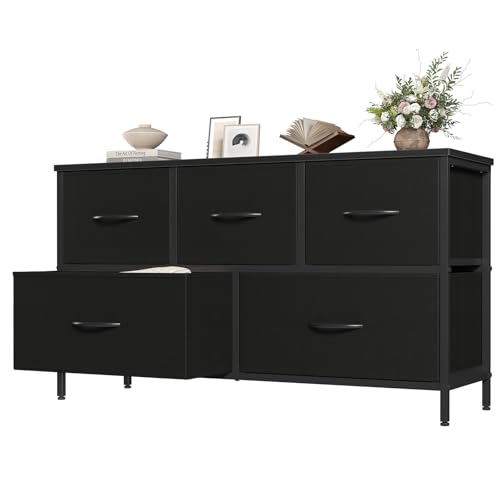
42 Inch Dresser: The Complete Buying Guide
A 42 inch dresser hits the sweet spot between compact and capable. Learn how to choose the right width, drawer layout, depth, and style for your bedroom.
Why 42 inches? A 42 inch dresser offers meaningful storage without dominating the room. It fits comfortably along most bedroom walls, works as a standalone piece or paired with a taller chest, and suits a wide range of interior styles. This guide walks you through everything you need to decide with confidence.
What Is a 42 Inch Dresser?
A 42 inch dresser measures roughly 42 inches (about 107 cm) across its widest point. That width places it squarely in the medium category: wider than a 36 inch wide dresser but narrower than a 48 inch dresser. For many bedrooms, this is the practical middle ground where storage capacity meets spatial flexibility.
Width is only one dimension, though. Depth and height matter just as much for fit and function. Most 42 inch dressers are 15 to 18 inches deep and stand anywhere from 30 to 40 inches tall, depending on the drawer count and style.
If you are comparing sizes more broadly, our dresser types overview explains how width, height, and drawer configuration interact across the category.
Key Dimensions to Understand
Before you start shopping, break the piece down into four measurements:
- Width (42 inches): The primary footprint. Confirm you have at least a few inches of clearance on each side for opening drawers and airflow.
- Depth (15–18 inches typical): Deeper drawers hold more, but a deep dresser protrudes further into walkways. A 12 inch deep dresser is a useful reference for tight spaces, while 18 inch deep chests maximize capacity.
- Height (30–40 inches typical): Taller models with more drawers suit small rooms where floor space is limited. A 40 inch tall dresser gives you vertical storage without a wide footprint.
- Drawer interior depth: The usable space inside each drawer is what actually determines how much you can store.
Who Should Choose a 42 Inch Dresser?
A 42 inch dresser works well for several specific situations:
- Single adults and couples in smaller bedrooms: It provides enough storage for one person's folded clothing and essentials, or serves as a shared secondary piece.
- Guest rooms and spare bedrooms: A medium-width dresser keeps the room functional without overcrowding it.
- Nurseries: Paired with a changing pad and anchored to the wall, a 42 inch dresser becomes a practical nursery dresser.
- Bedrooms with multiple furniture pieces: If you already have a wardrobe or armoire, a 42 inch dresser complements rather than competes.
- Rooms with awkward wall segments: A 42 inch piece fits between windows and doors more easily than a wide dresser.
If you need more capacity for two adults, consider pairing a 42 inch dresser with a tall dresser or stepping up to a 48 wide dresser.
Drawer Layouts: What to Expect
Drawer count and arrangement vary, but most 42 inch dressers fall into a few common configurations. The right layout depends on what you store and how you fold.
| Layout | Typical Configuration | Best For |
|---|---|---|
| 3-drawer | Three wide, deep drawers stacked vertically | Bulky items, bedding, sweaters |
| 4-drawer | Four drawers, often two wide and two narrower | Balanced everyday storage |
| 5-drawer | Five drawers in a mix of sizes | Mixed clothing types and accessories |
| 6-drawer | Two columns of three drawers | Separating clothing by category |
For a deeper look at how drawer count affects organization, see our guide to 3 drawer dressers and 4 drawer dressers. If you prefer maximum vertical storage in a narrow footprint, a tallboy chest may be the better fit.
Drawer Glides and Build Quality
Drawer hardware is where build quality shows. Entry-level dressers often use basic side-mounted glides, while mid-range and premium models typically feature smoother ball-bearing or undermount slides. If you open your dresser daily, smoother glides make a noticeable difference over time.
For heavy drawers, look for reinforced construction and higher weight ratings. Our overview of full extension drawer slides explains how slide length affects access to the back of each drawer.
Styles and Materials for a 42 Inch Dresser
Width does not limit style. A 42 inch dresser is available across the full spectrum of design directions:
- Modern dressers — clean lines, minimal hardware, often in matte finishes.
- Mid-century dressers — tapered legs, warm wood tones, and angled profiles.
- Farmhouse dressers — painted finishes, distressed details, and classic hardware.
- Rustic dressers — reclaimed wood looks and natural textures.
- White dressers — bright, versatile, and easy to pair with most color schemes.
- Black dressers — bold, grounding, and surprisingly flexible in modern rooms.
Material choice matters for durability. Solid wood construction, particularly oak, walnut, and maple, tends to hold up better over decades than engineered wood. That said, well-built engineered wood dressers can be a solid choice within their tier. Our materials and finishes guide breaks down the trade-offs.
How a 42 Inch Dresser Fits in Your Room
Fit is about more than width. Walk through these checks before you commit:
- Wall clearance: Leave at least 2–3 inches on each side so drawers can open fully and the piece does not feel cramped.
- Walkway space: Aim for 24–36 inches of clear walking space in front of the dresser.
- Door swings: Confirm the dresser does not block closet doors, room doors, or windows.
- Anchor point: Taller 42 inch models should be anchored to the wall, especially in homes with children or pets.
- Mirror placement: If you plan to add a mirror, check the total height against your ceiling and wall decor.
For rooms where floor space is genuinely tight, a dresser for small spaces guide can help you compare narrower and taller alternatives.
42 Inch vs. Other Common Widths
| Width | Relative Capacity | Best For |
|---|---|---|
| 36 inch dresser | Compact | Small bedrooms, narrow walls |
| 42 inch dresser | Medium | Most bedrooms, guest rooms, nurseries |
| 48 inch dresser | Large | Primary bedrooms, couples |
| 60 inch dresser | Extra large | Spacious rooms, shared storage |
Quality Tiers: What Changes as You Move Up
Rather than thinking in terms of specific figures, it helps to understand how dressers differ across quality tiers. This framework applies broadly to 42 inch models:
- Entry-level tier: Engineered wood construction, basic side-mounted glides, simpler hardware. Adequate for light use and guest rooms.
- Mid-range tier: Better joinery, smoother drawer slides, and more consistent finishes. A solid choice for daily use in a primary bedroom.
- Premium tier: Solid wood construction, undermount soft-close glides, dovetail joints, and higher-grade hardware. Built to last for years.
- Luxury tier: Heirloom-quality materials, hand-finished details, and designer hardware. A long-term investment piece.
Within each tier, look for the features that matter most to you. A mid-range dresser with excellent glides often serves daily use better than a premium piece with hardware you do not need.
Common Mistakes to Avoid
- Measuring only the wall: Measure the full path from delivery entrance to the bedroom, including doorways and stairwells.
- Ignoring drawer extension: A dresser placed too close to a wall or bed cannot open fully if the drawers need clearance.
- Skipping the anchor: Any dresser taller than about 30 inches should be secured to the wall.
- Overlooking drawer interior height: A drawer can look deep from the outside but have a shallow interior due to thick bottoms.
- Choosing style over function: A beautiful dresser with stiff drawers becomes frustrating quickly. Test glides in person when possible.
Frequently Asked Questions
What is the standard depth of a 42 inch dresser?
Most 42 inch dressers are 15 to 18 inches deep, with 16 to 17 inches being the most common. Shallower models around 12 to 14 inches work well for tight spaces, while deeper 18 inch models offer more storage per drawer.
Is a 42 inch dresser big enough for two people?
A 42 inch dresser is typically sized for one person or as a secondary storage piece for a couple. If you need wardrobe storage for two adults, consider pairing it with a wider dresser or a taller chest of drawers.
How many drawers does a 42 inch dresser usually have?
Most 42 inch dressers offer between three and six drawers. A common layout is four drawers stacked vertically or five drawers with a mix of wide and narrow compartments.
Can a 42 inch dresser be used in a nursery?
Yes, a 42 inch dresser can work well in a nursery, especially when paired with a changing pad and anchored to the wall. Look for models with smooth drawer glides, rounded edges, and safety certifications.
Ready to Compare 42 Inch Dressers?
Browse recommended options and check availability for models that match your space and storage needs.
Explore Options