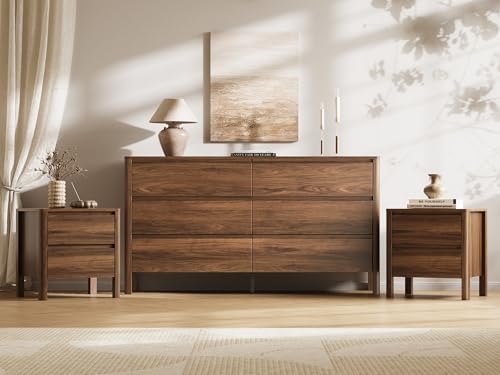
2 Nightstands and Dresser Set: Complete Buyer's Guide
A matching two-nightstand and dresser set brings order to your bedroom without guesswork. This guide covers sizing, materials, drawer layouts, and styling so you can choose a coordinated set that fits your room and your daily routine.
Explore Recommended SetsWhy a coordinated set makes sense: Buying a dresser and two nightstands together removes the risk of mismatched finishes and proportions. A well-chosen set gives you consistent hardware, balanced storage on both sides of the bed, and a unified look that reads as intentional rather than assembled piece by piece.
In This Guide
What a 2 Nightstands and Dresser Set Includes
A standard set pairs one dresser with two matching nightstands. The dresser handles folded clothing, linens, and larger items, while the nightstands keep essentials within reach on both sides of the bed. Many collections are offered as three-piece sets, and some include a mirror or a chest of drawers as an optional add-on.
If you prefer a broader matching footprint, a three-piece dresser and nightstand set adds a chest or mirror for extra storage and visual weight. For smaller rooms, a two-piece dresser and nightstand set can be a better fit, with the second nightstand added separately if space allows.
Key Benefits of Buying a Matching Set
Cohesive Look
Matching finishes, hardware, and proportions create a polished bedroom without the effort of coordinating separate pieces. The result feels deliberate and calm.
Balanced Bedside Storage
Two identical nightstands give each side of the bed the same drawer space, surface area, and visual weight. This symmetry is especially useful for shared bedrooms.
Simpler Shopping
One purchase covers three core pieces, so you avoid measuring, matching, and ordering separately. Sets also tend to use consistent drawer glides and assembly methods.
Consistent Quality
Pieces in the same collection usually share the same wood species, veneer grade, and joinery. That consistency makes it easier to judge durability across the whole set.
Better Resale and Styling
A complete set is easier to restyle and easier to pass on. Matching furniture also photographs well and works with a wide range of bedding and decor.
Clear Space Planning
Sets are designed with compatible heights and depths, so the nightstands sit naturally beside the bed and the dresser lines up with the room's proportions.
Sizing and Layout Planning
Measure first, then shop. The most common mistake is buying a dresser that fits the wall but leaves too little walking space, or nightstands that sit higher or lower than the mattress. Use the table below as a starting point, then adjust to your room.
| Piece | Typical Width | Typical Height | Best For |
|---|---|---|---|
| Nightstand | 18–24 inches | 22–28 inches (near mattress top) | Lamps, books, phone, small essentials |
| Dresser (compact) | 30–40 inches | 30–36 inches | Small bedrooms, single users, apartments |
| Dresser (standard) | 48–60 inches | 30–38 inches | Couples, standard primary bedrooms |
| Dresser (wide) | 60–72 inches | 30–38 inches | Large bedrooms, shared storage, statement walls |
| Tall chest alternative | 30–40 inches | 45–55 inches | Rooms with limited floor space but tall walls |
Leave at least 24 to 30 inches of clear walking space between the bed and the dresser, and keep 2 to 3 inches of clearance around drawer fronts so they open fully. If your wall space is tight, a 36-inch wide dresser or a 30-inch wide dresser can anchor the set without crowding the room. For rooms with longer walls, a 48-inch dresser or a 60-inch wide dresser offers more drawer space and a more grounded look.
Nightstand height matters more than many buyers expect. Aim for a top surface roughly level with the mattress so a lamp, glass, and book sit comfortably within reach. If your bed is taller, look for nightstands in the 26–28 inch range; if your bed is low, a 22–24 inch nightstand keeps the proportions balanced.
Materials and Construction Quality
The material determines how the set ages, how much it weighs, and how well it handles daily use. Solid wood is the most durable option and can be refinished. Engineered wood with quality veneers is a practical mid-range choice when the core is dense and the edges are well sealed.
- Solid wood: Durable construction, repairable surface, and a natural grain that varies from piece to piece. Look for kiln-dried hardwood to reduce warping.
- Engineered wood with veneer: Stable and consistent, especially when the veneer is thick and the edges are banded. Check that the drawer boxes are reinforced.
- Drawer glides: Metal ball-bearing or undermount glides feel smoother and last longer than basic side-mounted rollers. Full-extension glides let you reach the back of each drawer.
- Joinery: Dovetail or doweled drawer boxes hold up better than stapled corners. Reinforced corner blocks add stability to the dresser frame.
- Finish: A protective topcoat resists moisture and scratches. Matte and satin finishes hide wear better than high-gloss surfaces.
- Hardware: Solid metal pulls and knobs hold up better than plated plastic. Check that screws are pre-installed or clearly labeled.
For a deeper look at how wood species affect durability and appearance, the materials and finishes guide covers oak, walnut, pine, and painted options. If you want a taller storage profile without a wider footprint, a five-drawer dresser or a six-drawer dresser can replace a wide dresser in the set.
Drawer Count and Storage Needs
Drawer count is a useful shorthand, but interior dimensions matter more. A five-drawer dresser with deep lower drawers often holds more than a six-drawer dresser with shallow drawers. Think about what you store: folded shirts, jeans, knitwear, linens, or accessories.
| Dresser Type | Best For | Tier Consideration |
|---|---|---|
| 3-drawer dresser | Small bedrooms, guest rooms, single users | Entry-level to mid-range |
| 4-drawer dresser | Couples with modest storage needs, apartments | Essential tier to balanced tier |
| 5-drawer dresser | Primary bedrooms, mixed clothing storage | Balanced tier to premium |
| 6-drawer dresser | Shared bedrooms, larger wardrobes | Mid-range to high-end tier |
| 8-drawer dresser | Families, seasonal clothing rotation | High-end tier to flagship tier |
Nightstands usually carry two or three drawers. Two drawers are enough for a lamp, charger, and reading material; three drawers add room for personal items and small accessories. If you need more bedside storage, a three-drawer dresser nightstand pairs a compact footprint with extra capacity.
Style and Finish Options
Matching sets are available in nearly every major style. The right choice depends on your bedroom's existing architecture, bedding, and lighting. Neutral finishes are the most flexible; painted finishes add personality and are easier to touch up.
Modern and Minimalist
Clean lines, flat fronts, and integrated handles. Look for matte finishes and flush drawer fronts that keep the set visually quiet.
Farmhouse and Rustic
Planked details, distressed edges, and warm wood tones. These sets pair well with soft textiles and natural materials.
Mid-Century and Retro
Tapered legs, angled frames, and two-tone finishes. These sets add character without feeling heavy in a small room.
Traditional and Transitional
Molded edges, framed drawer fronts, and classic hardware. Transitional sets sit comfortably between formal and casual.
White and Light Finishes
White or light wood sets make small bedrooms feel brighter and more open. They also work well with bold bedding and wall color.
Dark and Moody Finishes
Walnut, charcoal, and black finishes add depth. They work best in rooms with good natural light and layered lighting.
For style-specific inspiration, browse the room ideas collection or explore dresser types to see how different silhouettes change the feel of a bedroom. If you are furnishing a nursery, a nursery dresser paired with a low nightstand can serve double duty as a changing station and bedside storage.
Buying Checklist
- Measure the wall where the dresser will sit, including door swing and window clearance.
- Confirm nightstand height against your mattress top, not just the bed frame.
- Check drawer interior depth and width, especially for folded clothing and linens.
- Look for metal glides, reinforced drawer boxes, and a protective topcoat.
- Verify that all three pieces share the same finish lot or are sold as a single set.
- Check assembly requirements and whether tools are included.
- Confirm return policy and warranty coverage for the full set.
- Plan for at least 24 inches of walking space around the bed and dresser.
Ready to Compare Sets?
Browse recommended two-nightstand and dresser sets below. Each option is grouped by tier and layout so you can match storage, style, and room size with confidence.
View Recommended SetsFrequently Asked Questions
What is included in a 2 nightstands and dresser set?
A standard set includes one dresser and two matching nightstands. Some collections add a mirror or a chest of drawers, while others are sold as three-piece sets with consistent finishes, hardware, and design lines.
How do I choose the right size dresser and nightstands for my bedroom?
Measure your bed width, the space on each side, and the wall length where the dresser will sit. Leave at least 24 to 30 inches of walking space around the bed. Nightstands should be roughly the same height as the mattress top, while the dresser should fit the wall without blocking doors or windows.
Are matching bedroom furniture sets still in style?
Yes. Matching sets remain popular because they create a cohesive look with less effort. Modern sets use clean lines and neutral finishes, so they blend well with different decor styles. You can also mix the set with other pieces to keep the room from feeling too uniform.
What material is best for a dresser and nightstand set?
Solid wood offers the most durable construction and can be refinished over time. Engineered wood with quality veneers is a solid choice for mid-range sets. For high-traffic bedrooms, look for reinforced drawer joints, metal glides, and a protective finish.
How many drawers should the dresser have in a set?
A five- or six-drawer dresser works well for most couples, while a three- or four-drawer dresser suits single users or smaller rooms. Consider drawer depth and interior height, not just the count, to make sure the dresser fits folded clothes, linens, and accessories.