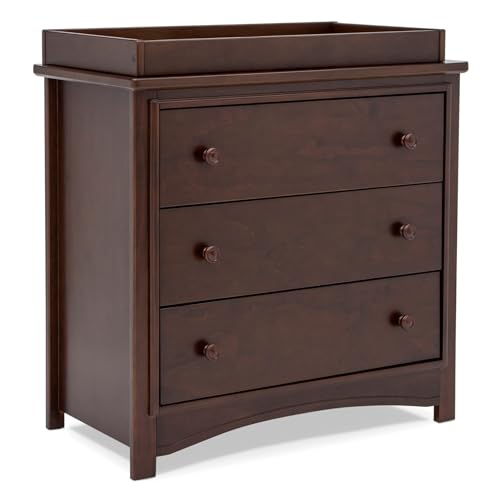
Wooden Changing Table with Drawers: The Complete Nursery Guide
Everything you need to know before choosing a wooden changing table with drawers — materials, safety, storage layout, and long-term usability for your nursery.
Explore Recommended ModelsWhy this matters: A wooden changing table with drawers is one of the most-used pieces of nursery furniture in the first two years. Getting the material, height, and drawer configuration right makes daily diaper changes faster, safer, and far less stressful.
What Is a Wooden Changing Table with Drawers?
A wooden changing table with drawers is a nursery storage piece that pairs a dedicated, safety-railed changing surface on top with a bank of drawers underneath. Unlike a simple changing pad placed on a dresser, a purpose-built model is designed from the ground up around the changing task: the top surface is enclosed by raised sides, the unit is engineered to be stable when a baby moves, and the drawers are positioned at a comfortable reach.
This dual-purpose design is why many parents treat it as a core nursery investment. The changing surface handles diapers, wipes, and creams, while the drawers absorb clothing, bedding, and everyday essentials. Once your child outgrows the changing phase, the drawer section usually continues as a standard dresser — a piece you can keep using for years rather than retiring after a short season.
If you are still deciding between a dedicated changing unit and a general-purpose storage piece, our overview of wooden storage chest with drawers covers how multi-purpose drawer furniture compares for nursery use.
Why Choose Wood Over Other Materials?
Wood remains the most common material for nursery changing tables, and for good reasons. It offers a warm, neutral look that fits almost any nursery theme, it can be refinished or repainted as your child's room evolves, and a well-built wooden frame holds its shape through years of daily use.
There is also a practical safety argument. Solid wooden construction tends to be heavier and more stable than thin metal or plastic frames, which reduces the risk of tipping if a toddler pulls on a drawer. The finish matters too: choose a unit with a water-based, low-VOC or otherwise non-toxic finish, since the changing surface is where your baby spends a lot of time.
Wood also integrates naturally with the rest of the bedroom. If you are building a coordinated nursery, our guide to wood dresser and nightstand set options explains how to match finishes and hardware across pieces.
Wood Types Compared
Not all "wooden" changing tables are equal. The material determines durability, weight, how well the piece resists wear, and how it responds to refinishing later. The table below compares the main categories you will encounter, using universal quality tiers rather than any specific figures.
| Material | Tier | Best For | Notes |
|---|---|---|---|
| Solid hardwood (oak, maple, birch) | Top-tier / premium | Long-term family use | Heaviest and most durable; can be sanded and refinished; best stability for a changing surface |
| Engineered wood with real wood veneer | Mid-range | Balanced durability and design choice | Stable panels, good surface quality; less tolerant of moisture at edges |
| Composite panels with laminate finish | Entry-level | Short-term or secondary nursery | Lighter and easier to move; check edge sealing and hardware quality carefully |
| Bamboo | Mid-tier / eco-conscious | Renewable-material preference | Hard surface and tight grain; finish quality varies widely between makers |
| Pine (solid) | Essential tier | Traditional and cottage-style nurseries | Soft wood that dents more easily; benefits from a protective finish |
If you want a deeper comparison of species and how they age, see our reference on wood types for antique furniture — the same durability principles apply to nursery pieces.
Safety Features to Verify Before Buying
Safety is the single most important filter when shopping for a changing table. Because the unit is used with a baby who cannot yet stabilize themselves, small design details make a real difference. Treat this checklist as non-negotiable rather than optional.
Changing Table Safety Checklist
- Raised perimeter on all four sides. A changing surface with low sides and a safety strap on only one side is not sufficient. Look for a raised rail or rim on every edge.
- Safety strap included and properly anchored. The strap should attach to the table frame, not only to the pad, and should be easy to fasten one-handed.
- Wide, stable base. The footprint should be at least as wide as the top, ideally wider. A narrow base with a wide top is a tipping risk.
- Anti-tip hardware. A wall-anchoring kit should be included or available, and you should install it regardless of how stable the unit feels.
- No gaps between pad and rails. Gaps wider than a finger can trap a baby's limb. Choose a pad sized for the specific table.
- Non-toxic finish. Confirm water-based, low-VOC, or otherwise child-safe coatings.
- Drawer stops and smooth glides. Drawers should not pull fully free accidentally, and should close without slamming.
- Sturdy hardware. Handles and knobs should be firmly attached with no exposed sharp edges or screws.
A related consideration is the drawer mechanism itself. A changing table drawer gets opened and closed many times a day; models in the mid-range and premium tiers typically use metal side-mount or undermount glides with soft-close, while entry-level units often use simpler roller slides that develop wobble sooner.
Drawer Configurations and Storage Layout
The drawer layout of a wooden changing table with drawers should match how you actually organize a nursery. In practice, most parents want three zones: a shallow top drawer for wipes, creams, and small items; mid-depth drawers for bodysuits and sleepwear; and at least one deeper drawer for blankets, spare bedding, or larger items.
A few common configurations and what they suit:
- Three-drawer layout (one shallow, two deep): The most common configuration and a solid all-round choice for a compact nursery.
- Four-drawer layout (two shallow, two deep): Better separation between small care items and clothing; useful if two caregivers share the station.
- Six-drawer or dresser-height layout: Larger storage capacity, often designed to convert into a full dresser later. Best for rooms where the changing table will remain as main storage.
- Open shelf plus drawers: Practical for baskets and bulk items, but open shelves collect dust and are easier for a toddler to reach.
If you prefer a wider surface for supplies, a wide dresser with deep drawers can be paired with a contoured changing pad and safety rails as an alternative approach, though a purpose-built table with raised sides remains the more secure option.
Height, Dimensions, and Room Fit
Height is the most overlooked specification. A changing surface that is too low forces you to bend repeatedly, which becomes painful during recovery and exhausting over months of daily use. A surface that is too high makes it harder to keep a hand on your baby safely. As a general guide, the changing surface should sit around waist height for the primary caregiver — commonly in the range of a standard kitchen counter.
Width and depth matter for the room as well. A typical changing surface needs enough depth to hold a contoured pad with clearance on all sides, and enough width that supplies sit outside the pad area. Before ordering, measure the wall space, account for door swings and closet clearance, and leave room to stand squarely in front of the unit. In small nurseries, a wooden chest of drawers paired with a removable changing topper can be a space-efficient alternative.
Style Options for Different Nursery Themes
Wooden changing tables come in a wide range of finishes and silhouettes, and the right choice usually depends on the rest of the room rather than the table itself. Neutral finishes such as natural wood, white, and soft gray tend to age well and work with almost any bedding or wall color.
- Scandinavian and modern: Clean lines, tapered legs, light wood tones, and minimal hardware.
- Farmhouse and cottage: Slatted sides, beadboard panels, and painted or distressed finishes.
- Mid-century: Angled legs, warm walnut or oak tones, and slim drawer pulls.
- Classic and traditional: Molded edges, framed drawer fronts, and heavier proportions.
Hardware is an easy way to tie the piece to the rest of the room. If you are coordinating with other furniture, our notes on wood dresser with black handles and wood dresser with gold handles show how hardware choice shifts the overall look.
How to Set Up and Use the Changing Station
Setup is straightforward but worth doing deliberately. Place the table against a wall and anchor it with the included anti-tip kit. Fit a contoured pad that matches the table's interior dimensions, then secure it with the pad's attachment straps or the table's safety strap. Keep wipes, diapers, and a spare bodysuit within arm's reach on the top surface or in the shallowest drawer — never leave them on a shelf you have to turn away to reach.
During every change, keep one hand on your baby at all times and never leave them unattended on the surface, even for a moment. As your child begins to roll and push up, transition to floor changing earlier than you might expect. When the changing phase ends, remove the pad and rails if the model allows it, and the unit becomes a standard drawer dresser.
Wooden Changing Table vs. Alternatives
It helps to understand where a dedicated wooden changing table fits against other nursery storage approaches.
| Option | Best For | Trade-offs |
|---|---|---|
| Wooden changing table with drawers | Dedicated, safe changing station with integrated storage | Takes up floor space; changing surface becomes redundant after toddlerhood |
| Dresser plus contoured pad and rails | Rooms that need maximum long-term storage | Less secure perimeter unless a proper topper or rails are added |
| Changing pad on a bed or floor | Temporary or travel situations | No storage, no fixed perimeter, harder on the back |
| Wall-mounted changing station | Very small nurseries or commercial settings | Limited storage; requires secure wall mounting |
For families who want a single piece that serves as both the changing station and the room's main storage, a wood dressers for bedroom selection combined with a safety topper is often the more flexible long-term route.
Care and Maintenance
A wooden changing table with drawers needs very little maintenance, but a few habits extend its life considerably. Wipe the changing surface after each use with a mild, baby-safe cleaner rather than harsh sprays, and dry it promptly — standing moisture is the main cause of finish wear and edge swelling on engineered panels. Check the safety strap, rails, and drawer hardware monthly and tighten anything that has loosened. Keep the unit out of direct sunlight to slow finish fading, and re-tighten the anti-tip anchor if the table shifts.
Frequently Asked Questions
What is a wooden changing table with drawers?
Is a wooden changing table with drawers safe for babies?
How long can a child use a changing table with drawers?
What wood type is best for a changing table with drawers?
Do I need a changing pad with a wooden changing table?
Ready to Compare Models?
Review our recommended wooden changing tables with drawers below, selected for solid construction, safety features, and practical storage layout.
View Recommended Models