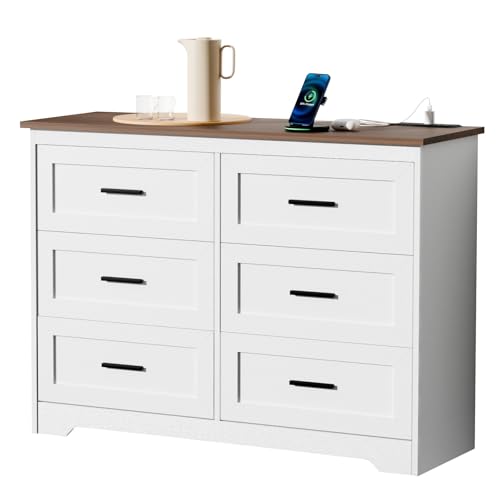
White and Natural Wood Dresser: The Complete Guide
A two-tone dresser brings crisp white surfaces together with warm, exposed timber grain. This guide explains how to choose the right wood tone, drawer construction, size, and styling so your purchase fits your bedroom for years.
Start the GuideWhy this guide exists: Most shoppers arrive here already knowing they want a dresser that mixes painted white with natural wood. What they still need is clarity on which wood tones work together, how to judge drawer quality, and how to size the piece for a real bedroom. Everything below is written to answer those questions before you commit to a purchase.
What Makes a White and Natural Wood Dresser Different
A white and natural wood dresser is a two-tone piece. One part of the construction — often the frame, drawer fronts, or side panels — is finished in painted white, while another part — typically the top, base, or drawer faces — keeps its natural grain visible. The result is a piece that feels lighter than an all-wood dresser and warmer than an all-white one.
This combination appears across several furniture families. Coastal and farmhouse designs lean on white bodies with pine or acacia tops. Scandinavian and modern interiors favor white frames with pale oak or ash. Mid-century-inspired pieces often pair white drawer fronts with walnut sides. Because the format is flexible, the same two-tone concept can fit very different rooms.
The appeal is practical as well as visual. White surfaces reflect light and make a bedroom feel larger, while natural wood adds texture and hides minor wear on high-contact areas such as the top surface. For a broader look at how this piece compares with single-finish options, see our page on white and natural wood dresser styles and variations.
Choosing the Right Natural Wood Tone
The wood tone is the single biggest decision in a two-tone dresser. It determines whether the piece reads as coastal, farmhouse, Scandinavian, or mid-century. Use the grid below to match a tone to the mood you want.
Light Oak & Ash
Pale, neutral grain with a subtle yellow-to-beige cast. Best for Scandinavian, Japandi, and airy coastal bedrooms. Pairs cleanly with white walls and light flooring.
Walnut
Rich brown with visible figure and a slightly cooler undertone. Best for mid-century and modern rooms. A white-and-walnut dresser adds depth without feeling heavy.
Pine & Acacia
Warm, informal grain with knots and variation. Best for farmhouse, cottage, and relaxed coastal interiors. Works well with textured fabrics and woven accents.
Maple & Birch
Fine, even grain with a light creamy tone. Best for transitional and contemporary rooms. A quiet choice that lets white hardware and trim stand out.
If your room already has a dominant wood tone — flooring, bed frame, or ceiling beams — repeat it in the dresser. A two-tone piece reads as intentional when the natural wood section echoes something else in the space. When the dresser introduces a completely new tone, it can look like an afterthought.
How to Evaluate Drawer and Frame Quality
Two dressers can look identical in a photo and behave very differently after a year of daily use. The differences sit in the joinery, the drawer slides, and the frame construction. Use the tier framework below as a relative comparison, not an absolute ranking.
| Tier | Drawer Box & Joinery | Slides & Hardware | Best For |
|---|---|---|---|
| Entry-level | Stapled or glued box joints, thinner sides, unfinished back panel | Basic side-mounted roller slides | Guest rooms, light daily use, first apartment |
| Mid-range | Reinforced box joints, thicker drawer sides, finished back | Ball-bearing side slides, some soft-close options | Primary bedrooms with regular daily use |
| Premium | Dovetail or doweled joints, solid wood drawer boxes | Under-mount soft-close slides, metal or solid wood pulls | High-use family bedrooms, long-term ownership |
| Luxury | Hand-fitted dovetails, kiln-dried hardwood, premium veneer over solid core | Concealed soft-close slides, hand-finished hardware | Statement pieces in designer or heritage interiors |
What to check in person or in detailed photos
- Drawer movement: Pull each drawer fully open. A well-built slide should feel smooth at every point, with no wobble or side-to-side play.
- Stops and safety: Drawers should have a stop that prevents them from pulling completely out unless intentionally released. This matters in households with children.
- Back panel: A finished back panel signals a piece meant to sit away from a wall or be used as a room divider. A thin unfinished panel is acceptable for wall placement but suggests a more basic build.
- Weight and stability: A dresser that feels light when empty can tip more easily. Wide bases and anti-tip hardware are non-negotiable for tall models.
- Paint and grain transition: On a two-tone piece, inspect the line where white paint meets natural wood. A crisp, clean edge indicates careful finishing; overspray or uneven lines indicate rushed production.
For a deeper breakdown of joint types and material grades, our dresser quality guide expands on each point. If you are comparing painted and unpainted options, the unfinished wood dresser overview explains what to expect from raw timber pieces.
Sizing a Two-Tone Dresser for Your Bedroom
Size mistakes are the most common reason a dresser gets returned or relegated to a spare room. Measure the wall, the walking path, and the swing of nearby doors before choosing a width.
Typical width ranges
- Narrow (under 90 cm): Fits small bedrooms, alcoves, and closet interiors. Three or four drawers is typical. See small dressers for layouts that work in tight spaces.
- Standard (90–140 cm): The most common bedroom width. Five to six drawers, often in a two-over-three or three-over-three layout.
- Wide (over 140 cm): Suits primary bedrooms and doubles as a media or display surface. Six to nine drawers, sometimes with a mix of drawer sizes.
Height and depth
Standard dresser height sits between 75 and 95 cm, which keeps the top surface at a comfortable standing height. Tall chests reach 120 cm or more and suit narrow footprints but need wall anchoring. Depth is usually 40–50 cm; deeper drawers hold folded knitwear and linens more comfortably, while shallower drawers suit accessories and paperwork.
If your room is tight, a vertical dresser trades width for height and can free up floor space. For rooms with a long empty wall, a wide model paired with a white bedroom dresser and nightstand set creates a cohesive furniture run.
Room-by-Room Styling Ideas
Primary bedroom
Pair a white frame with an oak top and keep the rest of the room tonal: white bedding, a light rug, and one warm wood accent such as a bench or mirror frame. The dresser becomes the anchor that repeats the room's natural materials without dominating.
Nursery
A white body with a natural wood top hides fingerprints and wipes clean easily. Anchor the piece to the wall and choose drawers with soft-close slides to avoid waking a sleeping baby. Our white six-drawer nursery dresser page covers safe configurations.
Guest room or small apartment
In compact rooms, a narrow two-tone dresser doubles as a nightstand alternative. A white four-drawer dresser with a natural wood top keeps the room feeling open while still offering real storage.
Living room or hallway
A low, wide dresser works as a console or sideboard when the depth is under 45 cm. Choose a model with a finished back if it will sit away from the wall. The white accent cabinet with drawers format is a close cousin worth considering for entryways.
Care and Maintenance for Two-Tone Finishes
Painted and natural surfaces age differently, so treat them separately.
- Weekly: Dust with a soft microfiber cloth. Avoid abrasive pads on painted areas.
- Monthly: Wipe painted surfaces with a damp cloth and a drop of mild soap, then dry immediately. Standing water dulls paint over time.
- Seasonally: Apply a wood-safe conditioner to natural wood sections. Test on a hidden area first, especially on veneered tops.
- Year-round: Keep the dresser out of direct sunlight and away from radiators. UV exposure fades both paint and wood grain unevenly.
- Hardware: Tighten pulls and knobs every few months. Loose hardware is the most common cause of wobble and drawer misalignment.
If you are refreshing an older two-tone piece rather than buying new, our guide to using chalk paint on furniture explains how to repaint the white sections without disturbing the natural wood faces.
Frequently Asked Questions
What is a white and natural wood dresser?
A two-tone furniture piece that combines a painted white frame, drawer fronts, or top with exposed natural wood grain on the other surfaces. The contrast between crisp white and warm timber suits coastal, farmhouse, Scandinavian, and modern interiors.
Which wood tones pair best with a white dresser?
Oak and ash bring a light, airy Scandinavian feel; walnut adds warmth and mid-century depth; pine or acacia create a relaxed farmhouse or coastal mood. Choose a tone that repeats elsewhere in the room so the two-tone design feels intentional.
How do I match a two-tone dresser to existing bedroom furniture?
Pick one dominant wood tone already present in the room and let the dresser echo it. If your bed is oak, choose a dresser with an oak top or drawer fronts. If your flooring is warm walnut, a walnut-and-white dresser will anchor the palette.
What should I check in drawer construction before buying?
Look for dovetail or reinforced box joints, drawer sides at least 12 mm thick, metal ball-bearing or under-mount slides rated for the expected load, and a finished back panel. Entry-level models often use stapled joints and thin slides, while mid-range and premium tiers typically add soft-close hardware and solid wood drawer boxes.
Is a white and natural wood dresser suitable for a nursery?
Yes, provided the dresser is stable and anchored to the wall. Choose models with a wide base, anti-tip hardware, and drawers that stop before pulling fully out. A white body with a natural wood top hides fingerprints while the wood top adds warmth.
How do I care for a two-tone white and wood dresser?
Dust weekly with a soft microfiber cloth. Wipe painted surfaces with a damp cloth and mild soap, drying immediately. Use a wood-safe conditioner on natural wood areas every few months and keep the piece away from direct sunlight and heat sources.
Ready to Compare White and Natural Wood Dressers?
Review the recommended models below, compare drawer counts and tier positioning, and choose the piece that fits your room's measurements and storage needs.
Explore Recommended Options