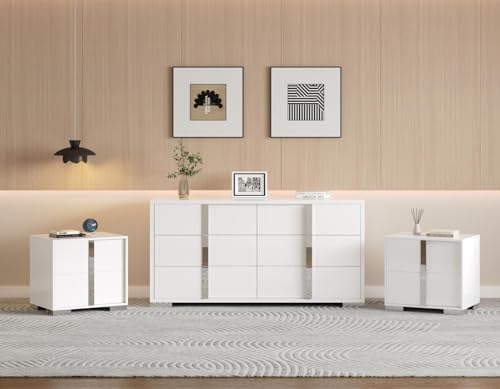
White Bedroom Dresser and Nightstand Set: A Complete Buyer's Guide
A coordinated white dresser and nightstand set brings a bright, clean look to any bedroom while solving real storage problems. Learn how to choose the right sizes, finishes, drawer layouts, and quality tier for your space.
Explore Recommended SetsWhy a matched set makes sense: A white bedroom dresser and nightstand set removes the guesswork from furnishing. Because both pieces share the same finish, hardware, and design language, the room instantly feels intentional and calm. This guide explains what separates a set that lasts from one that disappoints, so you can buy with confidence.
What Defines a Great White Dresser and Nightstand Set
A white bedroom dresser and nightstand set is more than two matching pieces of furniture. The dresser handles the bulk of your clothing and accessories, while the nightstand keeps essentials within arm's reach of the bed. When the two are designed together, proportions, drawer pulls, and finish tones align, producing a cohesive bedroom that looks curated rather than assembled piecemeal.
White finishes are especially practical in bedrooms because they reflect light, make compact rooms feel airier, and pair easily with almost any bedding or wall color. The challenge is that not every white is identical. Warm whites lean creamy, cool whites appear crisp and modern, and matte versus satin sheen changes how a piece reads under both daylight and evening lamps. Buyers researching this category should pay close attention to finish consistency across the dresser and nightstand, since mismatched whites are one of the most common regrets after delivery.
This guide walks through the decisions that matter most: size and scale, drawer layout, material and construction quality, finish durability, and how to evaluate a set by its market tier rather than by any single number. By the end, you will know exactly what to look for when comparing options, including related alternatives such as a coordinated white bedroom dresser and nightstand collection or a white dresser with a matching mirror if you want a more traditional dressing area.
Sizing the Dresser and Nightstand to Your Room
Scale is the most overlooked factor in bedroom furniture. A dresser that is too large crowds the walking path, while one that is too small leaves the wall looking unfinished and fails to hold your clothing. Start by measuring the available wall space and the height of your bed, then match the set to those dimensions.
Dresser width
A wide dresser typically spans roughly a double to triple dresser width. In a standard bedroom, leave at least a comfortable arm's reach of clearance in front of the drawers so they can open fully.
Dresser height
Low dressers double as a surface for decor; tall chests maximize storage in narrow footprints. Keep the top surface at a comfortable standing height for daily access.
Nightstand height
The top of the nightstand should sit level with or slightly below the top of your mattress so a lamp and a glass of water are easy to reach from bed.
Small rooms
In compact bedrooms, choose a narrow vertical dresser paired with a compact nightstand. White finishes help the pieces recede visually and keep the room feeling open.
If floor space is genuinely tight, consider a six-drawer white dresser as a middle-ground option, or review dedicated small dresser solutions before committing. For rooms where the nightstand must do double duty, a white bedside table with a drawer offers storage without taking over the floor plan.
Drawer Layout and Storage Strategy
The number and configuration of drawers determine how usable a set feels day to day. A typical dresser in a coordinated set offers anywhere from five to nine drawers, while a nightstand usually provides one or two drawers plus an open shelf. Think about what you actually store and how you fold it before you choose.
- Deep bottom drawers: ideal for bulky knitwear, folded jeans, or bedding that you rotate seasonally.
- Shallow top drawers: best for socks, undergarments, and accessories; felt lining is a welcome detail on higher-tier sets.
- Full-extension slides: let you reach the back of each drawer, which matters in wider dressers where items can otherwise get lost.
- Nightstand top drawer: keeps reading glasses, chargers, and small items tidy; an open lower shelf suits books or a basket.
If your wardrobe is accessory-heavy, a nine-drawer white dresser provides the granular organization that smaller configurations cannot. Conversely, if you prefer a minimalist look, a handleless six-drawer white dresser keeps the visual line clean while still offering generous capacity. Pairing the dresser with a vertical dresser arrangement can also help when wall width is limited but height is available.
Materials, Construction, and White Finish Durability
White furniture shows construction quality more readily than darker finishes, because paint and laminate highlight every joint, edge, and imperfection. Buyers should focus on the substrate beneath the finish, the drawer joinery, and the hardware, since those three factors determine how the set performs over years of daily use.
Solid wood remains the benchmark for durability and repairability, and a factory-applied white finish on solid wood generally resists chipping and yellowing better than many aftermarket paints. Engineered wood with a high-grade laminate or veneer sits in the mid-range and can be a solid choice when the core is dense and the edges are properly sealed. On the hardware side, metal drawer slides with a smooth, consistent glide are a meaningful upgrade over basic nylon rollers, and reinforced drawer boxes with dovetail or doweled joints hold up better under repeated loading.
Finish care matters as well. Keep white pieces out of direct sunlight during peak hours, dust with a soft cloth, and avoid abrasive cleaners that dull the sheen. If you are comparing paint systems more broadly, our guide on using chalk paint on furniture explains how aftermarket finishes differ from factory coatings and what to expect from each.
Comparing White Dresser Sets by Market Tier
Rather than fixating on any single number, evaluate a set by its position in the market tier. The table below summarizes what buyers typically gain as they move up from entry-level to luxury, so you can decide which tier matches your priorities for longevity, finish, and hardware quality.
| Tier | Typical Construction | Hardware & Finish | Best For |
|---|---|---|---|
| Entry-level | Engineered wood core with laminate or paper veneer; stapled or basic doweled joints. | Nylon roller slides; matte painted or printed finish with limited UV resistance. | Guest rooms, first apartments, and buyers who expect to refresh furniture within a few years. |
| Mid-range | Dense engineered wood or mixed solid-and-engineered construction; reinforced drawer boxes. | Metal ball-bearing slides; factory white finish with better sheen consistency and edge sealing. | Primary bedrooms where daily use is expected and a balanced tier is preferred. |
| Premium | Solid wood frames and drawer fronts; dovetail or doweled joints; thicker panels. | Full-extension soft-close slides; multi-step white finish with UV inhibitors and felt-lined top drawers. | Long-term family use and buyers who value repairability and finish longevity. |
| Luxury | Hardwood solids throughout; hand-finished joinery; heirloom-grade construction. | Designer hardware; hand-applied or catalyzed white finish; custom drawer configurations available. | Statement bedrooms and buyers treating the set as a long-term investment. |
Each tier can be a good value for its class. The key is matching the tier to the room's role: an entry-level set can be perfectly reasonable for a spare bedroom, while a primary suite benefits from the smoother slides and more durable finish found in mid-range and premium options. Within the white category specifically, finish consistency between the dresser and nightstand is often the clearest signal of overall quality, since manufacturers that invest in matching batches also tend to invest in better construction.
For buyers who want a coordinated look with subtle contrast, a white and natural wood dresser or a white and walnut dresser can break up an all-white scheme while retaining the brightness that makes white so appealing. Those exploring gold accents may prefer a white and gold dresser and nightstand set for a more elevated, hotel-inspired feel.
Style Directions for White Bedroom Sets
White is a chameleon finish, which means the silhouette and hardware do most of the stylistic work. A few directions dominate the market, and each suits a different bedroom personality.
- Modern and minimalist: clean lines, handleless fronts or slim bar pulls, and a matte white finish. These sets keep the bedroom calm and uncluttered.
- Farmhouse and cottage: paneled drawer fronts, cup pulls, and slightly distressed edges. A white six-drawer dresser with gold hardware bridges farmhouse warmth and modern polish.
- Transitional: shaker-style drawer fronts with classic round knobs, equally at home with traditional or contemporary bedding.
- Glam and boutique: mirrored accents, metallic trim, and soft-close drawers for a more curated, hotel-like atmosphere.
If you are furnishing a nursery rather than a primary bedroom, a white six-drawer nursery dresser paired with a low nightstand or changing surface keeps the set practical for early years. For a more classic dressing area, a white bedroom dresser with a mirror adds function without breaking the coordinated look.
Frequently Asked Questions
Should the dresser and nightstand match exactly or just coordinate?
Both approaches work. Matching sets create a clean, hotel-like look, while coordinated pieces with the same finish family but different silhouettes add visual interest. The key is a shared finish tone and compatible hardware so the pieces feel intentional.
What is the best material for a white bedroom dresser and nightstand set?
Solid wood with a factory-applied white finish is the most durable long-term choice. Engineered wood with high-quality laminate or veneer is a solid mid-range option. Look for dovetail or reinforced drawer joints and full-extension metal slides for daily use.
How do I prevent a white finish from yellowing?
Keep the furniture away from direct sunlight, use window treatments during peak hours, and clean with a soft damp cloth rather than harsh chemicals. Factory-applied finishes with UV inhibitors resist yellowing better than many aftermarket paints.
What drawer configuration is best for a bedroom set?
A dresser with six to eight drawers handles clothing well, while the nightstand typically needs one drawer and an open shelf or a second drawer. Deep bottom drawers suit bulky items, and felt-lined top drawers protect delicate accessories.
Are white dresser sets suitable for small bedrooms?
Yes. White reflects light and helps small rooms feel larger. Choose a narrow or vertical dresser and a compact nightstand to preserve floor space, and keep the finish consistent so the pieces read as one cohesive unit.