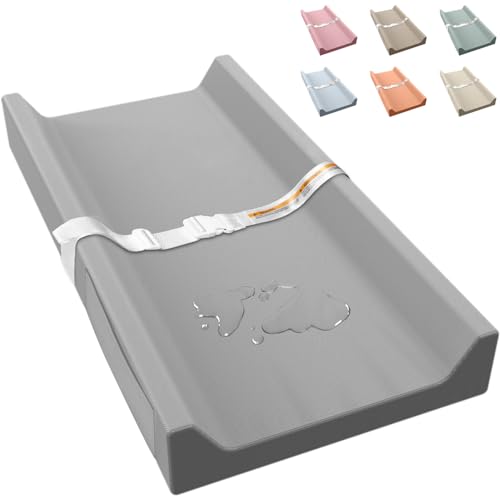
What Is a Rubber Changing Pad for a Dresser?
A rubber changing pad for a dresser is a portable mat designed to sit on top of a dresser and create a dedicated changing surface. It typically has two layers: a textured rubber or rubberized base that grips the furniture, and a soft, wipe-clean top layer that cushions the baby and handles spills.
Unlike a full changing table, a dresser pad does not require a separate piece of furniture. That makes it a popular choice for small nurseries, shared bedrooms, and parents who want to keep the room usable after the baby grows. If you are still deciding between a dedicated table and a dresser setup, our guide to securing a changing pad to a dresser walks through the hardware and anchoring options.
Why Choose a Rubber-Backed Pad?
The rubber base is the feature that separates a reliable dresser pad from a mat that slides around. Here is what it does in practice:
- Grip: A textured rubber underside holds onto painted wood, laminate, and varnished dresser tops far better than smooth foam.
- Stability: When the pad does not shift, the baby stays centered instead of drifting toward an edge.
- Protection: The rubber layer acts as a barrier between moisture and the dresser finish.
- Low maintenance: Most rubber-backed pads wipe clean with a damp cloth and mild soap.
- Portability: Many models fold or roll, so you can move the station between rooms or pack it for travel.
Key Features to Compare
Changing pads vary widely in build quality. Use the comparison below to match a pad to your dresser and your routine.
| Feature | What to Look For | Best For |
|---|---|---|
| Base material | Textured rubber or rubberized grip layer | Dressers with smooth or glossy finishes |
| Top surface | Sealed, waterproof, wipe-clean cover | Frequent changes and easy cleanup |
| Padding depth | Firm, supportive foam with modest cushioning | Daily comfort without a soft, sinking surface |
| Safety strap | Attached strap or harness point | Extra security on a dresser top |
| Contoured edges | Raised sides or a shallow well | Helping keep the baby centered |
| Size | Matches usable dresser top with clearance | Standard and compact dressers alike |
How to Size a Changing Pad to Your Dresser
Measure the usable top of the dresser first — the flat area between the front edge and the back rail, and between any side pieces. Standard pads run roughly 16 by 32 inches, while compact pads suit narrower dressers. Leave a few inches of clearance on every side so the pad sits flat, does not overhang, and leaves room for wipes and diapers within reach.
If your dresser is on the smaller side, a shallow-depth dresser or a small bedroom dresser layout can still work as a changing station when paired with a compact pad. The important thing is that the pad fits fully on the surface — never let it hang over an edge.
Safety Setup: Anchoring and Placement
A rubber base helps, but it is not a substitute for proper anchoring. Follow these steps when setting up a dresser-top changing station:
Dresser Changing Station Checklist
- Anchor the dresser to the wall with furniture straps or brackets.
- Place the pad on a clean, dry, flat dresser top with no overhang.
- Use the pad's safety strap or harness if it has one.
- Keep one hand on the baby at all times during changes.
- Store diapers, wipes, and cream within arm's reach but off the pad.
- Never leave a baby unattended on a dresser, even for a moment.
- Check the pad's grip monthly and replace it if the rubber base hardens or peels.
For a deeper look at attachment methods, see our detailed guide on securing a changing pad to a dresser. If you are still choosing the dresser itself, a small bedroom dresser with mirror can double as a changing station and a functional piece once the nursery stage ends.
Materials and Construction Tiers
Rubber changing pads fall into a few broad construction tiers. Use these descriptors to compare options without relying on numeric pricing:
- Entry-level tier: Basic foam with a thin rubberized base. Adequate for occasional use, but the grip layer may wear faster.
- Mid-range tier: Firmer foam, a sealed wipe-clean cover, and a more substantial rubber underside. A solid choice for daily nursery use.
- Premium tier: Dense padding, reinforced edges, a high-grip rubber base, and a safety strap. Well-specified for frequent changes and long-term use.
- Luxury tier: Thicker contoured padding, premium covers, and refined finishing. A long-term investment for parents who want a polished nursery setup.
Across all tiers, prioritize a sealed top surface and a textured rubber base. Those two features matter more than cosmetic details for daily safety and cleanup.
Maintenance and Longevity
Rubber changing pads are simple to maintain, but a few habits extend their life:
- Wipe the top after each change with a damp cloth and mild soap.
- Dry the pad fully before folding or storing it.
- Avoid harsh solvents that can degrade the rubber base.
- Inspect seams and the rubber underside every few weeks for cracks or peeling.
- Store the pad flat or loosely rolled — heavy creasing can weaken the grip layer.
When the nursery stage ends, a dresser that served as a changing station can transition smoothly into general storage. Our guides on room dresser layouts and small bedroom dresser ideas show how to repurpose the same furniture as the child grows.