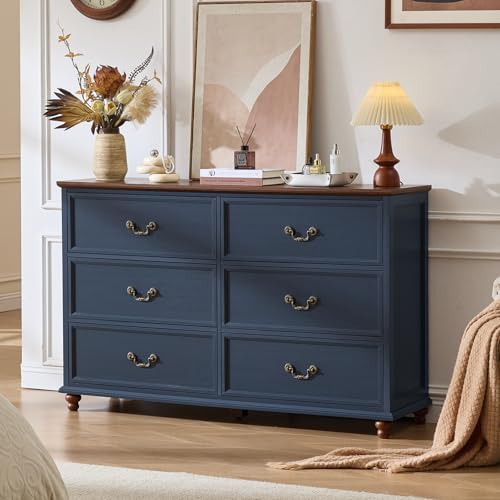
Navy Dresser: A Complete Buying Guide
A navy dresser brings depth, elegance, and practical storage to any bedroom. Discover styles, materials, drawer configurations, and expert tips to choose the right navy blue dresser for your space.
START READINGWhy choose a navy dresser? Navy is one of the most versatile dark tones in bedroom furniture. It anchors a room without the heaviness of black, pairs beautifully with metallic hardware, and works across modern, coastal, farmhouse, and transitional interiors. A well-chosen navy dresser can serve as both a storage workhorse and a design statement.
What Is a Navy Dresser?
A navy dresser is a bedroom storage piece finished in a deep blue tone that ranges from nearly black to a softer maritime blue. It typically features three to six drawers and may be configured as a wide dresser, a tall chest, or a compact accent piece. The finish can be painted, lacquered, or stained, and the dresser may be built from solid wood, engineered wood, or a combination of materials.
Unlike a standard navy chest of drawers, which tends to be taller and narrower, a navy dresser is often wider and lower, making it suitable as a bedroom anchor piece or a surface for decor, lighting, and accessories. The color itself is the defining feature, but the underlying construction, drawer mechanism, and hardware quality determine how well the piece performs over time.
Navy Dresser Styles and Finishes
Navy dressers appear across a wide range of interior styles. The finish and hardware choices strongly influence whether the piece reads as classic, modern, or casual. Here are the most common style directions:
Modern Navy Dresser
A modern navy dresser typically features clean lines, minimal ornamentation, and hardware in black, brushed nickel, or integrated finger pulls. These pieces often use engineered wood with a matte or satin lacquer finish. A navy blue dresser in a modern profile works well in contemporary bedrooms, guest rooms, and apartments where space efficiency matters.
Navy Dresser with Gold Hardware
Gold or brass hardware against navy is a classic pairing that adds warmth and a touch of glamour. A navy dresser with gold hardware suits transitional and luxury-leaning interiors. The contrast between the deep blue finish and warm metallic pulls makes the drawers visually distinct and gives the piece a more elevated appearance.
Coastal and Nautical Navy Dresser
Navy is a natural fit for coastal and nautical themes. A nautical dresser may feature whitewashed accents, rope details, or lighter wood tops that soften the deep blue. These pieces work well in beach houses, lake homes, and bedrooms styled with linen, rattan, and natural textures.
Farmhouse and Transitional Navy Dresser
A farmhouse navy dresser often includes shaker-style drawer fronts, cup pulls, and slightly distressed edges. The finish may be a painted navy over solid wood or engineered wood. These pieces bridge the gap between rustic and refined, making them suitable for both modern farmhouse and traditional bedrooms.
Navy Dresser Sizes and Drawer Configurations
Choosing the right size depends on the room dimensions, the amount of clothing you need to store, and whether the dresser will double as a surface for other items. The table below outlines common configurations and their best use cases. Note that tier descriptors reflect relative positioning within the category, not absolute quality.
| Configuration | Best For | Tier Positioning | Notes |
|---|---|---|---|
| 3-drawer navy dresser | Guest rooms, small bedrooms, nursery overflow | Entry-level to mid-range | Compact footprint; often used with a changing pad in nurseries |
| 4-drawer navy dresser | Primary bedrooms, apartments, shared rooms | Mid-range | Balanced storage; common in matching dresser and nightstand sets |
| 5-drawer navy dresser | Family bedrooms, couples | Mid-range to premium | More vertical storage; sometimes includes a mix of drawer heights |
| 6-drawer navy dresser | Large bedrooms, long-term storage | Premium | Wide configuration; often paired with a mirror or used as a statement piece |
| Tall navy dresser | Small bedrooms, narrow walls | Mid-range to premium | Vertical design frees floor space; check stability and anti-tip hardware |
For compact rooms, a navy blue chest of drawers may be more practical than a wide dresser. Chests concentrate storage in a smaller footprint, which is useful when wall space is limited. If you are furnishing a full bedroom, a navy blue dresser and nightstand set can simplify coordination and ensure consistent finish and hardware across pieces.
Materials and Construction
The finish may be the first thing you notice, but the underlying construction determines durability and drawer performance. Navy dressers are available in several material categories:
- Solid wood: Typically pine, oak, maple, or mahogany. Solid wood dressers are heavier and more resistant to wear, especially at drawer fronts and joints. These pieces often sit in the premium to luxury tier.
- Engineered wood: MDF, particleboard, and plywood with veneer or paint. These are common in mid-range and entry-level dressers. Quality varies widely, so check for reinforced drawer boxes and sturdy glides.
- Metal: Less common for navy dressers but available in industrial-style designs. Metal frames with navy-painted drawer fronts can work in modern and loft-style bedrooms.
- Mixed materials: A navy-painted body with a natural wood top or rattan drawer fronts. These combinations add texture and visual interest without relying on ornamentation.
Drawer glides are a critical but often overlooked component. Entry-level dressers may use basic side-mounted rollers, while mid-range and premium models typically use ball-bearing glides or soft-close mechanisms. If the dresser will be used daily, smoother glides are worth prioritizing. For a closer look at this feature, see our guide to the navy blue dresser for bedroom category.
Navy Dresser Color Pairings and Room Coordination
Navy is a strong color, but it is also forgiving. Its depth allows it to function as a neutral in many palettes. Consider these pairing strategies:
- Navy and white: Crisp and classic. White walls, bedding, or trim keep the navy dresser from feeling heavy. This pairing works in coastal, farmhouse, and modern bedrooms.
- Navy and gold or brass: Warm metallics add contrast and a sense of occasion. A navy dresser with gold hardware can serve as the focal point of a primary bedroom.
- Navy and warm wood: Natural oak, walnut, or pine tones soften the cool blue and add organic warmth. This combination suits Scandinavian and mid-century-inspired rooms.
- Navy and soft pastels: Blush, sage, and pale gray can balance the intensity of navy. These palettes feel calm and are well suited to nurseries and guest rooms.
- Navy and black: A high-contrast, modern pairing. Black hardware and accents give the dresser a sharper, more architectural look.
If you are building a coordinated bedroom, a navy blue dresser can anchor the scheme while other pieces remain lighter or more neutral. For nursery applications, a navy blue changing table dresser combines storage with a dedicated changing surface, and a navy blue crib and dresser set ensures a consistent finish across the room.
Hardware and Detail Choices
Hardware is one of the most impactful details on a navy dresser. Because navy is a dark, saturated color, the hardware creates a visible contrast that shapes the overall style:
- Gold and brass: Warm, classic, and slightly formal. Best for transitional and luxury-leaning interiors.
- Black: Modern and graphic. Works well with industrial, minimalist, and contemporary designs.
- Brushed nickel and satin nickel: Understated and versatile. A safe choice for neutral, modern bedrooms.
- Wood and leather pulls: Casual and organic. Suits coastal, Scandinavian, and boho interiors.
- Integrated finger pulls: Clean and minimal. Common on modern navy dressers with slab drawer fronts.
Drawer front style also matters. Shaker fronts add traditional texture, while flat slab fronts read as modern. Beveled or raised-panel fronts can lean classic or formal. The combination of finish, drawer front, and hardware determines whether the dresser feels casual or polished.
How to Choose the Right Navy Dresser
Before purchasing, consider the following practical factors:
- Measure the space: Confirm the dresser width, depth, and height against your wall and walking clearance. Leave enough room for drawers to open fully.
- Count your storage needs: A three-drawer model suits light storage; five or six drawers are better for full wardrobes and shared bedrooms.
- Check drawer construction: Look for dovetail or reinforced joints, sturdy bottoms, and smooth glides. These details affect long-term usability.
- Consider stability: Tall navy dressers should include anti-tip hardware, especially in homes with children or pets.
- Plan the finish pairing: Decide whether the navy will be the focal point or a supporting element in the room. This influences hardware and surrounding furniture choices.
- Review the return and assembly policy: Some dressers ship fully assembled; others require significant setup. Confirm before ordering.
If you are comparing a dresser with a chest, our overview of the navy dresser category and the broader navy chest of drawers category can help clarify the difference in height, width, and storage layout. For nursery-focused options, the navy blue dresser and nightstand set and the navy blue dresser with gold hardware pages offer additional configurations.
Care and Maintenance
Navy finishes can show dust and fingerprints more readily than lighter colors. To keep the dresser looking its best:
- Dust regularly with a soft, dry cloth. Avoid abrasive cleaners that can dull the finish.
- Use a slightly damp cloth for stubborn marks, then dry immediately.
- Avoid placing hot or wet items directly on the top surface; use coasters or a protective pad.
- Check hardware periodically and tighten screws as needed.
- Keep the dresser out of direct sunlight to prevent uneven fading over time.
With basic care, a well-constructed navy dresser can remain a functional and visually appealing part of the bedroom for many years. The finish may show minor wear at high-touch points, but solid construction and quality hardware reduce the likelihood of structural issues.
Frequently Asked Questions
A navy dresser is a storage furniture piece finished in a deep navy blue tone. It typically features multiple drawers for clothing and accessories and can range from compact chests to wide bedroom dressers. The color is the defining visual feature, while construction and drawer configuration determine its practical performance.
Navy pairs well with white, cream, gold, brass, warm wood tones, and soft pastels. Metallic hardware like gold or brass creates a classic contrast, while black hardware offers a modern look. For a softer palette, pair navy with blush, sage, or pale gray.
Yes. Navy is a deep, receding color that can make a compact dresser feel grounded rather than bulky. A narrow or tall navy dresser works well in small bedrooms by adding vertical storage without consuming floor space. Pair it with light walls and bedding to keep the room feeling open.
Three to six drawers suit most bedrooms. Three-drawer models are compact and ideal for guest rooms or small spaces, while five- and six-drawer navy dressers offer generous storage for primary bedrooms and shared spaces. Tall dressers with four or five drawers are a good compromise for narrow rooms.
Yes. Navy is a calming color that works well in nurseries. A navy blue changing table dresser combines storage with a dedicated changing surface, and a navy blue crib and dresser set can create a coordinated room. Always use anti-tip hardware and ensure the dresser meets current safety standards.