Modern Kitchen Cabinet Pulls: The Complete Buying & Style Guide
Transform your kitchen with the right hardware. Learn how to choose modern cabinet pulls that match your style, function flawlessly, and elevate your entire space.
Why hardware matters more than you think: Cabinet pulls are the jewelry of your kitchen. They are touched dozens of times each day, yet they are often the last decision homeowners make. The right modern pull ties together cabinetry, countertops, and lighting into one cohesive design—while also delivering the ergonomic comfort that makes daily cooking a pleasure.
What Makes a Cabinet Pull "Modern"?
Modern kitchen cabinet pulls share a design DNA that sets them apart from traditional hardware. Understanding these principles helps you shop with confidence and avoid mismatched choices.
- Clean geometry: Modern pulls favor straight lines, precise angles, and simple curves over ornate scrollwork or floral detailing.
- Minimal ornamentation: No raised panels or decorative flourishes—the beauty comes from the form and finish itself.
- Streamlined profiles: Slim bars, flush-mounted finger pulls, and low-profile edge pulls create a seamless look against flat-slab cabinetry.
- Architectural finishes: Matte black, satin nickel, brushed brass, and stainless steel dominate the modern palette, often with a subtle texture or consistent grain.
- Functional honesty: The pull's shape communicates how it should be used—a T-bar for a drawer, a long bar for a tall cabinet door, an edge pull for a handleless design.
If your kitchen leans contemporary, Scandinavian, or industrial, these traits are essential. If you are updating a traditional space, a modern pull with a warmer finish—such as brushed brass or satin nickel—can bridge the gap between old and new without clashing. For a broader look at how hardware shapes the feel of a room, explore our guide to modern cabinet pulls.
Types of Modern Kitchen Cabinet Pulls
Modern hardware comes in several distinct families. Each type suits a different cabinet style, installation method, and level of use.
Bar Pulls (T-Bar and Straight Bar)
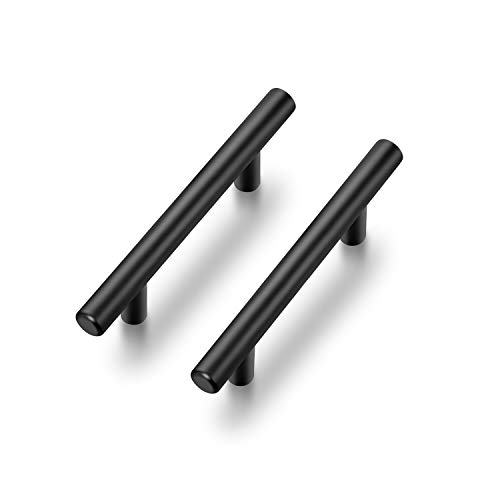
The workhorse of modern kitchens. A bar pull is a simple linear handle mounted on two standoffs, available in lengths from a few inches up to 24 inches or more. Short bars work on drawers; long bars make dramatic vertical statements on pantry doors. They are easy to grip, forgiving to install (the screw spacing is standardized), and available across every quality tier—from entry-level stamped steel to heavy-duty solid brass.
Finger Pulls and Edge Pulls
Finger pulls are integrated or recessed profiles mounted along the top edge of a drawer or door, allowing you to hook your fingers underneath. They are the signature of handleless modern kitchens because they preserve an uninterrupted cabinet face. Edge pulls are similar but mount on the front edge; they are slimmer and often used on drawers. For a full breakdown of this style, see our guide to modern kitchen cabinet finger pulls.
Knobs
Sometimes the cleanest modern look is a simple, geometric knob—a sphere, cube, or cylinder. Knobs work well on narrow cabinet doors and small drawers where a bar would look out of proportion. They also offer a quieter visual rhythm when used on upper cabinets while bars are used below.
With Backplates
A backplate sits behind the pull and distributes contact pressure across a wider area of the cabinet face—useful for soft or thin door materials. The design can also add a refined detail. Read more about this option in our article on modern cabinet pulls with backplate.
Choosing the Right Finish for Modern Kitchen Cabinet Pulls
Finish is the single most visible decision you will make. It must harmonize with your cabinet color, countertop, sink, and lighting without competing with them.
Matte Black
The most popular modern finish. Matte black offers high contrast against white or light-wood cabinets and blends beautifully with industrial or black-window accents. It hides fingerprints reasonably well but shows dust. Look for powder-coated or electroplated finishes that resist chipping—a sign of higher quality even in mid-range products.
Satin Nickel and Brushed Nickel
Neutral, warm, and timeless. Satin nickel is forgiving in busy households because the slight texture hides smudges and water spots. It pairs naturally with stainless appliances. Our article on modern satin nickel cabinet pulls covers size and style pairings in depth.
Brushed Brass and Gold
A warmer modern alternative that adds a touch of mid-century or transitional elegance. Brushed brass develops a subtle patina over time; lacquered versions stay uniform. It works best with white, navy, or green cabinetry and warm wood tones.
Stainless Steel
Clean, durable, and naturally industrial. Stainless steel matches most appliances but can look cold if it is the only metal in the room. Pair it with warm wood or soft textiles to balance the effect.
Black 3-Inch and Small-Format Pulls
Small black pulls are a smart solution for narrow drawers or compact kitchens where long bars would overwhelm the space. See our guide to modern black cabinet pulls 3 inch for sizing advice and placement tips.
How to Size Modern Cabinet Pulls Correctly
Scale is everything. A pull that is too small looks toy-like; one that is too large looks clumsy. Use these practical guidelines to get it right.
- Drawers: The pull should span roughly one-third to one-half of the drawer width. A 24-inch-wide drawer takes a 8–12 inch pull comfortably.
- Upper cabinet doors: A vertical bar pull should be 60–80 percent of the door height, or use a small knob if the door is under 12 inches wide.
- Lower cabinet doors: Long vertical bars (12–18 inches) read as intentional and modern; short horizontal pulls can look undersized.
- Consistency: Keep the same pull family and finish throughout. You can vary length for scale, but keep the visual language identical.
- Center-to-center spacing: This is the distance between screw holes. Measure your existing drilling or plan new holes carefully—standard spacing varies by length, so always confirm before ordering.
A well-sized pull is also a safety feature: it gives a full, comfortable grip for hands of all sizes, reducing wrist strain during heavy cooking sessions.
Materials and Quality Tiers: What to Expect
Cabinet pulls are not all created equal. The material and construction determine how long the hardware will look and feel like new. Use this tier guide to set realistic expectations.
| Tier | Typical Construction | Best For |
|---|---|---|
| Entry-Level | Stamped steel or zinc alloy with plated finish | Light-use kitchens, rentals, quick refreshes |
| Mid-Range | Solid zinc die-cast or steel with reinforced mounting | Most family kitchens, everyday durability |
| Premium | Solid brass, stainless steel, precision machining | High-traffic kitchens, long-term installations |
| Luxury | Hand-finished solid brass, designer collaborations, lifetime warranties | Custom cabinetry, showpiece kitchens |
Practical takeaway: Entry-level pulls are fine for low-traffic areas and quick updates. If you cook daily and plan to stay in your home, a mid-range die-cast pull is a solid choice for the tier—it offers smoother edges, better screw engagement, and finishes that resist flaking. Premium and luxury tiers justify themselves in high-use kitchens where tactile quality and longevity matter most.
Finishes That Last
- Powder coating: Durable, chip-resistant, and consistent in color—common on quality matte black pulls.
- PVD (physical vapor deposition): A thin, hard coating used on high-end stainless and brass finishes; extremely scratch-resistant.
- Lacquered brass: Stays bright and uniform; may wear at contact points over many years.
- Unlacquered brass: Develops a living patina; beautiful if you want a vintage-modern look, but it will change over time.
Installation and Placement Tips
Even the best pull looks wrong if it is installed inconsistently. Follow these rules of thumb for a professional result.
- Mark a template: Create a paper or cardboard template for each pull length and use it to mark screw holes consistently across all cabinets.
- Align to the rail: On drawers, center the pull horizontally and align it to the visual rail—usually the top third of the drawer face.
- Vertical vs. horizontal: Modern kitchens often use vertical bars on doors and horizontal bars on drawers. This creates a clear functional rhythm.
- Mind the reveal: Leave enough clearance between the pull and the cabinet edge or adjacent appliance so fingers do not scrape.
- Use the right screws: Match screw length to door thickness. Too long and you risk splitting the material; too short and the pull loosens.
If you are updating more than the kitchen, our modern drawer pulls guide covers matching hardware for dressers, vanities, and storage cabinets so your whole home feels intentional.
Pairing Modern Pulls with Your Kitchen Style
Hardware is a bridge between cabinetry and the room's overall design language. Here are proven pairings:
- Scandinavian / Minimalist: Slim brushed brass or matte white pulls, short finger pulls on flat-slab doors.
- Industrial: Matte black T-bars, exposed stainless, heavier profiles on solid-wood cabinets.
- Modern Farmhouse: Black or aged brass cup pulls and bar pulls; consider complementing with dresser hardware in the bedroom—our modern farmhouse bedroom dresser guide shows the same design logic applied to furniture.
- Contemporary Luxury: Long stainless or PVD brass bars, handleless edge pulls, integrated finger grooves.
Consistency across adjoining spaces matters too. If your kitchen opens to a laundry or mudroom with storage drawers, the same pull family keeps the transition seamless. Homeowners refreshing bedroom storage often discover that cabinet pulls and dresser hardware share a design language—see how pulls pair with modern chest of drawers and modern wood dressers.
Frequently Asked Questions
How do I choose between a knob and a pull?
Knobs are best for small doors and narrow drawers where a bar would look disproportionate. Pulls offer a stronger grip and a more linear modern look. Many contemporary kitchens mix both—knobs on upper doors, bars on drawers—for visual variety while keeping the finish consistent.
Can I install modern pulls on existing cabinets without drilling new holes?
Sometimes. If your existing pull has the same center-to-center spacing as the new one, you can reuse the holes. Otherwise, you will need to drill new holes and fill or cover the old ones. Using a paper template and a center punch makes the job clean and accurate.
What finish hides fingerprints best?
Matte and brushed finishes hide fingerprints far better than polished ones. Satin nickel and matte black are the most forgiving in daily use; brushed brass is also practical. Polished chrome and mirror-like stainless show every smudge.
How many pulls do I need?
Count one pull per drawer front and one per cabinet door. Some wide drawers may take two pulls for symmetry and easier opening. Measure each opening before ordering, and always order one or two extras for future replacements or mistakes.
Are modern cabinet pulls durable enough for daily cooking?
Yes—if you choose the right tier. Mid-range die-cast and premium solid-metal pulls are designed for years of daily use. Entry-level stamped pulls are fine for lighter-duty settings. Look for smooth edges, consistent finish, and sturdy mounting hardware as signs of build quality.
Final Checklist Before You Buy
- Measure every drawer and door you plan to update.
- Confirm center-to-center screw spacing on any existing drilling.
- Choose one finish and one pull family for the entire kitchen.
- Order a sample pull if possible—hold it against your cabinet in your actual lighting.
- Buy one or two extras for replacements.
- Match the tier to your usage: entry-level for light use, mid-range for family kitchens, premium or luxury for high-traffic and long-term installations.
Modern kitchen cabinet pulls are a small upgrade with an outsized effect on how your kitchen looks and feels. Take the time to get the style, finish, size, and tier right—and the result will serve you comfortably for years.