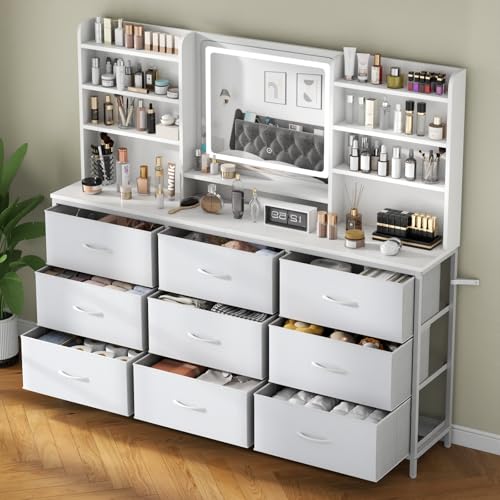
Large Dresser With Mirror: The Complete Buyer's Guide
Everything you need to know before choosing a wide dresser with mirror — sizing, materials, mirror mounting, drawer mechanics, and styling for a bedroom that feels complete.
START THE GUIDEWhy a large dresser with mirror? A wide dresser paired with a mirror doubles as a storage powerhouse and a grooming station. It anchors the bedroom visually, reflects light to make the room feel larger, and eliminates the need for a separate vanity. This guide walks you through every decision so you can buy with confidence.
What Defines a "Large" Dresser With Mirror?
A dresser is generally considered large when it is 60 inches wide or more. The mirror can be attached to the back of the dresser, mounted to the wall above it, or sold as a matching set. Understanding the dimensions first prevents the most common buying mistake: a piece that looks right in the showroom but overwhelms a bedroom wall.
Typical Large Dresser Dimensions
- Width: 60–72 inches for a wide footprint
- Depth: 18–20 inches for standard drawers
- Height: 30–40 inches without the mirror
- Mirror height: 30–42 inches above the dresser top
Measure your wall and leave at least 2–3 feet of walking clearance in front. For narrow rooms, a 72-inch wide dresser may be too dominant — consider a slightly narrower footprint first.
Mirror Attachment Types
- Attached mirror: Fixed to the dresser back; moves as one unit
- Wall-mounted mirror: Floating look; requires anchoring to studs
- Freestanding mirror: Leans against the wall above the dresser
- Trifold mirror: Adds side panels for a full dressing view
Attached mirrors are the safest choice in homes with children because there is no separate glass panel to tip. Wall-mounted mirrors free up dresser surface space but need secure hardware.
Quality Tiers: What to Expect at Each Level
We classify large dressers with mirrors into four universal tiers. These descriptors reflect relative market position and build quality — not a specific figure — so they stay useful as the market changes.
| Tier | Best For | Typical Construction |
|---|---|---|
| Entry-level | Guest rooms, first apartments, temporary setups | Engineered wood panels, basic side-mount slides, thinner mirror glass |
| Mid-range | Primary bedrooms, family homes | Solid wood or wood veneer, ball-bearing slides, beveled mirror edges |
| Premium | Long-term primary suites, design-focused rooms | Solid hardwood frames, soft-close undermount slides, dovetail joinery |
| Luxury | Statement pieces, heritage-style interiors | Hand-finished hardwood, full-extension heavy-duty slides, custom mirror framing |
Mid-range models usually offer the best balance of drawer smoothness and mirror clarity for most households. Premium and luxury tiers add dovetail joinery and reinforced mirror mounts that matter most in high-use bedrooms.
Materials and Finishes That Work With a Mirror
Wood and Finish Choices
Solid wood — oak, maple, cherry, or pine — takes hardware and refinishing best. Engineered wood with a wood veneer is a practical choice for entry-level and mid-range tiers. A painted finish hides minor wear, while natural grain shows character over time.
Dark finishes such as espresso dressers make a mirror pop, while light gray dressers keep the room airy. For a classic look, pair a white or cream frame with a beveled mirror.
Mirror Glass and Frame Quality
Look for 4 mm or thicker glass with a beveled edge — it resists chipping and looks more finished. A framed mirror adds visual weight; a frameless mirror keeps the silhouette clean. Silver-backed glass resists black-edge corrosion better than standard backing in humid rooms.
If you want a bolder style, browse mirrored dressers where the drawer fronts themselves are reflective. For a softer traditional look, cherry dressers pair naturally with a wood-framed mirror.
Drawer Mechanics: The Hidden Quality Signal
A large dresser holds more weight per drawer, so the slides matter more than on a small piece. Entry-level units typically use side-mount rollers; mid-range and above use ball-bearing or heavy-duty soft-close drawer slides. Full-extension slides let you reach the back of deep drawers — a real convenience on a wide unit.
Pro tip: On a large dresser, test drawer alignment across the full width. Gaps that widen toward one side suggest the frame is not square — a sign of weaker construction that will worsen over time.
If you plan to store bulky items, look at chests with deep drawers for the lower rows while keeping the top rows shallow for smaller items. A large dresser with lots of drawers helps separate clothing categories without stacking.
Room Placement and Styling
Where to Place It
The strongest placement is opposite or adjacent to the bed, not blocking traffic paths. Leave 30–36 inches of clearance in front of the drawers when open. Avoid placing the mirror directly facing a window; glare makes grooming difficult in daylight.
In a primary suite, pairing the dresser with matching side tables creates a cohesive look. If you want a complete set, a bedroom set with dresser with mirror saves the guesswork of matching finishes.
Styling the Top Surface
Keep the mirror sightline clear. A tray for jewelry, a small lamp, and one decorative object is enough. On wide units, divide the surface into zones: one for grooming, one for display. Avoid tall items that block the mirror.
For color direction, a brown dresser with mirror warms neutral rooms, while a black dresser with mirror adds contrast to lighter walls. A dark gray dresser with mirror sits between the two and suits modern palettes.
Pre-Purchase Checklist
- Measure wall width, depth, and walking clearance before ordering
- Confirm whether the mirror is attached, wall-mounted, or freestanding
- Check drawer slide type and weight rating for each drawer
- Verify mirror glass thickness and edge finish
- Confirm the finish matches your existing bed and side tables
- Plan anchoring for wall-mounted mirrors — studs or rated drywall anchors
- Check return policy for oversized furniture delivery
Related Reading
- All Dressers
- Large Dresser With Lots of Drawers
- 72-Inch Wide Dresser
- Mirrored Dressers
- Black Dresser With Mirror
- Brown Dresser With Mirror
- Dark Gray Dresser With Mirror
- Bedroom Set With Dresser With Mirror
- Mid-Century Modern Dresser With Mirror
- Heavy-Duty Soft-Close Drawer Slides
- Chest of Drawers With Deep Drawers
- Dresser With Organizer
- Drawer Dividers
- Dresser With Painted Finish
- Espresso Dressers
- Light Gray Dresser
Frequently Asked Questions
How wide should a large dresser with mirror be?
A dresser is typically considered large at 60 inches wide or more. A 60–66 inch unit fits most primary bedroom walls; a 72-inch unit suits larger rooms or a wall shared with the bed. Always leave 30–36 inches of clearance in front of open drawers.
Is an attached or wall-mounted mirror better?
An attached mirror is safer in homes with children and moves as one piece. A wall-mounted mirror frees the dresser top and looks more contemporary, but it must be anchored into studs or rated anchors. Choose based on household safety and the look you want.
What drawer slides should I look for on a large dresser?
Look for ball-bearing or soft-close undermount slides on mid-range and premium models. Full-extension slides are worth prioritizing on wide drawers so you can reach the back. Side-mount rollers are common on entry-level units but feel less smooth under load.
Can a large dresser with mirror replace a vanity?
Yes, if the mirror is large enough and the dresser top has room for grooming items. A trifold mirror or a wide beveled mirror works best. Many buyers combine a large dresser with a bedroom set with vanity dresser for a coordinated look.
How do I match the mirror to my existing furniture?
Match the frame finish to your bed frame or side tables rather than trying to match the wood grain exactly. A painted frame is more forgiving; a natural wood frame should share a similar tone family. Browse coordinated sets for the easiest match.