Dresser That Fits in Closet: A Complete Storage Guide
Free up bedroom floor space and turn your closet into a functional dressing zone. This guide explains how to measure, choose, and place a dresser that fits in closet layouts of every size, from narrow reach-in closets to spacious walk-ins.
Why Put a Dresser in the Closet?
A dresser that fits in closet space is more than a clever storage trick. It can reshape how your entire bedroom functions. Many people treat the closet as a place for hanging clothes only, yet a well-placed dresser inside the closet can consolidate folded clothing, accessories, and linens into a single, convenient zone.
The main benefit is reclaiming bedroom floor space. In smaller apartments or compact primary bedrooms, removing a freestanding dresser opens up the room for a larger bed, a reading chair, or simply more breathing room. A closet dresser also reduces visual clutter in the sleeping area, which supports a calmer, more restful environment.
Another advantage is workflow. When folded items, socks, undergarments, and hanging clothes all live in one place, getting dressed becomes faster and more intuitive. You can move directly from selecting an outfit on the rod to pulling a folded sweater from a drawer without crossing the room.
Closet dressers also support seasonal rotation. Off-season clothing can stay in the closet dresser while everyday pieces remain in the bedroom, or the arrangement can be reversed. For households with limited storage elsewhere, this flexibility is valuable. If you are still comparing furniture categories, our guide on dresser vs armoire explains when a taller enclosed piece may serve you better than a standard drawer unit.
How to Measure Your Closet Before Buying
Accurate measurements are the foundation of any successful dresser that fits in closet project. Guessing leads to drawers that cannot open, doors that scrape, or a unit that blocks access to hanging clothes. Measure every dimension twice and write the numbers down before you shop.
Step 1: Measure the Available Floor Space
Start with the width of the wall section where the dresser will sit. Subtract any obstructions such as door swing, baseboard heaters, or shelving supports. Then measure the depth from the back wall to the front edge of the closet opening. A typical reach-in closet provides 24 to 30 inches of usable depth, so a dresser no deeper than 22 to 24 inches is usually the safe choice.
Step 2: Account for Door Clearance
If your closet has hinged doors, measure how far they swing inward. A dresser placed too close to the door path will prevent the door from closing and may cause damage over time. Sliding doors offer more flexibility because they move along a track rather than swinging into the space.
Step 3: Check Drawer Extension Clearance
Drawers need room to pull out. Standard drawers extend roughly 15 to 20 inches, while full-extension drawers require the full depth of the drawer box. Leave at least 24 to 36 inches of open floor space in front of the dresser so drawers can slide out without hitting the opposite wall or hanging garments.
Step 4: Measure Ceiling Height and Shelf Placement
A tall dresser may collide with existing shelves or a hanging rod. Measure the vertical clearance from floor to the lowest shelf and confirm the dresser height leaves room for the top surface to be usable. If you plan to place items on top, allow a few extra inches.
Dresser Size Guide for Closets
The ideal dresser that fits in closet spaces balances storage capacity with maneuverability. The table below summarizes common size categories and where each tends to work best. These are relative descriptors, not fixed recommendations, because every closet is different.
| Dresser Category | Typical Footprint | Best For | Drawer Configuration |
|---|---|---|---|
| Narrow or slim dresser | Under 30 inches wide, 16 to 20 inches deep | Reach-in closets with limited wall space | 3 to 5 drawers, stacked vertically |
| Standard closet dresser | 30 to 44 inches wide, 18 to 22 inches deep | Mid-size closets and walk-in side walls | 4 to 6 drawers, mixed sizes |
| Tall chest | 28 to 36 inches wide, 18 to 20 inches deep, 45 to 55 inches tall | Narrow closets where vertical space is available | 4 to 6 deep drawers |
| Wide low dresser | 48 to 60 inches wide, 18 to 22 inches deep | Walk-in closets with a long empty wall | 6 to 9 drawers in two or three columns |
| Lingerie or accent chest | Under 24 inches wide, 14 to 18 inches deep | Tight corners and accessory storage | 4 to 7 small drawers |
If your closet is especially tight, explore options in our guide to dressers for small spaces, which covers compact configurations in more detail. For closets with a long but shallow wall, a dresser with full extension drawers can make every inch accessible.
Depth is usually the limiting factor. Many attractive bedroom dressers are 20 to 22 inches deep, which fits most closets, but some models reach 24 inches or more. Always confirm the depth measurement including drawer pulls and any decorative trim.
Choosing the Right Layout for Your Closet Dresser
Placement matters as much as dimensions. A dresser that fits in closet floor plans should support the way you move through the space, not obstruct it. Here are the most practical arrangements.
End Wall Placement
In a walk-in closet, the short end wall is often the best spot for a dresser. It keeps the long hanging runs clear and creates a natural focal point. Leave enough room between the dresser and the opposite hanging rod to open drawers fully.
Side Wall Placement
A side wall works well in wider walk-ins. Place the dresser between two hanging sections so folded clothing sits at the midpoint of your dressing routine. Ensure the dresser height does not block light switches or outlets.
Under a Window
If your closet has a window, a low dresser beneath it can provide storage without blocking light. Choose a model with a height that stays below the sill, and avoid covering vents or radiators.
Reach-In Closet Front Section
In a standard reach-in closet, a narrow dresser placed at one end of the rod can work if the door swings the other way. Measure the door arc carefully. Sliding doors make this layout much easier.
Corner or Angled Placement
Corner dressers are less common but can unlock awkward spaces. A compact lingerie chest or a corner-friendly unit may fit where a rectangular dresser cannot. Keep drawer access in mind, since corner placement can restrict the swing of adjacent doors.
Dresser Styles That Work in Closets
Closets are utilitarian spaces, but the furniture inside still affects how the room feels. A dresser that fits in closet environments should be visually light and easy to maintain. Our dresser style guide covers broader design directions, while the notes below focus on closet-friendly choices.
Tall and Narrow Chests
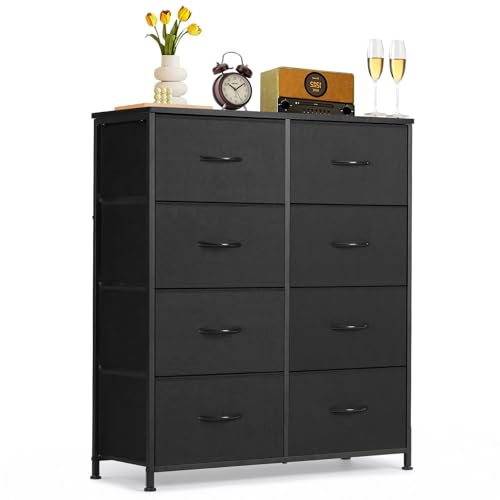
Vertical storage maximizes a small footprint. A tall chest with four to six drawers fits into narrow gaps between hanging sections and keeps folded clothing organized in a compact column. This is often the most efficient shape for a reach-in closet.
White and Light-Finish Dressers
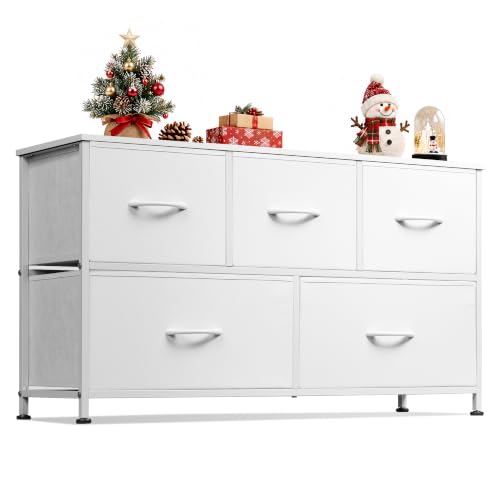
Light finishes reflect available light, which helps small closets feel less enclosed. A white or natural wood dresser can brighten a dim space without requiring additional lighting. If you prefer contrast, a dresser with gold handles adds a refined accent without overwhelming the room.
Dressers With Cubbies and Open Shelves
Open storage can be useful in closets for shoes, baskets, or folded throws. A dresser with cubbies and drawers combines closed and open storage, though open shelves collect dust more readily in a closet environment.
Dressers With Sliding or Barn Doors
Standard hinged doors need swing clearance, which is scarce in closets. A dresser with sliding barn door style offers concealed storage without the door arc, making it a smart choice for tight layouts.
Dressers With Baskets
Removable baskets add flexibility for laundry, accessories, or seasonal items. A dresser with baskets can serve double duty as a hamper station inside the closet, reducing clutter in the bedroom.
If your closet is part of a larger bedroom storage plan, consider how the dresser relates to other pieces. Our article on dresser vs wardrobe helps clarify when a wardrobe is the better primary storage solution and the dresser plays a supporting role.
Closet Dresser Organization Tips
Once the dresser is in place, organization determines how well the system works. A dresser that fits in closet spaces still needs a thoughtful internal layout. These strategies help you use every drawer efficiently.
Assign Drawers by Category
Dedicate each drawer to a single category: tops, bottoms, undergarments, socks, activewear, or linens. Clear categories prevent the dresser from becoming a catch-all and make it easy to find items at a glance.
Use Drawer Dividers
Dividers keep folded stacks upright and separate small items. They are especially useful in shallow drawers where loose accessories would otherwise slide around. Adjustable dividers let you reconfigure the layout as your wardrobe changes.
Fold Vertically
Vertical folding, sometimes called file folding, lets you see every item in a stack without lifting the ones on top. This method works particularly well in deep drawers and reduces the time spent searching for a specific piece.
Keep Heavy Items Low
Place heavier folded items such as jeans and sweaters in lower drawers to keep the dresser stable and make lifting easier. Lighter items like socks and accessories belong in upper drawers.
Rotate Seasonally
Use the closet dresser for the current season's clothing and store off-season pieces in bins or higher shelves. This keeps the most-used drawers uncluttered and makes the dresser feel larger than its footprint.
For a deeper dive into drawer systems and folding methods, see our full dresser organization guide. If your closet also needs hanging storage, a dresser with hanging rod can combine folded and hanging capacity in one unit.
Common Mistakes to Avoid
Even a well-chosen dresser that fits in closet dimensions can disappoint if planning is rushed. Watch for these common pitfalls.
- Ignoring drawer extension clearance: A dresser can fit against the wall and still be unusable if drawers cannot open. Always measure the open-drawer footprint, not just the closed unit.
- Blocking hanging space: Placing a dresser in front of a hanging rod reduces usable clothing capacity. Map the closet layout before purchasing.
- Choosing depth over function: A deeper dresser may fit the wall but leave no walking room. Prioritize comfortable access over maximum drawer volume.
- Overlooking ventilation: Closets need airflow to prevent musty odors and moisture damage. Avoid sealing off vents or pushing the dresser tight against a damp exterior wall.
- Skipping anchoring: Tall dressers should be anchored to the wall, especially in closets where the floor may be uneven or the unit may be bumped while reaching for hanging clothes.
- Forgetting lighting: A dark closet makes drawers hard to use. Add battery-powered puck lights or a small LED strip if the closet lacks built-in lighting.
If you are weighing a dresser against other storage furniture, our comparison of dresser vs chest of drawers clarifies how each form factor performs in tight spaces.
Frequently Asked Questions
What size dresser fits in a standard closet?
A standard reach-in closet typically offers 24 to 30 inches of depth. A dresser that fits in closet spaces should measure no more than 22 to 24 inches deep to leave room for the door to close and for you to move around. Width depends on available wall space, but narrow models under 30 inches wide are popular for reach-in closets.
Can a dresser fit in a walk-in closet?
Yes, walk-in closets are ideal for a dresser that fits in closet layouts. A mid-range or premium dresser placed along a side wall or at the end of a hanging rod run can create a boutique-style dressing room. Measure clearance for drawers to open fully, ideally 24 to 36 inches of open floor space.
Is a dresser inside a closet a good idea?
It can be excellent for freeing up bedroom floor space, keeping clothing in one zone, and creating a dedicated dressing area. However, closets need ventilation and moisture control. Choose a dresser with durable construction and avoid blocking vents or access to hanging rods.
What is the best drawer configuration for a closet dresser?
For a dresser that fits in closet spaces, a tall and narrow model with four to six drawers often works best. Deep drawers suit folded clothing and linens, while shallow drawers with dividers are useful for accessories. Full-extension drawers improve access in tight spaces.
Should a closet dresser be anchored to the wall?
Yes. Tall dressers should always be anchored to prevent tipping, especially in closets where you may lean or reach around the unit. Use the manufacturer's anti-tip kit and secure the dresser to a wall stud whenever possible.
Ready to Find Your Closet Dresser?
Use the size guide, layout tips, and organization strategies above to narrow your options. When you are ready to compare models, our curated selection highlights dressers and storage pieces suited to closet placement and compact spaces.
Explore Recommended Dressers