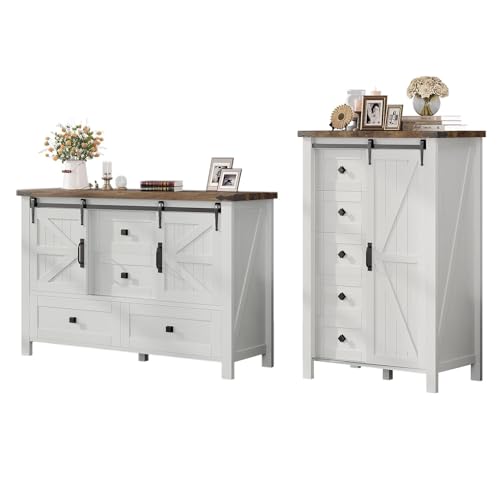
Dresser With Sliding Barn Door: The Complete Guide to Rustic Storage
A dresser with sliding barn door brings together the charm of rustic farmhouse design and the practicality of modern bedroom storage. Instead of the usual pull-out drawers, this piece features a sliding door that glides along a metal track — much like a barn door on a rustic outbuilding. The result is a distinctive furniture piece that conceals clutter, saves floor space, and adds instant character to any room.
If you are researching this style before buying, you likely already know you want something with visual personality and clever storage. This guide explains exactly how these dressers work, what to look for in materials and hardware, how to size one for your room, and how to choose the right tier for your needs — so you can make a confident, informed decision.
What Exactly Is a Sliding Barn Door Dresser?
A sliding barn door dresser is a storage cabinet that combines a standard chest of drawers with a barn-style door mechanism. The door is mounted on a top track using rollers, and it slides horizontally across the front of the dresser rather than swinging open on hinges. Behind the sliding door, you will typically find a combination of drawers, open shelves, or cubbies.
The design borrows directly from architectural barn doors, which have become a signature element of farmhouse and rustic interiors. Common characteristics include:
- Exposed metal track and rollers — usually powder-coated steel or iron in black or dark bronze.
- Solid wood or wood veneer door panels — often with a plank, X-brace, or framed panel design.
- Distressed or natural finishes — reclaimed wood looks, whitewashed finishes, and deep stained tones.
- Concealed storage — the door hides drawers or shelves behind it, keeping the room visually tidy.
Unlike a conventional chest of drawers, the sliding door means you do not need clearance in front of the unit to open it. That makes this style especially useful in tight bedrooms or along narrow walls. If space is a priority, you may also want to explore dressers for small spaces to compare layout options.
Why Choose a Dresser With a Sliding Barn Door?
There are several practical and design reasons this style has become so popular. Understanding them will help you decide whether it fits your bedroom, guest room, or even a living area.
1. Space efficiency
Because the door slides rather than swings, you can place the dresser close to a bed, a wall, or another piece of furniture without worrying about door swing clearance. In compact rooms, every inch counts — and this design respects that constraint.
2. Hidden storage that looks intentional
The sliding door conceals the contents behind it. If you prefer a calm, uncluttered look, this is a major advantage. Items like folded clothing, linens, or accessories stay out of sight, while the dresser itself reads as a purposeful design feature.
3. Strong rustic and farmhouse character
The exposed track and wood paneling give the piece a warm, handcrafted feel. It pairs naturally with farmhouse dressers and other rustic bedroom furniture, and it can anchor a room's style even when the rest of the decor is simple.
4. Versatility beyond the bedroom
Many buyers use these dressers in entryways, living rooms, and home offices. The barn door look works as a media console, a hallway storage cabinet, or a stylish catch-all near the front door. If you are exploring multi-use pieces, dressers with cabinets and drawers offer similar flexibility.
Key Features to Evaluate Before Buying
Not all sliding barn door dressers are built to the same standard. Use the checklist below to separate a well-made piece from a decorative but flimsy one.
Door track and roller hardware
The sliding mechanism is the defining feature, so inspect it closely. Look for a track made from powder-coated steel or iron rather than thin aluminum. Rollers should glide smoothly and be rated for the door's weight. A well-engineered track will have end stops to prevent the door from sliding off, and the mounting bolts should be substantial. Cheaper units often use lightweight tracks that wobble or squeak over time.
Door construction and weight
Solid wood doors feel substantial and resist warping, but they are heavier and demand stronger hardware. Engineered wood with a quality veneer can be a good middle ground. Check that the door is thick enough to stay flat and that the frame around it is reinforced where the rollers attach.
Drawer and shelf configuration behind the door
What is behind the door matters just as much as the door itself. Some models offer deep drawers for folded clothing; others combine drawers with open shelves for baskets or shoes. Consider how you actually store your belongings. If you need a mix of hanging space and drawers, a dresser wardrobe combo may be a better fit. If you want lots of shallow compartments, look at dressers with many small drawers.
Drawer glide quality
Even with a sliding door, the internal drawers still need smooth glides. Metal ball-bearing glides are more durable than simple nylon rollers. Full-extension glides let you reach the back of each drawer easily — a feature worth prioritizing if you plan to store larger items.
Finish and material durability
Rustic finishes can be beautiful, but check how the surface is sealed. A distressed look should still have a protective topcoat that resists moisture and everyday wear. Solid wood and high-grade veneer hold up better than particleboard with a printed finish.
| Tier | Typical Construction | Hardware Quality | Best For |
|---|---|---|---|
| Entry-level | Engineered wood with veneer, lighter door panels | Basic steel track, simple rollers | Guest rooms, light-use spaces, first rustic piece |
| Mid-range | Solid wood frame with veneer panels, reinforced door | Smoother track, ball-bearing rollers | Primary bedrooms, everyday use |
| Premium | Solid hardwood throughout, thicker door slabs | Heavy-duty steel track, precision rollers | High-use family bedrooms, long-term ownership |
| Luxury | Hardwood with hand-finished details, custom sizing | Commercial-grade hardware, soft-close options | Design-led interiors, statement furniture |
Use this table as a relative guide. A mid-range model usually offers noticeably smoother door movement and sturdier drawer glides than an entry-level piece, while a premium or luxury tier focuses on longevity and finish quality.
Sizing a Sliding Barn Door Dresser for Your Room
Before you commit, measure your space carefully. The sliding door adds a few inches of width beyond the cabinet body because the door overlaps the frame when open. Here is a simple approach:
- Measure the wall length where the dresser will sit, then subtract at least 2–4 inches on each side for breathing room.
- Account for the door travel. The door slides across the front, so the total footprint width equals the cabinet width plus the overlap. Most designs keep this within the cabinet footprint, but confirm the manufacturer's dimensions.
- Check height and depth. Standard bedroom dressers are around 30–36 inches tall and 18–20 inches deep. Taller models work well in narrow rooms.
- Leave room for the track. The top track sits above the cabinet, so ensure there is wall space for mounting and that the dresser is not placed under a low window sill.
If your room is tight, compare this design with dressers less than 50 inches wide or narrow dressers to find a footprint that fits.
Style Pairing: Making the Barn Door Dresser Work in Your Bedroom
The sliding barn door dresser is a strong statement piece, so it helps to think about how it will relate to the rest of the room. A few practical guidelines:
Farmhouse and rustic interiors
This is the natural home for the style. Pair it with wood tones, linen bedding, and simple metal accents. A matching dresser with matching nightstands creates a cohesive bedroom set.
Modern and transitional rooms
In a more contemporary space, choose a dresser with a cleaner door panel and a darker or painted finish. The barn door hardware then acts as an industrial accent rather than a dominant theme. Explore modern dressers if you want a more streamlined silhouette.
Small bedrooms and guest rooms
Because the door does not swing outward, this dresser suits compact rooms. Place it along the wall opposite the bed, or use it as a bedside storage unit if the height works. For very tight spaces, a dresser that fits in a closet can free up floor area entirely.
Practical Buying Tips
Keep these points in mind when comparing options online or in stores:
- Read the hardware specification. Look for the track material, roller type, and weight rating. This is the most common point of failure.
- Check the door alignment. A quality unit arrives with adjustable rollers so the door can be leveled after installation.
- Confirm assembly requirements. Some models ship mostly assembled; others require full setup. If you prefer minimal effort, look at dressers that don't require assembly.
- Consider internal lighting. If the door conceals the contents, interior lighting can help. Models with LED lights make it easier to see inside.
- Think about security. For shared or rental spaces, a dresser with locking drawers adds peace of mind.
Care and Maintenance
A sliding barn door dresser is low-maintenance, but a little care keeps the mechanism smooth for years:
- Dust the track monthly with a dry cloth or soft brush.
- Apply a silicone-based lubricant to the rollers every few months — avoid oily sprays that attract dust.
- Check the track mounting screws periodically and tighten if needed.
- Wipe wood surfaces with a damp cloth and dry immediately; avoid harsh solvents on distressed finishes.
- Keep the dresser away from direct heat sources that can warp wood panels.
Common Mistakes to Avoid
Buyers often run into the same issues with this style. Avoid these pitfalls:
- Ignoring door travel width. Measure the full width including the sliding door's overlap before placing the dresser against a wall.
- Choosing lightweight hardware. A heavy wood door on a thin track will sag or jam. Prioritize the hardware specification.
- Overlooking internal layout. The door hides the interior, so confirm the drawer and shelf arrangement suits your clothing and accessories.
- Skipping the wall anchor. Tall dressers should be anchored to the wall for safety, especially in homes with children.
- Mismatching room scale. A large barn door dresser can overwhelm a small room; check dimensions against your floor plan.
Frequently Asked Questions
What is a dresser with sliding barn door?
It is a storage dresser that uses a horizontally sliding barn-style door on a metal track, typically with rustic wood paneling and exposed hardware. The door conceals drawers or shelves behind it.
Are sliding barn door dressers suitable for small bedrooms?
Yes. Because the door slides sideways instead of swinging outward, you do not need clearance in front of the unit. This makes the style well suited to compact bedrooms and narrow wall spaces.
What materials are used in sliding barn door dressers?
Most models use solid wood or wood veneer for the frame and door, paired with powder-coated steel or iron hardware for the track and rollers. Pine, oak, and reclaimed-wood looks are common.
How do I maintain the sliding mechanism?
Dust the track regularly, lubricate the rollers with a silicone-based product every few months, and check that the mounting screws stay tight. This keeps the door gliding smoothly and prevents squeaks.
Can a sliding barn door dresser be used outside the bedroom?
Yes. The rustic look works well in entryways, living rooms, and home offices, where it can serve as a media console or general storage cabinet.
Final Thoughts
A dresser with a sliding barn door is more than a storage piece — it is a design decision that brings texture, warmth, and practical space-saving function into a room. By focusing on the hardware quality, internal layout, and correct sizing, you can choose a model that looks great and works smoothly for years. Use the tier comparison and checklist above as your reference, and you will be well prepared to make a confident purchase.