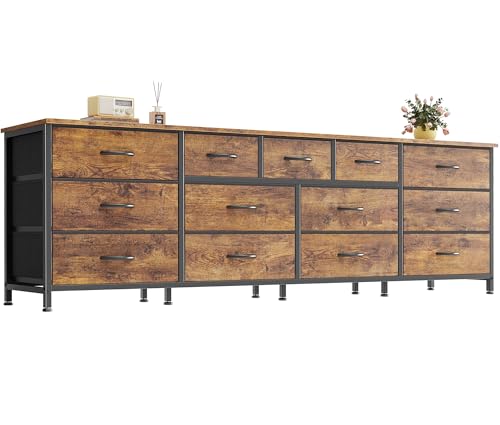
Double Sided Dresser: The Complete Guide
Two-sided storage that doubles your access, halves your footprint, and transforms the way you organize a shared bedroom or walk-in closet.
START EXPLORINGWhy a double sided dresser deserves your attention: Most dressers give you one usable face. A two-sided dresser opens from both front and back, which means a single piece of furniture can serve two people, two zones, or two sides of a closet aisle. For shared spaces, it is one of the most space-efficient storage solutions available today.
What Is a Double Sided Dresser?
A double sided dresser is a storage furniture piece built with drawers that open from two opposite faces. Instead of a solid back panel, the unit is finished on both sides, with drawer fronts and handles accessible from either direction. Some designs place drawers on both sides of a central divider; others use a pass-through layout where each user gets a dedicated set of drawers on their side.
The concept is simple but powerful: one footprint, two access points. If you have ever owned a double dresser for bedroom use, you already understand the value of generous drawer width. A double sided dresser extends that idea in a different dimension by adding a second usable face.
How a Double Sided Dresser Works
Dual Drawer Banks
Two independent drawer stacks share a common carcass. Each side typically has its own handle set and drawer slides, so one person's belongings never interfere with the other side.
Freestanding Divider
Because both faces are finished, the unit can stand in open space and act as a soft room divider between sleeping and dressing zones without looking unfinished from the back.
Finished Back Panel
Unlike standard dressers with a raw or thin backing, a two-sided unit uses a full finished panel or a second drawer face. This adds structural rigidity and visual polish from every angle.
Shared Carcass Strength
Doubling the drawer access means the frame must be reinforced. Better models use thicker side panels and a mid-frame divider to keep the piece stable when both sides are loaded.
Where a Double Sided Dresser Works Best
Placement is where this piece earns its keep. The most natural home is a walk-in closet with a central aisle: a double sided dresser for walk-in closet layouts lets two people dress simultaneously without crossing paths. One side faces the his section, the other faces the hers section, and the unit sits in the middle like a compact island.
Shared bedrooms benefit too. A couple with different sleep schedules can each reach their own drawers without walking around the bed. In larger rooms, the unit doubles as a room divider between a sleeping area and a reading nook. If your room is tight, pair the concept with dresser options for small spaces thinking: measure circulation first, then choose the narrowest double-sided profile that still fits your storage volume.
Other practical placements include:
- A dressing room island where both long sides need drawer access
- A guest room doubling as a home office, with work storage on one side and clothing on the other
- A nursery-to-child room transition, where one side holds baby items and the other holds older-child clothing
- A dresser room setup where the unit anchors the center of the floor plan
Key Benefits of Two-Sided Dressers
Two Users, One Footprint
Instead of buying two separate dressers, a single double sided unit serves two people. That saves floor area and keeps the room visually calmer.
Closet Aisle Efficiency
In walk-in closets, a central double sided dresser turns dead aisle space into high-density storage, freeing wall space for hanging rods and shelving.
Room Divider Function
The finished back means the unit looks intentional from every angle, so it can separate zones in a studio or loft without a built wall.
Better Drawer Discipline
When each person owns a dedicated side, drawer organization stays personal. Pair it with a drawer dividers guide to keep categories separate.
Long-Term Flexibility
A two-sided piece adapts as needs change: guest room today, shared kids room tomorrow, dressing room island later. Fewer furniture replacements over time.
Visual Symmetry
In open floor plans, a finished-on-both-sides dresser reads as a deliberate design element rather than a piece shoved against a wall.
Tiers & Quality Levels
Double sided dressers are more complex to build than standard single-face units, so quality varies widely. Use the tier descriptors below to understand relative market positioning without getting lost in specifications.
| Tier | Typical Construction | Best For | Drawer Slides |
|---|---|---|---|
| Entry-Level | Engineered wood carcass, thinner panels, basic hardware | Guest rooms, temporary setups, light use | Basic side-mount slides |
| Mid-Range | Mixed solid wood and engineered panels, reinforced mid-frame | Shared bedrooms, everyday closet use | Smooth ball-bearing slides |
| Premium | Solid wood primary panels, dovetail drawer boxes | Primary bedrooms, walk-in closet islands | Soft-close full-extension slides |
| Luxury | Hardwood carcass, hand-finished details, custom sizing | Custom closets, designer dressing rooms | Heavy-duty full-extension, often soft-close |
Mid-range models usually offer noticeably smoother drawer action and better frame rigidity than entry-level builds, which matters more on a double sided dresser because both faces carry load. If the unit will be used daily by two people, start your comparison at the mid-range tier.
Double Sided vs. Standard Dresser
It helps to compare the two-sided concept against familiar alternatives. A standard double dresser for bedroom use gives you a wide single-face bank of drawers; a double chest of drawers gives you a taller single-face stack. Neither offers rear access.
| Feature | Double Sided Dresser | Standard Single-Face Dresser |
|---|---|---|
| Access Points | Two opposite faces | One face |
| Placement Flexibility | Can float in open space as a divider | Must sit against a wall |
| Best Use Case | Shared rooms, walk-in closets, two users | Single-user bedrooms, wall-aligned layouts |
| Structural Demand | Higher, needs reinforced mid-frame | Standard, one-face load |
| Visual Finish | Finished on both sides | Back typically unfinished |
| Typical Tier Starting Point | Mid-range for daily use | Entry-level acceptable for light use |
What to Check Before Buying
Because you are paying for a second drawer bank and a finished rear, specification discipline matters. Run through this checklist before committing.
- Measure clearance on both sides. Each face needs 24 to 30 inches so drawers open fully without pinching traffic.
- Confirm the mid-frame. Ask whether there is a structural divider between the two drawer banks. It is the difference between a stable unit and a wobbling one.
- Check drawer slide ratings. Look for slides rated for frequent daily use, especially if both sides hold clothing and linens.
- Inspect the finished back. The rear should be fully finished, not a thin raw panel, since it will be visible.
- Verify handle symmetry. Handles on both faces should align cleanly when viewed from either side.
- Plan the footprint. A double sided unit is often deeper than a standard dresser. Confirm the aisle or floor zone accommodates the depth plus clearance.
- Match your storage volume. Count drawers per side. If you need deep clothing storage, prioritize a model with at least four drawers per face, similar to a double dresser with deep drawers layout.
- Consider drawer hardware upgrades. If the unit uses standard pulls, browse dresser hardware options to personalize both faces consistently.
Organization Tips for Two-Sided Storage
A double sided dresser works best when each face has a clear purpose. Treat each side as its own mini-system rather than mixing categories across the divider.
Assign Sides by Owner
In a shared bedroom, give each person one face. Ownership reduces clutter creep and makes dresser organization ideas easier to sustain.
Assign Sides by Category
In a closet island, dedicate one face to folded clothing and the other to accessories, linens, or off-season items.
Use Drawer Dividers
Both faces benefit from compartmentalization. A clear drawer dividers guide helps you map zones before the unit arrives.
Label Internally
Since two users share one carcass, internal labels on drawer boxes prevent mix-ups and speed up daily routines.
If you are outfitting a nursery transition, a two-sided unit can hold baby essentials on the aisle-facing side and older-child clothing on the wall-facing side, evolving as the child grows. Pair it with a dresser for children's room safety review to confirm anti-tip anchoring on both faces.
Ready to Compare Double Sided Dressers?
Explore recommended models below, filter by tier and drawer count, and check availability before you commit.
Explore OptionsFrequently Asked Questions
What is a double sided dresser?
A double sided dresser is a storage unit with drawers accessible from two opposite faces. It is built with a finished back and a reinforced mid-frame so both sides can be used independently, making it ideal for shared rooms and walk-in closets.
Is a double sided dresser the same as a double dresser?
No. A double dresser for bedroom use is a wide single-face unit with a long row of drawers. A double sided dresser has drawer access on both the front and back faces. The names sound similar but describe different storage layouts.
Where should I place a double sided dresser?
The most popular placement is a walk-in closet aisle, where a double sided dresser for walk-in closet setup serves both sides. It also works as a freestanding room divider in shared bedrooms and studio layouts.
How much clearance does it need?
Plan for at least 24 to 30 inches of clearance on each face so drawers can extend fully without blocking walking paths. In tight rooms, measure the circulation route first and choose a shallower depth if needed.
Can one person use a two-sided dresser alone?
Yes. Solo users often dedicate one face to daily clothing and the other to off-season storage, linens, or hobby supplies. It effectively doubles your drawer count in a single footprint.
Which tier should I choose?
For daily use by two people, start at the mid-range tier. Entry-level builds suit light or temporary use. Premium and luxury tiers add solid wood construction, dovetail drawer boxes, and soft-close full-extension slides for long-term durability.
Does a double sided dresser need to be anchored?
Yes. Any tall or freestanding dresser should be anchored to a wall or floor per the manufacturer's instructions. This is especially important in homes with children, since both faces may be opened simultaneously.