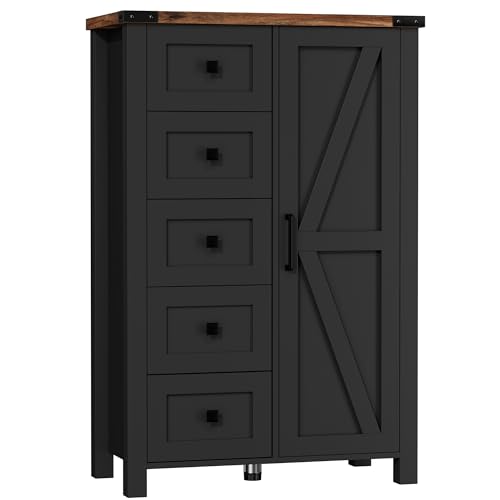
Chest of Drawers with Sliding Door: Complete Guide
Discover how a chest of drawers with sliding door combines the best of drawer storage and concealed compartment space. Learn about designs, materials, and choosing the right piece for your bedroom.
Start ExploringWhat Is a Chest of Drawers with Sliding Door?
A chest of drawers with sliding door is a hybrid storage furniture piece that combines traditional drawer capacity with a compartment concealed behind a sliding door. Unlike standard chests where every storage area is a drawer, this design incorporates one or more sections accessed through a lateral sliding panel—typically revealing shelves, a hanging rod, or additional smaller drawers.
This configuration addresses a common bedroom storage challenge: the need to separate daily-access items from less frequently used belongings. The drawer section handles folded clothing and everyday essentials, while the sliding door compartment conceals bulkier items, seasonal garments, or personal items you prefer to keep out of sight.
Sliding door chests are particularly valuable in rooms where space is at a premium. The door glides along a track rather than swinging outward, so you never need clearance in front of the unit beyond the drawer extension. This makes them a practical alternative to hinged-door armoire wardrobes in narrow bedrooms or tight corners.
Design note: The sliding door on these chests typically operates on either a top-mounted track system or a bottom-roller system. Top-mounted tracks are more common in residential furniture because they keep the mechanism hidden and reduce floor-level debris accumulation.
Key Benefits of Sliding Door Chests
Understanding why this furniture category exists helps you evaluate whether it suits your storage needs. Here are the primary advantages:
Space Efficiency
The most immediate benefit is the absence of swing clearance. In a bedroom where floor space is limited, a hinged door needs room to open—often 18 to 24 inches. A sliding door moves parallel to the chest face and requires zero additional clearance. This makes sliding door chests suitable for placement beside a bed, in a corner, or along a narrow wall where a traditional armoire would not fit.
Storage Flexibility
Behind the sliding door, you can typically find adjustable shelving or a combination of shelves and a hanging rod. This versatility means the same piece can serve as a dresser, a mini-wardrobe, and a display cabinet depending on how you configure the interior. For households with changing storage needs—such as a guest room that doubles as a home office—this adaptability is a meaningful advantage.
Concealed Organization
Some belongings are best kept behind a closed door: out-of-season clothing, craft supplies, paperwork, or items that simply do not fit the aesthetic of the room. The sliding door compartment provides a clean visual line while keeping those items accessible. This is especially useful in open-plan bedrooms or studio apartments where the sleeping area is visible from living spaces.
Reduced Visual Clutter
Drawer fronts, even when closed, create horizontal visual lines. A large sliding door panel offers a cleaner, more streamlined appearance. In minimalist or contemporary interiors, this unbroken surface contributes to a calmer visual environment. Pair it with a contemporary dresser and nightstand set for a cohesive bedroom look.
Types of Sliding Door Chest Designs
Not all sliding door chests are constructed the same way. The configuration of the door, the drawer layout, and the intended room all influence which type suits your needs.
Single Sliding Door with Drawer Stack
This is the most common configuration: a vertical stack of drawers on one side and a full-height sliding door compartment on the other. The door slides laterally to reveal shelving or a hanging section. This layout works well as a primary bedroom storage piece because it separates folded clothing (drawers) from hanging or bulky items (door compartment).
Double Sliding Door Chest
Two door panels slide past each other to cover a wider compartment, often with drawers positioned beneath. This design resembles a small wardrobe and suits rooms where you need more concealed hanging space but still want drawer storage for folded items. A deep chest of drawers variant with double doors can handle significant storage volume without occupying much wall width.
Sliding Door with Open Shelving
Some designs combine a sliding door on one section with open shelves on another. This is useful for display items—books, decorative objects, or frequently used accessories—while keeping the rest concealed. The mixed-material approach works well in living rooms and home offices as well as bedrooms.
Corner Sliding Door Chest
Designed for corner placement, these units use an angled front or a compact footprint to fit into otherwise wasted space. The sliding door allows access without needing to step back, which is particularly helpful in small bedrooms where a corner chest of drawers might otherwise be difficult to open.
Materials and Construction Quality
The sliding mechanism places additional stress on the chest frame compared to a standard drawer-only unit. The door's weight must be supported consistently across the track, and the frame must resist twisting over time. Material choice directly affects longevity.
Solid Wood Construction
Solid wood chests—whether oak, maple, walnut, or pine—offer the most reliable foundation for a sliding door mechanism. The frame resists warping, and the track can be securely anchored to dense material. A solid wood chest in the premium tier will typically use dovetail joinery on drawers and reinforced corner blocks, both of which contribute to structural rigidity. Expect these pieces to be heavier, which is actually a sign of stability rather than a drawback.
Engineered Wood with Veneer
Medium-density fiberboard (MDF) and particleboard cores with wood veneer offer a mid-range alternative. The key quality indicator is the density of the core and the thickness of the veneer. Lower-density boards are more susceptible to sagging under the weight of a sliding door over time. Look for chests that specify moisture-resistant MDF and reinforced track mounting points. For a balanced-tier option, engineered wood chests can perform well if the hardware is high-grade.
Metal and Glass Accents
Contemporary designs sometimes incorporate metal frames or glass door panels. A chrome dresser with a sliding glass door creates a modern aesthetic but requires careful handling—glass panels are heavier and less forgiving of impact. Metal tracks in these designs are typically more durable than plastic alternatives, but the overall frame must be rigid enough to prevent misalignment.
Hardware Quality
The sliding mechanism itself is the most critical hardware component. Rollers should be sealed ball-bearing type rather than plain nylon wheels. Tracks should be metal (aluminum or steel) rather than plastic. Soft-close dampers, while not essential, reduce noise and prevent the door from slamming. High-end tier chests often include adjustable track tensioners that let you correct minor misalignments without disassembling the unit.
Sizing and Placement Guide
Getting the dimensions right is essential for both functionality and aesthetics. A sliding door chest that is too tall can feel oppressive in a small room; one that is too shallow may not accommodate hanging garments.
Standard Dimensions
| Size Category | Typical Width | Typical Height | Best For |
|---|---|---|---|
| Compact | 30–40 inches | 40–50 inches | Small bedrooms, guest rooms |
| Standard | 40–55 inches | 50–60 inches | Primary bedrooms, couples |
| Large | 55–70 inches | 60–72 inches | Master suites, family storage |
| Tall / Wardrobe-style | 35–50 inches | 70–80 inches | Full hanging storage, small footprint |
Placement Considerations
Measure the wall space where the chest will sit. Unlike hinged furniture, a sliding door chest needs no front clearance, but you should still leave at least 24 inches of open floor in front of the drawers so they can extend fully. If the chest is placed beside a bed, confirm that the drawer pulls do not collide with the mattress or frame. For narrow rooms, a narrow dresser with a sliding door can fit into gaps as small as 30 inches wide.
Height matters too. If the chest will double as a surface for a mirror or decorative display, the top should sit at a comfortable viewing height—typically 30 to 36 inches from the floor for seated viewing, or 48 to 55 inches for standing use. A dresser with mirror combination works best when the mirror is proportional to the chest width.
Drawer and Door Configurations
The internal layout determines how usable the chest is day to day. A sliding door chest with a poorly planned interior wastes the space it was designed to save.
Drawer Depth and Height
Shallow drawers (4 to 6 inches deep) suit folded shirts, underwear, and accessories. Medium drawers (6 to 8 inches) handle sweaters and folded trousers. Deep drawers (8 to 12 inches) are best for bedding, bulky knitwear, or storage of off-season items. A well-designed chest varies drawer heights rather than making every drawer the same. For more on maximizing drawer utility, see our guide to clothes drawer storage.
Door Compartment Layout
Behind the sliding door, the most practical configurations are:
- Adjustable shelving: Three to five shelves that can be repositioned to match item height. Best for folded clothing, boxes, and accessories.
- Hanging rod: A single rod for shirts, dresses, or jackets. Often paired with a shelf above for shoes or boxes.
- Combination: A hanging section on one side and shelves on the other. This is the most versatile layout for mixed storage.
- Pull-out trays: Some premium designs include sliding trays behind the door for jewelry or small accessories.
Drawer Glide Quality
Drawers in a sliding door chest should use metal ball-bearing glides rather than plastic roller slides. The drawers will be opened frequently, and the chest's hybrid nature means the drawer section often carries the bulk of daily-use items. Soft-close mechanisms are a worthwhile feature in mid-range and premium tiers. For organization within drawers, clothes drawer dividers can prevent the contents from shifting when drawers are opened and closed.
Sliding Mechanism Maintenance
A sliding door chest will only remain smooth and functional if the track system is maintained. Neglected tracks accumulate dust, lint, and debris, which cause the door to bind or jump the track.
Routine Cleaning
Vacuum the track monthly using a brush attachment. Wipe the rails with a dry microfiber cloth to remove fine dust. Avoid wet cloths on metal tracks, as moisture can promote corrosion over time. If the track has visible debris in the grooves, use a soft brush or a cotton swab to dislodge it before vacuuming.
Lubrication
Apply a silicone-based lubricant—not oil or grease—to the track and rollers every three to six months, or more frequently in humid climates. Silicone dries to a thin film that repels dust rather than attracting it. Oil-based lubricants trap lint and eventually gum up the mechanism. After applying, slide the door back and forth several times to distribute the lubricant evenly.
Alignment Checks
Periodically inspect the door's alignment. If the door drags at one end, the track may have shifted or the rollers may be worn. Many mid-range and premium chests include adjustable roller brackets that let you raise or lower the door slightly without removing it. If the track itself is loose, tighten the mounting screws—but avoid over-tightening, which can strip the screw holes in softer woods. For general furniture care, see our dresser cleaning guide.
Maintenance tip: Avoid hanging heavy items—such as loaded garment bags—on the door itself. The door panel is designed to slide, not to bear weight. Hanging storage should always be inside the compartment on the rod, not on the door face.
Safety Considerations
Any tall furniture piece—especially one with sliding components—deserves attention to safety, particularly in households with children.
Anti-Tip Anchoring
Tall sliding door chests should be anchored to the wall using the anti-tip kit supplied by the manufacturer. Even a relatively short chest can tip if a child climbs on an open drawer or hangs on the door. If the chest did not include a kit, universal anti-tip straps are widely available and inexpensive. This is non-negotiable for children's dressers and any chest placed in a child's bedroom.
Door Track Safety
Ensure the sliding door has a stop block at each end of the track so it cannot slide completely off. Check that the door panel cannot be lifted out of the track from the front—some designs use a top guide that prevents this, while others rely on gravity alone. If the door can be lifted out easily, consider adding a small retainer clip or consult the manufacturer.
Drawer Interlocks
Some premium chests include drawer interlocks that prevent more than one drawer from opening at a time. This reduces the risk of the chest becoming front-heavy and tipping. If your chest lacks interlocks, establish a household rule of opening one drawer at a time, especially in homes with young children.
How to Choose the Right Sliding Door Chest
With the background covered, here is a structured approach to selecting a chest of drawers with sliding door that fits your space and needs.
Step 1: Define the Primary Storage Need
Ask what the chest must hold most. If the majority of your clothing is folded, prioritize drawer count and depth. If you need hanging space for dresses or suits, prioritize the door compartment's height and rod capacity. If you need both, look for a combination layout. Couples often benefit from a couples dresser design with clearly divided storage zones.
Step 2: Measure the Space
Record the available wall width, the ceiling height, and the distance to the nearest doorway or bed. Remember that sliding door chests need no swing clearance, but drawers need extension room. Also confirm that the delivery path—hallways, stairwells, doorways—can accommodate the chest's dimensions. A large chest that cannot be maneuvered into the room is a practical failure regardless of how well it suits the space.
Step 3: Set a Quality Tier Target
Decide which construction tier matches your expectations for longevity. Entry-level chests typically use thinner engineered wood and basic roller hardware—suitable for guest rooms or temporary setups. Mid-range chests offer better core density, metal tracks, and soft-close drawers—a balanced choice for most households. Premium and luxury tiers use solid wood, dovetail joinery, adjustable tracks, and reinforced frames—appropriate for primary bedrooms and long-term use. Whichever tier you target, verify the hardware specifications rather than relying on appearance alone.
Step 4: Evaluate the Door Mechanism in Person
If possible, operate the sliding door before purchase. It should glide smoothly with one hand, without wobbling or jumping the track. Listen for grinding or scraping sounds, which indicate misalignment or poor roller quality. Open and close every drawer; they should extend fully and retract without catching. Check that the door, when closed, sits flush with the chest face—gaps or uneven alignment suggest imprecise construction.
Step 5: Confirm Safety Features
Check that the chest includes or is compatible with an anti-tip anchoring system. Look for door stop blocks and, if children are in the home, drawer interlocks. These features are easier to evaluate before purchase than to retrofit afterward.
Ready to Explore Sliding Door Chests?
Browse our curated selection of chest of drawers with sliding doors and find the right storage solution for your bedroom.
View RecommendationsFrequently Asked Questions
What is a chest of drawers with sliding door?
A chest of drawers with sliding door combines traditional drawer storage with a sliding door compartment, typically used to conceal shelves, hanging space, or additional drawers. This hybrid design maximizes storage flexibility within a compact footprint and eliminates the swing clearance required by hinged doors.
Are sliding door chests suitable for small bedrooms?
Yes. Sliding doors require no swing clearance, making them ideal for tight spaces where hinged doors would obstruct walkways. Combined with drawer storage, these chests offer efficient organization in compact bedrooms. A compact or narrow sliding door chest can fit into spaces as small as 30 inches wide.
How do I maintain sliding door mechanisms?
Clean tracks regularly with a vacuum brush attachment, wipe rails with a dry cloth, and apply a silicone-based lubricant to keep glides smooth. Avoid oil-based lubricants, which attract dust. Check door alignment periodically and tighten track mounting screws if they loosen. Avoid hanging heavy items on the door itself.
What materials are best for sliding door chests?
Solid wood offers the best durability and longevity for sliding door chests, as the dense frame holds track hardware securely and resists warping. Engineered wood with quality veneers provides a balanced mid-range option if the core density is sufficient. Metal and glass accents add contemporary style but require careful handling.
Can a sliding door chest be used as a wardrobe?
Yes, many sliding door chests include a hanging rod behind the door, allowing them to function as a compact wardrobe. Taller models (70–80 inches) provide enough hanging height for shirts and dresses. However, for full-length garments or extensive wardrobes, a dedicated closet armoire wardrobe may be more appropriate.
Do sliding door chests require wall anchoring?
Yes, tall chests—including sliding door models—should always be anchored to the wall using an anti-tip kit. This is especially important in households with children or pets. Even shorter chests can tip if weight is distributed unevenly or if a child climbs on an open drawer.