
Chest of Drawers and Matching Wardrobe
Everything you need to choose a coordinated chest and wardrobe pair — sizing, materials, style matching, and layout — so your bedroom storage feels intentional from day one.
Start the Buying FrameworkWhy a coordinated pair matters: A chest of drawers handles folded clothing, accessories, and daily essentials, while a wardrobe manages hanging garments and larger items. When the two pieces are chosen as a set rather than as separate purchases, the bedroom gains visual calm and practical storage coverage that individual pieces rarely deliver on their own.
The Buying Framework: Matching Without Looking Generic
The most common mistake buyers make is treating "matching" as an all-or-nothing decision. In practice, successful bedroom furniture pairing falls into three approaches, each with its own character and trade-offs.
Exact Matching
Same collection, same finish, same hardware, same wood grain. This produces a formal, hotel-suite aesthetic. It is the safest route for buyers who want zero ambiguity and are furnishing a room from scratch.
Coordinated Matching
Same wood tone or finish family, but slightly different silhouettes, hardware, or leg styles. This is the most flexible approach and the one most interior designers recommend for lived-in bedrooms.
Complementary Pairing
Different finishes deliberately balanced through repeated tones elsewhere in the room — for example, a dark walnut chest with a painted wardrobe that echoes the same warm undertone.
Before deciding on an approach, confirm the storage split you actually need. If most of your wardrobe is hanging, a smaller chest works well alongside a full-height wardrobe. If you fold nearly everything, the chest becomes the primary storage and deserves more floor space. Buyers who are still mapping out their overall storage plan often benefit from reviewing a broader collection of buying guides before committing to a specific configuration.
Sizing Rules That Prevent Clutter
Proportion is where most matching sets succeed or fail. A chest that is visually heavier than the wardrobe makes the room feel bottom-heavy, while an undersized chest leaves dead space and forces overflow onto other surfaces.
- Width ratio: aim for the chest to be roughly 60–75% of the wardrobe's width when the two stand on the same wall.
- Height harmony: a chest that tops out near the wardrobe's midpoint reads as grounded and intentional. A tall chest of drawers placed beside a full-height wardrobe needs extra breathing room to avoid a crowded look.
- Circulation clearance: leave at least 24–30 inches of walking space in front of both pieces. This matters more than any aesthetic rule — a cramped layout undoes the effect of a perfectly matched set.
- Door swing radius: measure the wardrobe's door arc before placing the chest beside it. Hinged doors need unobstructed swing; sliding doors change the equation entirely.
- Low-and-wide alternative: in rooms with low ceilings or sloped walls, a low and wide chest of drawers paired with a compact wardrobe keeps the room feeling open.
Materials: What "Matching" Actually Means Across Wood Types
Matching finishes across two different pieces is easier said than done, because wood species and veneer lots vary. The table below shows how common materials behave when paired in the same room.
| Material | Matching Behavior | Best For |
|---|---|---|
| Solid oak | Grain patterns vary widely between pieces; matching requires selecting from the same production run. | Long-term investment pieces in mid-range to premium tiers |
| Walnut veneer | Veneer lots can differ noticeably in tone; coordinated pairing often reads better than exact matching. | Warm, mid-century or contemporary bedrooms |
| Painted MDF | Easiest to match exactly, since color is applied rather than inherent to the material. | Entry-level and starter-tier coordinated sets |
| Pine | Softwood grain and knot patterns differ strongly; exact matching is difficult outside a single collection. | Rustic and farmhouse-style bedrooms |
| Engineered wood with laminate | Consistent color and texture across pieces; the most predictable matching option. | Balanced-tier sets for renters and high-turnover rooms |
If exact matching matters to you, buying both pieces from a single collection is the only reliable route. Independent buyers who want a coordinated look should treat finish family — warm brown, cool gray, natural blond — as the matching criterion rather than exact color. Detailed notes on dresser quality and material selection can help you judge whether a veneer is likely to age in step with its companion piece.
Style Pairings That Work in Real Bedrooms
Certain chest-and-wardrobe combinations are consistently easier to style than others. These pairings hold up across room sizes and decor schemes:
- Mid-century pairing: tapered legs on both pieces, with a low chest and a taller wardrobe in the same warm wood tone. The leg profile is the visual glue.
- Modern minimal pairing: flat fronts, handleless drawers, and a matte finish across both pieces. Contrast comes from texture, not color.
- Farmhouse pairing: beadboard or paneled fronts on the chest, matched to a wardrobe with similar paneling in the same painted tone.
- Transitional pairing: a classic chest silhouette with a more contemporary wardrobe, unified by identical hardware and finish.
Hardware is the fastest, most reversible way to make two near-matching pieces read as a true set. Swapping pulls on both pieces to a single style costs little and instantly creates cohesion.
Layout Scenarios for Different Bedroom Sizes
Where the two pieces sit relative to each other changes the entire feel of the room. Three layouts cover most bedrooms:
- Same-wall alignment: chest and wardrobe side by side on one long wall. Works best when the width ratio falls in the 60–75% range and heights are roughly harmonized.
- Opposite-wall placement: wardrobe on the entry wall, chest near the bed. This avoids visual competition and is the most forgiving layout for mismatched heights.
- Corner arrangement: the chest angled into a corner with the wardrobe on the adjacent wall. This suits compact bedrooms and closet-adjacent placements.
Practical Checks Before You Commit
Once the aesthetic decisions are made, a short mechanical checklist prevents the most common post-purchase regrets:
- Measure the exact delivery path — hallway turns, stairwell width, and door frames — for both pieces before ordering.
- Confirm whether the wardrobe requires wall anchoring. Tall pieces paired with chests are frequently used as leaning points, which increases tip-over risk.
- Check drawer extension depth on the chest. Full-extension runners make deep drawers usable; partial-extension runners hide the back third of the drawer.
- Verify the wardrobe's interior configuration supports your hanging ratio — long-hang versus double-hang sections change how much the chest must carry.
- If the set will sit near a window, check whether the finish is UV-stable. Natural wood tones shift with sunlight, and matched pieces can drift apart over time if only one is exposed.
Ready to Shortlist Your Pair?
Browse coordinated chest-and-wardrobe options and compare configurations side by side before deciding.
Explore Matched SetsFrequently Asked Questions
Should a chest of drawers and wardrobe always match exactly?
Not necessarily. Exact matching creates a formal, hotel-like look. Coordinated matching — same wood tone or finish family but slightly different silhouettes — often feels more curated and flexible for real bedrooms.
What size chest of drawers pairs best with a wardrobe?
A chest that is roughly 60 to 75 percent of the wardrobe's width keeps visual balance. Height matters too: a chest no taller than the wardrobe's midpoint reads as grounded rather than competing.
Can I mix a tall chest with a low wardrobe?
Yes, but placement is key. A tall chest works best on a different wall or angled beside the wardrobe rather than directly adjacent, so the height contrast reads as intentional.
Do matching sets work in small bedrooms?
They can, if you scale down. Choose a narrow chest and a compact wardrobe in the same finish, and favor pieces with legs or recessed bases to keep floor space visible.
Recommended Chest of Drawers and Matching Wardrobe Sets
⚠️ AFFILIATE DISCLOSURE: This website contains affiliate links. As an Amazon Associate, we earn from qualifying purchases. If you make a purchase through these links, we may receive a small commission at no additional cost to you. Read our full affiliate policy.

GarveeHome Multifunctional Wooden Dresser for Bedroom, 43.3 in H 2 Door Wardrobe Armoire Closet with 4 Drawers and Hanging Rod, Low Storage Cabinet for Hanging Cloth, White
Check price on Amazon
GarveeHome Multifunctional Wooden Dresser for Bedroom, 43.3 in H 2 Door Wardrobe Armoire Closet with 4 Drawers and Hanging Rod, Low Storage Cabinet for Hanging Cloth, Natural Oak
Check price on Amazon
SONGMICS Dresser for Bedroom, Tall Dresser with 8 Fabric Drawers | Chest of Drawers with Steel Frame, for Closet & Entryway, Ink Black and Ebony Black, BELLAH Collection ULGS124B01S
Check price on Amazon
GarveeHome Multifunctional Wooden Dresser for Bedroom, 43.3 in H 2 Door Wardrobe Armoire Closet with 4 Drawers and Hanging Rod, Low Storage Cabinet for Hanging Cloth, Gray
Check price on Amazon
HIGDBFE Tall Dresser 44''H with Hanging Rack, 4 Drawers Small Closet Dresser for Bedroom, Reversible Fabric Chest of Drawers with Clothes Rack, Tall Storage Tower, Sturdy Frame, Black
Check price on Amazon
VASAGLE 5-Drawer Dresser, Chest of Drawers, 31.5 x 15.7 x 47.4 in | Large Capacity Storage Cabinet, Particleboard, MDF, Taupe Brown, SIREN Collection ULTS653TA01S
Check price on Amazon
SONGMICS Dresser for Bedroom, Wide Dresser with 5 Fabric Drawers | Chest of Drawers with Steel Frame, for Closet & Entryway, Ink Black and Rustic Brown, BELLAH Collection ULGS322B02S
Check price on Amazon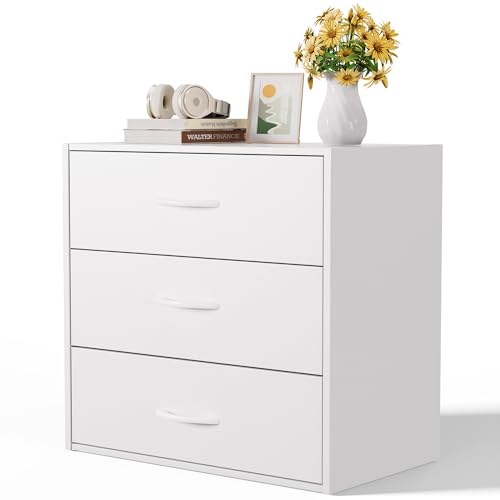
PrimeZone 3 Wood Drawer for Closet Storage: White Stackable Short Closet Dresser for Clothes Organizer - Modular Chest Cabinet for Closet Bedroom Dorm Wardrobe Nursery
Check price on AmazonDisclaimer
The information provided on DresserAdvisor is for educational and informational purposes only. We are not furniture professionals, and our content should not replace professional advice from qualified furniture makers, interior designers, or safety experts. Some content may use AI assistance. Always check product safety standards and certifications before purchasing. If you do not agree, please do not use this website. Read the full disclaimer.