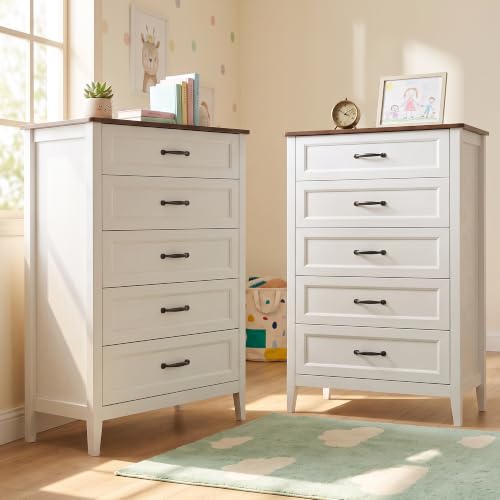
Chest of Drawers Set of 2: Complete Buying Guide
Two matching chests, one smart decision. Learn how paired drawer chests transform bedrooms, guest rooms, and living spaces with symmetrical storage that looks as good as it functions.
Start Your ResearchWhy consider a chest of drawers set of 2? A matching pair delivers visual harmony that single pieces rarely achieve. Instead of hunting for two separate chests that happen to complement each other, a coordinated set guarantees consistent finish, hardware, and proportions — and usually simplifies delivery and assembly. This guide walks you through every decision point so you can buy with confidence.
What Exactly Is a Chest of Drawers Set of 2?
A chest of drawers set of 2 is a coordinated pair of drawer chests sold together — typically identical in design, finish, and drawer configuration, though some collections offer complementary sizing (one wide, one narrow) as part of the same set. These pairs are designed to be placed together or in separate areas of the same room while maintaining a unified furniture story.
The concept solves a common problem: buying two separate chests often means compromising on visual cohesion. A dedicated set of two drawer chests removes that guesswork. You get matching hardware, consistent wood grain direction, and drawer interiors that operate identically — details that matter more than most shoppers realize until they live with mismatched pieces for a year.
Sets are particularly popular for primary bedrooms where symmetry frames the bed, for guest rooms that need generous storage without a full dresser footprint, and for open-plan living areas where a pair of low chests functions as a long media or display console. If you are still deciding between chest and dresser formats, our chest of drawers guide breaks down the distinctions in depth.
Why Choose a Matching Pair of Drawer Chests?
The case for buying a set goes beyond aesthetics. Here are the practical advantages that make paired chests a smart investment for many households:
- Design consistency: Identical finish, edge profile, and hardware eliminate the risk of two chests that almost match — a common frustration when buying separately.
- Symmetrical room composition: Flanking a bed with matching chests creates a balanced focal point that anchors the room and makes furniture layout decisions easier.
- Simplified logistics: Sets ship and arrive together, which reduces the chance of a discontinued finish or hardware style appearing on the second piece later.
- Flexible placement: You can keep the pair together, split them between two rooms, or use them on opposite walls — the visual connection remains intact either way.
- Coordinated storage: Drawer dimensions and interior layouts are standardized across the pair, making organizers, dividers, and liners interchangeable.
- Long-term replacement ease: If one unit needs repair or replacement years later, sourcing a matching piece from the same collection is far simpler than matching an orphan chest.
These benefits compound in households that value informed furniture buying. A coordinated set removes friction from the purchasing and styling process, letting you focus on how the furniture works in your daily routine rather than whether the second piece will arrive in the same tone as the first.
Key Considerations Before Buying a Set of 2
Buying a pair amplifies both the benefits and the risks of any furniture purchase — a wrong choice is now a wrong choice times two. Work through these decision points methodically before you commit.
1. Measure Your Space Twice
Paired chests take up more floor area than a single unit, but they can also distribute storage more efficiently. Measure wall length, clearance for doors and windows, and walking paths. If you are placing the pair on either side of a bed, confirm that drawer faces can open fully without hitting the mattress or blocking traffic. A pair of tall chests works well in narrow footprints, while low and wide chests suit longer walls beneath windows.
2. Choose the Right Drawer Configuration
Each chest in a set typically offers three to six drawers. Three-drawer units keep folded clothing accessible and are easier to organize with dividers. Five- and six-drawer chests provide more vertical storage for sweaters, linens, and bedding. Think about total volume across both units, not just drawer count on one — a pair of 5-drawer chests delivers ten drawers of combined capacity, which often exceeds a single wide dresser.
3. Evaluate Materials and Construction
Solid wood — oak, walnut, pine, maple, or mahogany — offers the most durable construction and can be refinished if the finish wears. Engineered wood with quality veneers provides a more uniform surface and lighter weight, which matters for upstairs bedrooms. Regardless of material, check the drawer joinery (dovetail is the gold standard), the drawer glide mechanism, and whether the back panel is reinforced. A solid wood chest in mid-range or premium tiers usually outperforms an entry-level engineered unit over a decade of daily use.
4. Match the Set to the Room's Function
A bedroom pair prioritizes clothing storage and bedside accessibility. A living room pair may need to support a television, display decor, or hold media accessories. A guest room pair benefits from a mix of deep drawers for linens and shallow drawers for small items. Defining the primary use before choosing a style prevents the common mistake of buying a beautiful pair that does not hold what you actually need to store.
5. Check Safety Features
Tip-over risk is a real concern with taller chests. Look for sets that include wall-anchoring hardware, and prioritize designs with drawer stops that prevent accidental pull-out. If the pair will be in a nursery or child's room, review our children's room chest guide for additional safety criteria.
Comparing Quality Tiers for Paired Chests
Use this tier framework to evaluate sets against each other without relying on fleeting numeric figures. Each tier reflects relative market position, construction quality, and expected lifespan.
| Quality Tier | Typical Construction | Drawer Glides | Best For | Longevity Signal |
|---|---|---|---|---|
| Entry-Level | Engineered wood with printed or thin veneer finish; stapled or glued joints | Basic side-mounted rollers or simple wood-on-wood | Guest rooms, first apartments, short-term staging | May develop wobble after several years of heavy use |
| Mid-Range | Engineered core with quality veneer or mixed solid/engineered construction | Ball-bearing side glides or entry-level undermount | Primary bedrooms, regular daily use | Stable construction with replaceable hardware |
| Premium | Solid wood drawer boxes with dovetail joinery; quality veneer over solid core | Soft-close undermount glides with full extension | High-use homes, design-focused interiors | Refinishable surfaces; decades of service with care |
| Luxury | Hardwood solids throughout, hand-finished details, reinforced corner blocks | Premium soft-close undermount or imported precision glides | Primary suites, formal living spaces, collector pieces | Heirloom-grade; often repairable and refinishable indefinitely |
A mid-range set is usually the sweet spot for most households: the drawer action feels smooth, the finish holds up to daily handling, and the pair remains structurally sound through normal use. Premium tiers make sense when the set will sit in a heavily used room or when you plan to keep the furniture through multiple home moves.
Popular Styles for Chest of Drawers Sets
Style drives as much satisfaction as construction. The right aesthetic depends on your existing decor, but these are the categories that pair best in coordinated sets:
Modern and Minimalist
Clean lines, flush drawer fronts, and restrained hardware define this category. Modern pairs suit rooms with neutral palettes and uncluttered surfaces. Look for sets with integrated or hidden pulls to maintain the streamlined look.
Farmhouse and Rustic
Weathered finishes, plank-style drawer fronts, and sturdy silhouettes give these pairs a relaxed, lived-in character. A farmhouse dresser aesthetic translates naturally to paired chests, especially in rooms with natural wood accents and soft textiles.
Mid-Century and Retro
Tapered legs, angled drawer pulls, and warm wood tones define mid-century pairs. These sets work particularly well flanking a bed in a room with vintage-inspired lighting and furniture. Our mid-century dresser guide covers the details that distinguish authentic designs from modern reinterpretations.
Traditional and Classic
Carved details, bracket feet, and decorative hardware distinguish traditional pairs. These sets suit formal bedrooms and rooms with layered textiles. If your existing furniture leans classic, a coordinated traditional pair maintains visual continuity without appearing matched-to-a-catalog.
Placement Ideas for a Pair of Chests
How you position the pair determines how well it serves your routine. These arrangements cover the most common scenarios:
- Flanking the bed: The classic symmetrical layout. Each chest functions as an oversized nightstand with generous drawer storage for pajamas, books, and bedside essentials. Works best in primary bedrooms with ample wall width.
- Side-by-side along a wall: Creates a long, low storage console that can support a television, display decor, or serve as a buffet in a dining area. Confirm that the combined width fits your wall without crowding doors.
- Opposite walls: Splits storage evenly around the room and keeps walking paths clear. Ideal for rooms where a single wall cannot accommodate both chests without blocking windows.
- Split between rooms: Use one chest in the bedroom and the other in a guest room, hallway, or home office. The matching finish maintains a subtle visual link even when the pieces are physically separated.
- Entryway or mudroom: A pair of shallow chests makes an organized drop zone for gloves, scarves, mail, and everyday carry items. Choose a finish that withstands frequent handling.
Placement Tip
Before finalizing placement, open every drawer through its full extension. Confirm that no drawer face collides with a door frame, radiator, or other furniture. It is far easier to adjust placement on moving day than to discover a collision after the chests are anchored and filled.
Getting the Most From Paired Drawer Chests
A set of two gives you a built-in organizational advantage: you can assign one chest to one category and the second chest to another. This division of labor reduces daily friction and makes it easier to find what you need without rummaging.
A common approach assigns the chest nearest the bed to sleepwear, loungewear, and personal accessories, while the farther chest handles bulkier items — folded sweaters, seasonal layers, or spare bedding. Using drawer dividers in the shallow drawers keeps small items from sliding, and dresser organization principles apply equally well to each chest in the pair.
If the pair splits between rooms, assign one chest to the bedroom's daily routine and the other to the guest room's periodic needs. Keep the guest chest stocked with fresh linens and a few universal essentials so it is always ready without last-minute preparation.
Frequently Asked Questions
A chest of drawers set of 2 refers to two matching or complementary drawer chests sold together as a coordinated pair. These sets are ideal for bedrooms that need symmetrical storage, guest rooms, or homes that want a cohesive furniture look without mixing and matching separate pieces.
The most common placement is on either side of the bed, functioning as oversized nightstands or as a flanking pair against a long wall. You can also place them side by side to create a wide storage console, or split them between two rooms while keeping the visual connection of matching finishes.
Yes, provided you choose compact dimensions. A pair of narrow or tall chests can fit into tighter footprints better than one oversized wide dresser, because you can position them in separate corners. Measure your wall space and walking clearance carefully before committing to a pair.
Solid wood constructions such as oak, walnut, pine, or maple offer the most durable long-term performance and can be refinished over time. Engineered wood with quality veneers delivers a more consistent surface and lighter weight. Mid-range and premium sets typically use dovetail joinery, metal drawer glides, and reinforced corner blocks for smoother operation.
Most paired chests offer between three and six drawers each. A 3-drawer configuration suits lighter storage like folded shirts and accessories, while 5-drawer and 6-drawer chests handle bulkier items such as sweaters, linens, and bedding. Consider your total storage volume rather than drawer count alone.
Absolutely. Matching chest pairs work well in living rooms as media consoles, in home offices for document storage, in dining rooms as buffet-style storage, and in entryways for gloves, scarves, and everyday essentials. The symmetrical look is especially effective in long hallways and open-plan spaces.
Ready to Choose Your Pair?
You now have the framework to evaluate any chest of drawers set of 2 with confidence. Browse our curated recommendations below to find coordinated pairs that match your space, style, and storage needs.
View Recommended Sets