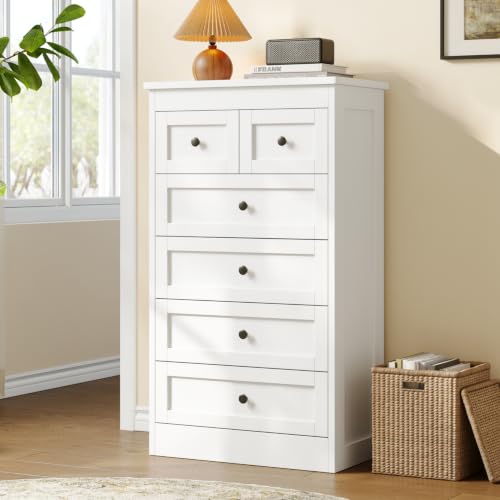
Cheap Tall Narrow Chest of Drawers: The Smart Storage Solution
Maximize vertical space in small bedrooms, dorms, and apartments with a tall narrow chest of drawers. This guide covers sizing, materials, drawer layouts, and safety so you can choose the right piece with confidence.
Explore Top PicksWhy a tall narrow chest works: A tall narrow chest of drawers packs generous storage into a footprint that fits against a short wall, beside a bed, or inside a closet. In this guide, we break down what to look for so you avoid common mistakes and pick a unit that stays stable, functional, and stylish for years.
Why Choose a Tall Narrow Chest of Drawers?
Space Efficiency
A narrow footprint frees up floor space for walkways, desks, or a reading chair. Vertical storage is the single most effective way to gain capacity without widening your furniture layout.
Fits Awkward Walls
Short wall segments, alcoves, and the space between a door and a bed frame are perfect for a slim chest. It turns dead zones into useful storage.
Plenty of Drawers
Tall configurations stack four to six drawers in a compact column. That means dedicated zones for tops, bottoms, and accessories without spreading out horizontally.
The main trade-off is that a tall, slim chest has a higher center of gravity than a wide lowboy. That makes wall anchoring non-negotiable, especially in households with children or pets. Fortunately, most modern designs ship with an anti-tip kit, and the installation takes only a few minutes. If you are comparing formats before you commit, our guide on tall chest of drawers explains how height affects usability and safety in more detail.
Sizing Guide: How to Measure Before You Buy
Measure your space in three dimensions before browsing. Drawer travel matters too: many drawers pull out 12 to 16 inches, so allow clearance in front of the unit. Use the table below as a quick reference for the most common proportions.
| Dimension | Typical Range | What to Check |
|---|---|---|
| Width | 18 to 30 inches | Leave 2 to 3 inches on each side for access and airflow. |
| Height | 40 to 60 inches | Top drawer should sit at or below shoulder height for easy reach. |
| Depth | 15 to 20 inches | Deeper drawers hold bulkier items but reduce walkway clearance. |
| Drawer Count | 4 to 6 drawers | Mix shallow and deep drawers for versatile storage. |
Materials and Build Quality by Tier
Narrow tall chests are available across every market tier. Instead of focusing on price tags, evaluate the build quality for the tier you are shopping in. The classification below uses universal tier descriptors so the guidance stays useful over time.
- Entry-level tier: Engineered wood panels with laminate or paper veneer. Drawer boxes are often stapled or glued. These units are lightweight, which makes wall anchoring especially important. Expect a functional but basic finish.
- Mid-range tier: Higher-density engineered wood or a mix of solid wood fronts with engineered carcases. Look for metal drawer runners, dovetail or reinforced drawer joints, and a factory-applied finish that resists chipping.
- Premium tier: Solid hardwood frames, hardwood or plywood drawer boxes, full-extension ball-bearing slides, and hand-finished surfaces. These units are heavier, more stable, and better suited to long-term use.
- Luxury tier: Hardwood construction with traditional joinery, soft-close hardware, and refined detailing. Weight and rigidity are noticeably higher, which reduces wobble even before anchoring.
Choosing the Right Drawer Layout
The drawer configuration matters more on a narrow chest than on a wide dresser because you have less horizontal room to compensate. A balanced layout usually includes two or three deep drawers for folded clothing and two or three shallow drawers for socks, accessories, and small items.
- Four-drawer layout: Best for bulky items such as sweaters and jeans. Simple to organize and often more stable because each drawer is deeper.
- Five-drawer layout: The most versatile option. Typically one shallow top drawer, two medium drawers, and two deep drawers at the base.
- Six-drawer layout: Great for separating categories, but shallow drawers limit bulky storage. Ideal for a shared bedroom or a dorm setup.
If your goal is to keep a compact bedroom organized, pair the chest with a matching small nightstand. Our guide to small-space nightstand sets shows how to keep the bedside zone cohesive without crowding the room. For a broader look at compact configurations, see our collection of small dresser options.
Safety First: Anchoring and Placement
Tall narrow furniture is more prone to tipping than wide low furniture, so anchoring is a safety requirement, not an optional upgrade. Follow these steps:
- Use the anti-tip strap or bracket included with the unit, or buy a furniture safety kit if it is missing.
- Anchor into a wall stud wherever possible. Drywall anchors are a fallback only when a stud is unavailable.
- Place heavier items in the lower drawers and keep the top drawer light.
- Never let children climb or hang on open drawers.
- Leave a small gap behind the unit for the strap and for cable routing if you place a lamp on top.
If you are furnishing a nursery or child's room, review our children's room chest of drawers guidance for additional stability and finish-safety considerations.
Placement Ideas for Tight Bedrooms
A slim chest can live in more places than a standard dresser. Consider these placements:
- Beside the bed: Use it as a combined nightstand and clothing store in very small rooms.
- Between windows: Narrow chests fit wall segments that are too tight for wider furniture.
- Inside a closet: A slim vertical unit adds drawer storage to a closet without eating the hanging space along a full wall.
- Entryway or hallway: A tall narrow chest doubles as a console with hidden storage for gloves, hats, and small accessories.
For small rooms that need maximum flexibility, our guide to a chest of drawers that fits in a closet explains how to measure and plan the layout. If you are starting from scratch, the broader buying guides section covers comparisons and checklists across furniture categories.
Shopping Checklist: What to Verify Before You Commit
- Dimensions: Confirm width, height, and depth against your measured space, including drawer pull-out clearance.
- Anchor kit: Check that an anti-tip strap or bracket is included in the box.
- Drawer slides: Look for metal runners and smooth operation; avoid drawers that stick or wobble.
- Joinery: Dovetail or reinforced joints last longer than stapled drawer boxes.
- Finish: A factory-applied finish resists chipping better than a thin laminate on very lightweight panels.
- Weight and stability: A heavier unit with a wide base is less likely to wobble on uneven floors.
- Assembly: Check whether the unit ships assembled or flat-packed, and confirm the tools required.
Frequently Asked Questions
What is the ideal width for a tall narrow chest of drawers?
Most narrow chests fall between 18 and 30 inches wide. Measure your available wall space and leave at least 2 to 3 inches of clearance on each side for drawer movement and access. A width under 24 inches is the sweet spot for very tight rooms.
How tall should a tall narrow chest be?
Tall narrow chests typically range from 40 to 60 inches high. Choose a height where the top two drawers remain easy to reach. For bedrooms with low ceilings or sloped walls, stay closer to the 40 to 48 inch range.
Is a tall narrow chest safe for a child's bedroom?
Yes, provided it is properly anchored. Tall, narrow furniture has a higher center of gravity and should always be secured to the wall with an anti-tip strap or bracket. Look for models that include a wall-anchoring kit and avoid placing heavy items in the top drawer.
What materials work best for a narrow tallboy chest?
Solid wood and high-grade engineered wood with reinforced joinery offer the best balance of durability and stability in a tall, narrow footprint. Entry-level models often use engineered wood with laminate finishes, while mid-range and premium tiers favor solid hardwood frames and dovetail drawer joints.
How many drawers should a tall narrow chest have?
Most tall narrow chests feature 4 to 6 drawers. A five-drawer configuration is the most versatile, giving you a mix of deep and shallow drawers. If you need to store folded clothing only, four deeper drawers may work better than six shallow ones.