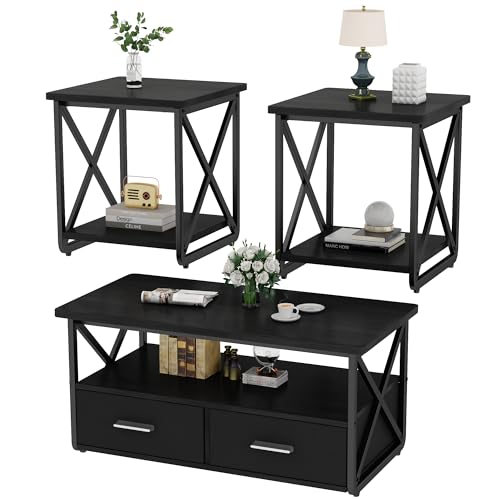
Black Coffee Tables and End Tables: A Complete Living Room Guide
Understand materials, finishes, proportions, and styling before you choose a black coffee table or black end table. This guide gives you the context to compare options with confidence.
EXPLORE THE GUIDEWhy black coffee tables and end tables deserve careful consideration: Black is one of the most versatile anchors in living room design. It grounds a space, sharpens the lines of surrounding furniture, and pairs naturally with wood tones, warm neutrals, and bold accent colors. But a black table is not a single product category. It spans glass-and-steel designs, solid wood silhouettes, marble-topped statement pieces, and compact nesting sets.
This page is written for readers who already know they want a black coffee table or black end table and now need to understand the details that separate a good choice from a great one. We cover construction, finish behavior, sizing, placement, and coordination so you can evaluate any option on its merits rather than on marketing language.
What Defines a Black Coffee Table or End Table?
A black coffee table is a low central table placed in front of a sofa or sectional, typically 14 to 18 inches tall and long enough to serve the seating group. A black end table is a smaller side table positioned beside a sofa, armchair, or recliner, usually 20 to 26 inches tall so it aligns with the armrest. Both share the same visual role: they provide a landing surface while tying the room's palette together.
Black as a finish can come from paint, lacquer, stain, powder coating, or the natural character of dark wood such as ebony-stained oak or walnut. That distinction matters. A painted black surface and a powder-coated metal frame behave differently over time, and a stained wood top shows grain while a lacquered top reads as a solid plane of color. When you compare products, identify which type of black you are looking at before judging anything else.
Popular Styles in Black Tables
Modern and Minimalist
Slim metal legs, clean rectangular or round tops, and matte black finishes. These designs disappear into the architecture of a room and let artwork or textiles lead. A good fit for contemporary apartments and open-plan living areas.
Industrial
Blackened steel frames paired with wood or concrete surfaces, visible welds, and exposed hardware. Industrial black tables add texture and a workshop character that suits loft-style and urban interiors.
Mid-Century and Retro
Tapered legs, rounded corners, and walnut or teak surfaces with black accents. These pieces soften the severity of black and work well alongside vintage seating and warm wood floors.
Glam and Luxe
Glossy black lacquer, marble or faux-marble tops, and polished metal trim. Glam black tables act as focal points and suit formal living rooms and bedrooms with upholstered seating.
Farmhouse and Rustic
Distressed black wood, planked tops, and turned legs. Rustic black tables bring warmth and a lived-in quality that balances crisp white walls and natural fiber rugs.
Scandinavian
Light woods with black-painted legs or black-stained surfaces, often round or oval. These designs keep the room airy while still delivering the graphic contrast that black provides.
Materials and Finishes That Matter
The material under the black finish determines durability, weight, and how the table ages. Understanding this helps you avoid surprises after delivery.
- Solid wood: Oak, walnut, and mango are common bases for stained black tables. Solid wood can be refinished and develops character over time, but it is heavier and more sensitive to humidity changes.
- Engineered wood with veneer: MDF or particleboard cores with a black veneer or laminate. These are stable and consistent, though they cannot be sanded and refinished the same way solid wood can.
- Metal: Powder-coated steel and aluminum frames are strong, slim, and resistant to chipping when the coating is well applied. Metal is ideal for minimalist and industrial designs.
- Glass: A black-tinted or clear glass top on a black metal base keeps visual weight low. Glass shows fingerprints and dust more readily than matte surfaces.
- Marble and stone: Genuine marble tops add weight and a natural pattern, while engineered stone offers consistency and easier sealing. Both need coasters and careful cleaning.
- Lacquer and paint: Glossy lacquer creates a mirror-like finish but shows dust and scratches. Matte or satin black paint is more forgiving and easier to touch up.
Key Factors When Choosing Black Tables
Once you have narrowed the style, the following practical factors determine whether a table works in your specific room.
- Height and clearance: A coffee table should sit within one to two inches of the sofa seat height, and end tables should align roughly with the armrest. Leave 14 to 18 inches between the sofa and coffee table for comfortable legroom.
- Surface area: A coffee table should cover about two-thirds the length of the sofa it serves. Oversized tables crowd circulation, while undersized tables look stranded.
- Shape: Rectangular tables suit long sofas and defined seating zones. Round and oval tables soften tight rooms and improve flow around corners.
- Storage: Lower shelves and drawers add function but also visual weight. In small rooms, open frames keep the floor visible and the room feeling larger.
- Finish behavior: Matte and satin black finishes hide fingerprints and fine scratches better than high-gloss surfaces. Glossy finishes reflect light and suit formal spaces.
- Coordination: Matching a black coffee table with black end tables creates cohesion. If you prefer contrast, keep the finish family consistent even when the shapes differ. If your wider bedroom scheme also includes storage pieces, you may find useful references in our black dresser guide and the broader black bedroom dressers and chests overview.
Market Tiers at a Glance
Black tables span a wide range of construction quality. The table below groups them by market position rather than by numeric figures, so the guidance stays useful regardless of when you read it.
| Tier | Typical Construction | Best For | Durability Outlook |
|---|---|---|---|
| Entry-level | Engineered wood cores, laminate or painted finishes, basic hardware and fittings | First apartments, staging, and rooms where the table is decorative more than heavily used | Moderate; finish may wear at edges with daily use |
| Mid-range | Solid wood or reinforced engineered cores, powder-coated metal frames, smoother drawer glides | Main living rooms with regular daily use and moderate entertaining | Good; hardware and finish hold up well with normal care |
| Premium | Hardwood construction, high-grade veneers, hand-applied finishes, reinforced joinery | Design-focused rooms where the table is a visible centerpiece | Strong; refinishable surfaces and tighter tolerances |
| Luxury | Genuine stone tops, solid hardwood framing, artisan finishing, premium metalwork | Formal living rooms and interiors built around statement furniture | Excellent; a long-term investment piece with proper care |
Styling Black Tables Without Overpowering a Room
Black furniture can dominate a space if it is not balanced. A few practical principles keep the result calm and intentional.
- Balance with lighter textures: Pair black tables with linen upholstery, jute rugs, or sheer curtains so the black reads as an anchor rather than a void.
- Edit the tabletop: A single tray, one book stack, and one object with height are usually enough. Empty space is part of the design.
- Repeat the finish: Echo the black in a frame, a lamp base, or a hardware detail so the tables feel deliberate rather than isolated.
- Consider the floor: Dark floors and black tables can merge visually. A rug with contrast, or visible legs and light beneath the table, restores separation.
- Match the room's weight: A heavy black marble table suits a large room; a glass-and-metal black table keeps a compact room from feeling weighed down.
Coordinating Black Tables with the Rest of Your Home
Living room tables rarely live in isolation. If your home uses a consistent black accent palette, the same finish logic carries into the bedroom. A black dresser with black handles or a black chest of drawers can echo the tone of your coffee table and end tables, while a black and wood dresser bridges the black-and-natural contrast if your living room mixes wood and metal.
For rooms that combine seating and bedside storage, a bedside cabinet with drawers or a bedside dresser can follow the same black finish family. If you are building a coordinated bedroom around darker tones, our guide to black and gold dressers shows how metallic accents change the mood of a black finish, and the black dresser with marble top reference is useful if you are considering a stone-topped living room table as well.
Ready to Compare Black Coffee Tables and End Tables?
Use the recommendations below to evaluate options by construction, tier, and feature set. Each listing opens on Amazon for further review.
VIEW RECOMMENDED OPTIONSFrequently Asked Questions
What is the ideal height for a black coffee table?
A black coffee table should generally sit 14 to 18 inches from the floor, ideally within one to two inches of your sofa seat height. This keeps drinks, books, and decor within easy reach while maintaining visual balance in the living room.
How do I choose between a black coffee table and black end tables?
A black coffee table anchors the center of a seating arrangement and handles shared surface needs, while black end tables flank sofas and chairs for lamps, remotes, and personal items. Many living rooms benefit from both, matched by finish and style.
Which black table finish is easiest to maintain?
Powder-coated metal and matte lacquered finishes resist fingerprints and smudges well, while glossy lacquer and glass show dust more readily. Satin or matte black finishes generally offer the most forgiving day-to-day maintenance.
Can black coffee tables work in a small living room?
Yes. In compact rooms, a black coffee table with a glass top, slender metal legs, or a rounded silhouette keeps visual weight low. Pair it with small black end tables or a single nesting set to preserve floor space.
How many end tables does a living room need?
Most living rooms work well with one end table per sofa or accent chair, positioned beside the seating. If the sofa floats in the room, a pair of black end tables creates symmetry and gives each guest a landing spot for drinks and devices.