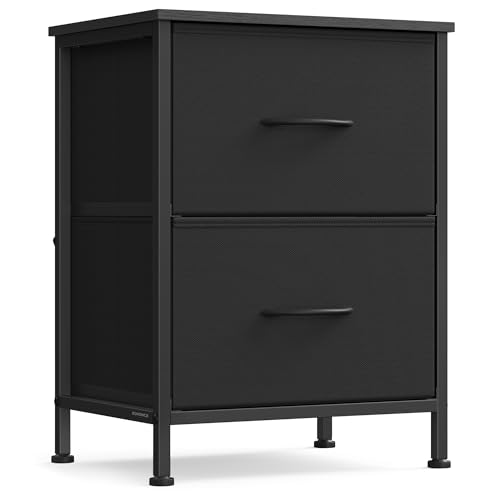
Bedside Cabinet with Drawers: The Complete Buyer's Guide
Discover how to choose a bedside cabinet with drawers that fits your bed height, stores your essentials, and complements your bedroom. Practical guidance on sizes, materials, drawer configurations, and styling.
Explore Recommended OptionsWhy a bedside cabinet with drawers matters: A well-chosen bedside cabinet keeps books, glasses, chargers, and personal items within arm's reach while reducing clutter on your bedroom floor and dresser top. This guide walks you through the details that separate a piece that simply looks good from one that genuinely works for your nightly routine.
What Is a Bedside Cabinet with Drawers?
A bedside cabinet with drawers is a compact storage unit placed next to a bed, typically featuring one to three drawers in place of, or alongside, open shelving or a cabinet door. It serves as both a nightstand surface for a lamp and a clock, and an enclosed storage zone for items you want out of sight. Compared with a simple bedside table, a drawer-equipped cabinet offers concealed storage that protects personal items from dust and keeps the sleeping area visually calm.
The term overlaps with several related categories. A bedside dresser tends to be slightly larger and taller, often with deeper drawers. A bedside table paired with a chest of drawers describes a broader bedroom storage arrangement. Understanding these distinctions helps you match the footprint to your available floor space.
Choosing the Right Size and Height
Height is the single most important measurement. As a rule, the top of your bedside cabinet should sit level with, or slightly below, the top of your mattress. That way you can reach a lamp or a glass of water without stretching. Measure from the floor to your mattress top before shopping, then compare that number to the cabinet's listed height.
Width and depth matter just as much in smaller bedrooms. A typical bedside cabinet ranges from roughly 16 to 24 inches wide and 14 to 18 inches deep. If your bed sits close to a wall or a wardrobe, a narrow profile keeps the walkway clear. For rooms with limited space, a compact accent cabinet with drawers can double as a bedside unit without overwhelming the room.
- Standard nightstand: 18–24 inches wide, 24–28 inches tall — suits most adult beds.
- Compact cabinet: 14–18 inches wide — suited to tight gaps beside the bed.
- Tall bedside dresser: 28–36 inches tall — good for taller beds or for adding vertical storage.
- Low bedside unit: under 22 inches tall — pairs with low platform or floor-level beds.
How Many Drawers Do You Actually Need?
Drawer count should follow your nightly habits. A single-drawer cabinet works for minimalists who keep only a book, glasses, and a charger on hand. Two drawers let you separate frequently used items from occasional ones. Three or more drawers effectively turn the unit into a small bedside dresser, useful for storing sleepwear, socks, or extra bedding.
Drawer Types to Compare
| Drawer Type | Best For | What to Look For |
|---|---|---|
| Single drawer with open shelf | Minimal essentials plus a book stack | Sturdy shelf base; drawer on smooth glides |
| Two stacked drawers | Separating daily items from occasional ones | Equal-depth drawers; consistent alignment |
| Three-drawer bedside dresser | Sleepwear and small clothing storage | Reinforced drawer bottoms; soft-close runners |
| Drawer plus cabinet door | Taller items alongside small accessories | Adjustable interior shelf; reliable hinges |
| Open shelf plus single drawer | Baskets and display objects with hidden storage | Clearance height for baskets; drawer depth |
Drawer hardware deserves attention during research. Entry-level units often use basic side-mounted glides, while mid-range models typically add soft-close mechanisms and metal ball-bearing runners. Premium and luxury tier cabinets frequently feature dovetail joinery, undermount slides, and drawer liners. When comparing models, check whether the drawer bottom is supported by a groove or stapled on — a grooved bottom signals more careful construction.
Materials and Finishes
The material affects durability, weight, and how the cabinet ages in a bedroom environment. Solid wood offers repairability and a natural grain, while engineered wood with quality veneers delivers stability and a consistent finish. Metal and rattan options introduce texture and suit specific decor styles.
Solid Wood
Long-term investment. Can be sanded and refinished. Heavier, so check that drawer runners and joinery are reinforced. Oak, walnut, and pine are common choices.
Engineered Wood & Veneer
Stable and consistent. Quality veneers resist warping better than low-grade particle board. Look for sealed edges and moisture-resistant coatings.
Metal & Mixed Media
Durable and easy to clean. Powder-coated finishes resist rust. Rattan or cane fronts add texture while keeping the piece lightweight.
Finish choices matter for maintenance. Painted finishes hide minor scratches less well than wood grain but are straightforward to touch up. Natural wood finishes show wear more gradually and can be refreshed with wax or oil. If you plan to place the cabinet near a window, choose a finish with UV resistance to slow fading.
Understanding Quality Tiers
Rather than anchoring your decision to price figures, classify bedside cabinets by construction quality and intended lifespan. This framework keeps comparisons consistent across brands and marketplaces.
- Entry-level / starter tier: basic glides, stapled drawer bottoms, thin panels. Suitable for guest rooms or short-term setups.
- Mid-range / balanced tier: ball-bearing runners, soft-close options, grooved drawer bottoms, thicker top panels. A solid choice for daily use.
- Premium / high-end tier: dovetail joinery, undermount slides, solid wood drawer boxes, furniture-grade finishes. Built for long-term daily wear.
- Luxury / flagship tier: hand-finished surfaces, custom hardware, kiln-dried hardwood, and precise alignment tolerances.
Mid-range models usually offer the most balanced combination of smooth drawer action and durable materials. Stepping up to premium tier makes sense when you plan to keep the piece for many years or want repairable construction.
Style, Placement, and Bedroom Coordination
A bedside cabinet does not need to match your dresser exactly, but it should share at least one design thread — wood tone, hardware finish, or overall form. For a cohesive setup, consider how the cabinet relates to your dresser and nightstand set or a dresser paired with two nightstands. Matching hardware is often the simplest way to unify pieces bought separately.
Placement rules are straightforward. Leave a few inches between the cabinet and the wall so drawers can open fully. If your bed has a tall headboard, a slightly taller cabinet balances the visual weight. In rooms where floor space is tight, a wall-mounted or floating bedside cabinet frees up the floor beneath and creates an airier look.
For a more complete picture of how bedside storage fits into a larger bedroom plan, review options such as a bedroom set with dresser and chest or a set built around a large dresser. These configurations often include complementary nightstands that maintain consistent proportions.
A Practical Buying Checklist
Before you commit to a bedside cabinet with drawers, confirm:
- Cabinet height matches or sits just below your mattress top.
- Width and depth leave clearance for walkways and wardrobe doors.
- Drawer count matches what you store nightly.
- Runners are smooth; soft-close is a plus for quiet bedrooms.
- Drawer bottoms are grooved, not stapled.
- Finish suits the room's humidity and light exposure.
- Hardware finish coordinates with existing bedroom pieces.
- Assembly requirements match your comfort level.
For additional perspective on matching pieces, browse recommended dresser sets and compare how different brands handle drawer alignment and finish consistency across a collection.
Frequently Asked Questions
What height should a bedside cabinet be?
Ideally, the top surface should sit level with or slightly below your mattress top. Measure floor-to-mattress height first, then compare it to the cabinet's listed height. A difference of an inch or two is usually comfortable.
How many drawers are enough for a bedside cabinet?
One drawer suits minimal essentials. Two drawers separate daily items from occasional ones. Three or more effectively act as a small bedside dresser, which is useful if you store sleepwear or small clothing nearby.
Are soft-close drawers worth considering?
Yes, particularly in shared bedrooms. Soft-close runners prevent slamming and reduce noise, which matters if one person rises earlier than the other. Mid-range and premium tier cabinets commonly include this feature.
Can a bedside cabinet with drawers replace a dresser?
In small bedrooms, a tall bedside cabinet can absorb overflow storage, but it cannot replace a full dresser for clothing volume. Think of it as a supplement that keeps daily items organized and off the dresser top.
How do I keep drawers gliding smoothly?
Keep drawer loads light and evenly distributed, vacuum the runners periodically, and avoid overstuffing. If glides begin to stick, a dry silicone lubricant on metal runners often restores smooth movement.
Final Thoughts
A bedside cabinet with drawers is one of the most frequently used pieces of furniture in a bedroom, so it deserves the same research you would give a dresser or bed frame. Prioritize height match, drawer action, and construction quality over surface appearance alone. Once those fundamentals are right, style choices become much easier to narrow down. Explore the recommended options below to see how these criteria apply to real products.