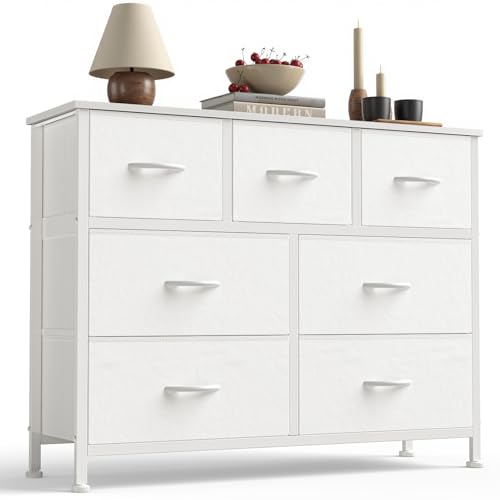
7 Drawer Dresser: The Complete Buying Guide
Everything you need to know about choosing a seven-drawer dresser that fits your space, matches your style, and delivers the storage capacity your bedroom truly needs.
Explore Recommended ModelsWhat Is a 7 Drawer Dresser?
A 7 drawer dresser is a storage cabinet built around seven individual drawers, typically arranged in a tall or semi-tall silhouette. Unlike a standard four- or five-drawer model, the extra drawers let you separate clothing categories more precisely. Instead of mixing socks, shirts, and sweaters in the same compartment, you can assign a dedicated drawer to each group.
Most seven-drawer designs fall into two broad families. The first is the tall chest layout, where all seven drawers are stacked in a narrow column. This is the most space-efficient option for compact bedrooms. The second is the wide-and-tall layout, where the top row is split into two smaller drawers while the remaining rows span the full width. That arrangement gives you a broader top surface for display and daily essentials.
If you are comparing this format with smaller options, our guide to a six-drawer dresser is a useful reference point. Stepping up from six to seven drawers typically adds one extra compartment without dramatically increasing the footprint, which is why many shoppers consider the seven-drawer format the sweet spot between capacity and floor space.
Why Choose a Seven-Drawer Dresser?
The appeal of seven drawers goes beyond raw capacity. The real benefit is organization granularity. With more compartments, each drawer stays shallower and easier to manage, which means you spend less time digging and more time getting dressed. Here is why this format consistently ranks among the most practical bedroom storage choices:
- Dedicated zones for every category. You can assign separate drawers for tops, bottoms, undergarments, activewear, loungewear, accessories, and linens.
- Vertical efficiency. A tall seven-drawer profile uses wall height instead of floor area, which is a major advantage in apartments and smaller bedrooms.
- Shared storage. Couples can split the drawers evenly, or one person can use the top four while the other uses the bottom three.
- Better folding discipline. Shallower drawers encourage vertical folding and file-style storage, keeping garments visible and wrinkle-free.
- Flexible placement. A narrow seven-drawer unit can slide into tight corners, beside a bed, or inside a walk-in closet where a wide dresser would never fit.
For households that have outgrown a five-drawer unit, the jump to seven drawers often removes the need for an additional storage piece entirely. That makes it a practical long-term investment rather than a stopgap solution.
Dimensions and Footprint: What to Expect
Understanding the typical measurements helps you plan placement before you shop. While exact dimensions vary by manufacturer, most seven-drawer dressers share a recognizable range. The table below summarizes the common configurations you will encounter.
| Configuration | Typical Height | Typical Width | Typical Depth | Best For |
|---|---|---|---|---|
| Tall chest (7 stacked drawers) | 50–62 inches | 28–38 inches | 16–20 inches | Small bedrooms, closet placement, narrow walls |
| Semi-tall (split top row) | 42–52 inches | 40–52 inches | 17–20 inches | Medium bedrooms, display surface, couples |
| Wide seven-drawer | 36–44 inches | 54–66 inches | 18–21 inches | Primary bedrooms, larger top surface, mirror pairing |
Before ordering, measure the intended wall, the clearance to doorways, and the walking path around the piece. Leave at least 24 inches of clearance in front of the drawers so you can open them fully. If your room is especially tight, a tall seven-drawer dresser is often the most space-conscious solution, since it trades width for height.
Also consider ceiling height and window placement. A tall unit placed in front of a low window will block light, while a wide seven-drawer model under a window can work beautifully as a combined storage and display surface.
Drawer Configuration and Layout Options
Seven drawers can be arranged in several ways, and the layout you choose affects how usable the dresser feels day to day. Here are the most common configurations:
Equal Stack Layout
Seven drawers of identical height, stacked in a single column. This is the classic tall chest format. It is straightforward, efficient, and ideal for folded clothing of consistent size. The trade-off is that deep items like bulky sweaters may not fit in shallow drawers, so check internal drawer height carefully.
Split Top Layout
The top row is divided into two smaller side-by-side drawers, with five full-width drawers below. This configuration is popular because the small top drawers are perfect for jewelry, watches, sunglasses, and other accessories, while the larger drawers handle clothing. It is one of the most practical layouts for daily use.
Three-Plus-Four Layout
Three wider drawers on one side and four narrower drawers on the other. This asymmetric arrangement suits couples who have different storage needs, or anyone who wants a mix of shallow accessory drawers and deeper clothing drawers.
Wide Low Profile
A broader, shorter cabinet with seven drawers spread across a wider face. This layout provides a generous top surface that can double as a vanity or display area, and it pairs naturally with a mirror. It works best in primary bedrooms with more floor space.
Materials and Build Quality
Because a seven-drawer dresser carries more weight and sees more daily use than a smaller unit, build quality matters more. The material and joinery determine how smoothly the drawers glide, how long the piece lasts, and how well it resists sagging over time.
Solid Wood
Solid hardwood frames and drawer fronts represent the top-tier of durability. Oak, maple, walnut, and mahogany offer excellent structural integrity and can be refinished if the surface wears. Solid wood drawers with dovetail joinery are a hallmark of professional-grade construction. Expect these models to sit in the premium and luxury tiers of the market.
Engineered Wood
MDF and particleboard with veneer finishes are common in mid-range and entry-level models. Modern engineered wood can be perfectly serviceable, especially when the drawer boxes are reinforced and the slides are rated for the load. The key is to look for solid wood drawer boxes even when the cabinet itself is engineered.
Drawer Slides and Hardware
Full-extension ball-bearing slides are the baseline for a quality seven-drawer dresser. Soft-close mechanisms reduce noise and prevent slamming. Heavy-duty slides rated for higher loads are essential in the deeper bottom drawers, where you are likely to store jeans and sweaters. Cheap slides are the most common failure point in tall dressers, so inspect this detail closely.
Finishes
Lacquer, polyurethane, and water-based finishes all protect the surface, but the application quality matters more than the chemistry. A well-sealed finish resists moisture and staining, which is particularly important for white and light-colored dressers. If you prefer a painted look, our notes on a white dresser cover how finish quality affects long-term appearance.
For a deeper comparison, the general dresser buying guide covers how to evaluate joinery, drawer boxes, and hardware across all dresser types.
How to Organize Seven Drawers Effectively
The main advantage of seven drawers is that you can build a logical system. A consistent, zone-based approach prevents the dresser from turning into a catch-all. Here is a practical framework that works for most households:
- Top drawer (or top two small drawers): Jewelry, watches, sunglasses, ties, belts, and small accessories. Use dividers or a jewelry tray to keep items separated.
- Second drawer: Socks, underwear, and base layers. These are small, frequently accessed items, so keeping them near the top reduces bending.
- Third drawer: T-shirts, short-sleeve tops, and lightweight knitwear. Fold vertically so every item is visible at a glance.
- Fourth drawer: Long-sleeve shirts, blouses, and lightweight loungewear.
- Fifth drawer: Jeans, trousers, and heavier bottoms. Roll or fold these to maximize depth.
- Sixth drawer: Sweaters and bulky knitwear. Use a cedar block or lavender sachet to keep them fresh.
- Bottom drawer: Off-season items, spare linens, or occasional-wear clothing. The bottom is the least accessible spot, so reserve it for items you reach for less often.
Drawer dividers are a worthwhile addition in a seven-drawer unit. They keep small items from sliding to the back and make the extra compartments genuinely useful rather than just more space to lose things in. If you want a full system, our dresser organization guide walks through folding techniques and seasonal rotation in detail.
Safety and Stability Essentials
Tall furniture carries a higher tipping risk, and a seven-drawer dresser is no exception. Safety should be treated as a non-negotiable part of the buying decision, not an afterthought.
- Always use the anti-tip kit. Most seven-drawer dressers ship with a wall-anchoring strap or bracket. Install it. This is especially important in homes with children, pets, or anyone who might lean on an open drawer.
- Load from the bottom up. Place heavier items in the lower drawers. A top-heavy dresser is far more likely to tip.
- Open one drawer at a time. Multiple open drawers shift the center of gravity forward. This is a simple habit that significantly reduces risk.
- Check the base and feet. A stable, level base distributes weight evenly. If the dresser wobbles, adjust the levelers or add shims before use.
- Keep the top clear of heavy objects. The top surface is for lightweight decor, not for stacking boxes or heavy electronics.
If the dresser will be used in a nursery or children's room, review safety standards carefully and prioritize models with drawer stops that prevent full removal. A changing table dresser guide is a useful reference for safety considerations in child-focused furniture.
How to Choose the Right 7 Drawer Dresser
With the fundamentals covered, here is a decision framework you can apply in the store or while shopping online. Work through these questions in order:
1. Measure Your Space First
Confirm the available wall width, the depth clearance, and the path to the room. A tall seven-drawer unit needs less width but more vertical clearance. A wide model needs a longer wall and enough room to open the drawers without blocking the bed.
2. Decide on Tall vs. Wide
Tall layouts are better for small rooms and closet placement. Wide layouts are better for primary bedrooms, paired with a mirror, and for anyone who wants a larger display surface. Compare the trade-offs honestly against your actual room.
3. Set Your Tier and Priorities
Entry-level models typically use engineered wood with basic slides. Mid-range models improve the drawer boxes and often add soft-close hardware. Premium and luxury tiers use solid hardwood, dovetail joinery, and heavy-duty slides. Decide which of these features matter most to you, and prioritize accordingly.
4. Inspect the Drawers
Open and close each drawer. It should glide smoothly without wobble or binding. Look for full-extension slides, solid drawer boxes, and a smooth interior finish. If buying online, read reviews that specifically mention drawer performance over time.
5. Plan the Organization Before Delivery
Sketch your intended drawer assignments. If you need more small-item storage, favor the split-top layout. If you store a lot of bulky knitwear, check the internal height of the deeper drawers.
6. Consider the Complete Bedroom
If you are furnishing a room from scratch, matching sets simplify the design process. A dresser and nightstand set shows how coordinated pieces can unify a bedroom. For larger storage needs, a 8-drawer dresser is worth comparing if you have the floor space.
Finally, verify the return policy and delivery terms. Furniture is bulky, and a seven-drawer dresser is heavy. Knowing the return window and whether assembly is included prevents unpleasant surprises.
Related Dresser Guides
Frequently Asked Questions
Is a 7 drawer dresser a good choice for a small bedroom?
Yes. A seven-drawer dresser is one of the most space-efficient options because it uses vertical height instead of floor area. A tall, narrow silhouette gives you substantial storage in a compact footprint, which is ideal for apartments and smaller bedrooms.
How tall is a typical 7 drawer dresser?
Most seven-drawer dressers stand between 45 and 60 inches tall. Tall chest layouts with seven stacked drawers often reach the upper end of that range, while wide layouts with a split top row tend to be shorter.
What should I store in a 7 drawer dresser?
The top drawers suit jewelry, accessories, socks, and undergarments. Middle drawers work well for folded shirts and tops. Bottom drawers are best for jeans, sweaters, linens, and off-season clothing.
Does a 7 drawer dresser need to be anchored to the wall?
Yes. Anti-tip anchoring is strongly recommended for tall dressers. A seven-drawer unit has a higher center of gravity, so securing it to the wall prevents tipping accidents, particularly in homes with children or pets.
What is the difference between a 7 drawer dresser and a 7 drawer tall chest?
The terms overlap significantly. A seven-drawer dresser can be tall or wide, while a seven-drawer tall chest specifically refers to the stacked, narrow-column layout. Both offer seven drawers; the distinction is mainly about proportions and placement.