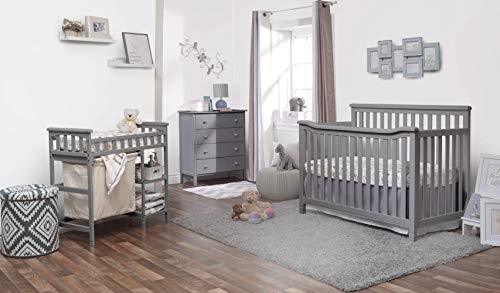
4-in-1 Convertible Crib and Dresser Set: Complete Guide
Everything you need to know before choosing a convertible crib and dresser bundle that adapts from newborn nursery to toddler room and beyond.
START EXPLORINGDresserAdvisor Insight: A 4-in-1 convertible crib and dresser set is one of the smartest nursery purchases you can make. It combines a safe sleep space, a matching storage solution, and a design that grows with your child for years — reducing the need to replace furniture as your family's needs change.
What Is a 4-in-1 Convertible Crib and Dresser Set?
A 4-in-1 convertible crib and dresser set is a coordinated nursery furniture bundle built around a crib that transforms through four distinct configurations. Most models convert from a standard infant crib into a toddler bed, then a daybed, and finally a full-size bed with the addition of a conversion kit. The dresser that ships with the set is typically a matching chest of drawers or a changing-table dresser designed in the same finish, hardware, and silhouette.
The appeal is straightforward: you buy once, and the furniture adapts as your child grows. Instead of replacing a crib after two or three years, you reconfigure it. The dresser remains useful indefinitely, serving as a changing station in the early months and as a standard bedroom dresser later. For parents who want a cohesive nursery without piecing together mismatched items, these sets deliver a unified look straight out of the box.
If you are still weighing whether a convertible crib belongs in your nursery at all, it helps to compare it against standalone options. Our guide to 4-in-1 crib and dresser sets covers how these bundles differ from buying a crib and dresser separately, including the trade-offs in flexibility and design consistency.
How the 4-in-1 Conversion System Works
Understanding the conversion path is essential before you commit, because not every 4-in-1 set includes every kit. Some bundles include the toddler rail in the box but require you to purchase the full-size bed conversion separately. Others bundle all stages together. Here is the typical progression:
- Stage 1 — Infant crib: The crib is used in its standard configuration with a fixed or adjustable mattress support. Most models offer multiple mattress height positions so you can lower the mattress as your baby learns to sit and stand.
- Stage 2 — Toddler bed: The front rail is replaced with a low toddler guardrail, allowing your child to climb in and out independently. This stage usually begins around 18 to 24 months, once the child is confidently walking.
- Stage 3 — Daybed: The toddler rail is removed entirely, leaving a low-profile daybed suitable for lounging, reading, or transitional seating in the room.
- Stage 4 — Full-size bed: The crib's side rails are removed and replaced with a full-size bed conversion kit, typically including side rails and a footboard. This stage requires a standard full-size mattress and can last well into the teenage years.
The dresser in the set does not usually convert, but its role evolves naturally. Many 4-in-1 bundles pair the crib with a 3-drawer changing table dresser that includes a removable changing top. Once diaper changes are behind you, the top comes off and the piece becomes a standard bedroom dresser. Other bundles pair the crib with a taller chest for clothing storage.
Why Parents Choose a Convertible Crib and Dresser Bundle
The case for a 4-in-1 set rests on three practical advantages: longevity, design cohesion, and simplified shopping.
Longevity is the headline benefit. A conventional crib has a useful life of roughly two to three years. A convertible crib with a full-size conversion can remain in service for a decade or more. When you factor in the dresser, which typically lasts even longer, the set represents a long-term investment in your child's room rather than a short-term nursery purchase.
Design cohesion matters more than many parents expect. Matching finishes and hardware across the crib and dresser create a polished room that photographs well and feels intentional. Buying separately often means compromising on shade, style, or scale. A bundled set removes that guesswork.
Simplified shopping is a real relief during pregnancy and the newborn months. One decision replaces several, and delivery timelines are usually synchronized so both pieces arrive together. If you are building a nursery from scratch, pairing the set with a 2 nightstands and dresser set can complete the room's storage layout without introducing mismatched furniture.
Types of 4-in-1 Crib and Dresser Sets
Not all bundles are structured the same way. The table below outlines the most common configurations, along with the type of family each one suits best.
| Set Configuration | What's Included | Best For | Market Tier |
|---|---|---|---|
| Crib + 3-drawer changing dresser | Convertible crib, toddler rail, 3-drawer dresser with removable changing top | First-time parents who want a complete, compact nursery setup | Entry-level to Mid-range |
| Crib + 6-drawer dresser | Convertible crib, toddler rail, full-size conversion kit, 6-drawer dresser | Families who need generous clothing storage and plan to keep the furniture long-term | Mid-range to Premium |
| Crib + dresser + nightstand | Convertible crib, toddler rail, dresser, matching nightstand | Parents furnishing a full nursery who want a coordinated three-piece look | Mid-range to Premium |
| All-stages included set | Convertible crib with all conversion kits, dresser, sometimes a nightstand or bookcase | Buyers who want to avoid sourcing conversion kits later and prefer a single long-term purchase | Premium to Luxury |
When comparing configurations, pay close attention to what the bundle actually includes. A set advertised as 4-in-1 may include only the toddler rail and require a separate purchase for the full-size conversion. Reading the product specification carefully prevents an unwelcome surprise later. Sets that bundle a taller dresser, such as a 6-drawer dresser, often deliver more usable storage per square foot than shorter changing-table units.
Key Features to Evaluate Before You Buy
Once you have settled on a configuration, the next step is comparing build quality and safety features. These are the details that separate a set that lasts from one that disappoints.
Safety and Certifications
In the United States, cribs must comply with CPSC and ASTM safety standards, including mandatory testing for slat strength, mattress support integrity, and hardware security. Look for a Juvenile Products Manufacturers Association (JPMA) certification if you want an additional layer of third-party verification. For the dresser, check whether it includes an anti-tip kit — and actually install it. Dressers that lack a tip-restraint system are a recognized hazard in homes with young children.
Material and Construction
Solid wood construction — particularly hardwood such as maple, oak, or birch — tends to be more durable and holds up better to repeated conversions. Engineered wood with a quality veneer can be a solid choice in the mid-range tier, provided the hardware and joinery are reinforced. Examine drawer glides as well: metal, full-extension glides with a soft-close mechanism are the benchmark for smooth, quiet operation, while basic side-mounted glides are common in entry-level sets. If drawer performance matters to you, our guide to full-extension drawer slides explains what to look for.
Conversion Kit Availability
Before buying, confirm that conversion kits for all four stages are either included or readily available from the manufacturer. Some discontinued models leave owners unable to source the full-size bed rail years later. A quick check of the manufacturer's replacement-parts page is worthwhile.
Dresser Size and Drawer Count
Dresser size should match the room and your storage habits. A 3-drawer dresser suits a compact nursery with a changing station on top. A 4-drawer dresser offers a useful balance of clothing storage and footprint. Taller chests, such as a 5-drawer dresser or a 6-drawer dresser, work well when floor space is limited but clothing volume is high.
Finish and Hardware Durability
Nursery furniture takes a beating. Look for finishes that are water-resistant and easy to wipe clean, and hardware that is securely attached rather than surface-glued. If the dresser doubles as a changing station, a finish that resists staining from lotions and wipes is a meaningful practical advantage.
Pre-Purchase Checklist
- Confirm which conversion stages are included in the bundle and which require separate kits
- Verify CPSC/ASTM compliance and check for JPMA certification
- Check that the dresser includes an anti-tip restraint kit
- Measure the room and confirm the footprint of both pieces with clearance for doors and walkways
- Review drawer glide type and weight capacity
- Confirm the mattress size required for each stage (crib mattress vs. full-size mattress)
- Read the assembly instructions or reviews to gauge setup difficulty
- Check the manufacturer's replacement-parts policy for conversion kits
How These Sets Compare Across Market Tiers
Convertible crib and dresser sets span a wide range of positions in the market. Understanding what each tier typically delivers helps you calibrate expectations without relying on specific figures.
Entry-level sets generally use engineered wood with laminate or veneer finishes, include the toddler rail, and pair with a compact 3-drawer dresser. Drawer glides are often basic side-mounted units, and the full-size conversion kit may be sold separately. These sets are a sensible starting point for families furnishing a first nursery on a tighter plan.
Mid-range sets step up to sturdier joinery, smoother drawer mechanisms, and more consistent finishes. Many include the full-size conversion kit in the box and offer a wider choice of dresser sizes. Hardware feels more substantial, and the overall build tolerates repeated disassembly and reassembly better.
Premium sets frequently use solid hardwood for key components, soft-close full-extension glides, and reinforced corner blocks. They often bundle all four conversion stages and may include a matching nightstand. These sets are positioned as long-term investments intended to survive multiple children.
Luxury sets represent the top of the category, with premium hardwood construction, hand-finished details, designer hardware, and comprehensive all-stage bundles. They are chosen by buyers who prioritize heirloom-quality furniture and are prepared to treat the nursery as a permanent room rather than a temporary phase.
Across every tier, the same principle applies: a set that is well-specified for its class will outperform a set from a higher tier that cuts corners on hardware or safety. Compare within tiers rather than across them.
Space Planning: Making the Set Fit Your Nursery
Before ordering, map the room. A convertible crib occupies roughly the same footprint as a standard crib, but the full-size bed conversion later requires significantly more floor space — typically the length of a full mattress plus clearance on all sides. If you plan to use the full-size stage in the same room, confirm the layout can accommodate it.
Placement matters for safety as well. Keep the crib away from windows, blind cords, wall-mounted decor, and heating sources. Leave enough space between the crib and the dresser to move comfortably during nighttime feeds and changes. If the room is tight, consider a narrower dresser such as a 30-inch wide dresser or a 36-inch wide dresser to preserve walkway space.
For very small nurseries, a compact set built around a 24-inch wide dresser can free up meaningful floor area. Pair it with a crib positioned against the longest uninterrupted wall to keep the center of the room open. If you are furnishing a shared or multi-purpose room, our guide to 3-piece dresser and nightstand sets explores how coordinated bundles simplify layout decisions in constrained spaces.
Assembly, Maintenance, and Long-Term Care
Most convertible crib and dresser sets ship flat-packed and require assembly. Budget two to three hours for a typical crib-and-dresser bundle, and assemble the crib first so the sleep space is ready before anything else. Follow the manufacturer's torque specifications for hardware — overtightening can crack engineered wood, while undertightening leaves joints loose.
Once assembled, install the anti-tip kit on the dresser immediately. Anchor it to a wall stud wherever possible. Recheck the crib's hardware every few months, particularly the mattress support bolts and the toddler rail attachment points, since these bear repeated load and movement.
For cleaning, use a damp cloth with mild soap and dry promptly. Avoid abrasive cleaners on veneer and laminate finishes. When it is time to convert to the toddler bed stage, store the removed crib rail and hardware in a labeled bag so the pieces remain available if you need them for a younger sibling or a future resale.
Common Mistakes to Avoid
Even well-informed buyers run into a few recurring pitfalls with convertible sets. The most common is assuming the bundle includes every conversion stage. Verify the contents list before ordering. The second is underestimating the space required for the full-size bed stage and later discovering the room cannot accommodate it. The third is skipping the anti-tip installation because the dresser "feels stable" — stability is not a substitute for anchoring.
Another frequent issue is buying a crib mattress that does not fit snugly. Crib mattresses must fit the crib frame with no gaps larger than two fingers wide. Always confirm the mattress dimensions match the crib's interior specifications. Finally, avoid mixing a convertible crib with a dresser from a different collection if visual cohesion matters to you; the mismatch becomes more noticeable as the room matures beyond the newborn phase.
For parents who prefer a more modular approach, comparing a convertible bundle against a standalone 4-drawer chest dresser paired with a crib can be worthwhile. Bundles win on cohesion and convenience; separate purchases win on flexibility if you already own a compatible crib or dresser.
Frequently Asked Questions
How long does a 4-in-1 convertible crib last?
With all four conversion stages available, a convertible crib can remain in use from birth through the teenage years. The infant crib stage typically lasts until around 18 to 24 months, the toddler bed stage covers the early preschool years, and the full-size bed stage can serve through adolescence. The limiting factor is usually the availability of conversion kits rather than the crib's construction.
Does the dresser in the set convert too?
Generally no. The dresser is a fixed piece, but many sets pair the crib with a changing-table dresser that includes a removable changing top. Once the top is removed, the piece functions as a standard bedroom dresser. Its useful life typically extends well beyond the crib's conversion stages.
Are all four conversion stages usually included?
Not always. Many entry-level and some mid-range sets include the toddler rail but require a separate purchase for the full-size bed conversion kit. Premium and luxury sets more often bundle every stage. Always confirm the contents list before ordering.
What mattress sizes are needed?
The infant and toddler stages use a standard crib mattress. The full-size bed stage requires a standard full-size mattress. Note that conversion kits are designed for specific mattress thicknesses, so check the manufacturer's guidance before purchasing the full-size mattress.
Is a convertible crib and dresser set safe for a newborn?
Yes, provided the crib meets current CPSC and ASTM safety standards and the mattress fits snugly with no gaps. Keep the crib free of bumpers, pillows, and loose bedding for infants under one year. Install the dresser's anti-tip kit before use and keep the crib away from windows and corded blinds.
Can I use the full-size conversion in a small room?
Possibly, but measure first. A full-size bed requires substantially more floor space than a crib. If the room cannot accommodate the full-size stage, you can still use the crib, toddler bed, and daybed stages, then repurpose the furniture elsewhere or pass it on.
How difficult is assembly?
Most sets are flat-packed and require two to three hours to assemble with basic tools. Two people make the process considerably easier, particularly for lifting the crib frame and attaching the dresser's anti-tip hardware. Follow the instructions carefully and avoid overtightening.
Should I buy the set or purchase pieces separately?
A set offers design cohesion, synchronized delivery, and simplified shopping. Separate purchases offer flexibility if you already own compatible furniture or want to mix styles. If you are furnishing a nursery from scratch and value a unified look, a set is usually the more efficient path.
Final Thoughts
A 4-in-1 convertible crib and dresser set is a practical, long-lasting foundation for a child's room. The crib adapts through four stages, the dresser serves as a changing station and then a standard storage piece, and the coordinated design keeps the room cohesive as it evolves. The key is to verify what the bundle includes, confirm safety certifications, measure your space for the full-size stage, and install the anti-tip kit without delay.
If you are ready to compare specific options, the recommended products below are grouped by configuration and tier so you can match a set to your room, your storage needs, and your long-term plans.