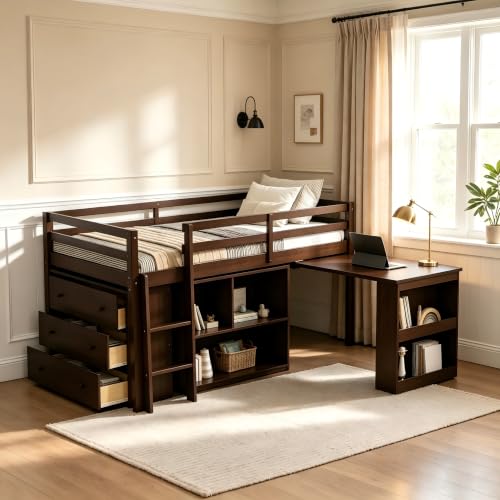
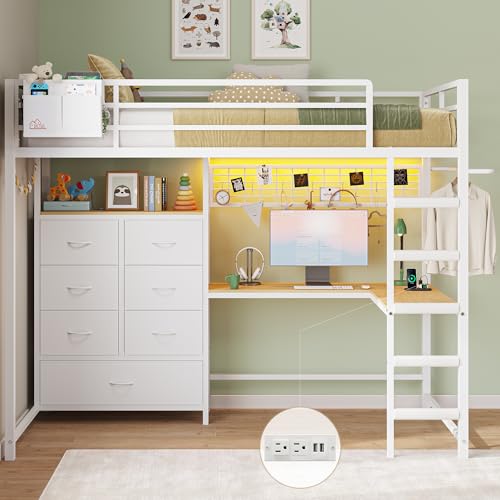
Wood Loft Bed with Desk and Dresser: The Complete Buying Guide
A wood loft bed with a built-in desk and dresser turns a single bedroom footprint into a sleeping zone, a workspace, and organized storage. This guide explains how to choose the right size, wood type, layout, and safety features so you buy once and buy well.
Start the GuideWhy this combination works: A loft bed lifts the mattress off the floor, freeing the area beneath for a desk and a dresser. For small bedrooms, dorms, teens, and guest rooms, this single piece of furniture replaces three separate items, reduces clutter, and creates a dedicated study and storage zone without adding floor space.
What Is a Wood Loft Bed with Desk and Dresser?
A wood loft bed with desk and dresser is a multi-functional bedroom system built from solid wood or engineered wood. The sleeping platform sits elevated on a sturdy frame, and the space underneath is organized into a workspace and a drawer-based storage unit. Unlike a standard bunk bed, the lower level is not a second mattress; it is a functional zone for studying, dressing, and organizing clothes.
Most models fall into one of three configurations: a desk on one side with a dresser on the other, a full-width desk with a dresser tucked beside it, or a corner layout where the desk wraps around the dresser. The right configuration depends on the room's shape, the user's age, and how much clothing storage is needed. If you are also comparing standalone storage pieces, our guide to a wood cabinet with drawers explains how drawer depth and height affect everyday use.
Because the bed, desk, and dresser share one frame, the quality of the wood and the joinery matters more than in a single-purpose piece. A well-built unit should feel rigid, show no wobble at the ladder, and use reinforced rails under the mattress platform.
Who Should Consider This Setup?
This furniture format suits a specific set of buyers. If you recognize yourself in two or more of the profiles below, a loft bed with desk and dresser is likely a strong fit:
- Teens and students who need a dedicated study surface and clothing storage in a single room.
- Small bedroom owners who want to reclaim floor space without giving up a desk or a dresser.
- Dorm and apartment residents working with limited square footage and no built-in closets.
- Guest room planners who want a room that can serve as both a bedroom and a workspace.
- Parents upgrading a child's room as the child moves from a toddler bed to a study-friendly layout.
If the room has low ceilings, a loft bed may feel cramped; in that case, a twin bed with built-in dresser keeps storage low and preserves headroom. Conversely, if the room is tall and narrow, a vertical layout with drawers and shelves, such as a tall dresser with shelves and drawers, can complement the loft bed's footprint.
Sizing and Room Clearance: Get the Numbers Right
Measurements are the most common reason buyers regret a loft bed purchase. Before choosing a model, confirm three numbers: ceiling height, mattress size, and the clearance under the bed.
Ceiling height. Most loft beds require a ceiling of at least 8 feet (about 96 inches). You need comfortable sitting headroom above the mattress plus enough clearance below for a seated person at the desk. Measure from the floor to the ceiling, not to a light fixture or ceiling fan.
Mattress size. Twin and twin XL are the most common sizes for loft beds. Twin XL adds length for taller teens and adults. Full-size loft beds exist but consume more floor area and are harder to fit into narrow rooms.
Under-bed clearance. Desk height should allow a seated adult to work comfortably, typically around 28 to 30 inches from the floor to the desktop. Dresser drawer depth should be checked against the space beside the desk so drawers can open fully without hitting a wall or the ladder.
Also account for the ladder or stairs. A straight ladder projects outward and needs clear floor space in front of it. Integrated stairs take up more width but are easier for younger children and double as additional storage. If the room is tight, a twin bed frame with dresser underneath is a lower-profile alternative worth comparing.
Understanding Quality Tiers
Loft beds with desk and dresser combinations vary widely in construction quality. Rather than focusing on numbers, use these three universal tiers to set expectations for materials, stability, and longevity.
Entry-Level Tier
Engineered wood panels with laminate or paper veneer, basic metal-to-wood fasteners, and a simpler ladder. Suitable for light use, guest rooms, or short-term needs. Expect a lighter frame and more assembly steps.
Mid-Range Tier
Solid wood rails and legs combined with engineered panels, reinforced corner brackets, smoother drawer glides, and a more stable ladder. A solid choice for daily use by teens and students, and the most common tier for family bedrooms.
Premium Tier
Mostly or fully solid wood construction, dovetail or doweled drawer joints, heavy-duty hardware, and a rigid frame that resists sway. Designed for long-term daily use and often finished with a durable, low-emission coating.
Within any tier, prioritize frame rigidity and drawer glide quality. A mid-range model with a reinforced frame and smooth glides usually outperforms an entry-level model with a decorative finish but a wobbly ladder. For a deeper comparison of materials, read our guide on solid wood vs engineered wood.
Choosing the Right Wood
The wood species affects weight, durability, grain appearance, and how the piece ages. Each option below has a distinct character:
- Pine. Lighter in weight and tone, with visible knots. Easier to move and assemble, but softer and more prone to dents. A common choice in entry-level and mid-range models.
- Oak. Hard, dense, and highly durable with a pronounced grain. A strong pick for premium frames and high-traffic rooms.
- Rubberwood. A practical, stable hardwood often used in mid-range furniture. Takes paint and stain well and offers good screw-holding strength.
- Maple and birch. Fine, even grain and a clean look that suits modern and Scandinavian interiors. Birch is common in plywood cores for engineered panels.
- Walnut. A darker, richer tone with a luxurious feel. Typically found in premium tier pieces and paired with brass or black hardware.
Regardless of species, check the finish. A low-VOC, water-based finish is preferable for bedrooms and children's rooms. If you are matching the loft bed to existing furniture, our collection of solid wood chests shows how consistent wood tones can unify a room.
Layout Configurations: Desk and Dresser Placement
The relationship between the desk and the dresser determines how usable the under-bed area feels. Consider these common layouts:
Side-by-Side Layout
The desk occupies one side and the dresser the other. This works best in wider rooms and gives each function its own zone without overlap. Ideal for two users sharing a room.
Desk with Dresser Return
The dresser sits at the end of the desk in an L-shape. Efficient for narrow rooms because the dresser doubles as a desk return and storage wall.
Corner Layout
The desk wraps a corner with the dresser beside it. Maximizes under-bed storage in square rooms but requires careful drawer clearance planning.
Integrated Dresser Steps
Stairs replace the ladder and conceal drawers. Excellent for younger children and for rooms where every inch counts. Drawers in the steps often double as clothing or toy storage.
If the under-bed dresser feels too small, a separate storage chest with drawers placed along an adjacent wall can add capacity without crowding the desk. For rooms with very limited floor area, a small space dresser is designed to fit tight gaps and corners.
Safety Features You Should Not Skip
An elevated sleeping platform requires more safety attention than a standard bed. Check for the following before purchase:
- Full safety rail. The rail should extend along the entire exposed side of the mattress and sit high enough above the mattress surface to prevent rolling out.
- Sturdy ladder or stairs. Steps should be wide, textured, and firmly attached. A ladder that shifts or flexes under weight is a hazard.
- Wall anchoring. Loft beds should be anchored to the wall with the included hardware. This is especially important in homes with children or in earthquake-prone regions.
- Weight limits. Follow the manufacturer's stated mattress weight and user weight limits. Do not substitute a thicker or heavier mattress than recommended.
- Rounded edges and non-toxic finish. Look for sanded edges and a low-emission finish, particularly for children's rooms.
For families with younger children, compare the guardrail height and step design of a dedicated twin bed and dresser set; some sets include lower platforms that reduce fall risk while still offering under-bed storage.
Comparing the Options at a Glance
Use this table to compare common loft bed configurations by category and best use case. Tiers describe relative market positioning, not absolute features.
| Tier | Typical Construction | Best For | Key Consideration |
|---|---|---|---|
| Entry-Level Tier | Engineered panels, laminate finish, basic ladder | Guest rooms, light use, short-term setups | Check frame rigidity and ladder attachment |
| Mid-Range Tier | Solid wood rails with engineered panels, reinforced brackets | Teens, students, daily use | Prioritize smooth drawer glides and wall anchoring |
| Premium Tier | Mostly solid wood, dovetail or doweled drawers, heavy-duty hardware | Long-term family use, high-traffic rooms | Confirm finish durability and weight limits |
| Stairs Configuration | Integrated stepped storage in any tier | Younger children, rooms needing extra storage | Verify step width and drawer clearance |
Organizing the Desk and Dresser Zone
A loft bed with a desk and dresser is only as useful as its organization. A few practical habits make the setup work day to day:
- Assign zones. Keep the dresser for folded clothing and the desk for study materials. Avoid letting paperwork drift into drawers.
- Use drawer dividers. Dividers keep socks, undergarments, and small accessories from mixing. A stackable dresser drawer organizer adapts to most drawer depths.
- Rotate seasonal clothing. Store off-season items in under-bed bins or a separate storage bed if the room has one.
- Keep the desk surface clear. A small drawer or a wall-mounted shelf above the desk handles pens, chargers, and notebooks.
- Light the workspace. Add a clamp lamp or an LED strip under the bed frame so the desk is usable in the evening.
If the dresser section feels tight, our guide to a tall dresser with lots of drawers explains how vertical storage can supplement the under-bed unit without taking up extra floor space.
A Practical Buying Checklist
Before you commit, run through this checklist. It covers the details that buyers most often overlook:
- Measure ceiling height, room width, and the path to the bed. Confirm the assembled dimensions fit with clearance for drawers and the ladder.
- Confirm the mattress size and check the recommended mattress thickness for the model.
- Verify the frame material and look for reinforced rails and corner brackets.
- Test or review the drawer glides; smooth, full-extension glides make daily use far easier.
- Check that a full safety rail, sturdy ladder or stairs, and wall-anchoring hardware are included.
- Review the finish for low emissions, especially for children's rooms.
- Plan the layout of the desk and dresser so drawers open fully and the desk has adequate light.
- Compare the under-bed storage capacity with your actual clothing volume; add a supplementary piece such as a small chest of drawers if needed.
Ready to compare models? Explore our curated selection of wood loft beds with desks and dressers below, and match your room measurements with the right configuration.
View Recommended ModelsFrequently Asked Questions
What is a wood loft bed with desk and dresser?
It is a space-saving furniture system that raises the sleeping area off the floor and uses the space underneath for a built-in desk and a dresser or drawer storage. It combines three core bedroom functions into one footprint.
Is a loft bed with desk and dresser safe for children and teens?
Yes, when properly built and installed. Look for solid wood construction, a full safety rail, a sturdy ladder or integrated stairs, and a design that can be anchored to the wall. Always follow the manufacturer's weight limits and assembly instructions.
What ceiling height do I need for a loft bed?
Most loft beds need a ceiling height of at least 8 feet (about 96 inches) to be comfortable. You should have enough headroom above the mattress for sitting up, plus clearance below for the desk and dresser area.
Can I use a standard mattress on a loft bed?
Use a mattress that matches the platform size and stays within the recommended thickness. A mattress that is too thick can reduce the effectiveness of the safety rail; one that is too thin can make the frame feel less stable.
How do I keep the under-bed desk and dresser organized?
Assign separate zones for clothing and study materials, use drawer dividers, rotate seasonal clothing, and keep the desktop clear with a small drawer or wall shelf. A supplementary small chest of drawers for closet can absorb overflow.