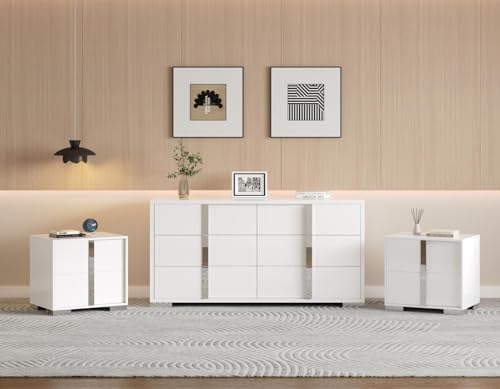
White and Silver Dresser: Complete Buying Guide
Learn how to choose a white and silver dresser that elevates your bedroom with a refined, modern look. Explore finishes, hardware styles, drawer layouts, and room-matching strategies before you decide.
EXPLORE OPTIONSWhy a white and silver dresser stands out: The pairing of a crisp white body with silver-toned hardware creates a light, airy feel while adding a subtle metallic accent. It works across modern, transitional, and glam bedroom styles, and it is especially effective in smaller rooms where brighter furniture helps the space feel larger.
What Makes a White and Silver Dresser a Smart Choice
A white and silver dresser combines two design elements that are easy to live with: a clean white finish and reflective silver-toned hardware. The white body keeps the piece visually light and flexible, while silver handles, pulls, or trim introduce a polished accent that catches light without overwhelming the room. This combination is popular because it sits comfortably between neutral and decorative, letting you shift the surrounding decor without replacing the dresser itself.
From a practical standpoint, white finishes are generally easier to coordinate with bedding, wall colors, and accent furniture than darker tones. Silver hardware tends to resist showing fingerprints more than some darker metallic finishes, and it pairs naturally with chrome, nickel, and brushed steel fixtures already common in bedrooms and bathrooms. If you are still comparing finishes, our guide to white dressers for the bedroom covers broader coordination ideas.
Materials and Finishes to Evaluate
The durability and feel of a white and silver dresser depend heavily on the body material and the finish process. Before you commit, understand the trade-offs between solid wood, engineered wood, and mixed construction.
- Solid wood: Offers a substantial feel, holds hardware screws more securely over time, and can be refinished. A solid wood white 6-drawer dresser is a strong long-term investment if you want a piece that can be repaired rather than replaced.
- Engineered wood with veneer: More dimensionally stable in humid rooms and typically lighter to move. Quality veneer with a well-sealed white finish can look refined, but edges and seams deserve a close inspection.
- Mixed construction: A solid wood frame with engineered drawer boxes is common in mid-range and premium tiers. This balances structural strength with efficient manufacturing.
For a deeper comparison of construction types, read our breakdown of solid wood versus engineered furniture. On the finish side, look for a sealed, low-sheen white coating rather than a flat paint that shows scuffs easily. Silver hardware should be described as brushed, satin, or polished—each reflects light differently, and the choice affects how formal the dresser feels.
Silver Hardware Styles and Design Pairings
Silver-toned hardware is the detail that defines the look of a white and silver dresser. The shape and finish of the pulls change the piece's personality more than most buyers expect.
- Bar pulls in brushed nickel: Clean and contemporary; a natural fit for modern and minimalist bedrooms.
- Round knobs in polished chrome: Adds a subtle glam accent; works well with mirrored accessories and soft textiles.
- Cup pulls in satin silver: Leans traditional or transitional; often seen on dressers with framed drawer fronts.
- Mixed silver and clear handles: A lighter, airier look that suits small rooms. See our notes on a white dresser with clear handles for related styling ideas.
If you prefer a warmer metallic accent instead, the principles in our white and gold dresser guide translate directly—only the metal tone changes. For a more textured, natural look, a white and rattan dresser offers an alternative direction.
Choosing the Right Size and Drawer Layout
White and silver dressers are available in many footprints, so matching the piece to your room and storage habits matters more than the finish alone. Measure your available wall space, leaving clearance for doors, walking paths, and any nearby closet or bed.
- Small and narrow rooms: A compact or vertical design keeps floor space open. Browse small white dressers and vertical dressers for space-conscious options.
- Wide walls: A long, low profile balances a large bed and provides a generous top surface. A white wide dresser or white long dresser for the bedroom can anchor the room.
- Deep storage needs: If you store bulky clothing or linens, prioritize drawer depth. A white tall dresser with deep drawers may suit you better than a shallow wide unit.
- Mirror integration: A white 9-drawer dresser with mirror combines storage and a dressing surface in one footprint.
Drawer count is not just about capacity—it also affects organization. More, smaller drawers suit folded tops and accessories, while fewer, larger drawers handle bedding and bulkier items. If you are planning a coordinated room, a white dresser chest and nightstand set simplifies matching finishes and hardware tones.
White and Silver Dresser Tiers at a Glance
Use this tier-based comparison to set expectations for construction, hardware, and drawer mechanics. Tiers describe relative market position, not a specific figure.
| Tier | Typical Construction | Hardware and Finish | Best For |
|---|---|---|---|
| Entry-level | Engineered wood with laminated or painted finish | Basic silver-tone knobs; standard side-mount glides | Guest rooms, first apartments, seasonal setups |
| Mid-range | Solid wood frame with engineered drawer boxes | Brushed nickel or satin silver pulls; smooth ball-bearing glides | Primary bedrooms with regular daily use |
| Premium | Solid wood throughout; dovetailed drawer joints | Polished or brushed silver hardware; soft-close mechanisms | Long-term family use and heirloom-style pieces |
| Luxury / top-tier | Hardwood solids with premium veneers; reinforced joinery | Designer silver hardware; precision soft-close and full-extension glides | High-end bedrooms and statement interiors |
In general, moving up a tier tends to bring smoother drawer action, tighter joinery, and more consistent finish quality. The difference is most noticeable in daily use—drawers that glide quietly and align evenly make a dresser feel better than its visual style alone.
Styling a White and Silver Dresser in Your Bedroom
A white and silver dresser is a flexible styling base. To keep the look cohesive, repeat the silver accent in small doses around the room—lamp bases, mirror frames, or drawer pulls on a nightstand—rather than introducing several competing metals.
- Bedding and textiles: Cool whites, soft grays, and pale blues reinforce the crisp feel; warm textures like linen and chunky knits prevent the room from feeling sterile.
- Wall color: The dresser reads clean against soft greige, pale blue, or warm white walls. If you want contrast, a deeper accent wall behind the dresser makes the white pop.
- Top surface: Keep it intentional—a tray for small items, one lamp, and a mirror or artwork above. Clutter undercuts the light, polished look the finish is meant to create.
- Coordinated pieces: If you want a matched set, browse white dresser with nightstand sets to keep hardware and finish consistent.
For broader coordination ideas across finishes, our white dressers for bedroom guide covers palettes and placement in more detail.
A Practical Buying Checklist
Before finalizing a white and silver dresser, run through these checks to avoid common regrets:
- Measure twice: Confirm width, depth, and height against your wall and walking clearance, and account for baseboards and outlet placement.
- Inspect drawer mechanics: Look for ball-bearing or soft-close glides and full-extension drawers; these matter more than the hardware's appearance.
- Check hardware attachment: Silver pulls should sit flush and feel secure; loose or stripped screw holes are a sign of weaker construction.
- Review the finish warranty and care instructions: White finishes vary in scuff resistance; know how to clean them without dulling the surface.
- Confirm stability: A dresser should include anti-tip hardware, especially in homes with children or pets.
- Plan the delivery path: Verify door widths and stair turns so the piece fits into the intended room.
If your room is tight, our small space dresser guide offers additional layout strategies, and white small dressers for closets covers walk-in and reach-in closet setups.
Frequently Asked Questions
Is a white and silver dresser suitable for a modern bedroom?
Yes. A white body with brushed nickel or satin silver hardware fits modern and minimalist interiors especially well. Keep the surrounding palette restrained and repeat the silver accent sparingly so the dresser remains the focal point.
How do I keep a white dresser finish looking clean?
Dust regularly with a soft microfiber cloth and use a mild, non-abrasive cleaner for marks. Avoid solvent-based products that can dull a sealed finish. For silver hardware, a dry cloth is usually enough; abrasive polishes can remove brushed textures.
Does silver hardware show fingerprints?
Brushed and satin silver finishes tend to hide fingerprints better than polished chrome. If you prefer a high-shine look, plan to wipe the pulls occasionally with a dry cloth.
Should I choose a wide or tall white and silver dresser?
Wide, low dressers suit larger walls and provide a broad top surface for styling. Tall dressers are more space-efficient in narrow rooms and can offer deeper storage. Match the shape to your available wall space and how you fold and store clothing.
Can I mix a white and silver dresser with other furniture finishes?
Yes. White is a neutral base that pairs with natural wood, gray, and soft upholstered pieces. Keep other metallic accents limited—one additional metal tone is usually enough to keep the room cohesive.
Ready to Compare White and Silver Dresser Options
Review the recommended models below, compare construction and drawer features, and choose the piece that fits your room and storage routine.
VIEW RECOMMENDED OPTIONS