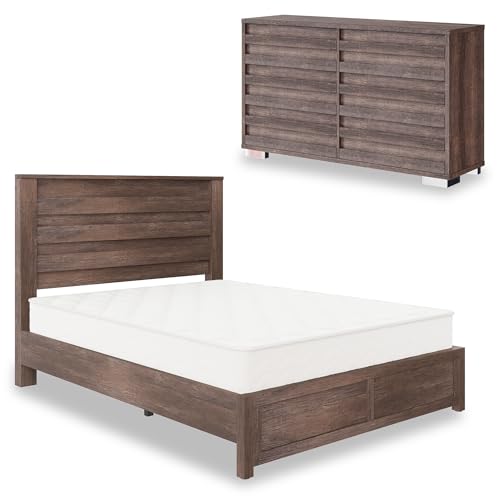
Queen Headboard and Dresser Set: The Complete Buying Guide
Everything you need to choose a coordinated queen headboard and dresser set — from matching styles and materials to storage capacity, sizing, and long-term durability. Research first, decide with confidence.
Why a coordinated set matters: A queen headboard and dresser set gives your bedroom an instant sense of cohesion that piecemeal furniture rarely achieves. The headboard anchors the visual weight of the room, while the dresser handles daily storage. When the two are designed as a matched pair, proportions, wood tones, hardware finishes, and stylistic details align — which means fewer design decisions, less risk of mismatch, and a faster path to a polished bedroom. This guide walks you through the research stage so you can pick a set that fits your space, your storage habits, and your long-term expectations.
What Exactly Is Included in a Queen Headboard and Dresser Set?
Set composition varies significantly between manufacturers and retailers, so the single most important research step is confirming what ships in the box. Broadly, you will encounter three configurations:
- Headboard + dresser only: The most stripped-down pairing. You supply your own queen bed frame, box spring or platform base, mattress, and often the nightstand separately. Best for buyers who already own a compatible frame or want maximum flexibility.
- Headboard + dresser + nightstand: A three-piece arrangement that covers the essential bedroom furniture. This is the most common set configuration and typically offers the best coordination between pieces, including matched hardware and finish.
- Full bedroom set: Headboard, dresser, mirror, nightstand(s), and sometimes a chest or bench. If you are furnishing a room from scratch, a complete set removes nearly all coordination guesswork — but you pay for pieces you may not need.
If your priority is a fully matched room with minimal effort, a broader queen bedroom set with dressers may serve you better than a headboard-and-dresser-only bundle. Conversely, if you already own a quality bed frame and simply want a cohesive anchor and storage piece, the tighter two-piece set is the efficient route. Buyers who want the bed included should compare queen bed and dresser set options, which bundle the frame and headboard together.
Headboard Styles: Finding the Right Visual Anchor
The headboard is the tallest, most visible element in most bedrooms. It sets the style language that the dresser then echoes. Understanding the major headboard categories will help you narrow the field quickly.
Upholstered Headboards
Fabric-wrapped headboards — in linen, velvet, bouclé, or performance weaves — soften the room and provide acoustic dampening. They suit modern, transitional, and glam interiors. The trade-off is maintenance: upholstery collects dust and is harder to clean than wood or metal. Look for removable covers or tightly woven performance fabrics if easy care matters to you.
Wood Headboards
Solid wood and wood-veneer headboards are the most versatile choice and pair naturally with wood dressers. Panel designs, slatted backs, cane inserts, and spindle styles all fall under this category. Wood offers the widest finish range — from pale oak to deep walnut — and ages gracefully. Check whether the headboard is solid wood or engineered wood with veneer; the former is a long-term investment, the latter an entry-level to mid-range option.
Metal Headboards
Iron and steel headboards bring an airy, architectural quality. They are durable, low-maintenance, and often the lightest visual option in a small room. Open-frame metal designs let wall color show through, which helps compact bedrooms feel larger. Finishes range from matte black to brushed brass and powder-coated colors.
Bookcase and Storage Headboards
A storage headboard integrates shelving or cubbies above the mattress line — useful in rooms without space for a nightstand. These are heavier and require secure wall anchoring, but they add genuine functional value in compact layouts.
Matching the Dresser to Your Storage Needs
The dresser half of the set should be chosen around what you actually store, not just how it looks. A few practical distinctions matter:
Drawer Count and Configuration
Three- and four-drawer dressers suit lighter wardrobes or guest rooms. Five- to six-drawer configurations handle a full adult wardrobe rotation. Wide, shallow drawers work well for folded tops and knitwear; deep drawers suit jeans, bedding, and bulky items. If you are building a storage plan around a specific drawer count, our guidance on six-drawer oak dressers explains how that layout performs in practice.
Dresser Height and Depth
Standard dresser height runs roughly 30 to 42 inches; depth typically falls between 16 and 20 inches. A dresser that is too deep crowds walking space at the foot of the bed, while one that is too shallow struggles with folded stacks. Measure your room's circulation path before committing.
Style Pairing
If your headboard is upholstered and modern, a clean-lined dresser with minimal hardware reinforces the look. If the headboard is a traditional wood panel, a dresser with framed drawer fronts and classic pulls continues the theme. Mixed-material sets — wood headboard with a painted dresser, for instance — can work beautifully but require more deliberate styling.
Materials and Construction: What Separates Tiers
Construction quality is where matched sets diverge most sharply. Use the universal tier framework below to position any set you are evaluating, regardless of brand or retailer.
| Tier | Typical Construction | Best For | Durability Outlook |
|---|---|---|---|
| Entry-level | Engineered wood panels, paper or thin veneer, stapled or cam-lock joinery, basic euro glides | Guest rooms, first apartments, short-term setups | Serviceable for light use; may loosen with frequent moving |
| Mid-range | Engineered core with thicker veneer, some solid wood trim, dowel-and-cam joinery, side-mounted or entry-level ball-bearing glides | Primary bedrooms with moderate daily use | Solid everyday performance with reasonable care |
| Premium | Solid wood frame and drawer boxes, dovetail or reinforced joinery, full-extension ball-bearing glides, quality hardware | Primary bedrooms, long-term ownership | Excellent longevity; refinishable surfaces |
| Luxury | Kiln-dried hardwood throughout, hand-finished details, soft-close undermount glides, premium hardware, often bench-made | Design-led interiors, heirloom expectations | Decades of service; holds structural integrity |
A practical observation: mid-range sets typically offer the smoothest drawers and sturdier frames than entry-level ones, while premium and luxury tiers add refinishability and repairability that matter if you intend to keep the set for a decade or more. If you are drawn to natural timber, our overview of oak dressers explains why that species is a popular anchor for coordinated sets. For a broader discussion of veneer versus solid construction, the real wood dressers guide covers the trade-offs in detail.
Sizing the Set to Your Room
A queen mattress occupies 60 by 80 inches. The headboard will typically run 62 to 66 inches wide, extending slightly beyond the mattress edges for a finished look. Around that, you need circulation space:
- Walking clearance at the foot of the bed: allow at least 24 inches, ideally 30 inches.
- Dresser-to-bed clearance: a minimum of 30 inches for comfortable drawer access; 36 inches feels generous.
- Headboard height: most range from 40 to 60 inches. Taller headboards make a stronger statement but can overwhelm low ceilings.
In compact rooms, a narrower dresser paired with a slim, open-frame metal headboard keeps the visual weight low. If space is genuinely tight, you may want to explore queen size bed frame with dresser configurations that consolidate footprint. Buyers who want a fully integrated solution often consider a queen bed with built-in dresser, which folds storage into the bed structure itself.
- Measure the wall width available for the headboard, including any nightstand gaps.
- Measure the walking path from bed to dresser, closet, and doorway.
- Confirm ceiling height against your intended headboard height.
- Check doorway and stairwell widths for delivery access.
- Verify that the dresser depth leaves room for open drawers.
Style Directions That Work Well as a Set
Modern Minimalist
Slim upholstered or flat-panel headboard paired with a handle-less dresser in matte white or warm gray. Low visual clutter, strong geometry.
Traditional Wood
Framed panel headboard and a dresser with classic pulls in oak or walnut. Timeless, refinishable, and easy to accessorize.
Farmhouse
Slatted or beadboard headboard with a painted dresser featuring cup pulls. Soft, welcoming, and forgiving of everyday wear.
Mid-Century
Tapered-leg dresser and a low, angled headboard with splayed supports. Warm wood tones and brass accents define the pairing.
Glam
Channel-tufted velvet headboard with a dresser in a lacquered finish and metallic hardware. High contrast, high impact.
Coastal
Cane or rattan headboard with a light-washed dresser. Airy textures and pale finishes suit bright, relaxed rooms.
Coordinating Additional Pieces
Most matched sets are designed to expand. If you later want to add a nightstand, the same finish and hardware should be available — which is a strong argument for buying from a single collection rather than assembling piece by piece. Our guide to oak dresser and nightstand sets illustrates how collections scale across a bedroom.
You should also consider whether the set includes a mirror, or whether the dresser top can host one. A dresser with a mirror changes the functional role of the piece from pure storage to a grooming station. Similarly, if your bed frame is the centerpiece and you want the dresser to sit beneath a window or against a side wall, confirm the headboard's finish reads well from multiple angles.
Common Mistakes to Avoid
- Assuming all pieces ship together. Always read the set contents list. Some listings show a styled room image where the nightstand or mirror is sold separately.
- Ignoring drawer glide quality. Glides are the first component to fail. Full-extension ball-bearing or soft-close undermount glides significantly extend usable life.
- Overlooking wall anchoring. Tall dressers and heavy headboards should be secured to the wall, particularly in homes with children or pets.
- Buying on style alone. A beautiful set with shallow drawers and stiff glides will frustrate you daily. Function first, aesthetics second.
- Skipping the finish check. Wood tones look different under showroom lighting versus bedroom lighting. Request finish samples or order swatches where available.
Frequently Asked Questions
Does a queen headboard and dresser set include the bed frame?
Usually not. Most sets pair a headboard with a dresser and leave the frame, box spring, and mattress to the buyer. If you want the complete bed structure included, look for a set explicitly described as a bed frame and dresser bundle rather than a headboard and dresser pairing.
Can I mix a queen headboard from one set with a dresser from another?
Yes, and many buyers do. The key is matching scale and finish family rather than exact model. A 62-inch headboard reads as intentional alongside a dresser of similar height and wood tone, even if the two are from different collections. Coordinated sets simply remove that decision-making burden.
How tall should the dresser be relative to the headboard?
There is no rigid rule, but a common proportion is a dresser that reaches roughly two-thirds to three-quarters of the headboard height. A dresser substantially taller than the headboard can make the bed look undersized; one much shorter can leave the wall feeling unbalanced.
What is the best material for a long-term set?
Solid hardwood frames with dovetail or reinforced drawer boxes and quality ball-bearing or soft-close glides represent the strongest long-term choice. These sets can be refinished and repaired, extending their service life well beyond engineered-wood alternatives.
How many drawers do I need in the dresser?
For a single adult with a full wardrobe rotation, five to six drawers is a practical baseline. Couples sharing one dresser often need six to eight. Guest rooms and secondary bedrooms can function well with three to four drawers.
Should the headboard be upholstered or wood?
Upholstered headboards add softness and comfort for sitting up in bed, but demand more cleaning attention. Wood headboards are more durable, easier to maintain, and pair naturally with wood dressers. Choose based on your maintenance tolerance and the style language of your room.
Can a queen headboard fit a full-size bed?
Not cleanly. A queen headboard is roughly 62 to 66 inches wide, while a full mattress is 54 inches wide. The headboard will overhang noticeably on both sides, which looks unintentional. Always match headboard width to mattress size.
Final Decision Checklist
- Confirm the set contents — headboard only, headboard plus dresser, or full bundle.
- Verify headboard width suits a 60-inch queen mattress.
- Check drawer glide type and drawer box construction.
- Measure room clearances for bed-to-dresser and foot-of-bed paths.
- Confirm finish samples or swatches where possible.
- Check whether matching nightstands or a mirror are available for future expansion.
- Verify wall-anchoring hardware is included or recommended.
- Review delivery access — doorway width and stairwell turns.
Researching a coordinated set is a one-time effort that pays off every day. Take the measurements, confirm the tier, and buy with confidence.