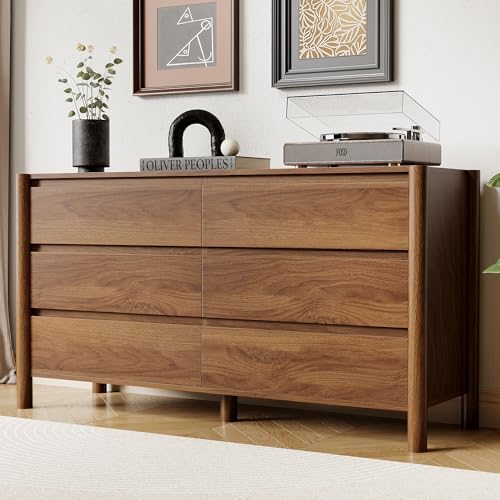
Modern Solid Wood Chest of Drawers
A complete research guide to construction, wood species, finishes, drawer hardware, and sizing — everything you need before choosing a solid wood chest of drawers for your bedroom.
Start the Buying GuideWhy this guide matters: If you have already narrowed your search to a modern solid wood chest of drawers, you are past the browsing stage and into decision-making. This guide walks through the details that separate a piece built to last from one that only looks the part — joinery, wood species, finish durability, drawer glide systems, and proportion. Read it once, and you will know exactly what to inspect before you commit.
What Defines a Modern Solid Wood Chest of Drawers
A chest of drawers is a tall, vertically stacked storage unit, distinguished from a wider dresser by its footprint rather than its purpose. The modern interpretation keeps that classic vertical form but strips away ornamentation: clean lines, flush or minimally profiled drawer fronts, restrained hardware, and a finish that lets the wood grain carry the visual weight.
What makes the piece genuinely modern, however, is not the silhouette alone. Modern design in solid wood furniture emphasizes honest materials and precise engineering. That means drawer boxes that operate smoothly and quietly, carcasses that stay square, and surfaces finished to resist daily wear. If you are still weighing form factors, the distinction between a modern chest of drawers and a wider dresser is worth reviewing before you lock in dimensions.
Solid wood construction also changes the way a chest ages. Unlike veneered or engineered panels, solid wood can be sanded and refinished, and minor surface damage can be repaired rather than replaced. That repairability is the core reason solid wood is treated as a long-term investment rather than a disposable purchase.
Solid Wood vs. Engineered Wood: What You Are Actually Comparing
The single most consequential decision in this category is material. Both solid wood and engineered wood can be durable when well made, but they behave differently over time and respond differently to humidity.
| Factor | Solid Wood | Engineered Wood |
|---|---|---|
| Structural integrity over time | Excellent; joints tighten and the piece holds shape for decades | Good in stable conditions; susceptible to swelling if moisture reaches the core |
| Repairability | High; can be sanded, refinished, and repaired | Low; damaged panels are generally replaced, not repaired |
| Weight and stability | Heavy and self-stabilizing, which reduces tipping risk | Lighter; often requires anti-tip anchoring |
| Response to humidity | Expands and contracts naturally; needs acclimatization | Dimensionally stable, but core can degrade if exposed to moisture |
| Best fit | Long-term investment pieces and heirloom-quality furniture | Practical, stable furniture for climate-controlled rooms |
Inspection tip: Solid wood does not automatically mean better. A solid wood chest with stapled drawer boxes can be less durable than a well-engineered piece with dovetail joinery. Judge construction quality and material quality separately.
Wood Species: How They Affect Appearance and Behavior
The species you choose shapes grain pattern, tone, hardness, and how the piece responds to seasonal humidity changes. Each has a distinct character, and there is no universally superior option — only the right match for your room and priorities.
Oak
Dense and hard-wearing with an open, pronounced grain. Takes stain and finish well and holds up to daily use. A natural fit for light and mid-tone modern finishes; the grain adds visual texture without ornament.
Walnut
Rich, dark brown heartwood with a smooth, refined grain. Typically positioned in the high-end tier for its appearance and workability. Ideal when the chest is meant to be a focal point against lighter walls.
Maple
Hard, tight-grained, and pale, with a clean, uniform look. Resists dents well and suits minimalist modern interiors where the wood should read as a quiet, neutral surface.
Cherry
Warm reddish-brown that deepens with exposure to light. Moderately hard and easy to work. Expect the tone to darken over the first year or two — plan your room palette accordingly.
Ash
Light, springy, and strongly grained. Frequently used in Scandinavian and Japandi modern designs. Works especially well with natural, low-sheen finishes that keep the grain visible.
Pine
Softer and more prone to denting, but with a friendly, casual character. Typically an entry-level or mid-range species. Better suited to low-traffic rooms or rustic-adjacent modern styles.
If your primary concern is a natural, untoned look, a modern wood chest in oak or ash with a matte finish is a reliable direction. If you prefer a darker, more graphic presence, walnut delivers contrast that most other species cannot match without heavy staining.
Drawer Construction: The Detail That Decides Longevity
Drawers take the most abuse of any part of a chest. Every open-and-close cycle stresses the joints, and a poorly built drawer box will announce itself within a year. The three components that matter most are joinery, glide system, and bottom panel construction.
- Dovetail joinery interlocks drawer sides and fronts mechanically. It resists pulling apart under load and is the benchmark for professional-grade construction. Look for English dovetails at the front and, ideally, at the back as well.
- Box joints and doweled joints are acceptable in mid-range pieces when paired with solid materials and careful assembly.
- Stapled or glued butt joints signal entry-level construction and rarely survive heavy use.
- Drawer glides come in three broad classes: wooden runners (traditional, quiet, requires waxing), side-mounted metal slides (economical, functional), and under-mount soft-close slides (smooth, quiet, and the modern standard).
- Drawer bottoms should be captured in a groove rather than stapled to the underside, and should have enough clearance to expand and contract with humidity.
If smooth, quiet operation is a priority, prioritize under-mount glides and check that the drawer boxes are square. A piece described as a modern dresser with soft-close drawers typically signals that the manufacturer has invested in the glide hardware, which is usually a good proxy for overall assembly quality.
Finish and Hardware: Where Modern Design Lives
Finish is not decoration — it is protection. A well-applied finish resists moisture, oils from skin contact, and everyday scuffs, while preserving the tactile quality of the wood.
- Conversion varnish and catalyzed lacquer: top-tier durability for residential furniture. Resistant to moisture and household chemicals; typical of premium and luxury pieces.
- Water-based polyurethane: balanced tier. Low odor, clear finish, good resistance with minimal ambering over time.
- Oil and wax blends: essential tier for natural looks. Easy to repair spot-by-spot, but requires periodic reapplication and offers less moisture protection.
- Lacquer and shellac: traditional and repairable, but more vulnerable to water rings and alcohol than modern catalyzed finishes.
Hardware is where modern chests either commit to minimalism or add a focal accent. Bar pulls, edge pulls, and recessed finger pulls keep the look restrained. Knobs in matte black, brushed brass, or satin nickel add contrast without visual clutter. Consider whether hardware is interchangeable — standard-spaced pulls allow you to refresh the piece later. Exploring modern drawer pulls before purchase helps you plan for that future swap. The broader modern cabinet pulls category is also useful for matching a chest to built-in cabinetry in the same room.
Sizing and Proportion: Fitting the Chest to Your Room
Proportion failures are the most common regret in bedroom furniture. A chest that is too deep crowds the walking path; one that is too tall blocks sightlines or feels top-heavy in a small room.
- Width: most chests of drawers fall between 30 and 44 inches. Narrower chests suit small bedrooms, while wider configurations start to overlap with dresser territory.
- Depth: 16 to 20 inches is typical. Deeper drawers hold more but reduce floor clearance in front of the piece.
- Height: 40 to 55 inches is the standard range. The top drawer should sit comfortably at or below chest height for daily access.
- Clearance: leave at least 24 inches in front of the chest so drawers can fully extend without obstruction.
If your room is genuinely tight, a narrow chest of drawers preserves the vertical storage advantage without eating floor space. For rooms where you want the chest to double as a display surface, a modern 4 drawer dresser offers a wider top with fewer, deeper drawers.
Quality Tiers: Setting Expectations by Construction Level
Rather than anchoring to any specific figure, it helps to understand what changes as you move up the construction ladder. The descriptors below describe relative market positioning and are consistent throughout this guide.
| Tier | Typical Construction | Best For |
|---|---|---|
| Entry-level | Solid wood fronts over engineered carcass; stapled or simple glued drawer boxes; side-mounted slides | Guest rooms, first apartments, short-to-medium term use |
| Mid-range | Solid wood carcass with some engineered components; box-jointed or doweled drawer boxes; under-mount or upgraded side slides | Primary bedrooms where durability and finish quality both matter |
| Premium | Fully solid wood carcass and drawer boxes; dovetail joinery; under-mount soft-close glides; catalyzed finish | Long-term investment pieces and high-traffic primary bedrooms |
| Luxury | Select-grade hardwoods; hand-fitted dovetails; premium glide systems; hand-applied finish | Heirloom-quality furniture and design-led interiors |
Moving from entry-level to mid-range usually delivers the largest perceived jump in quality — smoother glides, better joint integrity, and more consistent finishing. Above mid-range, improvements become more incremental and are largely about material grade and hand-finishing detail. A mid-range chest is competitive within its class for most households; a premium piece justifies itself through longevity rather than immediate difference.
Care, Humidity, and Long-Term Performance
Solid wood is a living material. It expands in humid months and contracts in dry ones. A few habits keep a chest of drawers stable for decades:
- Let the piece acclimatize in the room for a few days before loading drawers, especially after delivery in a different climate.
- Keep relative humidity in the 40 to 60 percent range. A hygrometer is an inexpensive safeguard.
- Keep the chest away from direct heat sources and out of prolonged direct sunlight, which can fade and dry the finish.
- Dust with a soft, slightly damp cloth; avoid silicone-based polishes that build up and attract dust.
- Address scratches early with a matching touch-up stick before moisture reaches the raw wood.
For more on matching a chest to a full bedroom scheme, the modern dresser for bedroom guide covers palette coordination and complementary pieces. If you are furnishing a complete room, the modern dresser and nightstand set overview helps you evaluate coordinated furniture without sacrificing the option to buy pieces individually.
Frequently Asked Questions
What is the difference between a chest of drawers and a dresser?
A chest of drawers is typically taller than it is wide, with drawers stacked vertically. A dresser is usually wider and lower, often combining different drawer sizes. Both store clothing and accessories; the chest fits narrow footprints better, while the dresser offers a broader top surface for display.
Is solid wood better than engineered wood for a chest of drawers?
Solid wood offers superior durability, repairability, and structural integrity, and it can be refinished over time. Engineered wood is dimensionally stable and works well in climate-controlled rooms, but solid wood remains the preferred option for a long-term investment piece.
What drawer joinery should I look for in a solid wood chest?
Dovetail joinery is the benchmark because it locks together mechanically and resists pulling apart under load. Box joints and doweled joints are acceptable in mid-range pieces, while stapled or glued butt joints indicate entry-level construction.
How do I choose the right size chest of drawers for my bedroom?
Measure your available wall space and leave at least 24 inches of clearance in front of the drawers. A chest works best in narrow footprints, while wider dressers suit rooms with generous wall space. Confirm drawer depth matches what you plan to store.
Do I need to anchor a solid wood chest of drawers to the wall?
Solid wood chests are heavy and generally stable, but anchoring is strongly recommended in homes with children or pets. Anti-tip hardware is inexpensive and does not affect the piece's appearance. Always follow the manufacturer's anchoring instructions.
Ready to Compare Your Options?
You now have the framework: prioritize dovetail drawer boxes and under-mount glides, match the wood species to your room's light and palette, and confirm dimensions against your wall space before deciding. Browse the recommended modern solid wood chests below to see how these specifications translate into real products.
Explore Recommended Chests