
Good Quality Dresser: What to Look For Before You Buy
A dresser is a long-term purchase, so quality matters more than a flashy look. This guide explains the materials, joinery, hardware, and finish details that separate a well-built dresser from one that will sag, stick, or wobble within a few years.
Jump to the Quality ChecklistWhat Makes a Dresser Good Quality
Quality in a dresser is not defined by a single feature. It comes from how well the parts work together: the wood or engineered panels that form the case, the way corners and joints are reinforced, the drawer boxes that carry the actual weight of your clothes, and the slides that let those drawers move smoothly. A well-built dresser holds its shape, keeps drawers aligned, and resists the daily stress of opening, closing, and loading.
For buyers who are still deciding on size and style, a broader good quality dresser should first match the room and storage need. But once size is settled, construction is what determines whether the piece lasts. The following sections break down each quality indicator so you can evaluate any dresser with confidence.
Materials: Solid Wood vs Engineered Wood
The material of the dresser case and drawer fronts affects weight capacity, stability, and how the piece ages. Neither solid wood nor engineered wood is automatically superior — construction quality matters more than the label.
Solid Wood
Durable and refinishable. Common options include oak, walnut, maple, and pine. Solid wood can support heavier loads and be sanded or repainted later, but poor drying or thin boards can still warp or split.
Engineered Wood
Plywood and high-grade particleboard with veneer are stable and resist warping. Premium engineered panels are a solid choice for the case and shelves, especially when edges are properly sealed.
Veneer
A thin wood layer over a stable core. Good veneer work looks like solid wood and resists cracking. Check that edges are banded and seams are tight.
MDF and Particleboard
Used in entry-level and mid-range pieces. They are stable and smooth but heavier and less resistant to moisture. Look for sealed edges and reinforced hardware points.
Joinery and Frame Construction
Joinery is how the panels of the dresser are connected. Strong joints resist racking — the side-to-side wobble that develops when a dresser is pushed or loaded unevenly. When inspecting a dresser, look at the corners and the back panel.
- Dovetail joints in drawer boxes are a strong sign of quality. Interlocking wedge-shaped pins resist pulling apart under load.
- Reinforced corner blocks add rigidity to the case, especially in mid-range and premium pieces.
- Solid back panels help square the frame and prevent side-to-side movement. Thin stapled cardboard backs are a weak point.
- Glued and screwed joints outperform stapled joints in durability tests and daily use.
If you are comparing storage options, a dresser vs chest of drawers comparison can help clarify how frame design affects capacity and footprint. Chests tend to be taller and narrower, which places different stress on the frame.
Drawer Boxes and Slides
The drawers are the part of the dresser you interact with every day, and they take the most punishment. A quality drawer box has four solid sides, a sturdy bottom, and a smooth-running slide system.
Drawer Box Construction
Dovetail or reinforced box joints hold up better than stapled corners. The drawer bottom should be at least 3/8 inch thick and seated in a groove, not just nailed to the sides.
Drawer Slides
Metal ball-bearing slides offer smooth, quiet movement and full extension. Side-mounted roller slides are common at the entry-level tier; under-mount slides are typical of premium and luxury pieces.
Weight Rating
Deep drawers that hold heavy items such as denim or bedding need slides rated for the load. Reinforced slides prevent sagging and drawer misalignment over time.
Alignment and Feel
Test every drawer. Quality drawers close flush with the front, run straight without binding, and return smoothly. Wobble or a gritty feel is a warning sign.
For bedrooms with deep storage needs, extra deep drawer chest of drawers models place more demand on drawer bottoms and slides, so construction quality matters even more in that category.
Finish and Hardware
A finish protects the wood and affects how the dresser looks over time. A good finish is even, smooth to the touch, and covers edges and interior surfaces. On painted pieces, check for drips, thin spots, and rough edges. On stained or natural finishes, look for consistent color and sealed ends that resist moisture.
- Hardware quality: Solid metal knobs and pulls hold up better than hollow or plastic ones. Check that screws bite firmly and do not strip.
- Drawer stops: Quality drawers have stops that prevent them from being pulled out accidentally.
- Anti-tip hardware: Many newer dressers include a wall-anchoring kit. Use it, especially in homes with children or pets.
- Edge banding: Sealed edges on engineered panels resist moisture and chipping.
If hardware styling is part of your decision, explore gold hardware dressers for a warmer look, and confirm that the finish on the hardware is plated rather than painted for longer wear.
Quality Tiers Explained
Dressers generally fall into three broad quality tiers. These descriptors are relative — they describe market position and construction approach rather than any specific number.
| Tier | Typical Construction | Best For |
|---|---|---|
| Entry-level | Particleboard or MDF case, stapled or cam-lock joints, roller slides, thin drawer bottoms | Guest rooms, dorms, first apartments, occasional-use spaces |
| Mid-range | Plywood or sealed engineered panels, reinforced corner blocks, ball-bearing slides, solid drawer fronts | Primary bedrooms, daily-use storage, family homes |
| Premium and luxury | Solid wood or high-grade veneer, dovetail drawer boxes, under-mount slides, solid metal hardware | Long-term investment pieces, primary suites, heirloom use |
Mid-range models usually offer smoother slides and more stable frames than entry-level pieces, while premium models add better joinery and refinishable surfaces. If long-term durability is your priority, a extra large solid wood dresser at the premium tier is a strong candidate for a primary bedroom.
In-Store Quality Checklist
Use this checklist when you view a dresser in person or read a product listing. If a listing does not answer these points, ask the seller before ordering.
- Open and close every drawer — smooth, flush, no wobble
- Check drawer box joints — dovetail or reinforced corners
- Confirm drawer bottom thickness and how it is seated
- Look for metal ball-bearing or under-mount slides
- Inspect the back panel — solid, not thin cardboard
- Check corner blocks and frame reinforcement
- Feel the finish — even, sealed edges, no rough spots
- Test hardware — solid metal, screws bite firmly
- Confirm anti-tip kit is included
- Ask what the case sides and drawer bottoms are made of
Frequently Asked Questions
What makes a dresser good quality?
A good quality dresser combines solid or well-engineered wood, sturdy joinery such as dovetail or reinforced corner blocks, smooth metal drawer slides, a durable finish, and solid hardware. These elements support weight, resist wear, and keep drawers gliding smoothly for years.
Is solid wood always better than engineered wood for a dresser?
Not always. Solid wood is durable and can be refinished, but high-grade engineered wood such as plywood with veneer can be stable and resistant to warping. The key is construction quality: well-built engineered wood often outperforms poorly built solid wood.
How can I tell if dresser drawers are well made?
Open and close each drawer. Quality drawers glide smoothly, close flush, and do not wobble. Look for dovetail joints or reinforced corners, a sturdy drawer bottom, and metal slides with a smooth action. Thin, stapled drawer boxes signal lower quality.
Does drawer count affect quality?
Not directly. Drawer count affects capacity and organization, but quality depends on how those drawers are built. A three-drawer dresser with dovetail boxes and under-mount slides can be higher quality than a nine-drawer piece with stapled corners.
Recommended Good Quality Dressers and Storage
⚠️ AFFILIATE DISCLOSURE: This website contains affiliate links. As an Amazon Associate, we earn from qualifying purchases. If you make a purchase through these links, we may receive a small commission at no additional cost to you. Read our full affiliate policy.

HOUROM Walnut Dresser for Bedroom,63"Wide 9 Drawer Mid Century Modern Chest | 63 inch wide dresser with 9 spacious drawers,solid wood legs and concealed handles.Large walnut storage design for bedrooms
Check price on Amazon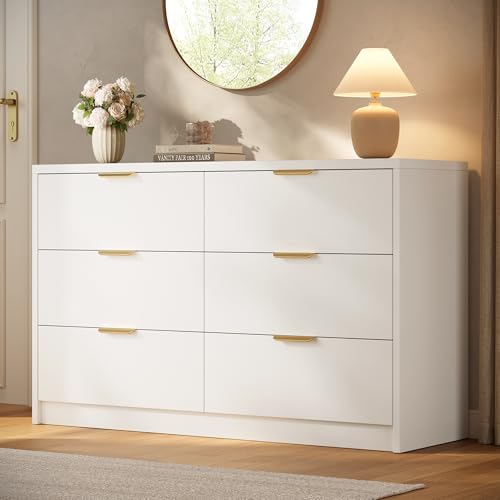
MapleGrace 53" Wide 6 Drawer Dresser for Bedroom, Modern Simple Wood Dresser Chest of Drawers Closet Store Organizer for Living Room, Hallway (White, 15.4" D x 53.1" W x 30.9" H (6 Drawers))
Check price on Amazon
9 Drawer Dresser with Power Outlet, Modern Dresser with LED Light | Modern Chest of Drawers for Closet, Wide Drawer Organizer Cabinet for Bedroom,Living Room
Check price on Amazon
ZORPLIX 10 Drawer Dresser for Bedroom, 55" Long High Gloss Dresser, White | Modern Dresser Chest of Drawers, Handle-less Design, High Gloss Panel, Dresser TV Stand, Wooden Dressers for Bedroom, Closet
Check price on Amazon
YESHOMY Black 6 Dresser for Bedroom | 47.2"/W Wood Dresser, Modern Chest of Drawers, Clothes Storage Organizer, TV Stand for Living Room, Entryway, Closet
Check price on Amazon
WLIVE 5 Drawer Dresser, 45" Tall Dresser for Bedroom with Exclusive Anti-Tip Structure, Modern Chest of Drawers with Large Capacity for Living Room, Hallway, Closet, Home Furniture, Rustic Brown
Check price on Amazon
Jocoevol Modern 9 Drawer Dresser for Bedroom, Simply Chest of Drawers, Wood Storage Dresser with Deep Drawers for Living Room Hallway Entryway (Black)
Check price on Amazon
TEENFON 63" Dresser for Bedroom with 9 Drawers, Modern Dressers & Chests of Drawers with Thicker Panels, Wooden Dresser TV Stand, Bedroom Dressers, for Bedroom, Hallway, Natural
Check price on AmazonDisclaimer
The information provided on DresserAdvisor is for educational and informational purposes only. We are not furniture professionals, and our content should not replace professional advice from qualified furniture makers, interior designers, or safety experts. Some content may use AI assistance. Always check product safety standards and certifications before purchasing. If you do not agree, please do not use this website. Read the full disclaimer.