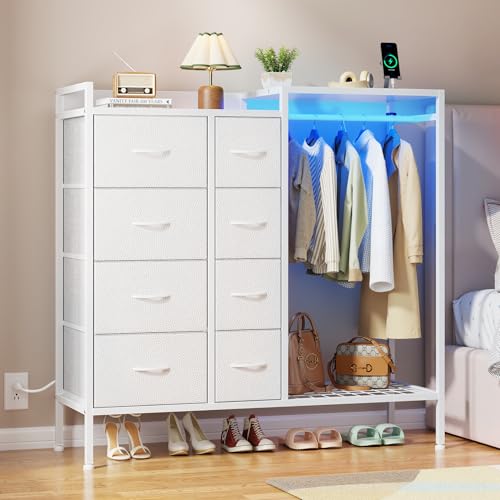
Dresser with Hanging Rack: The Complete Guide to Combo Storage
A dresser with a hanging rack merges drawer storage with a built-in hanging rod, giving you wardrobe functionality and folded-clothes organization in one footprint. This guide covers everything you need to know before choosing the right unit for your bedroom.
START THE GUIDEWhy consider a dresser with hanging rack? If your bedroom lacks a built-in closet, or if your closet is already bursting at the seams, a combo unit lets you hang shirts, dresses, and jackets while keeping folded items neatly in drawers. It is one of the most space-efficient furniture solutions for small bedrooms, guest rooms, and studio apartments.
What Is a Dresser with a Hanging Rack?
A dresser with a hanging rack is a hybrid storage piece that pairs a traditional bank of drawers with a dedicated hanging section. The hanging portion typically includes a horizontal rod mounted inside an open niche, behind doors, or within a taller side compartment. Some designs place the hanging rod above the drawer stack, while others dedicate one half of the unit to hanging space and the other half to drawers.
This dual-purpose design is closely related to the concept of a dresser wardrobe combo, but with a narrower focus on the hanging element. Unlike a full dresser vs wardrobe comparison, a combo unit with a hanging rack is usually more compact and designed to sit flush against a bedroom wall rather than function as a standalone armoire.
If you are still weighing whether a dedicated hanging section makes sense for your space, the broader dresser style guide can help you compare functional layouts across furniture categories.
Who Should Choose a Dresser with Hanging Rack?
This storage format suits a wide range of households, but it shines in specific situations:
- Small bedrooms without closets: A combo unit replaces two separate pieces of furniture and preserves floor space.
- Guest rooms: Visitors can hang a few outfits and store folded items without needing a full closet.
- Studio apartments: A single piece handles both clothing categories, which keeps a compact living area uncluttered.
- Children's rooms: A lower hanging rod lets kids reach their own clothes while drawers hold smaller items. For nursery-oriented options, compare dedicated dresser that doubles as a changing table designs.
- Closet overflow: If your main closet is full, a hanging-rack dresser adds secondary hanging space in the bedroom itself.
For rooms where floor area is the primary constraint, our guide to dressers for small spaces covers additional compact configurations worth reviewing.
Common Configurations of Dressers with Hanging Racks
Manufacturers arrange the drawer and hanging components in several distinct layouts. Understanding these configurations helps you match the unit to your garment mix and room dimensions.
Side-by-Side Layout
One vertical section holds a hanging rod while an adjacent stack of drawers sits beside it. This is the most common layout and works well when you need balanced storage for both hanging and folded items.
Hanging Rod Above Drawers
The hanging section occupies the upper portion of the unit, with drawers below. This design keeps the footprint narrow and is ideal for shorter garments such as shirts and children's clothing.
Open Niche with Rod
An open compartment with a visible rod sits beside or above closed drawers. This layout is convenient for frequently worn items but requires tidier hanging habits since the contents are always visible.
Door-Covered Hanging Section
The hanging rod is enclosed behind doors, protecting garments from dust and keeping the bedroom visually streamlined. This configuration leans closer to a compact wardrobe.
Each layout has trade-offs in interior height and rod length. If you need a full-length hanging section for dresses and coats, a taller enclosed design is preferable. If you mostly hang shirts and tops, a shorter upper rod above drawers may be sufficient.
Sizes and Dimensions to Consider
Because a dresser with hanging rack must accommodate both a rod and a drawer bank, its proportions differ from a standard dresser. Pay attention to these measurements before purchasing:
- Overall width: Combo units generally run wider than single-purpose dressers because they must fit both a hanging section and drawers side by side.
- Hanging section height: Short rods for shirts need less vertical clearance than full-length rods for dresses. Confirm the interior height of the hanging compartment against the longest garment you plan to hang.
- Rod length: A longer rod holds more hangers, but the rod must be properly supported. Look for reinforced mounts or metal rod brackets on mid-range and premium models.
- Drawer depth: Deep drawers suit bulky items like sweaters, while shallower drawers are better for folded shirts and accessories.
- Footprint depth: Combo units are often deeper than standard dressers to accommodate hanging garments. Measure your available wall space and walking clearance.
For narrow rooms, you may also want to review dressers less than 30 inches wide to compare compact alternatives, though most hanging-rack combos require additional width for the rod section.
Materials and Build Quality
The structural demands of a hanging rack set this furniture category apart. The rod and its mounting points must support the weight of multiple garments over time, so build quality matters more than in a simple drawer-only dresser.
Frame and Panel Materials
- Solid wood frames: The most durable option for long-term use. Solid wood resists sagging and holds rod hardware securely.
- High-grade engineered wood: Thick engineered panels with reinforced joinery can perform well, particularly in mid-range and premium models.
- Entry-level engineered panels: Thinner panels may flex under load. If you choose an entry-level unit, check the rod's mounting method and weight rating.
Rod and Hardware
Metal rods with reinforced brackets outperform thin wooden dowels. On higher-end tier models, you will often find thicker rods with center supports for longer spans. Drawer glides also vary: full-extension metal glides are common on premium models, while basic side-mounted glides appear on entry-level units. For more on drawer mechanics, see our notes on dressers with full extension drawers.
Finish and Durability
Look for finishes that resist moisture and daily wear. Painted and laminated surfaces are common, but solid wood with a protective topcoat generally ages better. If you are comparing construction methods more broadly, the dresser vs chest of drawers breakdown explains how frame construction affects longevity across furniture types.
Feature Checklist Before You Buy
Use this checklist to evaluate candidate units methodically:
| Feature | Why It Matters | What to Look For |
|---|---|---|
| Rod weight rating | Prevents sagging or collapse under heavy garments | Metal rod with reinforced brackets and center support on wide spans |
| Hanging section height | Determines whether long garments fit | Measure against your longest dress or coat |
| Drawer glide type | Affects smoothness and access | Full-extension metal glides preferred on mid-range and premium tiers |
| Drawer count and sizes | Matches your folded-clothing mix | Mix of deep and shallow drawers for versatility |
| Anti-tip hardware | Safety, especially in children's rooms | Wall-anchor kit included or available |
| Interior lighting | Visibility in enclosed hanging sections | Optional LED strips on higher-end tier models |
| Assembly requirements | Time and tool investment | Check whether pre-assembled or flat-pack; see dressers that don't require assembly |
How It Compares to Alternative Storage Solutions
A hanging-rack dresser sits between a standard dresser and a full wardrobe on the storage spectrum. Here is how it stacks up against related furniture types:
Versus a Standard Dresser
A standard dresser offers only drawer storage. If your wardrobe includes many hanging garments, a combo unit prevents you from needing a separate hanging solution. For a direct functional comparison, see dresser vs armoire.
Versus a Wardrobe or Armoire
A wardrobe or armoire provides more hanging capacity but typically fewer drawers and a larger footprint. The combo unit wins on space efficiency, while the wardrobe wins on total hanging volume. Our guide to dresser vs wardrobe covers the trade-offs in detail.
Versus a Closet-Only Solution
If your closet already handles hanging storage, a dedicated dresser that fits in a closet may be a better fit. The hanging-rack combo makes most sense when you want both functions in the bedroom itself.
Versus a Hanging Rod Dresser Variant
Some units emphasize a simpler hanging rod without a fully enclosed wardrobe section. Compare these with our notes on a dresser with hanging rod to see which configuration matches your routine.
Placement and Styling Tips
Where you place the unit affects both usability and the visual balance of the room:
- Leave clearance for doors and drawers: Enclosed hanging sections need door swing clearance, while open drawers need pull-out space.
- Anchor to the wall: Taller combo units should always be secured with anti-tip hardware, particularly in households with children.
- Coordinate with bed height: A unit placed beside the bed should not tower awkwardly over the headboard. Mid-height designs integrate more smoothly in compact rooms.
- Use the top surface: The flat top provides display or utility space. Our guides to dresser top organizer with drawers and dresser with shelves on top show how to extend functionality.
- Pair with a mirror: A mirror above or beside the unit turns it into a dressing station. See dresser with mirror and drawers for layout ideas.
How to Organize a Dresser with Hanging Rack
A combo unit rewards a deliberate organization plan. A simple approach:
- Hang by frequency: Place the items you wear most often at eye level on the rod.
- Group by category: Keep shirts together, then dresses, then outerwear, so you can find items quickly.
- Use slim hangers: Thin velvet or slim plastic hangers maximize rod capacity.
- Assign drawers by size: Deep drawers for bulky knits, shallow drawers for folded shirts and accessories.
- Add dividers: Drawer dividers keep small items contained and reduce clutter creep.
For a deeper system, our guide to dressers with lots of storage explores how drawer count and layout affect organization capacity.
Final Buying Guidance by Tier
Approach your purchase by identifying the tier that matches your durability and feature expectations:
- Entry-level tier: Basic engineered panels, standard side-mounted glides, and a simple rod. Suitable for guest rooms or light use. Verify rod mounting and anti-tip hardware.
- Mid-range tier: Thicker panels or partial solid wood, smoother glides, and a reinforced metal rod. A solid choice for daily use in a primary bedroom.
- Premium tier: Solid wood frame, full-extension glides, sturdy rod with center support, and refined finishes. A long-term investment for heavy daily use.
- Luxury tier: Furniture-grade construction, integrated lighting, and custom hardware. Appropriate when the unit is a focal piece and expected to last for decades.
Whichever tier you choose, confirm the hanging section height against your longest garment and check the rod's weight capacity. Those two specifications determine whether the unit actually meets your daily needs.
Frequently Asked Questions
What is a dresser with a hanging rack?
A dresser with a hanging rack is a hybrid storage unit that combines traditional drawer storage with a built-in hanging rod or hanging space. You can store folded clothes in drawers and hang garments such as shirts, dresses, or jackets in the same piece of furniture.
How much hanging space does a dresser with hanging rack typically offer?
Hanging space varies by design. Compact combo units often provide a single short rod suitable for shirts and children's clothing, while larger wardrobe-style dressers may offer a full-height hanging section that accommodates dresses and coats. Always check the interior height and rod length before choosing.
Is a dresser with hanging rack suitable for small bedrooms?
Yes. A dresser with hanging rack is an excellent choice for small bedrooms because it consolidates two storage functions into one footprint. Instead of buying a separate dresser and wardrobe, you get drawer storage and hanging space in a single unit, which frees up floor area.
What materials are best for a dresser with hanging rack?
Solid wood and high-grade engineered wood with reinforced joinery are the most durable choices. Solid wood offers long-term structural integrity, which is especially important because the hanging rod must support the weight of garments. Mid-range and premium models typically use solid wood frames or thick engineered panels with metal rod supports.
Can a dresser with hanging rack replace a closet?
In many cases, yes. A dresser with hanging rack can serve as a compact closet alternative for studio apartments, guest rooms, or bedrooms without built-in closets. However, if you have an extensive wardrobe with long garments and formal wear, you may still need additional hanging space or a full wardrobe.
Ready to Compare Options?
Review our curated selection of dressers with hanging racks and combo storage units below. Each listing links to detailed product information so you can verify dimensions, materials, and hanging capacity before deciding.
VIEW RECOMMENDED OPTIONS