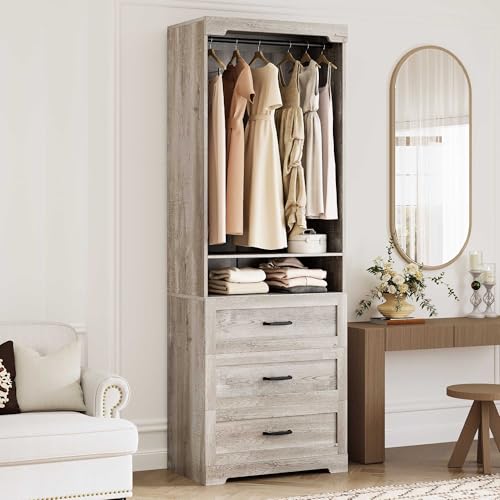
Armoire with Drawers and Hanging Rod: Complete Guide
Discover how a single piece of furniture can replace an entire closet. Learn about styles, sizes, materials, and expert tips for choosing the ideal armoire with drawers and a hanging rod for your bedroom.
START EXPLORINGWhy an armoire with drawers and a hanging rod? This hybrid storage piece combines three essential bedroom functions in one elegant footprint: a hanging section for wrinkle-free garments, a stack of drawers for folded clothing and accessories, and often adjustable shelving for shoes or bags. For anyone short on closet space, it is one of the most efficient furniture investments you can make.
What Is an Armoire with Drawers and Hanging Rod?
An armoire with drawers and a hanging rod is a tall, freestanding wardrobe cabinet that brings together three storage functions in a single piece of furniture. Unlike a standard dresser, it offers vertical hanging space. Unlike a basic wardrobe, it includes a dedicated bank of drawers. And unlike a simple closet, it stands as a finished piece of furniture that can anchor a bedroom's design.
The typical configuration places the hanging rod in the upper section, with one or two adjustable shelves above it for hats or bags. Below the hanging area, a stack of three to five drawers provides storage for folded clothing, delicates, and accessories. Some models split the interior vertically, dedicating one side to full-length hanging and the other to drawers and shelves. This layout is especially practical for couples or for anyone who needs both long-hanging space for dresses and coats alongside folded storage.
If you are exploring broader wardrobe options, our guide to armoire wardrobe cabinets covers how these pieces differ from standard closets. For a closer look at drawer-only configurations, see armoire with doors and drawers.
Why Choose an Armoire with Drawers and Hanging Rod?
Bedroom storage is rarely a one-size-fits-all problem. Some garments need to hang to stay wrinkle-free. Others fold better and take up less space in drawers. An armoire with both features solves this problem without requiring a walk-in closet or a separate dresser and wardrobe.
Space Efficiency
One piece of furniture replaces two or three separate items. This is especially valuable in small bedrooms, guest rooms, and apartments where floor space is at a premium.
Complete Wardrobe Storage
Hang dresses, suits, and coats while storing folded shirts, sweaters, and delicates in drawers. Everything has a dedicated place, which makes daily routines faster and tidier.
Design Flexibility
Armoires are available in styles ranging from rustic farmhouse to sleek modern. They can serve as a focal point in a bedroom or blend quietly into the background.
Freestanding Convenience
Unlike built-in closets, an armoire can be moved, repositioned, or taken with you when you relocate. It requires no structural modification to your home.
Types of Armoires with Drawers and Hanging Rods
The market offers several configurations, each suited to different room layouts and storage needs. Understanding these categories will help you narrow down your options before you start shopping.
1. Full-Size Wardrobe Armoire
The classic full-size armoire typically stands between 70 and 80 inches tall and 40 to 50 inches wide. It includes a full-width hanging rod at the top, three to five drawers in the lower section, and often one or two adjustable shelves between the two zones. This is the most versatile configuration and works well as a primary closet replacement in a master bedroom or guest room.
2. Split-Configuration Armoire
In a split-configuration model, the interior is divided vertically. One side offers full-length hanging for dresses and coats, while the other side contains a stack of drawers and shelves. This layout is ideal for couples who share a room or for individuals who need both long-hanging and folded storage in equal measure. You can explore similar layouts in our guide to armoire closet with drawers.
3. Compact Armoire with Drawers
Compact models are typically 60 to 68 inches tall and 30 to 36 inches wide. They still include a hanging rod and two or three drawers, but the reduced footprint makes them suitable for small bedrooms, dorm rooms, and studio apartments. If space is your primary constraint, our article on bedroom armoire with shelves and drawers explores how compact units maximize every inch.
4. Armoire with Mirror and Drawers
Some models incorporate a full-length mirror on one of the doors, turning the armoire into a dressing station as well as a storage piece. This is a practical choice for bedrooms without a dedicated vanity or dressing area. For mirror-equipped options, see armoire with drawers and hanging.
How to Choose the Right Size
Size is the single most important factor in choosing an armoire with drawers and a hanging rod. A piece that is too large will overwhelm a small room; one that is too small will fail to hold your wardrobe. Use the following guidelines to match dimensions to your space and storage needs.
| Size Category | Typical Height | Typical Width | Best For |
|---|---|---|---|
| Compact | 60–68 inches | 30–36 inches | Small bedrooms, studios, guest rooms |
| Standard | 68–72 inches | 36–44 inches | Primary bedrooms, apartments |
| Full-Size | 72–80 inches | 44–50 inches | Master bedrooms, closet replacement |
| Grand / Wardrobe | 80+ inches | 50+ inches | Large bedrooms, shared spaces, luxury suites |
Beyond the overall dimensions, pay attention to the interior measurements. The hanging rod width determines how many garments you can hang side by side. A 36-inch rod holds roughly 15 to 20 garments; a 48-inch rod holds 20 to 28. Drawer depth matters too: deeper drawers (6 to 8 inches) suit sweaters and jeans, while shallow drawers (4 to 5 inches) work better for delicates and accessories.
Always measure the delivery path before you buy. A tall armoire may not fit through a narrow hallway or around a tight staircase corner. Confirm that the packaged dimensions will clear doorways, elevators, and stairwells.
Materials and Construction Quality
The material of an armoire with drawers and a hanging rod determines its durability, weight capacity, and appearance. Construction quality matters even more than the surface material, because a poorly built cabinet will sag or wobble regardless of what it is made from.
Solid Wood
Solid oak, maple, walnut, and mahogany are the gold standard for long-term durability. They can be sanded and refinished, they resist warping in normal indoor humidity, and they age gracefully. A solid wood armoire is a long-term investment that can last for decades. Look for dovetail drawer joints and corner blocks as signs of quality construction.
Engineered Wood with Veneer
Plywood and MDF cores with a real wood veneer offer a solid mid-range option. They are stable, resist moisture better than solid wood in some cases, and can mimic the look of premium hardwoods. Check that the veneer is at least 0.6mm thick; thinner veneers are prone to chipping at the edges.
MDF with Painted Finish
MDF is common in entry-level and painted armoires. It takes paint well and allows for smooth, uniform finishes. However, MDF is heavy, susceptible to moisture damage, and less resistant to impact than solid wood. For a guest room or a low-traffic space, a well-built MDF armoire can be a solid choice.
Metal and Mixed Materials
Metal frames with wood or glass panels are less common in traditional armoires but appear in industrial and modern designs. These pieces are typically lighter and easier to move, but they offer less insulation for clothing and fewer options for internal customization.
For a broader discussion of material choices across bedroom furniture, see our guide to armoires.
Interior Features to Look For
The exterior of an armoire with drawers and a hanging rod gets all the attention, but the interior determines how well it works day to day. Here are the features that matter most.
Adjustable Shelving
Adjustable shelves allow you to reconfigure the interior as your storage needs change. Look for shelves that are at least 0.75 inches thick and supported by metal pins or brackets rather than plastic clips, which can break under load.
Drawer Glides and Joints
Drawer glides should be metal, not plastic, and should offer smooth, full-extension operation. Dovetail joints are the strongest option for drawer boxes; stapled or glued joints are common in entry-level pieces but less durable over time.
Hanging Rod Quality
The hanging rod should be at least 1 inch in diameter and made of metal, not wood or plastic. A wooden rod can bow under the weight of heavy coats; a metal rod with center support will hold its shape. Check that the rod is mounted to the cabinet sides with metal brackets, not screws driven directly into thin panels.
Ventilation and Cedar Options
Closed armoires can trap moisture, which is bad for clothing. Look for models with ventilation gaps or slatted backs. Some premium armoires offer cedar-lined interiors, which naturally repel moths and absorb moisture. Cedar is a worthwhile feature if you store woolens or seasonal garments.
Anti-Tip Hardware
Tall furniture must be anchored to the wall. A fully loaded armoire can weigh several hundred pounds, and tip-over accidents are a real risk, especially in homes with children. Confirm that the armoire includes anti-tip straps or brackets, and use them.
Styles to Match Your Bedroom
An armoire with drawers and a hanging rod is a large piece of furniture, so its style will influence the entire room. Here is how the most common styles compare.
| Style | Key Characteristics | Best For |
|---|---|---|
| Traditional | Raised panel doors, crown molding, antique brass hardware | Classic bedrooms, formal guest rooms |
| Modern | Clean lines, flat panels, minimal hardware, matte finishes | Contemporary bedrooms, minimalist spaces |
| Farmhouse | Beadboard panels, distressed finishes, cup pulls | Rustic and cottage-style bedrooms |
| Mid-Century | Tapered legs, walnut tones, angled handles | Retro-inspired and eclectic bedrooms |
| French Provincial | Curved details, carved accents, white or cream finishes | Elegant, romantic bedrooms |
For a closer look at specific aesthetics, our guides to antique French dressers and antique dressers explore how heritage styles translate into modern storage pieces.
Where to Place Your Armoire
Placement affects both the functionality and the visual balance of the room. Here are the most common placement strategies.
Along a Blank Wall
This is the simplest option and works in nearly any bedroom. Leave at least 24 inches of clearance in front of the doors so they can open fully. Avoid placing the armoire directly opposite a window if the room receives strong afternoon light, as the finish may fade over time.
As a Room Divider
In a studio apartment or an open-plan bedroom, a freestanding armoire can define zones without building a wall. Choose a model with a finished back panel if the rear will be visible.
Beside the Bed as a Nightstand Replacement
A compact armoire can serve double duty as a nightstand and a storage piece, though it will be taller than a standard nightstand. This works best in small rooms where every piece must earn its place. For coordinated options, see bedroom dresser and nightstand sets.
In a Guest Room or Home Office
Armoires are excellent in multi-purpose rooms. In a guest room, they hold extra linens and out-of-season clothing. In a home office, they can conceal files, supplies, and a printer. The hanging rod may go unused in these settings, but the drawers and shelves provide versatile storage.
Buying Checklist
Before you commit to an armoire with drawers and a hanging rod, run through this checklist to avoid common mistakes.
- Measure the space: Confirm the armoire fits the intended wall and that doors can open fully.
- Measure the delivery path: Check doorways, hallways, stairwells, and elevators against the packaged dimensions.
- Assess your wardrobe: Count hanging garments versus folded items to choose the right interior ratio.
- Check the rod height: Full-length hanging requires at least 60 inches of vertical clearance below the rod.
- Inspect drawer construction: Look for metal glides and dovetail joints, not stapled boxes.
- Confirm anti-tip hardware: The armoire must be anchorable to the wall.
- Review the finish: Matte and satin finishes hide fingerprints better than high-gloss; distressed finishes hide scratches.
- Consider assembly: Flat-pack armoires save on delivery but require significant assembly time and tools.
Understanding Quality Tiers
Armoires with drawers and hanging rods span a wide range of construction quality. Rather than focusing on numbers, use these universal tier descriptors to compare products fairly.
- Entry-Level — Typically MDF or particleboard with painted finishes, plastic drawer glides, and basic hardware. Suitable for guest rooms, dorm rooms, or temporary setups. Expect a functional piece with a shorter service life.
- Mid-Range — Engineered wood with veneer or solid wood in secondary areas, metal drawer glides, and improved joinery. A balanced choice for primary bedrooms, offering good durability for its class.
- Premium — Solid hardwood construction, dovetail drawers, full-extension glides, and quality hardware. Built to last and often backed by longer warranties. A worthwhile investment for long-term use.
- Luxury — Heirloom-grade materials, hand-finished details, cedar lining, and custom hardware. These pieces are designed to be passed down and often feature bespoke sizing or finishes.
Within each tier, construction quality varies. A well-built mid-range armoire from a reputable maker will often outperform a poorly built premium piece. Always prioritize joinery, hardware, and finish quality over surface appearance.
Frequently Asked Questions
Ready to Explore Armoire Options?
Now that you understand the features and configurations, browse our curated selection of armoires with drawers and hanging rods. Compare styles, materials, and interior layouts to find the piece that fits your bedroom and your wardrobe.
VIEW RECOMMENDED ARMOIRES