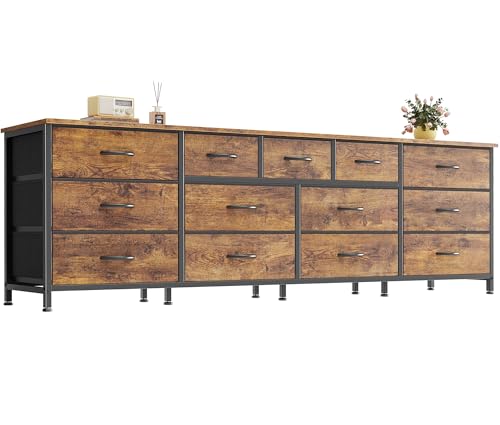
70 Dresser: The Complete Guide to Wide Bedroom Storage
A 70-inch dresser is one of the most versatile wide-format storage pieces you can add to a bedroom. This guide explains what a 70 dresser is, how it compares to narrower formats, which drawer layouts work best, and how to confirm it fits your room before you buy.
Jump to Buying ChecklistWhy the 70 dresser category matters: Shoppers searching for a 70 dresser are usually upgrading from a standard 50 to 60 inch unit. They want more folded-clothing capacity, a stronger visual anchor against a long wall, and a layout that stays organized over time. The challenge is that "70 dresser" is a size category, not a single product, so the quality of your choice depends on drawer construction, material grade, and how well the footprint matches your floor plan.
What Exactly Is a 70 Dresser?
A 70 dresser is a wide-format dresser measuring approximately 70 inches across the front. In practice, listings in this category range from about 68 to 72 inches, depending on the manufacturer and whether the measurement includes overhanging tops or side posts. Depth typically lands between 18 and 20 inches, which is the standard for bedroom dressers that need to leave walkway space.
This width places the 70 dresser between two common formats: the 60-inch class, which is a popular mid-size choice for primary bedrooms, and the 80-inch class, which is often reserved for larger suites or double-vanity-style layouts. The 70 dresser is the sweet spot for rooms that feel too spacious for a 60-inch piece but cannot accommodate an 80-inch unit without crowding the bed or closet doors.
Most 70-inch dressers use a double-column drawer layout, often with six, seven, eight, or nine drawers. Some designs pair three wide drawers with a stack of narrower ones, while others use a symmetrical grid. If you are comparing formats side by side, the 60-inch dresser guide and the 80-inch dresser overview are useful reference points before committing to the wider 70-inch footprint.
Key Features That Define a Good 70 Dresser
Drawer Glide Quality
Entry-level 70 dressers often use basic side-mounted glides, while mid-range and premium models move to ball-bearing or soft-close undermount slides. Smooth, full-extension glides matter more on a wide dresser because each drawer carries more weight across a longer span.
Drawer Box Construction
Look for dovetail or reinforced box joints, solid wood or high-grade plywood sides, and a sturdy bottom panel. Stapled or glued drawer boxes are common in starter-tier pieces and tend to loosen faster under daily use.
Frame Stability
A 70-inch dresser needs a rigid frame to resist racking. Corner blocks, center support legs, and a solid back panel all help. Wide dressers with only four corner feet can feel less stable when fully loaded.
Material Grade
Solid wood and high-grade engineered wood with real wood veneer sit at the top of the category. Particleboard with printed laminate is typical of entry-level tiers. The material affects durability, weight, and how well the finish ages.
Drawer Layout
Six-drawer layouts favor large folded items, while eight- and nine-drawer configurations support separated categories such as tops, bottoms, and accessories. Measure the internal drawer height, not just the exterior.
Safety Hardware
Anti-tip straps are essential for wide dressers, especially in homes with children. Confirm the unit includes a wall-anchoring kit and that the top can be secured to a stud.
70 Dresser vs. Other Wide Formats
The table below compares the 70 dresser with neighboring size classes using quality-tier descriptors rather than numeric figures. Use it to match the format to your room dimensions and storage goals.
| Format | Typical Tier Positioning | Best For | Drawer Capacity | Room Fit |
|---|---|---|---|---|
| 60-inch dresser | Essential to mid-range | Standard primary bedrooms and guest rooms | 5 to 7 drawers | Walls of roughly 70 inches or more |
| 70 dresser | Mid-range to premium | Larger bedrooms needing expanded folded storage | 6 to 9 drawers | Walls of roughly 80 inches or more |
| 80-inch dresser | Premium to luxury | Suite-style bedrooms and statement focal walls | 8 to 12 drawers | Walls of roughly 90 inches or more |
| 72-inch dresser | Mid-range to premium | Near-70 layouts with slightly broader proportions | 6 to 9 drawers | Walls of roughly 82 inches or more |
Tier labels describe relative market positioning and construction quality, not numeric figures. They are used consistently across this guide.
70 Dresser Buying Checklist
Before you commit to a 70-inch dresser, work through the following checks. Each one addresses a common reason shoppers return or regret a wide dresser purchase.
- Measure the wall twice. Confirm at least 70 inches of clear wall width plus 2 to 4 inches of side clearance for drawer pull-out and airflow.
- Check walkway depth. A 70-inch dresser with 20-inch depth needs roughly 30 inches of open floor in front of it to keep the room comfortable.
- Confirm door swing and closet clearance. Wide dressers often sit near closet doors. Make sure the dresser does not block the swing path.
- Match drawer count to your wardrobe. Six-drawer layouts suit bulky folded items, while eight- and nine-drawer layouts support more granular organization.
- Verify glide type. Mid-range and premium 70 dressers usually offer ball-bearing or soft-close glides; entry-level models may use basic side glides.
- Inspect drawer box joints. Dovetail or reinforced joints indicate a sturdier build than stapled boxes.
- Plan for anchoring. Wide dressers should be secured to the wall. Confirm the unit includes or accepts an anti-tip kit.
- Think about finish care. Solid wood and veneer finishes can be refreshed; printed laminates are more difficult to repair if chipped.
Popular Drawer Layouts in the 70 Dresser Category
Wide dressers are not interchangeable. The drawer arrangement changes how usable the unit feels day to day. Three layouts dominate the 70-inch category:
Six-Drawer Double Column
Two columns of three drawers each. This is the most common 70 dresser layout and works well for folded clothing, linens, and seasonal items. The wide drawers are generous but can become disorganized without dividers.
Eight-Drawer Grid
Four rows of two drawers, or a mix of wide and narrow drawers. Eight-drawer 70 dressers are popular for couples who want separate sides. Internal dividers are easier to use in this configuration.
Nine-Drawer Asymmetrical
Often three wide drawers paired with two stacks of three narrower drawers. This layout suits a mix of bulky items and accessories, and it is common in premium and luxury 70 dresser designs.
If you are still deciding between drawer counts, the 7-drawer dresser guide and the 9-drawer dresser overview explain how those layouts compare for different clothing volumes.
Materials and Finishes for a 70 Dresser
Material choice affects durability, visual warmth, and long-term maintenance. The 70 dresser category spans several material tiers:
| Material | Tier Positioning | Strengths | Considerations |
|---|---|---|---|
| Solid wood | Premium to luxury | Durable, repairable, ages well | Heavier; requires humidity awareness |
| Engineered wood with veneer | Mid-range to premium | Stable, consistent finish, good value for its tier | Edges need care; avoid moisture pooling |
| Laminate over particleboard | Essential to mid-tier | Lightweight, easy to clean, feature-rich for its class | Less repairable if chipped |
| Metal | Starter to mid-range | Compact profiles, industrial styling | Drawer feel varies widely by model |
For a deeper comparison of construction quality, the dresser quality guide breaks down joints, glides, and finishing standards across tiers.
How a 70 Dresser Fits Different Bedrooms
A 70-inch dresser works best when it has a dedicated wall. In a primary bedroom, it can serve as the main storage anchor opposite or beside the bed. In a guest room, it adds capacity without the visual weight of an 80-inch unit. In a nursery or shared room, confirm drawer height and anchoring before placing it near a crib or changing area.
Primary Bedroom
Pair a 70 dresser with a queen or king bed and leave at least 30 inches of walkway. This format supports two-person clothing storage without dominating the room.
Guest Room
A 70 dresser adds generous storage for occasional guests and can double as a surface for decor and a mirror. Keep the top uncluttered for a hotel-like feel.
Nursery or Shared Room
Choose a 70 dresser with soft-close glides and a wall anchor. Confirm drawer height is comfortable for a changing pad if the unit will double as a changing station.
If your room is tighter than expected, the small dresser guide and the dressers for small spaces overview explain how to scale down without losing organization.
Getting the Most From a Wide Dresser
A 70-inch dresser has more horizontal space than narrower units, which is both an advantage and a risk. Without a system, wide drawers become catch-alls. A simple approach is to assign each column a category: one side for tops, the other for bottoms, with a shared top drawer for accessories. Drawer dividers and shallow trays help maintain separation in wide drawers.
For a full walkthrough, the dresser organization guide covers folding techniques, seasonal rotation, and divider placement. If you are also planning closet storage, the closet organization ideas page pairs well with a wide dresser setup.
Frequently Asked Questions About 70 Dressers
What is a 70 dresser?
A 70 dresser is a wide-format dresser approximately 70 inches across, typically offering six to nine drawers. It sits between the 60-inch and 80-inch classes and works well as a statement storage piece in larger bedrooms.
How much wall space does a 70-inch dresser need?
Plan for at least 70 inches of clear wall width plus 2 to 4 inches of clearance on each side. A wall of roughly 80 inches or more gives the dresser room to breathe and allows drawers to open fully.
Is a 70 dresser too big for a small bedroom?
It can work if depth stays around 18 to 20 inches and the dresser sits on the longest wall. Measure walkways and avoid placing it opposite a bed with limited clearance. If space is tight, a 60-inch format may be a better fit.
How many drawers do 70-inch dressers usually have?
Most 70-inch dressers feature six to nine drawers. Six-drawer layouts favor bulky folded items, while eight- and nine-drawer configurations support more granular organization for couples or shared rooms.
Should a 70 dresser be anchored to the wall?
Yes. Wide dressers carry more weight and have a higher tip-over risk if a child climbs or a drawer is overloaded. Use the included anti-tip kit or a compatible wall-anchoring strap secured to a stud.
Ready to Compare 70 Dresser Options?
Use the curated product section below to explore wide dressers and storage pieces that match this category. Compare drawer layouts, material tiers, and safety features before deciding.
View Recommended Options