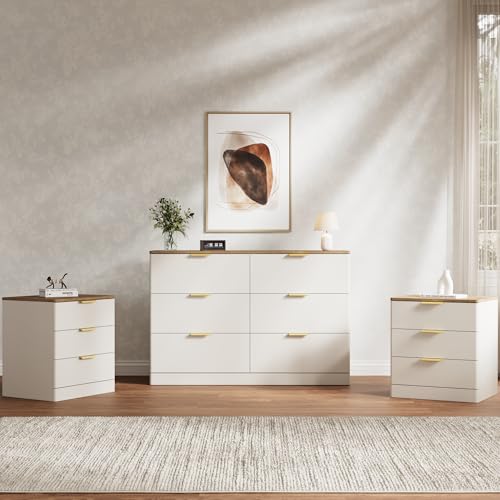
White and Gold Nightstand and Dresser Set: The Complete Guide
A white and gold nightstand and dresser set brings instant polish to any bedroom. This guide walks you through finishes, hardware quality, drawer construction, and styling so you can choose a coordinated set that looks refined and holds up for years.
Jump to Buying ChecklistA matching nightstand and dresser set removes the guesswork from bedroom design. When both pieces share the same white finish and gold hardware, the room reads as intentional and calm. But two sets that look identical in a product photo can differ dramatically in drawer action, finish durability, and hardware plating.
This guide focuses on what actually matters when you shop: how the white finish is applied, whether the gold hardware is solid or plated, how the drawers are built, and how to size both pieces for your room. Readers researching white and gold dresser and nightstand sets will find the details below useful for comparing options with confidence.
Why White and Gold Nightstand and Dresser Sets Are So Popular
White furniture brightens a room and makes small bedrooms feel larger. Gold hardware adds warmth and a touch of glamour without the heaviness of dark wood. Together, the combination sits comfortably in several decorating styles: modern glam, transitional, French provincial, and even soft contemporary.
The set format also solves a practical problem. Nightstands and dressers are often sold separately, and matching a finish across brands is difficult. A coordinated set guarantees that the white tones and hardware finishes align. For buyers who want a pulled-together look without hunting for matching pieces, a set is the efficient choice.
Another reason these sets stay popular is versatility. A white and gold dresser can work as a bedroom storage piece, a nursery dresser, or even a living room accent cabinet. The nightstand can serve as a bedside table or a small side table elsewhere. That flexibility makes the set a long-term purchase rather than a single-room decision.
White Finish Types Compared
The word "white" covers several very different finishes. Knowing which one you are looking at helps you predict how the piece will age and how much care it needs.
Painted White
Painted finishes are sprayed or brushed onto the wood or engineered wood surface. A well-executed painted finish is smooth and opaque, with a consistent sheen. Entry-level painted pieces may show visible brush marks or thin coverage on edges. Mid-range and premium painted finishes typically include a primer coat and a protective topcoat, which improves resistance to scuffs and moisture.
Lacquered White
Lacquer produces a harder, smoother surface than standard paint and is common on higher-tier pieces. Lacquered white has a subtle sheen that pairs especially well with gold hardware. It resists yellowing better than some older paint formulations, though direct sunlight still affects any white finish over time.
Whitewashed or Distressed White
Whitewashed finishes let some wood grain show through, giving a softer, more casual look. These pair well with brushed gold or antique gold hardware rather than bright polished gold. If your bedroom leans farmhouse or coastal, a whitewashed set may fit better than a solid painted one. You can read more about related finishes in our guide to white and gold vintage dressers.
Laminate and Veneer White
Laminate surfaces are printed and bonded, while veneers use thin slices of real wood over a core. High-quality veneer with a white finish can look nearly identical to solid painted wood and is more stable across humidity changes. Laminate is durable but can chip at edges if bumped hard. Inspect edge banding carefully on any laminate set.
Finish tip: Ask whether the white finish includes a topcoat. A topcoat is the difference between a surface that wipes clean easily and one that absorbs stains from lotions, drinks, and craft supplies.
Gold Hardware Quality Guide
Gold hardware is the visual signature of these sets, and it is also where quality varies most. The finish on the pulls and knobs determines whether the set still looks crisp after a few years or starts to show wear.
Solid Brass
Solid brass hardware is the top tier. It can be polished to a bright gold, brushed for a satin look, or left to develop a natural patina. Solid brass is heavy in the hand and does not flake. It is most common on high-end and luxury sets.
Brass-Plated Metal
Brass plating over steel or zinc is common in mid-range and premium sets. The plating thickness matters: thicker plating resists wear at the touch points, while thin plating can wear through on the most-used drawers. Look for hardware described as "heavy-duty" or "reinforced" plating.
Painted or Powder-Coated Gold
Entry-level sets often use painted metal or powder-coated finishes to achieve the gold look. These can look convincing at first but may chip at edges over time. They are a reasonable choice for guest rooms or low-traffic spaces, but expect more visible wear in a daily-use primary bedroom.
Hardware Styles
- Bar pulls: Clean and modern; easy to grip and common on wide dresser drawers.
- Ring pulls: Classic and slightly traditional; pair well with French provincial and transitional sets.
- Knobs: Simple and versatile; often used on nightstand drawers and smaller dresser drawers.
- Cup pulls: Vintage-leaning; a good match for whitewashed or distressed finishes.
If you prefer a brighter, more polished look, our overview of white and gold dressers covers hardware variations in more detail.
Drawer and Frame Construction
The drawer is the part of a dresser you interact with every day. A set can look beautiful and still feel disappointing if the drawers stick, sag, or rattle. These are the construction details worth checking.
Drawer Slides
Entry-level sets often use basic side-mounted roller slides. They work but tend to feel looser over time. Mid-range sets typically move to ball-bearing side slides, which glide more smoothly. Premium and top-tier sets often use under-mount soft-close slides, which are quieter, hide the mechanism, and protect the drawer from slamming. For heavy loads, look for slides rated for higher weight capacity.
Drawer Box Joinery
Dovetail joinery is the traditional mark of quality and resists pulling apart under load. Box joints and stapled construction are faster and less durable. English dovetail on the front and French dovetail on the back is a common premium specification.
Drawer Bottoms and Supports
A thin drawer bottom can bow under the weight of folded clothing. Look for drawer bottoms that are at least a sturdy panel thickness with a center support on wider drawers. Wide dresser drawers benefit from a support rail beneath the bottom panel.
Frame and Dust Panels
Dust panels between drawers keep clothing clean and add rigidity. A solid frame with corner blocks or reinforced joints resists racking, which is the side-to-side wobble that develops in weaker case goods. If the set will sit on carpet, check that the base has adjustable levelers.
Safety Features
Any dresser or nightstand should include an anti-tip kit. Tall dressers especially should be anchored to the wall. Interlock systems, which prevent more than one drawer from opening at a time, add stability. These features are standard on better sets and worth confirming before purchase.
Sizing the Dresser and Nightstand
Fit matters as much as finish. A dresser that is too deep crowds the walking path; a nightstand that is too tall disrupts the visual line of the bed. Use these guidelines to narrow your search.
Dresser Sizing
- Small bedrooms: A 3-drawer or 4-drawer dresser around 30 to 40 inches wide keeps the room open. A white 4-drawer dresser is a common fit for tighter spaces.
- Standard bedrooms: A 6-drawer dresser around 50 to 60 inches wide offers a good balance of storage and footprint.
- Large bedrooms: A wide 8-drawer or 9-drawer dresser can anchor a wall and replace a separate chest.
- Depth: Standard dresser depth runs about 16 to 20 inches. Deeper drawers hold more but need more clearance in front.
Nightstand Sizing
- Height: The nightstand top should sit level with or slightly below the mattress top for comfortable reach.
- Width: 18 to 24 inches is typical. Allow at least a few inches between the nightstand and the bed frame.
- Storage: One or two drawers is standard. A nightstand with an open shelf suits readers and phone chargers.
If you are working with a compact room, the sizing advice in our white bedroom dresser and nightstand set guide can help you plan clearances before you commit.
Matching the Set to Your Bedroom Style
White and gold is flexible, but the specific shape of the furniture changes the mood. Consider how the set will sit alongside your bed, bedding, and wall color.
Modern Glam
Look for clean lines, glossy or lacquered white finishes, and polished gold bar pulls. Mirrored accents or a white and gold dresser with mirror reinforce the glam direction. Keep surrounding decor minimal so the hardware stands out.
Transitional
Transitional sets blend soft curves with straight lines. A white finish with a satin sheen and brushed gold ring pulls works well. These sets pair naturally with upholstered beds and neutral bedding.
French Provincial
French provincial sets often feature cabriole legs, scalloped aprons, and ornate gold hardware. A white and gold vintage dresser style fits this category. Pair with soft florals and warm wood tones.
Nursery and Guest Rooms
In a nursery, prioritize safety anchoring, soft-close drawers, and a finish that wipes clean. A white 6-drawer nursery dresser offers generous storage without overwhelming a small room. For guest rooms, a compact set keeps the space feeling airy.
Tier Comparison at a Glance
The table below compares construction and finish expectations across market tiers. It uses relative descriptors rather than figures, so it stays useful over time.
| Tier | White Finish | Gold Hardware | Drawer Slides | Best For |
|---|---|---|---|---|
| Entry-level | Painted or laminate; may show thin coverage on edges | Painted or thin-plated metal | Basic side roller slides | Guest rooms, low-traffic spaces, starter setups |
| Mid-range | Primed and topcoated paint; more even coverage | Brass-plated metal with moderate plating thickness | Ball-bearing side slides | Primary bedrooms with regular daily use |
| Premium | Lacquered or high-quality veneer; smooth and durable | Thicker brass plating; solid feel | Under-mount soft-close slides | Design-focused bedrooms and long-term use |
| Luxury | Hand-finished lacquer or solid wood with painted finish | Solid brass hardware | Premium soft-close slides with high weight rating | High-end primary suites and statement rooms |
As a rule, moving up a tier buys smoother drawer action, more consistent finish coverage, and hardware that holds its appearance longer. A mid-range set is usually the sweet spot for a daily-use bedroom, while an entry-level set can be a sensible choice for a room that sees occasional use.
Buying Checklist
Use this checklist when comparing white and gold nightstand and dresser sets online or in a store.
- Confirm the finish type: painted, lacquered, whitewashed, or veneer. Ask about topcoat.
- Check hardware material: solid brass, brass-plated, or painted. Plating thickness matters most at the touch points.
- Inspect drawer slides: ball-bearing or soft-close are worth prioritizing for daily use.
- Verify joinery: dovetail is more durable than stapled or box joints.
- Measure your space: confirm dresser width, depth, and nightstand height against your bed and walking paths.
- Look for anti-tip hardware: every tall dresser should be wall-anchored.
- Check levelers: adjustable feet help on uneven floors and carpet.
- Read the return policy: large furniture returns are costly; confirm terms before ordering.
If you are comparing a set against individual pieces, our guide to white bedroom dressers and nightstands walks through the trade-offs.
Care and Maintenance
A white and gold set stays looking its best with simple routine care.
- Dust regularly: use a soft microfiber cloth on both the white surfaces and the gold hardware.
- Clean spills promptly: white finishes show rings from drinks and lotions if left sitting.
- Avoid abrasive cleaners: harsh scrubs can dull the finish and scratch plated hardware.
- Protect from direct sun: prolonged sunlight can yellow some white finishes over time.
- Lubricate slides sparingly: a dry silicone lubricant on metal slides keeps drawers gliding smoothly.
- Re-tighten hardware: gold pulls can loosen with use; check screws periodically.
Placement tip: Keep the dresser and nightstand away from direct heat sources. Consistent humidity helps prevent veneer lifting and finish cracking.
Frequently Asked Questions
Is a white and gold nightstand and dresser set suitable for a small bedroom?
Yes. Choose a narrower dresser, around 30 to 40 inches wide, and a compact nightstand. White finishes reflect light and help small rooms feel larger. Confirm depth so the pieces do not crowd walking paths.
Will the gold hardware tarnish over time?
Solid brass develops a natural patina and can be polished back to a bright finish. Plated hardware holds its appearance well if the plating is thick, but thin plating can wear at the most-used pulls. Painted gold finishes are the most likely to show wear.
Can I use the dresser outside the bedroom?
Yes. A white and gold dresser works well as a living room accent cabinet, an entryway storage piece, or a nursery dresser. The nightstand can serve as a side table. Just confirm the piece is stable and anchored if used in a high-traffic area.
What should I check before ordering a set online?
Confirm the finish type and topcoat, the hardware material, the drawer slide type, and whether an anti-tip kit is included. Measure your room and compare the listed dimensions. Review the return policy for large furniture before you buy.
How do I keep the white finish looking clean?
Dust with a soft microfiber cloth and wipe spills promptly with a mild, non-abrasive cleaner. Avoid harsh scrubs and keep the set out of direct sunlight to reduce yellowing over time.
Ready to Compare White and Gold Sets?
Browse curated options that match the construction and finish standards covered in this guide.
Explore Recommended Sets