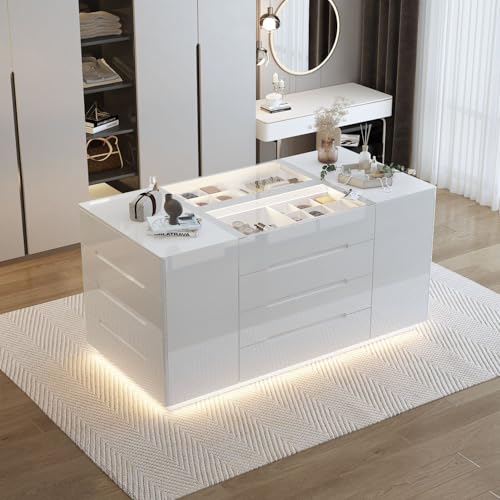
Walk-In Closet Island Dresser: Complete Buying Guide & Ideas
Turn the center of your walk-in closet into a functional, elegant storage hub. Learn how to size, configure, and choose a closet island dresser that keeps everything organized and within reach.
Start ExploringDresserAdvisor Philosophy: A walk-in closet island dresser is more than extra furniture — it is the command center of your wardrobe. When planned correctly, it reduces clutter, adds usable countertop space, and makes daily dressing simpler.
What Is a Walk-In Closet Island Dresser?
A walk-in closet island dresser is a freestanding or built-in storage unit positioned in the center of a walk-in closet. Unlike a standard bedroom dresser, an island dresser is designed to be accessed from multiple sides, often combining deep drawers, a flat countertop, and sometimes open shelving or bench seating. It serves as both a dresser and a central organization station.
Many homeowners discover that the center of a walk-in closet is wasted space. An island dresser fills that gap with accessible storage for folded clothing, accessories, jewelry, and seasonal items. It also provides a surface for laying out outfits, packing, or displaying decorative pieces. If you are comparing storage formats, our guide on walk-in closet chest of drawers explains how a chest differs from an island unit.
Multi-Access Storage
Drawers face outward on one or more sides, so two people can use the island at the same time without stepping over each other.
Countertop Workspace
A flat top gives you a place to fold clothes, arrange accessories, or set down items while dressing.
Central Organization Hub
The island anchors the closet layout and keeps frequently used items within easy reach from any side of the room.
Visual Balance
An island adds symmetry and a furniture-like feel to a walk-in closet, making the space feel intentional rather than utilitarian.
Key Benefits of Adding an Island Dresser to Your Closet
The right island dresser transforms how a walk-in closet functions. Here are the main benefits to consider:
- Maximizes unused floor space: The middle of a walk-in closet is often empty. An island dresser turns that area into practical storage.
- Improves daily workflow: Folded clothing, undergarments, and accessories stay organized in one central location instead of being spread across multiple furniture pieces.
- Supports shared closets: A multi-sided island lets two users access their own drawers without crossing paths.
- Adds a premium feel: A well-designed island gives a walk-in closet the look of a boutique dressing room.
- Creates a folding and staging surface: The countertop is useful for folding laundry, packing, or laying out an outfit the night before.
How to Size a Walk-In Closet Island Dresser
Sizing is the most important planning step. An island that is too large will make the closet feel cramped, while one that is too small will not provide enough storage. Start by measuring your closet dimensions and subtracting the depth of surrounding shelving, hanging rods, and walkways.
As a general rule, leave at least 36 inches of walking clearance on every usable side of the island. If two people share the closet, aim for 42 to 48 inches on the main walkway. Remember that drawers need additional clearance when pulled open — a full-extension drawer can add up to 20 inches of projection.
| Closet Width | Recommended Island Width | Typical Configuration | Best For |
|---|---|---|---|
| Up to 8 feet | 24–36 inches | Compact 2-drawer or 3-drawer unit | Starter tier closets, narrow walk-ins |
| 8–10 feet | 36–48 inches | 3-drawer to 6-drawer island | Mid-tier closets, single-user layouts |
| 10–12 feet | 48–60 inches | 6-drawer to 8-drawer island with countertop | Premium closets, shared layouts |
| 12 feet and above | 60–84 inches | Custom multi-drawer island with seating or open shelving | Luxury walk-in closets, boutique-style dressing rooms |
Depth matters as well. A typical island depth ranges from 18 to 30 inches. Shallower units (18–22 inches) work well in tighter closets, while deeper units (24–30 inches) offer more storage and a more substantial countertop. Always confirm drawer extension clearance before finalizing your layout.
Drawer Configuration and Interior Organization
The internal drawer layout determines how useful your island dresser will be. A balanced configuration usually includes shallow top drawers for accessories and jewelry, medium drawers for folded clothing, and at least one deep drawer for bulkier items such as sweaters or linens.
- Shallow drawers (4–6 inches deep): Ideal for jewelry, watches, ties, belts, and small accessories. Consider felt-lined interiors for delicate items.
- Medium drawers (7–9 inches deep): Best for folded shirts, undergarments, activewear, and everyday clothing.
- Deep drawers (10–12 inches deep): Useful for sweaters, jeans, bedding, or off-season clothing.
- Dividers and inserts: Adjustable dividers keep folded items upright and make it easier to see what you have.
Drawer hardware also matters. Soft-close slides reduce noise and prevent drawers from slamming, while full-extension glides give you access to the entire drawer interior. Heavy-duty slides are recommended for deep drawers that hold bulky items. For related storage configurations, see our guide on vertical dresser with deep drawers.
Materials, Finishes, and Countertop Choices
Walk-in closets are enclosed spaces, so material choice affects both durability and indoor air quality. Solid wood and high-grade engineered wood with quality veneers are durable, stable choices. Entry-level units often use laminated particleboard, which can be serviceable but less resistant to moisture and heavy use over time.
For the countertop, popular options include quartz, butcher block, sealed stone, and high-pressure laminate. Quartz and sealed stone resist scratches and moisture well, making them a strong fit for a dressing area. Butcher block adds warmth but requires periodic sealing. Laminate is a practical choice for starter and mid-tier setups.
Finish selection should complement the surrounding shelving and flooring. Painted finishes in white, gray, or soft neutrals keep the closet feeling bright, while wood tones such as walnut or oak add warmth. If you prefer a wood-forward look, our walnut dresser guide covers grain patterns and finish considerations in more detail.
Lighting and Placement Considerations
An island dresser sits in the middle of the closet, which means it can cast shadows on the surrounding shelving. Plan overhead lighting so that it reaches both the island surface and the perimeter storage. Recessed ceiling lights, track lighting, or a decorative pendant above the island are common solutions.
If your closet has a window, avoid placing the island where it blocks natural light from reaching hanging rods and shelves. In windowless closets, layered lighting — ambient plus task lighting — keeps the space functional and welcoming.
Also consider electrical access. If you plan to store a steamer, charge grooming tools, or add a small lamp, an outlet near the island is helpful. Plan this during the design phase, especially for built-in units.
Custom vs. Modular vs. Freestanding Island Dressers
There are three main approaches to adding an island dresser to a walk-in closet:
- Custom built-in: Designed to the exact dimensions of your closet. Offers the best fit and finish, with fully tailored drawer layouts. Typically falls in the premium to luxury tier and is common in high-end closet renovations.
- Modular system: Pre-configured units that can be combined or adjusted. A strong mid-range choice that balances flexibility and fit.
- Freestanding dresser: A standalone piece placed in the center of the closet. The most flexible option and often the simplest to install. Works well in starter and mid-tier setups, especially in rental homes or closets that may be reconfigured later.
Each approach has trade-offs. Custom units maximize storage but require planning and lead time. Modular systems offer a middle ground. Freestanding dressers are the easiest to move or replace, but they may not align perfectly with the closet layout. For a related freestanding option, see our vintage chest of drawers guide.
Style Ideas for Walk-In Closet Island Dressers
The style of your island dresser should complement the overall closet design. Here are a few directions to consider:
- Modern minimal: Clean lines, handleless drawers, and a neutral finish. Pairs well with white shelving and integrated LED lighting.
- Boutique luxury: Fluted wood details, brass hardware, and a stone countertop. Often paired with glass-front cabinets and a pendant light above the island.
- Warm traditional: Raised-panel drawers, wood tones, and a butcher block top. Works well in closets with painted cabinetry and woven baskets.
- Scandinavian: Light wood, simple pulls, and a pale countertop. Keeps the closet feeling airy and uncluttered.
If you are drawn to a softer, textured look, an upholstered dresser can add a furniture-like feel, though it is less common in closet islands due to maintenance considerations.
Common Mistakes to Avoid
- Underestimating clearance: Forgetting drawer projection space can make the island feel cramped even when the floor plan looks fine on paper.
- Choosing style before function: A beautiful island that lacks the right drawer mix will not solve your storage needs.
- Ignoring lighting: An island in a dim closet becomes a shadow trap. Plan lighting before installation.
- Overlooking ventilation: Enclosed closets can trap moisture. Choose materials and finishes that suit your climate and humidity levels.
- Skipping interior organization: Dividers, inserts, and drawer liners make a significant difference in daily usability.
Frequently Asked Questions
What is a walk-in closet island dresser?
A walk-in closet island dresser is a freestanding or built-in storage unit placed in the center of a walk-in closet. It typically combines drawers, countertop space, and sometimes open shelving, acting as both a dresser and a central organization hub.
How much clearance do I need around a closet island?
Aim for at least 36 inches of walking clearance on all usable sides of the island. If two people share the closet, 42 to 48 inches on the main walkway is more comfortable, especially when drawers are pulled open.
What is the best drawer configuration for a closet island?
A balanced layout usually includes a mix of shallow top drawers for accessories and jewelry, medium drawers for folded clothing, and at least one deep drawer for bulkier items. Soft-close slides and full-extension glides improve daily usability.
Can a walk-in closet island dresser be customized?
Yes. Many mid-range and premium options allow custom drawer layouts, interior dividers, countertop materials, and finishes. Custom-built islands are common in luxury closets, while modular units offer flexibility in starter and mid-tier setups.
What materials work best for a closet island dresser?
Solid wood and high-grade engineered wood with quality veneers are durable choices. For countertops, quartz, butcher block, and sealed stone are popular. Consider humidity and ventilation in your closet when choosing finishes.
Ready to Choose Your Walk-In Closet Island Dresser?
Use the sizing, drawer, and material guidance above to shortlist the right configuration. Then browse the recommended options below to find a model that fits your closet and your routine.
View Recommended Options