
Painted French Provincial Dresser: A Complete Guide
Graceful curves, cabriole legs, and a soft painted finish — the painted French provincial dresser is one of the most romantic and versatile storage pieces you can bring into a bedroom. This guide explains the style, the finishes, the construction details to check, and how to choose the right one for your home.
Jump to Buying AdviceWhat Is a Painted French Provincial Dresser?
A painted French provincial dresser is a chest of drawers built in the French provincial style — characterized by curved apron fronts, cabriole legs, decorative moldings, and often subtle carved detailing — finished with paint rather than a clear wood stain. The paint can be a soft off-white, a muted grey, a pastel, or a deeper tone, and it is usually applied with a satin or matte sheen that highlights the carved curves without looking glossy or artificial.
The style originated in the French provinces outside Paris, where local craftsmen adapted the elegant forms of royal furniture into practical pieces for country homes. Today, the painted version is prized because it softens the formality of the original design, making it feel at home in farmhouse, cottage, shabby chic, and even modern transitional interiors.
If you are still exploring the broader category, our provincial dresser guide covers the full range of French-inspired styles, while the painted dresser with wood top article explains a popular two-tone variation.
Style Origins and Design Language
French provincial furniture was made by provincial craftsmen who interpreted the ornate styles of the French court in a more restrained, practical way. The result was furniture with graceful proportions, curved lines, and decorative details that were elegant but not ostentatious. Key design elements include:
- Cabriole legs: Curved legs that taper at the foot, often ending in a simple scroll or pad foot.
- Serpentine or bowed fronts: Drawer fronts that curve outward in the center, adding depth and movement.
- Carved detailing: Subtle floral or scroll motifs, often on the apron, corners, or drawer fronts.
- Decorative hardware: Ornate pulls, often in a antiqued brass or pewter finish.
- Molded edges: Rounded or chamfered edges that soften the silhouette.
When these elements are combined with a painted finish, the result is a piece that feels relaxed and approachable while retaining its historical character. The paint also allows the carved details to read more clearly, because light catches the raised surfaces and creates soft shadows in the recesses.
Paint Finishes and Color Choices
The finish is what makes a painted French provincial dresser distinctive. The paint is typically applied in several thin coats, sometimes with a glaze or wax topcoat to add depth and a gently aged appearance. Here are the most common finish directions:
Soft Neutrals
Off-white, cream, ivory, and dove grey are the classic choices. They keep the piece light and airy and work with almost any bedding or wall color.
Pastels
Blush pink, sage green, and soft blue add a romantic cottage feel. Pastels work especially well in nurseries and guest rooms.
Muted Earth Tones
Olive, pebble grey, and warm taupe give the dresser a more grounded, sophisticated look that suits transitional interiors.
Deep Contrasts
Charcoal, navy, or forest green make the carved details stand out dramatically and create a bold focal point.
Sheen matters as much as color. A matte or satin finish is the most authentic choice for this style; high-gloss finishes tend to look out of place on carved provincial forms. Many quality pieces use a hand-rubbed wax or a low-sheen lacquer that protects the paint while keeping the surface soft.
For more color inspiration, see our guides on the off-white dresser, the pebble grey dresser, and the olive dresser. If you prefer a two-tone look, the painted dresser with wood drawers article shows how painted frames pair with natural wood drawer fronts.
Construction and Quality Checkpoints
Not every painted French provincial dresser is built to the same standard. Because the paint hides the wood underneath, it is especially important to inspect construction details before you commit. Use the following checklist:
| Feature | What to Look For | Why It Matters |
|---|---|---|
| Drawer joinery | Dovetail joints at the drawer corners | Dovetails are a sign of durable, long-lasting construction. |
| Drawer glides | Smooth-running metal or wood glides with stops | Prevents sticking and keeps drawers aligned over time. |
| Frame material | Solid wood or high-grade engineered wood with solid wood trim | Solid construction resists warping and holds up to daily use. |
| Corner blocks | Reinforced corner blocks or doweled joints | Adds rigidity and prevents the case from racking. |
| Carvings | Crisp, defined details rather than soft or blurry edges | Sharp carving indicates care in manufacturing and a better mold or hand-cut. |
| Paint finish | Even coverage, no drips, consistent sheen | A clean finish signals quality control and a longer-lasting surface. |
Sizes and Drawer Configurations
Painted French provincial dressers come in a range of sizes, from compact three-drawer chests to wide six-drawer dressers. The right size depends on your room dimensions, your storage needs, and whether the piece will be used as a primary or secondary storage unit.
- Three-drawer: A good choice for small bedrooms, guest rooms, or as a secondary dresser. Often paired with a mirror.
- Four to five drawer: The most versatile configuration for a primary bedroom. Provides a balance of drawer depth and surface area.
- Six to nine drawer: Best for larger rooms or for households that need substantial clothing storage. Often used as a statement piece.
- Tall chest: A narrow footprint with vertical storage — ideal for rooms with limited floor space.
Measure the wall space and the walking clearance before you choose. A dresser that is too deep can crowd a narrow room, while a piece that is too small can look lost against a large wall. If you are furnishing a nursery, our nursery dresser guide covers safe anchoring and height considerations.
Styling Ideas by Room
The painted French provincial dresser is remarkably adaptable. Here is how to style it in different rooms:
Bedroom
Pair a soft off-white or cream dresser with linen bedding, a vintage mirror, and a small vase of dried flowers. Keep the top surface uncluttered — a tray for jewelry and a single lamp are often enough. If you want a coordinated look, consider a matching off-white dresser and nightstand set.
Nursery
Pastel painted dressers work beautifully in nurseries. Use the top surface for a changing pad and keep the drawers organized with dividers. Always anchor the dresser to the wall and choose a height that is comfortable for diaper changes. Our nursery dressers collection includes several French-inspired options.
Guest Room
A three-drawer painted provincial dresser is an elegant guest room addition. Style it with a tray of fresh towels, a small lamp, and a framed print. The soft finish makes the room feel welcoming without feeling heavy.
Dressing Area or Hallway
Use a narrow painted dresser as a console in a hallway or dressing area. Add a mirror above and a pair of baskets underneath for extra storage. The carved details make it a natural focal point even in a small space.
Care, Maintenance, and Repainting
A painted French provincial dresser is relatively easy to care for. Dust regularly with a soft cloth, and wipe spills promptly with a damp cloth. Avoid harsh chemical cleaners, which can dull the paint or leave streaks. If the finish is waxed, reapply a thin coat of furniture wax once or twice a year to maintain the sheen.
If you want to change the color or refresh a worn finish, repainting is straightforward. Lightly sand the surface to dull the sheen, clean it thoroughly, and apply a bonding primer before painting. For detailed steps, see our guides on refinishing a dresser with paint and repainting painted wood furniture. If you prefer to avoid sanding, the paint old furniture without sanding guide explains how to use a bonding primer for a durable finish.
How to Choose the Right Painted French Provincial Dresser
When you are ready to buy, focus on four factors: proportion, construction, finish, and function. Proportion ensures the dresser fits your room and your storage needs. Construction determines how long the piece will last. Finish affects the look and the maintenance requirements. Function covers drawer layout, glide quality, and hardware.
Consider the tier of the piece as well. Entry-level painted provincial dressers often use engineered wood with a painted finish, while mid-range models typically offer solid wood frames and dovetail joinery. Top-tier and premium pieces often feature hand-carved details, high-grade hardware, and a multi-step painted finish with a protective topcoat. Choose the tier that matches your expected use and the level of detail you want to live with.
Before purchasing, read the product description carefully for material details and check the drawer dimensions. If you are comparing styles, our provincial dresser guide and painted dresser with wood top article can help you narrow down the options. For a nursery or child’s room, always verify that the dresser meets current safety standards and can be anchored to the wall.
Frequently Asked Questions
What defines a painted French provincial dresser?
A painted French provincial dresser combines the graceful curves, cabriole legs, and ornate detailing of traditional French provincial furniture with a painted finish. The paint softens the carved wood, giving it a relaxed, romantic look that suits farmhouse, shabby chic, and cottage interiors.
What paint colors work best on a French provincial dresser?
Soft neutrals like off-white, cream, dove grey, and pebble grey are the most popular choices. Pastel shades such as blush pink, sage green, and soft blue also work well. Deeper tones like olive or charcoal create a more dramatic, modern contrast against the carved details.
How can I tell if a French provincial dresser is well made?
Check the drawer joinery (dovetail joints indicate quality), the smoothness of the drawer glides, the weight and solidity of the piece, and whether the curves and carvings are crisp rather than muddy. Solid wood construction and reinforced corner blocks are strong indicators of a well-built dresser.
Can a painted French provincial dresser be repainted?
Yes. A painted finish can be refreshed or changed. Lightly sand the surface, clean it thoroughly, and apply a bonding primer before repainting. If the existing paint is in good condition, you can often paint directly over it after deglossing.
What rooms suit a painted French provincial dresser?
It works beautifully in bedrooms, nurseries, guest rooms, and dressing areas. The soft painted finish also makes it a natural fit for cottage, farmhouse, and shabby chic interiors, and it can serve as an elegant accent in living rooms and hallways.
Recommended Painted French Provincial Dressers
⚠️ AFFILIATE DISCLOSURE: This website contains affiliate links. As an Amazon Associate, we earn from qualifying purchases. If you make a purchase through these links, we may receive a small commission at no additional cost to you. Read our full affiliate policy.
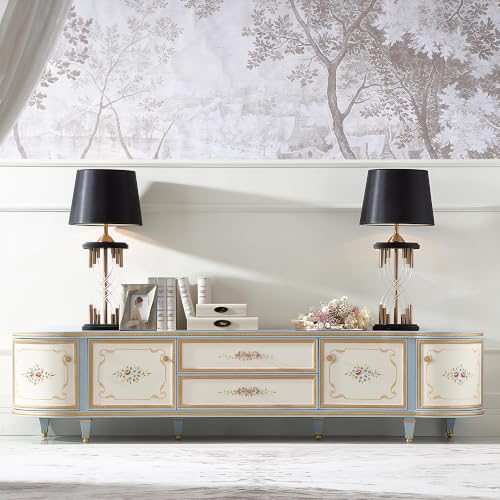
French Retro Style TV Stand , Fully Assembled TV Console with Storage | Solid Wood, Thick Tabletop, Generous Storage Drawers, Perfect for Guest Rooms, Master Rooms and Vacation Rental Decor
Check price on Amazon
Namesake Eloise 7-Drawer Wide Assembled Dresser (56") in French Sage and Performance Sand Eco-Weave, Greenguard Gold Certified
Check price on Amazon
Signature Design by Ashley Realyn French Country 7 Drawer Two Tone Dresser (Chipped White) and 3 Drawer Nightstand with Electrical Outlets & USB Ports (Chipped White)
Check price on Amazon
ChinaFurnitureOnline Traditional French Motif Asian Curved Bathroom Vanity Base
Check price on Amazon
Jetland French Provincial Drawer Pulls - 6-Pack, Antique Brass, 3" Hole Centers, Vintage Shabby Chic Pulls for Dresser Nightstand Cabinet, PW1619ABR76
Check price on AmazonDisclaimer
The information provided on DresserAdvisor is for educational and informational purposes only. We are not furniture professionals, and our content should not replace professional advice from qualified furniture makers, interior designers, or safety experts. Some content may use AI assistance. Always check product safety standards and certifications before purchasing. If you do not agree, please do not use this website. Read the full disclaimer.