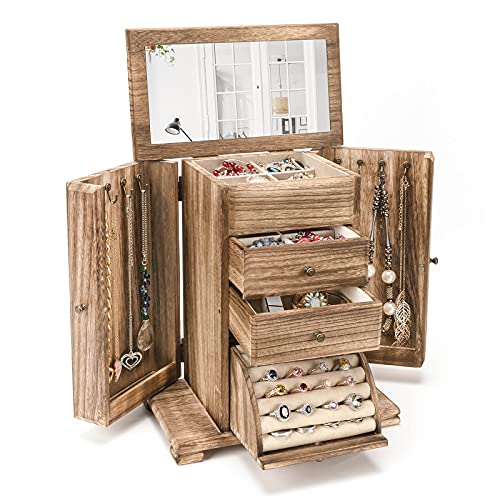
Jewelry Box for Top of Dresser: The Complete Buying Guide
Your dresser top is prime real estate. Discover how to choose a jewelry box that protects your valuables, keeps necklaces tangle-free, and complements your bedroom style.
Why this guide matters: A jewelry box for the top of your dresser is more than a pretty accessory — it is a daily-use storage system. The wrong box leads to tangled chains, scratched rings, and clutter spreading across your dresser surface. The right one keeps every piece visible, protected, and easy to grab in the morning. This guide walks you through size, materials, lining, organization features, and matching your box to your existing jewelry dresser setup so you can choose with confidence.
Why a Dedicated Jewelry Box for Your Dresser Top Matters
Most people start by dropping jewelry into a drawer or a random dish. That works for a week, then earrings go missing and chains knot together. A purpose-built jewelry box solves three problems at once: protection, visibility, and organization. It shields pieces from dust, moisture, and sunlight — the three biggest enemies of plated metals, pearls, and gemstones — while keeping everything in one predictable place.
Placing the box on top of your dresser also creates a natural daily routine. You take jewelry off before bed and put it back in the same spot. That single habit dramatically reduces lost earrings and scratched finishes. If your dresser top is crowded, pair the box with a jewelry organizer for dresser top to divide the surface into zones for fragrance, accessories, and display items.
Beyond function, the box becomes part of your bedroom decor. A well-chosen piece in solid wood, velvet, or leather can visually tie together your dresser, nightstand, and mirror — especially if you already own a coordinated jewelry dresser with glass top where display and storage overlap.
Key Factors to Evaluate Before You Choose
Jewelry boxes vary enormously in build quality and layout. These are the factors that actually change how a box performs day to day:
Size & Footprint
Measure your dresser top first. A box that is too large crowds the surface; too small and it overflows within months. Leave at least a few inches of breathing room around it.
Interior Layout
Ring rolls, necklace hooks, divided compartments, and removable trays determine whether your collection actually fits. Match the layout to what you own, not what looks pretty.
Lining Material
Soft fabric linings — velvet, suede, or microfiber — prevent scratches and reduce tarnish. This is one of the clearest quality signals in the category.
Exterior Material
Solid wood, engineered wood with veneer, leather, and fabric-wrapped options each behave differently in humidity and sunlight. Consider your climate and window exposure.
Lid & Closure
A glass or mirror lid lets you see contents at a glance. Hinges should feel smooth and hold position; weak hinges are the most common failure point over time.
Security & Lock
A simple key lock or combination latch adds peace of mind, especially in shared bedrooms or homes with children and pets. It is not high security, but it deters casual handling.
Size Guide: Matching the Box to Your Dresser Top
There is no universal size, but there is a reliable rule: the box should occupy roughly one-third of your dresser top's depth and no more than half its width. That leaves room for a mirror, a lamp, or a decorative tray without the surface feeling cluttered.
| Tier | Typical Footprint | Best For | What to Expect |
|---|---|---|---|
| Entry-level | Compact, single-layer | Small collections, few rings and earrings | Basic fabric lining, simple latch, limited dividers |
| Mid-range | Two-layer with removable tray | Daily wear plus a few statement pieces | Soft velvet lining, multiple compartments, smoother hinges |
| Premium | Three-layer or stackable set | Larger collections, mixed jewelry types | Dense velvet or suede, ring rolls, necklace hooks, sturdy build |
| Luxury | Full dresser-top organizer | Collectors and heirloom pieces | Solid wood, suede lining, mirror lid, lock, artisan hardware |
If you own mostly necklaces, prioritize depth and built-in hooks over width. If you own mostly rings and studs, a wider single-level box with ring rolls is more practical than a tall stacked box. And if your collection grows seasonally, choose a modular design where trays can be added or rearranged instead of replaced.
Materials and Build Quality
Exterior: What Lasts on a Dresser Top
Dresser tops are exposed to sunlight, occasional moisture from perfume or lotion, and daily handling. Solid wood and wood veneer offer the best combination of durability and visual warmth. Leather and faux leather resist dust well and age gracefully, though they can fade in direct sun. Fabric-wrapped boxes look charming in a bedroom but show dust and stains faster, so they suit low-traffic or decorative setups.
Interior Lining: The Feature Most People Overlook
The lining does more work than the outside. Velvet and suede hold pieces in place, cushion them against knocks, and reduce the abrasive contact that dulls metal. A mid-range or premium box typically uses denser, softer lining than an entry-level one, and the difference is immediately obvious to the touch. For silver and plated pieces, tarnish-resistant lining is a worthwhile upgrade if it is offered.
Practical check: Open and close the box several times before committing. Listen for squeaks, feel whether the lid holds open, and press gently on the base. A box that flexes under light pressure will not hold its shape after a year of daily use. These small tests separate a solid build from a fragile one more reliably than marketing descriptions.
Organization Features Worth Having
Good organization is what turns a jewelry box from a container into a system. These are the features that earn their place:
- Ring rolls: Padded cylinders that keep rings upright and visible. Essential for anyone with multiple rings.
- Necklace hooks: Prevent the knots that plague flat compartments. Look for hooks with enough spacing for longer chains.
- Removable trays: Let you lift out the layer you need without digging through the whole box.
- Divided compartments: Small adjustable dividers keep earrings, studs, and bracelets separated.
- Mirror or glass lid: Lets you check contents without opening — and doubles as a usable mirror for putting pieces on.
- Drawer or pull-out section: Adds capacity without increasing the footprint on your dresser.
If your collection is broad, consider pairing a jewelry box with complementary storage such as jewelry trays for overflow and a jewelry stand for frequently worn necklaces. That layered approach keeps the box focused and the dresser top tidy.
How to Match the Box to Your Dresser and Bedroom Style
Your jewelry box sits at eye level every day, so visual harmony matters. Match the wood tone to your dresser first — a warm walnut box on a cool grey dresser will always look slightly off, while a neutral or complementary tone blends naturally. If your dresser is painted, you have more freedom: choose a box in a contrasting material like leather or a metallic-finished lid for a deliberate accent.
Hardware is the second cue. Brushed brass, matte black, and polished silver are the three dominant finishes; choosing the same family as your drawer handles creates visual continuity. If your gray dresser with mirror already anchors the room, a jewelry box with a mirror lid echoes that design language without adding clutter.
Finally, consider height. A tall, stacked box can look heavy next to a low, wide dresser. A flat, single-layer box on a tall dresser risks looking lost. Proportional pairing — wide with wide, tall with tall — reads as intentional rather than accidental.
Placement and Everyday Use
Where the box sits on the dresser affects both convenience and protection. Keep it away from direct window light to slow fading and prevent gemstone discoloration. Avoid placing it directly under an air-conditioning vent, where dry air accelerates tarnish. The best spot is usually a few inches back from the front edge, slightly off-center, with enough clearance to open the lid fully.
Establish a simple daily rhythm: remove jewelry at night, place it in the box, close the lid. Once a month, wipe the interior with a dry soft cloth and check that hooks and hinges are secure. This routine takes under a minute and dramatically extends both the life of your jewelry and the box itself.
Frequently Asked Questions
What size jewelry box fits best on top of a dresser?
A box that covers roughly one-third of the dresser's depth and up to half its width is the practical sweet spot. Measure your dresser top first, then leave a few inches of clearance on each side so the box does not feel cramped and the lid can open fully.
Is velvet or suede lining better for jewelry?
Both are soft and protective. Velvet is slightly more plush and holds pieces in place well; suede has a tighter, smoother surface that resists lint. Either is a significant upgrade over unlined or rough interiors, and both reduce scratching and tarnish compared to bare compartments.
Should I choose a lockable jewelry box?
A lock is useful in shared bedrooms or homes with children and pets. It is not high security, but it discourages casual handling and keeps curious hands out. If you own high-value pieces, treat the lock as a deterrent and store the most valuable items elsewhere.
Can a jewelry box damage my jewelry?
Only if the interior is abrasive or pieces are stored in ways that cause friction. Soft lining, ring rolls, and separate compartments prevent the scratching and tangling that damage pieces over time. Avoid stacking heavy items directly on delicate chains.
How do I keep silver from tarnishing inside the box?
Choose a box with tarnish-resistant lining if available, keep it out of direct sunlight and away from humid spots, and close the lid after use. A small anti-tarnish strip placed inside the box also helps slow oxidation between wears.
Final Buying Checklist
Before you commit, run through this short list. It covers the details that separate a box you will use for years from one you will replace within a season:
- Measure your dresser top and confirm the box footprint leaves clearance on all sides.
- Match the interior layout to what you actually own — ring rolls, hooks, and compartments in the right proportions.
- Check the lining by touch: it should feel dense and soft, not thin or scratchy.
- Open and close the lid several times; hinges should feel smooth and hold position.
- Confirm the exterior material suits your climate and window exposure.
- Decide whether a lock, mirror lid, or removable tray is genuinely useful to you.
- Compare the box's wood tone and hardware finish with your existing dresser.
If you are still refining your bedroom storage setup overall, our guide to guest bedroom storage ideas shows how small accessories and display pieces fit into a larger organization plan — and if you are redesigning the room, our guest room furniture overview helps you coordinate the bigger pieces.
Ready to Organize Your Dresser Top?
Browse our recommended jewelry boxes and organizers below, selected for build quality, thoughtful layouts, and materials that protect your collection every day.
Explore Recommended Options