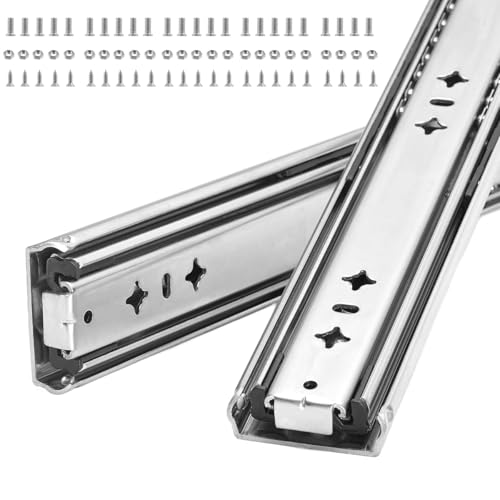
Heavy Duty Drawer Slides 36 Inch: The Complete Buying Guide
Everything you need to know about 36-inch heavy-duty drawer slides — load ratings, materials, mounting styles, and how to choose the right pair for your dresser or cabinet project.
When you are building or upgrading a wide dresser, a deep cabinet, or a workshop storage unit, the hardware you choose determines how the piece performs day after day. Heavy duty drawer slides 36 inch are a popular choice because they bridge the gap between compact slides and truly long-extension hardware. At 36 inches, these slides support wide drawers that hold clothing, tools, or heavy household items — but only if the slide itself is engineered for the load.
This guide walks you through what makes a 36-inch slide "heavy duty," how to match load ratings to your drawer contents, and which mounting style suits your project. By the end, you will understand exactly what to look for before you commit to a purchase.
Quick summary: A 36-inch heavy-duty slide is best for wide dresser drawers, deep cabinet pull-outs, and workshop storage. Look for a full-extension design, ball-bearing movement, and a load rating that exceeds the weight of the drawer plus its contents by a safe margin. Steel construction with a rust-proof finish is the baseline for long-term durability.
Why Choose 36-Inch Drawer Slides?
Drawer slides are sized to match the depth of the drawer box. A 36-inch slide fits a drawer box with roughly 36 inches of internal depth (or a cabinet with a 36-inch deep opening). This length is common in a few specific applications:
- Wide dressers and chests: Dresser drawers that span a wide frame need longer slides to keep the drawer stable when fully open.
- Deep cabinets and pantries: Pull-out shelves and deep storage drawers benefit from full-length support.
- Workshop and garage storage: Heavy tool drawers often use long slides to handle wide, deep boxes.
- Van and truck conversions: Long slides are used in slide-out storage systems where depth is available.
Compared to shorter slides, a 36-inch unit distributes the load across a longer rail, which reduces flex in wide drawers. That said, length alone does not make a slide heavy duty — the load rating and bearing system matter just as much.
What Makes a 36-Inch Slide "Heavy Duty"?
The term "heavy duty" is often used loosely in product listings. In practice, a genuinely heavy-duty slide shares several characteristics:
- High-grade steel construction: Cold-rolled or stainless steel rails resist bending under load.
- Ball-bearing movement: Steel ball bearings reduce friction and distribute weight more evenly than roller slides. For very heavy loads, look at heavy duty ball bearing slides.
- Full extension: The drawer opens fully, giving access to the entire box. For maximum reach, consider heavy duty full extension drawer slides.
- Reinforced mounting brackets: Thicker flanges and more mounting holes prevent the slide from pulling out of the cabinet.
- Rust-proof finish: Zinc-plated or powder-coated surfaces resist corrosion in humid environments.
- Consistent load rating: The stated capacity should hold across the full extension, not just when closed.
When comparing products, check whether the load rating is stated per pair or per slide. A pair rating is the standard for dresser and cabinet applications.
Understanding Load Ratings for 36-Inch Slides
Load ratings tell you how much weight a pair of slides can support. For a wide dresser drawer, a realistic target is the empty drawer weight plus the contents. A 36-inch-wide clothing drawer can easily hold 50 to 100 pounds of folded clothes, so the slide rating should exceed that comfortably.
If you are planning a very heavy application, such as a tool drawer or a pull-out pantry, look at slides rated for 500 lbs or higher. For extremely demanding loads, there are even 500 kg options, though these are usually overkill for residential dressers.
| Tier | Typical Load Range | Best For |
|---|---|---|
| Essential tier | Up to 100 lbs per pair | Light clothing drawers, occasional use |
| Mid-tier | 100–250 lbs per pair | Standard dresser drawers, everyday bedroom use |
| High-end tier | 250–500 lbs per pair | Wide dressers, deep cabinet pull-outs, workshop storage |
| Commercial-grade | 500 lbs+ per pair | Industrial tool drawers, heavy pantry pull-outs, van systems |
These tiers are relative guides, not absolute limits. Always check the manufacturer's stated capacity for the specific product and confirm whether it applies to the pair or a single slide.
Mounting Styles: Side-Mount vs. Undermount
36-inch heavy-duty slides are available in two main mounting styles, each with trade-offs:
Side-Mount Slides
Side-mount slides attach to the outside of the drawer box and the inside of the cabinet. They are the most common style for dressers and are easier to install and adjust. Heavy-duty side-mount slides are widely available and generally offer the highest load ratings. If you need a long slide for a deep drawer, side-mount is often the practical choice.
Undermount Slides
Undermount slides attach beneath the drawer box, keeping the sides clean and hidden. They offer a more finished look but typically have lower load ratings than side-mount slides. If you want the concealed look, look for heavy duty undermount drawer slides full extension and confirm the rating meets your needs.
For a wide dresser with a 36-inch drawer, side-mount is usually the safer choice for load capacity. Undermount works well for lighter bedroom drawers where a clean visual line matters more than maximum weight support.
Materials and Finishes That Last
The rail material and finish determine how well the slide holds up over time. Key considerations:
- Cold-rolled steel: The standard for heavy-duty slides. Strong, rigid, and resistant to bending.
- Stainless steel: Best for humid or coastal environments where rust is a concern.
- Zinc plating: Common corrosion-resistant finish for indoor use.
- Powder coating: Adds durability and a clean appearance; often used on black or colored slides.
- Ball-bearing cages: Keep bearings evenly spaced for smooth movement under load.
A solid build with a rust-proof finish is the baseline for a slide that will last through years of daily use. If the slide is going into a bathroom, laundry room, or van, prioritize corrosion resistance.
Installation Considerations for 36-Inch Slides
Longer slides require more careful installation than short ones. Keep these points in mind:
- Measure the drawer box depth: The slide length should match or be slightly shorter than the internal drawer depth. A 36-inch slide fits a drawer box with approximately 36 inches of internal depth.
- Check cabinet clearance: The cabinet opening needs enough depth to accommodate the slide rail when the drawer is closed.
- Use all mounting holes: Longer slides have more holes for a reason — using them all prevents the rail from working loose under load.
- Align both sides: Misalignment causes binding and premature wear. Install one side, then attach the drawer and slide, then mark and install the second side.
- Consider a locking option: If the drawer will be in a moving vehicle or a child-accessible area, heavy duty locking drawer slides add a safety layer.
If you are building a van conversion or mobile storage system, heavy duty drawer slides for van applications deserve extra attention to locking mechanisms and vibration resistance.
36-Inch vs. Other Slide Lengths
Choosing the right length is mostly about drawer depth, but it helps to know how 36-inch slides compare to neighboring sizes:
- 30-inch heavy-duty slides — better for standard-depth dressers and narrower cabinets.
- 36-inch heavy-duty slides — the sweet spot for wide dressers, deep cabinets, and workshop drawers.
- 40-inch heavy-duty slides — for extra-deep drawers and long pull-out shelves.
- 60-inch heavy-duty slides — large pull-out systems and specialty storage.
- 72-inch heavy-duty slides — oversized applications such as trailer slide-outs.
If your drawer depth falls between sizes, choose the slide that fits the drawer box rather than forcing a longer slide into a shorter space.
Buying Checklist for 36-Inch Heavy-Duty Slides
Before you add a pair to your cart, run through this checklist:
- ✅ Length: 36 inches, matching your drawer box depth.
- ✅ Load rating: At least 1.5× the expected loaded drawer weight, per pair.
- ✅ Extension: Full extension for full access to the drawer box.
- ✅ Bearing type: Ball bearings for smooth, heavy-load movement.
- ✅ Mounting style: Side-mount for maximum capacity, undermount for a concealed look.
- ✅ Finish: Zinc-plated or powder-coated for corrosion resistance.
- ✅ Hardware included: Screws and mounting brackets should be in the box.
- ✅ Locking option: Consider if the drawer will be in a mobile or child-accessible setting.
Frequently Asked Questions
What size drawer does a 36-inch slide fit?
A 36-inch slide typically fits a drawer box with approximately 36 inches of internal depth. Always measure the drawer box and the cabinet opening before ordering, and allow a small margin for the slide mechanism.
Are 36-inch heavy-duty slides suitable for dressers?
Yes. Wide dresser drawers benefit from the longer rail because it reduces flex and keeps the drawer stable when fully open. Choose a load rating that comfortably exceeds the weight of the loaded drawer.
Side-mount or undermount for a wide dresser?
Side-mount slides generally offer higher load ratings and are easier to adjust, making them the safer choice for wide, heavy dresser drawers. Undermount slides provide a cleaner look but usually have lower capacity.
How do I know if a slide is truly heavy duty?
Look for high-grade steel construction, ball-bearing movement, full extension, reinforced mounting flanges, and a stated load rating per pair. Avoid listings that do not specify a rating or that describe the slide only in vague terms.
Can I use 36-inch slides in a van conversion?
Yes, but choose a locking slide to prevent the drawer from rolling open while the vehicle is moving. Vibration resistance and corrosion resistance are also important in mobile applications.
What is the difference between roller and ball-bearing slides?
Roller slides use nylon or steel rollers and are generally suited to lighter loads. Ball-bearing slides use steel balls in a cage, which distribute weight more evenly and provide smoother movement under heavy loads. For heavy-duty applications, ball bearings are the preferred choice.
Ready to Choose Your Slides?
Browse our recommended heavy-duty drawer slides below, compare features, and find the right pair for your dresser, cabinet, or workshop project.