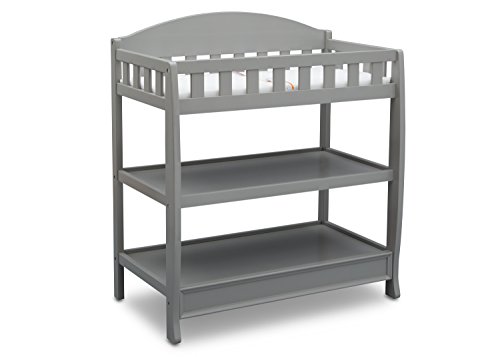
Grey Changing Table with Drawers: The Complete Buyer's Guide
Everything you need to choose a safe, stylish, and well-organized grey changing table with drawers for your nursery — from safety standards and drawer configurations to finish options and long-term use.
Explore Recommended ModelsWhy a grey changing table with drawers? Grey has become the defining neutral of modern nursery design — calm, gender-neutral, and easy to style. When you combine that finish with built-in drawers, you get a changing station that keeps diapers, wipes, clothing, and blankets within arm's reach while doubling as lasting bedroom storage. This guide walks you through every decision point so you can buy with confidence.
Why Choose a Grey Changing Table with Drawers?
Grey is more than a trend. It sits comfortably between warm wood tones and cool whites, which means it adapts as your nursery evolves. A grey finish also hides minor smudges and fingerprints better than pure white, an advantage in a room that sees daily use. Pair a grey unit with a grey dresser with mirror for a cohesive suite, or keep it standalone for a clean, modern look.
The drawer component is what separates a basic changing pad stand from a genuine storage solution. Instead of stacking bins on the floor or hanging organizers on the rail, you get enclosed, dust-free storage that keeps essentials sorted. Many parents find that a unit with three to four drawers eliminates the need for a separate changing-table organizer entirely.
- Neutral versatility: works with grey, white, wood, navy, sage, and blush palettes.
- Concealed storage: drawers keep supplies out of sight and away from curious hands.
- Longevity: most units convert to a standard dresser once the changing years end.
- Resale and hand-me-down appeal: grey finishes age better than trend-driven colors.
Safety Standards You Must Verify
A changing table is one of the few nursery purchases where safety features are non-negotiable. Before you commit, confirm the following on the product specification sheet:
- Safety strap with a secure buckle — a three-point or waist strap is the minimum.
- Raised edges on all four sides of the changing surface, typically at least two inches high.
- JPMA certification or CPSC compliance — these confirm the unit has passed voluntary and mandatory safety testing.
- Anti-tip hardware included — wall-anchoring kits should come in the box, not as an add-on.
- Stable base with no rocking — check that all four feet sit flush on the floor.
- Non-toxic finish — look for low-VOC or water-based paints, especially in a nursery.
Drawer slides deserve their own check. Cheap slides wobble and jam under the weight of stacked diapers. Look for metal ball-bearing slides or undermount slides with a soft-close mechanism. If you are comparing hardware options across furniture, our guide to handles for dresser drawers explains how pull style affects daily usability.
Types of Grey Changing Tables with Drawers
Not every changing table with drawers is built the same way. The three main configurations suit different room sizes and budgets, and each has trade-offs worth understanding before you buy.
1. Dedicated Changing Table with Drawers
This is the classic format: a changing surface on top with two to four drawers underneath. It is typically narrower than a full dresser, making it a strong fit for compact nurseries. The downside is that it usually has a shorter useful life — once the changing top is removed, you are left with a relatively small chest.
2. Changing Table Dresser Combo
A combo unit is a full-width dresser with a removable or fold-down changing topper. This is the most versatile option because it converts cleanly into a standard dresser. If you are planning a nursery that will grow with your child, a combo is usually the smarter long-term choice. Our grey 6-drawer dresser guide covers the storage capacity you can expect from wider combo formats.
3. Corner and Compact Units
For small rooms, corner units or narrow vertical designs maximize floor space while still offering two or three drawers. These work well in apartments and shared bedrooms. If space is tight, browse our guest bedroom storage ideas for overlapping strategies that apply equally to small nurseries.
Comparing Configurations by Tier and Use Case
The table below groups the main configurations by quality tier and intended use. Tier descriptors reflect relative market positioning, not absolute figures, and are consistent throughout this guide.
| Configuration | Tier | Best For | Drawer Range | Longevity |
|---|---|---|---|---|
| Dedicated changing table | Entry-level | Compact nurseries, short-term use | 2–3 | Nursery years only |
| Compact corner unit | Entry-level | Apartments, shared bedrooms | 2–3 | Nursery years only |
| Changing table dresser combo | Mid-range | Growing families, long-term use | 4–6 | Converts to standard dresser |
| Solid wood combo unit | Premium | Heirloom intent, heavy daily use | 5–7 | Decade-plus with care |
| Designer / custom finish unit | Luxury | Statement nursery design | 5–8 | Long-term with refinishing |
How to Plan Your Drawer Layout
Drawer count matters less than drawer proportion. A unit with four shallow drawers stores less usable volume than one with two deep and two shallow drawers. Think in terms of categories rather than numbers:
- Top shallow drawer: diapers, wipes, rash cream, and small grooming tools.
- Second shallow drawer: onesies, socks, and daily clothing.
- Deep drawer(s): blankets, sleep sacks, spare bedding, and larger clothing sizes.
- Bottom deep drawer: bulk diaper packs, out-of-season clothing, or toys.
If you prefer an open-and-close workflow during changes, a single deep drawer plus a side shelf can outperform a four-drawer stack. Consider whether you want the changing surface to face the room or a wall — orientation affects which hand reaches the drawers and how the unit sits relative to the crib.
Grey Finish Options and Style Pairing
"Grey" covers a wide spectrum. The finish you pick should match the room's light and the other furniture. Popular variants include:
- Light dove grey: airy and bright; pairs well with white trim and pale wood floors.
- Mid charcoal grey: grounded and modern; works with brass or black hardware.
- Warm greige: blends grey and beige; softens cool-toned rooms.
- High-gloss grey: reflective and contemporary; best in well-lit rooms.
Hardware is the fastest way to shift the style. A grey unit with gold hardware reads warm and glam, while matte black pulls push it toward industrial or modern farmhouse. If you are weighing finishes across the room, our grey dresser overview covers how different grey tones behave under various lighting conditions.
Materials and Build Quality
Nursery furniture takes abuse: spilled milk, diaper cream, and the occasional kicked drawer. Material choice directly affects how the piece holds up. Solid wood and high-grade plywood outlast particleboard in humid rooms, though quality engineered wood can serve well for a few years if the drawer boxes are reinforced.
Pay attention to three zones: the changing surface frame (should be rigid, not flexing), the drawer boxes (dovetail or doweled joints beat stapled corners), and the back panel (a thin hardboard back contributes to racking over time). If you want a deeper comparison of construction tiers, our high-quality solid wood dresser guide breaks down joinery and finish standards.
Organizing Your Changing Table Drawers
A changing table with drawers only works if the contents stay sorted. A few principles make daily changes faster:
- One category per drawer — never mix diapers and clothing in the same drawer.
- Use dividers to separate sizes and prevent avalanche slides when the drawer opens.
- Keep a restock line — store the next size up at the back, current size at the front.
- Wipe the changing surface daily and vacuum drawer corners monthly to prevent dust buildup.
- Rotate seasonal clothing so the drawers never overflow.
If you plan to store clothing long-term in the drawers, review our guide to removing musty smells from dresser drawers — nursery drawers are especially prone to trapped humidity.
Using the Unit Beyond the Nursery Years
The best changing tables with drawers earn their place after potty training. A combo unit with the topper removed becomes a standard dresser that fits a child's room, a guest room, or a hallway. Before you buy, check whether the topper is removable (screwed on) versus fixed (glued or integrated). Fixed tops limit future use.
If you plan ahead for a guest room transition, our guest room furniture guide shows how a converted dresser fits into a multifunctional space. Some families pair the converted unit with a grey nightstand and dresser set to create a matching bedroom suite later.
Ready to Compare Grey Changing Tables with Drawers?
Browse hand-picked models across entry-level, mid-range, and premium tiers. Every listing includes verified safety features and drawer configurations.
View Recommended ModelsFinal Buying Checklist
Use this list as a quick reference when reviewing any product page:
- Safety strap and raised edges confirmed
- JPMA or CPSC compliance noted
- Anti-tip kit included in the box
- Drawer slides are metal, not plastic
- Changing topper is removable
- Finish is low-VOC and easy to wipe
- Drawer count and depth match your storage plan
- Unit width fits your nursery floor plan with clearance
If you are still weighing dresser formats more broadly, our guide on how to choose a dresser covers size, proportion, and placement principles that apply directly to combo units.
Frequently Asked Questions
Prioritize safety straps, a raised edge on all four sides of the changing surface, sturdy construction, and drawer slides that operate smoothly. Check for JPMA or CPSC compliance and verify the weight capacity of both the changing top and the drawers.
Yes. Many parents remove or fold down the changing top and continue using the piece as a standard dresser or storage chest once the child is potty trained, extending the furniture's useful life well into childhood.
Three to four drawers is the sweet spot for most nurseries: one for diapers and wipes, one for clothing, one for bedding and blankets, and an optional fourth for toys or extras. More than five drawers is rarely necessary for a single child.
Absolutely. Grey is one of the most versatile neutral finishes, pairing well with any accent color. It works equally well in a boy's, girl's, or gender-neutral nursery and transitions easily as the child grows.