Drawer Fronts: The Complete Guide to Styles, Materials & Fit
The drawer front is the face of your dresser — the part you see, touch, and pull every day. This guide explains what a drawer front is, how it differs from a drawer box, which styles and materials exist, and how to measure and choose the right front for your furniture.
What a Drawer Front Actually Is
A drawer front is the visible panel mounted to the face of a drawer box. It is the surface that carries the handle or knob, provides the decorative character of a dresser or chest of drawers, and covers the gap between the drawer box and the cabinet frame. In many furniture designs, the drawer front is the single largest visual element on the piece, which is why it has an outsized effect on the overall style of a bedroom.
Functionally, the drawer front has three jobs. First, it conceals the internal structure and protects the contents from dust. Second, it distributes the pulling force you apply when opening the drawer, transferring it to the drawer box and slides. Third, it provides a mounting surface for hardware such as knobs, pulls, and handles. A well-fitted drawer front should sit flush or with a consistent reveal around the perimeter, without binding against adjacent drawers or the cabinet opening.
Quick definition: the drawer front is the face panel — the drawer box is the container behind it. The two are separate components on most quality furniture, which is why drawer fronts can often be swapped or refinished independently.
Drawer Front vs. Drawer Box vs. Drawer Face
The terminology in furniture descriptions can be confusing, so it helps to separate the three related parts clearly.
- Drawer box: the structural container — typically a four-sided box with a bottom panel — that holds the contents. It rides on slides or runners and is usually made from plywood, solid wood, or engineered wood.
- Drawer front: the decorative and functional face panel attached to the front of the box. It is the part you see and the surface that carries the hardware.
- Drawer face: a term often used interchangeably with drawer front, especially in cabinetry contexts. In some trade usage, "face" emphasizes the visible surface rather than the panel as a component.
On well-built furniture, the drawer front is usually attached to the box with screws from the inside, which allows the front to be removed, replaced, or adjusted without dismantling the drawer. On lower-tier construction, the front may be permanently fixed or integral to the box. Knowing which construction you have matters if you plan to refinish, repair, or upgrade the fronts.
If you are also comparing whole storage pieces, the distinction between a standard drawer arrangement and a deep, multi-drawer format is covered in our guide to deep drawer configurations, which explains how box depth affects usable capacity.
Drawer Front Styles Explained
Drawer front style drives the visual personality of a dresser far more than the cabinet body does. Most fronts fall into a handful of recognizable families, and each carries practical implications for cleaning, hardware compatibility, and how the piece fits a room's design language.
Flat slab fronts
Slab fronts are a single flat panel, often with a slight chamfer or eased edge. They read as modern and minimal, and they are the easiest profile to wipe clean because there are no recesses where dust collects. They pair well with bar pulls or edge pulls and suit contemporary and minimalist bedrooms.
Recessed panel fronts
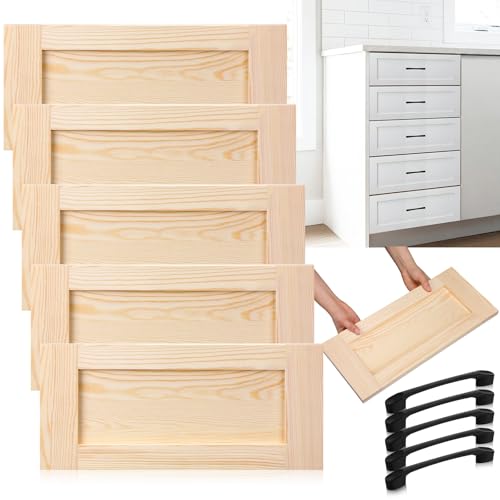
A recessed panel front has a raised border and a sunken center panel, created by stiles and rails on the face. This is the classic Shaker and traditional profile. It adds visual depth and shadow lines, and it is forgiving of minor surface wear because the eye is drawn to the panel frame. The recesses do require a little more attention when dusting.
Raised panel fronts
Raised panel fronts feature a center panel that projects above the surrounding frame, often with a bevel or molded profile. They are associated with traditional, colonial, and French provincial styles. They are heavier visually and typically require more elaborate hardware to look balanced.
Beadboard and grooved fronts
Beadboard fronts show narrow vertical grooves, giving a cottage or farmhouse character. Grooved fronts add texture and break up a large surface, but the grooves trap dust and benefit from periodic brushing.
Molded and routed profiles
Routed profiles include decorative edges, ogee curves, and applied moldings. These are the most ornate option and suit formal or vintage-inspired rooms. They are also the most demanding to clean and to refinish because of the number of curves and recesses.
Frameless versus framed fronts
Frameless fronts sit over the cabinet with a narrow reveal and are typical of modern European-style construction. Framed fronts sit inside or over a face frame, which produces more visible structure lines. The choice affects how the reveal looks around each drawer and how forgiving the fit is if measurements are slightly off.
| Style | Visual Character | Cleaning Effort | Best For |
|---|---|---|---|
| Flat slab | Modern, minimal | Low | Contemporary bedrooms, small spaces |
| Recessed panel | Classic Shaker | Moderate | Transitional and farmhouse interiors |
| Raised panel | Traditional, formal | Moderate to high | Colonial and French provincial rooms |
| Beadboard | Cottage, textured | Moderate | Farmhouse and coastal styles |
| Molded profile | Ornate, vintage | High | Formal and antique-inspired pieces |
Materials and Finishes for Drawer Fronts
The material of a drawer front affects durability, weight, finish options, and how well the panel holds hardware over time. Most fronts are made from one of four broad families.
Solid wood
Solid wood fronts — oak, maple, walnut, pine, and mahogany among them — offer the most repairable surface. They can be sanded, refinished, and re-stained, and they develop character over time. Solid wood expands and contracts with humidity, so panels are usually built with a floating center to allow movement. This is the high-end tier choice for longevity and craft.
Engineered wood with veneer
A plywood or MDF core with a wood veneer face provides dimensional stability at a mid-range position in the market. Veneered fronts can look indistinguishable from solid wood when well made, but the thin veneer limits how much sanding the surface can take during refinishing.
MDF and painted finishes
MDF takes paint exceptionally well and produces a smooth, uniform surface, which makes it popular for painted slab and recessed fronts. It is stable and resistant to grain telegraphing, but it is heavier and less forgiving of water damage at exposed edges.
Laminate and thermofoil
Laminate and thermofoil fronts are common on entry-level and starter-tier furniture. They are easy to clean and resist staining, but they cannot usually be refinished and may show edge lifting over time if exposed to heat or moisture.
Finishes and hardware pairing
Finish choice interacts with hardware selection. Painted fronts suit knobs and simple pulls, while natural wood fronts often benefit from metal hardware that contrasts with the grain. If you are updating an older piece, our guide to dresser hardware covers how to coordinate pulls, knobs, and finishes, and the dedicated page on drawer pulls explains the difference between bar pulls, cup pulls, and edge pulls in practical terms.
How to Measure and Size a Drawer Front
Sizing is where most drawer front projects go wrong. A front that is a few millimeters oversized will bind against the cabinet opening or adjacent drawers; one that is undersized will leave an uneven reveal that is visible from across the room. Measure methodically and write the numbers down before ordering or cutting.
Step-by-step measurement
- Measure the opening, not the old front. Record the width and height of the cabinet opening the drawer sits in. If the existing front overlaps the frame, measure both the opening and the overlap.
- Decide on the reveal. The reveal is the gap between the edge of the front and the cabinet opening or neighboring drawer. A typical reveal is a few millimeters; consistency around the perimeter matters more than the exact number.
- Account for the style. Overlay fronts cover part of the cabinet frame, while inset fronts sit flush inside the opening. Inset fronts require more precise sizing because there is no overlap to hide small errors.
- Check hardware clearance. Pulls and knobs need room to operate without scraping adjacent drawers. Center-to-center spacing on the pull must match the drilling on the new front.
- Verify the mounting pattern. Measure the distance between the screw holes on the drawer box and confirm the new front can be drilled to match, or plan to drill new holes in the box.
Measuring tip: measure each drawer opening individually. Cabinet openings are rarely perfectly identical, especially on older furniture, and a front cut to an average size can fit one drawer well and another poorly.
For a broader treatment of how drawer dimensions fit into overall dresser sizing, the dresser buying guide explains how drawer depth, width, and height combine into usable storage capacity. If you are working on a specific format such as a wide six-drawer unit, the wide six-drawer dresser reference shows how front proportions change across a wider cabinet.
Replacing or Upgrading Drawer Fronts
Replacing drawer fronts is one of the most efficient ways to change the look of a dresser without replacing the entire piece. It is also a practical repair path when a front is cracked, water-damaged, or drilled incorrectly for new hardware.
When replacement makes sense
- The drawer boxes and slides are still sound, but the fronts are damaged or dated.
- You want a different style — for example, moving from a raised panel to a flat slab profile.
- You are changing hardware and the existing drilling cannot be reused cleanly.
- You want a uniform finish across a mismatched set of secondhand furniture.
When refinishing is the better path
- The fronts are solid wood and structurally intact.
- You want to keep the original profile and character.
- The piece has heritage or sentimental value.
If you are considering a refinish rather than a replacement, the dresser makeover ideas collection covers painting, staining, and hardware swaps in a single workflow. For a deeper look at restoring an older piece, the dresser restoration guide walks through surface preparation and finish repair.
Installation considerations
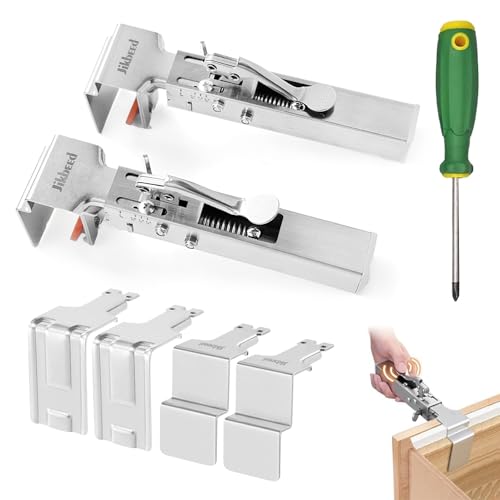
New fronts must be attached so that the panel sits square to the drawer box. Attach with screws from the inside of the box where possible, and check alignment by closing the drawer and inspecting the reveal on all four sides before final tightening. If the drawer uses side-mount slides, the front position affects how the drawer closes; if it uses undermount slides, the box alignment matters more than the front. Heavy-duty slide systems are covered in the heavy-duty full-extension drawer slides guide, which explains how load capacity interacts with front weight.
Buying Checklist Before You Commit
Before ordering replacement fronts or selecting a dresser based on its front design, run through this checklist. It covers the points that most often cause returns, fit problems, or disappointment after delivery.
- Confirm the construction type. Is the front attached with screws from inside the box, or is it integral to the drawer? Replacement is only straightforward on the former.
- Measure each opening individually. Do not assume all drawers in a dresser are identical.
- Decide the reveal and stick to it. Consistent gaps around every drawer are the difference between a professional look and an amateur one.
- Match hardware drilling. Check center-to-center spacing on pulls and the screw pattern on knobs before ordering.
- Consider cleaning effort. Grooved, molded, and raised profiles collect dust; flat slab fronts do not.
- Check finish compatibility. If you are matching existing furniture, confirm the finish name or send a sample; painted and stained finishes rarely match by name alone.
- Think about weight. Solid wood fronts are heavier than MDF or laminate and put more load on slides over time.
- Plan for humidity. Solid wood fronts move with seasonal humidity; leave the recommended clearance in panel construction.
Tier guidance: entry-level fronts are typically laminate or thermofoil over engineered wood; mid-range fronts are veneered engineered wood or painted MDF; premium and luxury fronts are solid wood with floating panel construction. Choose the tier that matches how long you intend to keep the piece and how much refinishing flexibility you want.
If you are still choosing the overall storage piece, the dresser quality guide explains how to assess joinery, drawer construction, and finish durability before you buy, and the complete dresser buying guide puts drawer front choices into the wider context of size, material, and room fit.
Frequently Asked Questions
What is a drawer front?
A drawer front is the visible face panel attached to the front of a drawer box. It is the part you see and pull when opening a dresser or chest of drawers, and it defines the furniture's style.
What is the difference between a drawer front and a drawer box?
The drawer box is the structural container that holds your belongings and slides on runners. The drawer front is the decorative and functional face panel mounted to the front of that box.
Can I replace drawer fronts without replacing the whole dresser?
Yes. Drawer fronts can often be replaced independently as long as the new fronts match the drawer box dimensions and the mounting hardware aligns with the existing screw holes or slide mechanism.
Which drawer front style is easiest to keep clean?
Flat slab fronts with a smooth finish are generally the easiest to wipe clean because they have no recessed panels, grooves, or carved details where dust collects.
Do drawer fronts need to match the drawer box material?
No. Many quality dressers use solid wood fronts with plywood boxes, or veneered fronts with engineered wood boxes. The front determines appearance and hardware mounting; the box determines structural strength and slide compatibility.
Ready to Compare Drawer Front Options?
Use the recommendations below to explore dressers and storage pieces with the drawer front styles and materials discussed in this guide.