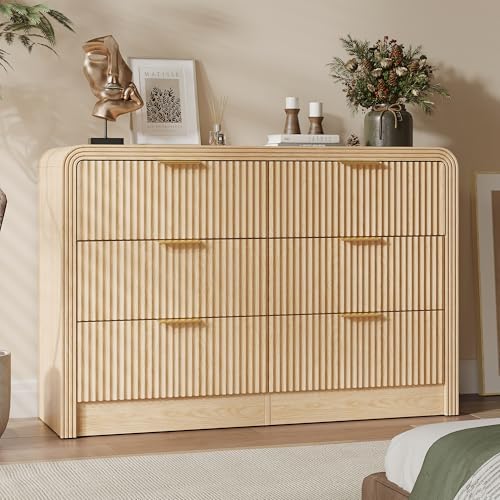
Brown Dresser with Gold Handles: The Complete Buyer's Guide
A warm brown wood finish paired with gleaming gold hardware is one of the most enduring combinations in bedroom furniture. Here is everything you need to know before you choose one.
Style and Design: What to Look For
A brown dresser with gold handles is not a single look. The silhouette, wood tone, and hardware shape together determine whether the piece reads as traditional, transitional, or modern. Understanding these variables helps you match the dresser to your existing bedroom rather than starting from scratch.
Traditional and Transitional Silhouettes
Traditional dressers often feature curved aprons, bracket feet, and decorative molding. Gold handles in a bail-pull or ornate backplate style reinforce that heritage feel. Transitional pieces split the difference: clean lines with a subtle curve, simple bracket feet, and gold bar pulls or cup handles. If your bedroom already leans traditional, a brown dresser with gold handles in a traditional silhouette is the safest match. If your room is more neutral, a transitional model gives you flexibility.
Mid-Century Modern and Contemporary Profiles
Mid-century modern dressers typically have tapered legs, a low profile, and clean horizontal lines. Gold handles in a slim bar or recessed pull style work beautifully here because they echo the geometry of the piece. Contemporary dressers may be more angular with flat fronts and minimal ornamentation; gold hardware adds a warm focal point without disrupting the clean lines. For a deeper look at these profiles, see our guide to brown mid-century modern dressers.
Wood Tone and Gold: Getting the Contrast Right
The relationship between brown wood and gold hardware depends on undertones. Deep walnut and mahogany have red and purple undertones that make gold pop with richness. Medium oak and teak are more neutral and produce a softer, calmer contrast. Lighter browns such as pine or bleached finishes can work, but the gold needs to be restrained — think brushed or satin gold rather than high-polish — to avoid a jarring effect. If you are curious how different brown finishes compare, our overview of brown dresser options covers the full spectrum.
Materials and Construction Quality
The material determines how the dresser ages, how the gold hardware sits on the drawer fronts, and how long the piece will serve you. Brown dressers with gold handles appear in solid wood, wood veneer over engineered cores, and occasionally metal or upholstered frames.
Solid Wood
Solid wood dressers — particularly walnut, oak, mahogany, and maple — are the most durable and hold hardware well because the drawer fronts are dense and stable. Solid wood can be refinished down the line, which extends the life of the piece. Expect these to sit in the mid-range to luxury tiers depending on the species and joinery. For a broader comparison of wood species, see our materials and finishes guide.
Wood Veneer Over Engineered Wood
Veneer construction uses a thin layer of real wood over plywood or MDF. High-quality veneer dressers can look indistinguishable from solid wood and offer excellent stability, especially in rooms with humidity swings. Entry-level and mid-tier veneer pieces are common in this category. Check that the veneer is thick enough to resist chipping and that the drawer boxes are joined with dovetail or dowel construction rather than staples.
Hardware Quality
Gold handles come in several forms: solid brass, brass-plated zinc, gold-finished steel, and gold-painted aluminum. Solid brass is the most durable and develops a natural patina over time. Plated and finished hardware is more common in entry-level and mid-range pieces; it looks good initially but can wear at contact points. When shopping, check whether the handles feel substantial and whether the mounting screws are properly seated. Our guide to brass dressers explains how brass and gold finishes differ in practice.
Construction checklist: Look for dovetail drawer joints, drawer glides that extend at least three-quarters of the way, and a finished back panel if the dresser will be visible from the side. A dust-proof bottom or center drawer guide reduces sagging over time, especially in wider dressers.
Drawer Count and Configuration
The number and layout of drawers determines how well the dresser fits your storage habits. A brown dresser with gold handles is available in configurations from three to nine drawers, with wide and tall variations in between.
Small Configurations: 3 to 4 Drawers
These suit guest bedrooms, small apartments, and rooms where the dresser is secondary storage. A three-drawer dresser typically has a top drawer for accessories and two deeper drawers below. Four-drawer models often split into two smaller top drawers and two full-width lower drawers, which is a practical layout for a single user.
Mid-Size Configurations: 5 to 6 Drawers
A six-drawer dresser is the most common choice for a primary bedroom. The typical layout includes two smaller top drawers, two medium-width middle drawers, and two full-width bottom drawers. This gives you a place for folded shirts, delicates, and bulkier items without forcing everything into one depth. If you want a wider footprint, see our notes on brown 6-drawer dressers.
Large Configurations: 7 to 9 Drawers
Tall dressers and chests with seven to nine drawers are designed for couples or for anyone who stores a full wardrobe in drawers. A tall dresser with deep drawers maximizes vertical space in a compact footprint, while a wide nine-drawer dresser spreads storage across a longer horizontal plane. For tall options, our brown tall dresser guide covers depth and height considerations.
| Configuration | Best For | Typical Layout | Space Notes |
|---|---|---|---|
| 3-drawer | Guest rooms, small bedrooms, secondary storage | One accessory drawer, two deep drawers | Narrow footprint, suits tight walls |
| 4-drawer | Single users, apartments, kids' rooms | Two small top drawers, two full-width lower drawers | Balanced width and depth |
| 5-drawer | Primary bedrooms with moderate storage needs | Two small, three medium or wide | Flexible for mixed clothing types |
| 6-drawer | Couples, primary bedrooms | Two small top, two medium, two wide | Most versatile all-round layout |
| 7–9 drawer | Couples with extensive wardrobes, shared rooms | Multiple small and wide drawers, sometimes split columns | Requires more wall width or height |
Gold Handle Styles and Finishes
The handles are what turn a brown dresser into a brown dresser with gold handles. The style and finish of the hardware affect both the visual weight of the piece and its day-to-day usability.
Handle Shapes
- Bar pulls: Clean, linear, and modern. They suit contemporary and mid-century profiles and are easy to grip.
- Bail pulls: A classic drop-handle style that reads traditional. Often paired with a backplate for added visual interest.
- Cup pulls: Recessed or surface-mounted cup shapes that feel substantial and work well on wider drawers.
- Knobs: Round or faceted gold knobs are common on smaller top drawers. They add a jewel-like detail without overwhelming the wood.
- Shell or ornate pulls: Decorative shapes that suit period-inspired and French provincial dressers.
If you are comparing this combination with darker hardware, our guide to a brown dresser with black hardware shows how the same wood tone reads very differently with a cooler accent.
Gold Finish Variations
- Polished gold: High shine, reflective, and formal. Best on traditional and luxury-tier pieces.
- Brushed or satin gold: Softer sheen with visible grain. Works across transitional and modern styles.
- Antique or aged gold: Muted, warmer, and less uniform. Ideal for vintage-inspired and rustic dressers.
- Champagne gold: A pale, slightly cool gold that pairs well with lighter brown and gray-brown woods.
Replacing or Upgrading Handles
If you already own a brown dresser and want the gold-handle look, swapping hardware is straightforward. Measure the center-to-center distance between the existing screw holes, then choose gold handles with the same spacing. If the spacing does not match, you can drill new holes and fill the old ones, or use a backplate to cover the original holes. Our guide to brown dressers with gold hardware covers more hardware pairing ideas.
Matching the Dresser to Your Bedroom
A brown dresser with gold handles can anchor a bedroom or sit quietly alongside other pieces. The key is to balance the warmth of the wood and the shine of the gold with the rest of the room.
Color Palettes That Work
- Warm neutrals: Cream, taupe, and soft beige walls let the brown wood and gold hardware stand out without competition.
- Rich jewel tones: Deep green, navy, and burgundy walls create a dramatic backdrop that makes gold hardware glow.
- White and light gray: A crisp white or pale gray room makes the brown dresser the visual anchor and keeps the gold from feeling heavy.
- Black accents: Black bedside tables or a black bed frame create a strong contrast that highlights the gold hardware.
Coordinating with Bedroom Furniture
You do not need a matching suite. A brown dresser with gold handles can sit alongside a black bed frame, a white nightstand, or a mirrored accent piece as long as the scale and formality levels are compatible. If you are building a coordinated set, our guide to brown bedroom dressers with mirrors shows how to pair a dresser with a mirror without overwhelming the room. For a broader room-planning view, see our room ideas section.
Styling the Dresser Top
Keep the top uncluttered so the gold hardware remains the focal point. A table lamp, a small tray for everyday items, and one decorative object are usually enough. If the dresser sits opposite the bed, a mirror above it can amplify the gold accents and make the room feel larger. Avoid covering the drawer fronts with heavy textiles or large baskets, which hide the hardware you chose deliberately.
Sizing and Placement Considerations
Before you commit, measure the wall where the dresser will stand and the walking clearance in front of it. A dresser that is too deep can make a bedroom feel cramped, while one that is too short leaves unused wall space.
Standard Dimensions
- Width: Small dressers range from roughly 30 to 42 inches; standard bedroom dressers from 50 to 68 inches; wide dressers from 70 inches upward.
- Depth: Most dressers are 16 to 20 inches deep. Tall chests may be slightly deeper to accommodate drawer slides.
- Height: Low dressers sit around 30 to 34 inches; standard dressers around 36 to 42 inches; tall chests from 48 to 60 inches.
For a more detailed breakdown, see our brown chest of drawers guide, which covers height and depth in the context of different room sizes.
Clearance and Walkways
Leave at least 24 to 30 inches of walking space in front of the dresser so drawers can open fully without blocking the room. If the dresser faces the foot of the bed, keep at least 36 inches between the two for comfortable movement. In small rooms, a tall dresser with a compact footprint is often a better fit than a wide low dresser that eats up floor space.
Final Buying Checklist
Use this checklist to evaluate any brown dresser with gold handles before you commit:
- Measure the space: Confirm width, depth, and height against your wall and walkway clearance.
- Check the wood or veneer: Look for consistent grain, tight seams, and a finish that feels smooth rather than tacky.
- Test the drawers: Open and close each drawer fully. They should glide smoothly without wobbling or scraping.
- Inspect the hardware: Gold handles should feel secure and sit flush against the drawer front. Check that screws are not loose.
- Confirm the drawer layout: Make sure the split between small, medium, and wide drawers matches what you actually store.
- Review the construction: Dovetail joints, a finished back, and dust-proofing are signs of a well-built piece.
- Plan the styling: Decide whether the dresser will stand alone, pair with a mirror, or sit alongside a nightstand set.
Frequently Asked Questions
What style of bedroom does a brown dresser with gold handles suit best?
A brown dresser with gold handles is remarkably versatile. It suits traditional, transitional, mid-century modern, and even contemporary bedrooms. The warm brown wood tone grounds the room while the gold hardware adds a touch of elegance that works with both neutral and rich color palettes.
What wood finishes pair best with gold handles?
Walnut, mahogany, and dark oak are the most popular pairings because their deep, warm tones contrast beautifully with gold. Medium-toned woods like teak and cherry also work well. Lighter browns such as pine can work in a transitional setting but require more deliberate styling to avoid visual clash.
How do I care for gold handles on a wooden dresser?
Gold-finished handles should be wiped with a soft, dry cloth weekly to remove dust and oils. Avoid abrasive cleaners and harsh chemicals, which can strip the finish. For solid brass or gold-plated hardware, an occasional gentle polish with a non-abrasive metal cleaner keeps the shine intact.
Can I replace the handles on a brown dresser with gold ones?
Yes. Replacing drawer pulls is one of the simplest upgrades you can make. Check the center-to-center spacing of your existing holes, then choose gold handles with matching spacing. If the spacing differs, you may need to drill new holes or use filler to adapt the existing ones.
What drawer count is best for a brown dresser with gold handles?
It depends on your storage needs. A 6-drawer dresser is the most versatile for a primary bedroom, offering a balance of width and depth. A 3- or 4-drawer model suits smaller rooms or guest bedrooms, while an 8- to 9-drawer piece works well for couples who need ample clothing storage.
Ready to Choose Your Brown Dresser with Gold Handles?
You now have the framework to evaluate style, material, drawer count, hardware, and room fit. Browse our recommended dressers below to compare options that match your space and storage needs.