Black Chest of Drawers for Sale: The Complete Buying Guide
Everything you need to choose a black chest of drawers that fits your space, your wardrobe, and your style — before you commit to a purchase.
START THE GUIDEWhy a black chest of drawers? Black furniture anchors a room. It hides smudges better than white, reads as intentional and modern, and pairs effortlessly with wood, metal, and textile accents. This guide walks you through every decision — from drawer count to finish — so you can buy with confidence.
What Makes a Black Chest of Drawers Worth Choosing
A black chest of drawers is one of the most versatile storage pieces you can add to a bedroom, guest room, or hallway. Unlike lighter finishes, black absorbs visual noise: it grounds a space, makes surrounding textures — linen bedding, oak flooring, brass lamps — stand out, and stays looking clean longer between dustings. For buyers who already know they want black, the real work is in the details: drawer glide quality, frame construction, finish type, and how the piece will age.
This guide is written for people who are past the browsing stage. You have decided on a black chest of drawers; now you need to understand the differences between an entry-level flat-pack chest and a mid-range or premium solid-wood piece, and how each choice affects daily use. We cover drawer count, height and width, material and finish, hardware, safety, and placement — plus a final checklist you can use right before you add a chest to your cart.
Drawer Count: Match the Chest to Your Wardrobe
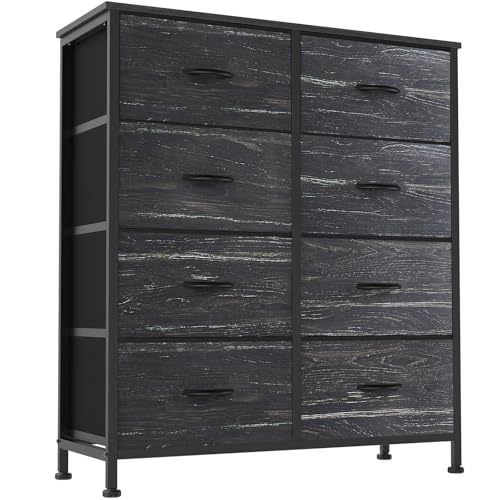
The number of drawers matters more than most buyers expect. A black chest with three deep drawers holds bulky knitwear and folded jeans well but forces you to stack T-shirts in tall piles. A five- or six-drawer chest gives you separation — socks and underwear in the top drawers, folded shirts in the middle, bedding or off-season items at the bottom. If you are shopping for a shared bedroom, a black tall dresser already assembled with five or more drawers usually works harder than a wide, low chest.
Consider these common configurations:
- Three-drawer chests — best for guest rooms, nurseries, or as a secondary storage piece in a hallway. Look for deep bottom drawers.
- Four- to five-drawer chests — the balanced tier for most couples. Enough separation for two people's folded clothing.
- Six-drawer and taller chests — the top-tier choice for small bedrooms where floor space is limited but vertical space is available. A black and gold 6 drawer dresser combines that storage with a statement finish.
- Nine-drawer and specialty chests — for serious storage needs or larger primary bedrooms.
Size and Placement: Height, Width, and Clearance
Measure twice before you buy. A chest of drawers needs clearance in front of it for drawers to open fully — at least 24 to 30 inches in most rooms. Height matters too: a chest that sits around waist height doubles as a surface for a lamp or mirror, while a tall chest maximizes storage in a narrow footprint.
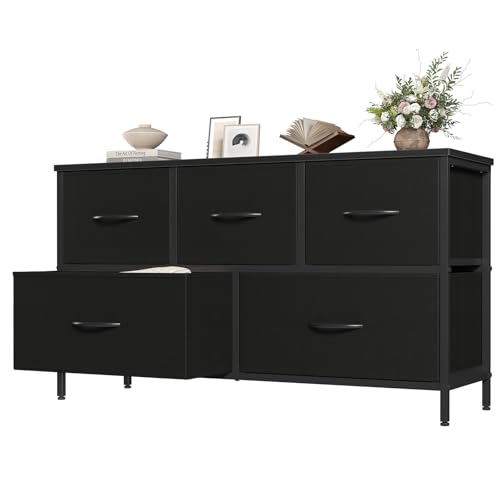
If your room is compact, a tall black dresser uses vertical space efficiently. If you have a long, empty wall, a wide low chest — sometimes called a double dresser — gives you more top surface and a calmer visual line. A black double dresser is a strong option for primary bedrooms where the chest will sit opposite the bed. For narrow alcoves, look at 24 inch wide cabinet with drawers designs that fit tight gaps without sacrificing drawer depth.
Materials and Finish: What to Expect at Each Tier
Black finishes vary dramatically in quality, and the difference shows up in how the piece wears over time. Here is how the market typically breaks down:
- Entry-level tier — engineered wood with a black laminate or foil wrap. Lightweight, easy to assemble, and fine for low-traffic rooms. Edges can chip if the chest is moved often.
- Mid-range tier — painted or stained solid wood frames with engineered panels, or fully painted hardwood. Smoother drawer glides and stronger joints than starter pieces. A black lacquer dresser in this tier offers a glossier, more reflective finish.
- Premium tier — solid hardwood construction, dovetail or reinforced drawer boxes, soft-close glides, and a multi-step finish. These pieces are a long-term investment and often come fully assembled.
- Luxury tier — hand-finished hardwoods, custom hardware, and heirloom-grade joinery. Expect deeper drawers and a heavier, more stable frame.
Finish type also affects maintenance. Matte and satin black finishes hide fingerprints better; high-gloss lacquer shows dust and smudges but reflects light and makes small rooms feel larger. If you want a statement piece, a black velvet dresser with mirror leans into texture and drama rather than a flat painted surface.
Hardware and Style: Modern, Traditional, and Everything Between
Hardware is the easiest way to shift a black chest from modern to traditional. Slim bar pulls and recessed handles read contemporary; ring pulls and ornate backplates read vintage. Brass and gold hardware warm up black and create contrast; matte black hardware disappears for a seamless, minimalist look. If you are drawn to a softer, more decorative silhouette, an ornate dresser in black pairs well with traditional bedrooms.
Style considerations to weigh:
- Modern and minimalist — flat fronts, no visible hardware, clean lines. Good for contemporary bedrooms.
- Mid-century modern — tapered legs, angled fronts, and warm wood accents. A mid-century dresser in black is a classic pairing.
- Transitional — subtle molding and classic proportions. Works in almost any bedroom.
- Glam and statement — mirrored accents, metallic hardware, or velvet upholstery. A black and gold 6 drawer dresser is the clearest example.
Drawer Glides and Build Quality: The Details That Matter Daily
Drawer glides are the single biggest predictor of daily satisfaction. Entry-level chests often use nylon roller glides that work fine at first but can stiffen or wobble over time. Mid-range chests typically use side-mounted ball-bearing slides, while premium and luxury pieces use undermount soft-close slides that pull the drawer shut on their own. If quiet, smooth operation matters to you — especially in a nursery or a bedroom shared with a light sleeper — prioritize a chest with soft-close glides.
Also check the drawer box construction. Stapled or glued boxes are common at entry level; dovetail joints, screwed corner blocks, and reinforced bottoms indicate a sturdier build. A heavy-duty dresser will specify load ratings or reinforced drawer bottoms — useful if you plan to store bedding or heavy clothing.
Safety First: Anti-Tip and Child Safety
Any chest of drawers taller than about 30 inches should be anchored to the wall. This is especially important in homes with young children. Look for chests that include an anti-tip kit, or budget for one separately. Avoid placing heavy items in the top drawers of a tall chest, and keep tempting objects off the top surface in nurseries. If the chest will go in a child's room, a lower, wider design is generally safer than a tall narrow one.
Room-by-Room Recommendations
- Primary bedroom — a wide or double chest with five to six drawers. Consider a black double dresser for top-surface styling and two-person storage.
- Guest room — a three- or four-drawer chest is usually enough. Keep it simple and pair with a mirror.
- Nursery — prioritize anti-tip anchoring and soft-close drawers. A small chest of drawers for nursery keeps storage within reach.
- Small bedroom or apartment — a tall chest maximizes vertical space. A 24 inch tall chest of drawers fits narrow walls without feeling cramped.
- Hallway or entryway — a low chest can double as a console. Choose a shallow depth so it does not block traffic.
Pre-Purchase Checklist for a Black Chest of Drawers
Before you finalize your choice, run through this list:
- Measure your space — width, height, depth, and drawer clearance. Account for baseboards and door swings.
- Count your clothing volume — how many folded items, and how much bedding or off-season storage do you need?
- Check the drawer glide type — soft-close undermount is the top-tier experience; ball-bearing side slides are a solid mid-range choice.
- Confirm the finish — matte and satin hide fingerprints; gloss reflects light but shows dust.
- Verify assembly status — some chests ship fully assembled, which matters if you want to avoid tools and setup time. Compare fully assembled dressers for sale options if assembly is a concern.
- Plan for anti-tip anchoring — especially in homes with children.
- Match hardware to your room — brass and gold for warmth, matte black for minimalism.
Frequently Asked Questions
Does a black chest of drawers make a bedroom look smaller? Not necessarily. Black adds depth and can make a room feel more intentional. In compact rooms, choose a mid-height or low-profile black chest with sleek hardware and pair it with lighter walls and bedding.
How many drawers do I need? Three to five drawers suit most single sleepers or couples who fold clothing. Tall five- to six-drawer chests work well for shared bedrooms, while three-drawer designs fit guest rooms and small spaces.
Are black chests easy to match with other furniture? Yes. Black is a neutral anchor color that pairs with wood tones, white, gray, and metallic accents. Repeat the black tone in one or two other pieces to keep the room cohesive.
What is the difference between a chest of drawers and a dresser? The terms overlap, but a chest is typically taller than it is wide, while a dresser is often wider and lower. For more detail, see our guide to black dressers and compare silhouettes before you decide.