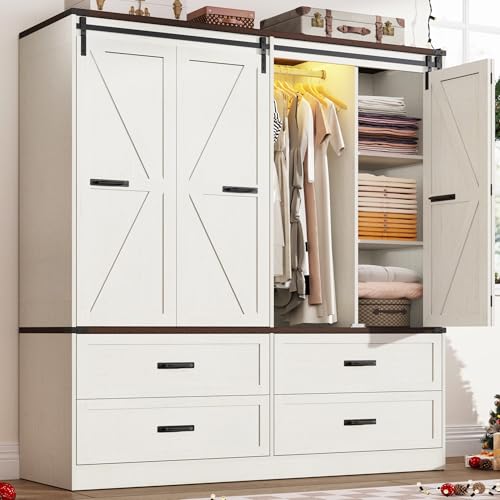
Antique Armoire Wardrobe Closet: A Complete Guide
Everything you need to know about choosing, evaluating, and living with a vintage armoire wardrobe closet — from style periods and wood types to sizing, restoration, and long-term care.
Explore the GuideWhy an antique armoire wardrobe closet? A well-preserved antique armoire combines generous storage with craftsmanship that is difficult to replicate today. For buyers in the research phase, the key is understanding what you are actually purchasing — the era, the wood, the joinery, and the condition — before committing to a piece that may become a long-term investment in your bedroom.
What Is an Antique Armoire Wardrobe Closet?
The terms armoire, wardrobe, and closet are often used interchangeably, but they describe slightly different things. An armoire is a tall, freestanding cabinet that typically combines hanging space with shelves and drawers behind two large doors. A wardrobe is primarily oriented around hanging clothing. An antique armoire wardrobe closet blends both: it is a vintage storage piece designed to hold garments, linens, and accessories in a single footprint.
In practical terms, this category covers French provincial armoires, Dutch colonial kas cabinets, English country wardrobes, and American pine cupboards. Each has a distinct silhouette, hardware style, and interior layout. If you are still comparing storage categories, our guide on the antique dresser with doors and drawers is a useful companion read for understanding hybrid storage forms.
Antique Armoire Styles by Era
Style period is the single most useful filter when shopping for a vintage armoire. The era tells you what joinery, hardware, and proportions to expect — and it also tells you how well the piece is likely to hold up.
French Provincial
Curved bonnet tops, cabriole legs, and decorative carving. Often painted or finished in soft neutrals. The mid-range to premium tier of antique armoires, with excellent resale interest.
Dutch Colonial Kas
Large, architectural cabinets with heavy cornices and raised panel doors. Solid oak and walnut construction places these in the high-end tier for durability and scale.
English Country Wardrobe
Clean lines, generous hanging space, and practical drawers. An essential-tier entry point for buyers who want vintage character with everyday usability.
American Pine Cupboard
Rustic, sturdy, and often refinished. A balanced-tier option for farmhouse and cottage interiors, frequently used as a linen or utility armoire.
If your bedroom leans toward painted or patinated finishes, the antique dresser with curved front guide offers complementary styling notes that translate well to armoire selection.
Materials and Wood Types to Look For
Wood species affect weight, stability, grain character, and how the piece responds to humidity. The table below summarizes the most common materials found in antique armoire wardrobe closets.
| Wood Type | Typical Era | Tier | Best For |
|---|---|---|---|
| Oak | 17th–19th century | High-end tier | Heavy-duty structural pieces; Dutch and English cabinets |
| Walnut | 18th–19th century | Premium | Decorative French and Italian armoires with rich grain |
| Mahogany | 18th–20th century | Premium to luxury | Formal bedrooms; polished, high-sheen finishes |
| Pine | 19th–20th century | Entry-level to mid-range | Farmhouse and cottage interiors; painted finishes |
| Cherry | 18th–20th century | Mid-range to premium | Warm-toned American armoires and linen presses |
Beyond the species, examine the secondary wood used for drawer sides and back panels. A well-made antique armoire will use a stable secondary hardwood rather than softwood offcuts. This detail is one of the clearest signals of overall build quality.
How to Measure Your Space and Choose the Right Size
Antique armoires are often taller and deeper than modern wardrobes, so measurement must happen before you fall in love with a piece. Follow this sequence:
- Wall space: Measure width and height of the intended wall, then subtract clearance for door swing. Double-door armoires need roughly 60–90 cm of clear floor in front.
- Ceiling height: Confirm the armoire fits upright, with at least a few centimetres of headroom for maneuvering during placement.
- Delivery path: Measure doorways, stairwells, and hallway turns. Many antique armoires cannot be disassembled, so the path matters as much as the room.
- Interior layout: Check whether the piece has a hanging rod, fixed shelves, or adjustable shelves. Match the interior to your actual clothing mix.
- Floor loading: Solid oak armoires are heavy. On upper floors or older timber floors, verify that the load is acceptable.
For smaller bedrooms, consider a narrower vintage piece or pair the armoire with compact storage furniture. Our 6 drawer dresser tall guide explains how vertical storage can complement a tall armoire without crowding the room.
Condition Checklist Before You Commit
Antique furniture is sold in widely varying condition, from museum-grade to fully restored to as-found. Use this checklist during inspection or when reviewing seller photos:
- Joinery: Look for dovetail drawers and mortise-and-tenon frames. Loose joints are repairable but signal a mid-tier structural condition.
- Doors and hinges: Test alignment and swing. Original hinges add character; replaced hinges are fine if fitted cleanly.
- Woodworm and rot: Check the underside, back panels, and feet. Active woodworm requires treatment before indoor use.
- Finish: Original patina is desirable. Heavily stripped or over-polished surfaces reduce character but may suit a modern interior.
- Mirrors and glass: Original glass with foxing is a plus for collectors; replacement panels are acceptable if the frame is intact.
- Smell: Musty odours can indicate damp storage. Persistent smells may transfer to clothing.
If the piece you are considering includes a mirror or vanity element, the antique dresser vanity with mirror article covers how to assess glass condition and frame integrity.
Restoration, Refinishing, and Daily Care
Restoration decisions depend on whether you value collector authenticity or everyday usability. A few principles apply broadly:
- Clean gently first. Use a soft cloth and a mild wood cleaner before considering any refinishing.
- Preserve original finish where possible. Wax-based polishes maintain patina and protect against dryness.
- Stabilize before cosmetic work. Fix loose joints, hinges, and drawer runners first; cosmetic restoration comes second.
- Control humidity. Antique wood prefers stable indoor humidity. Avoid placing the armoire against a damp exterior wall or directly beside a heat source.
- Reinforce for daily use. Adding discreet metal brackets or drawer stops is acceptable if it extends the working life of the piece.
If you are considering a painted update, review our guide on the antique dresser made into bathroom vanity for a sense of how vintage pieces adapt to new functions and finishes.
Antique Armoire vs Modern Wardrobe
Buyers often ask whether a vintage armoire is a practical alternative to a new flat-pack wardrobe. The honest answer is: it depends on your priorities.
| Factor | Antique Armoire | Modern Wardrobe |
|---|---|---|
| Construction | Solid wood, traditional joinery | Engineered panels, cam-lock fittings |
| Character | High — patina, period hardware | Uniform, contemporary |
| Interior flexibility | Often fixed shelves | Adjustable modular interiors |
| Maintenance | Periodic waxing, humidity control | Minimal |
| Longevity | Long-term investment when well kept | Variable by tier |
For a broader comparison of cabinet-style storage, the antique apothecary cabinet article explores the trade-offs between decorative antique cabinets and purpose-built wardrobes.
Styling a Vintage Armoire in a Modern Bedroom
An antique armoire can anchor a bedroom or feel out of place — placement and contrast make the difference. Consider these approaches:
- Contrast eras deliberately. Pair a carved French armoire with a low-profile modern bed to let the vintage piece stand out.
- Keep the palette restrained. Neutral walls and bedding let the wood tone and hardware read clearly.
- Use lighting to highlight. A warm wall wash or a pair of bedside lamps draws attention to the silhouette.
- Leave breathing room. Avoid crowding the armoire with tall furniture on both sides; negative space preserves its presence.
- Coordinate with complementary vintage storage. A matching or sympathetic chest — see our guide to antique chest of drawers for sale — creates a cohesive room.
Frequently Asked Questions
What is the difference between an antique armoire and a wardrobe?
An armoire typically features shelves and drawers behind doors and is often more decorative, while a wardrobe is primarily designed for hanging clothes. Many antique pieces combine both functions, offering hanging rods alongside shelves and drawers.
How do I measure a space for an antique armoire?
Measure the width, height, and depth of your intended space, then add clearance for doors to swing open fully. Account for ceiling height and doorways along the delivery path, as antique armoires are often tall and heavy.
Are antique armoires durable enough for daily use?
Solid wood antique armoires from reputable makers are highly durable and often outlast modern engineered pieces. Inspect joints, hinges, and drawer runners carefully, and reinforce or restore as needed for everyday use.
Should I refinish an antique armoire or keep the original finish?
If the original finish is intact, preserving it maintains character and collector interest. Refinishing is reasonable when the existing finish is failing, heavily damaged, or when the piece is being adapted for a new function.
Can an antique armoire be used outside the bedroom?
Yes. Vintage armoires are commonly used in entryways, dining rooms, and home offices for linen, tableware, or supply storage. Confirm that the interior layout suits the intended contents and that the piece is stable on the floor surface.
Ready to Shortlist Your Antique Armoire?
Use the checklist above to evaluate candidates with confidence, then explore curated options in the recommended section below. The right antique armoire wardrobe closet is both a storage solution and a long-term investment in your home.