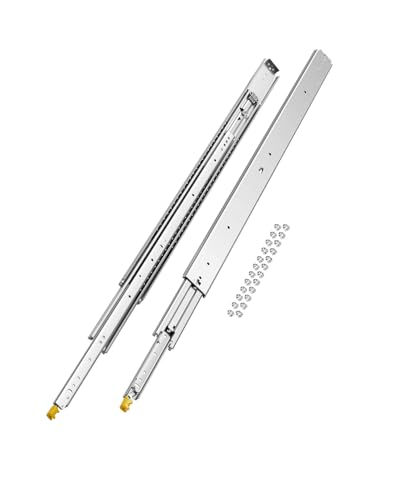
48 Full Extension Drawer Slides: The Complete Guide
Everything you need to know about 48-inch full extension slides for wide dressers, chests, and built-in storage — load ratings, mounting styles, materials, and installation.
Start ReadingWhy 48-inch slides matter: Wide dressers and large chests need drawer slides that reach the full depth of the cabinet. A 48-inch full extension slide lets the drawer open completely, giving you easy access to every item at the back — no more reaching blindly into deep drawers. This guide explains how to choose, install, and maintain them.
What Are 48 Full Extension Drawer Slides?
A 48 full extension drawer slide is a pair of metal runners sized for cabinets and dressers that are roughly 48 inches deep (or designed to support a drawer with a 48-inch travel). "Full extension" means the drawer can pull out until the back of the drawer is fully accessible — usually because the slide travel matches or nearly matches the drawer depth.
These slides are common in wide dressers, deep chests of drawers, workshop cabinets, and custom built-ins. They are also a popular upgrade for anyone building or refinishing a large dresser who wants smoother, stronger drawer movement than basic friction or roller slides provide.
Key characteristics
- Full extension travel: The drawer opens until its rear edge is accessible, unlike three-quarter extension slides.
- 48-inch length class: Sized for deep cabinets and wide dresser builds where standard 16–24 inch slides are too short.
- Ball-bearing or roller mechanisms: Ball-bearing slides are generally smoother and stronger; roller slides are simpler and lighter.
- Side-mount or undermount: Side-mount slides attach to the drawer side and cabinet side; undermount slides hide beneath the drawer bottom for a cleaner look.
- Load ratings: Ranging from light-duty (for small drawers) to heavy-duty (for wide, deep drawers holding clothing or tools).
How to Choose the Right 48-Inch Slides
Before you order, match the slide to your drawer's depth, weight, and installation style. The table below summarizes the main decision points.
| Factor | What to Check | Why It Matters |
|---|---|---|
| Drawer depth | Measure the cabinet interior depth and the drawer box depth | A 48-inch slide must fit the available depth; too long and it won't close, too short and travel is limited |
| Extension type | Full extension vs. over-travel vs. three-quarter | Full extension gives complete access to the drawer's rear |
| Load capacity | Rated load per pair (light-duty, medium-duty, heavy-duty) | Wide drawers holding heavy clothing or tools need a stronger slide |
| Mounting style | Side-mount, undermount, or center-mount | Affects installation complexity and visible hardware |
| Material/finish | Cold-rolled steel, stainless steel, zinc-plated, or coated | Moisture resistance and long-term durability |
| Soft-close feature | Built-in damper vs. standard closing | Quieter, gentler closing for bedroom furniture |
| Disconnect feature | Lever or trigger release | Makes it easy to remove drawers for cleaning or moving |
Types of 48-Inch Drawer Slides
1. Side-Mount Ball-Bearing Slides
Side-mount slides screw onto the outside of the drawer box and the inside of the cabinet. Ball-bearing versions run on steel balls for smooth, quiet movement and are widely used in dressers and chests. They are straightforward to install and easy to replace.
2. Undermount Slides
Undermount slides attach beneath the drawer bottom and are hidden from view, giving a clean look inside the drawer. They often include soft-close mechanisms and are popular in premium bedroom furniture. Installation requires a compatible drawer bottom and precise alignment.
3. Heavy-Duty Slides
For very wide or deep drawers — think large dressers, tool chests, or built-in storage — heavy-duty slides use thicker steel and larger bearings to handle greater loads. They may be side-mount or specialty styles, and they often include locking or over-travel features.
4. Soft-Close Slides
Soft-close (or self-close) slides include a damper that slows the drawer as it nears the closed position, preventing slamming. This is a nice upgrade for bedroom furniture where quiet operation matters.
5. Over-Travel Slides
Over-travel slides extend slightly beyond the drawer's full depth, giving extra access to the back corners. They can be useful in deep dressers, but they require extra clearance behind the cabinet.
Materials and Finishes
The material of the slide affects smoothness, corrosion resistance, and lifespan. Common options include:
- Cold-rolled steel: The most common slide material; strong and widely available, often zinc-plated for rust resistance.
- Stainless steel: Better for humid environments (bathrooms, coastal homes) thanks to its corrosion resistance.
- Zinc-plated or powder-coated finishes: Provide a protective layer against moisture and wear.
- Nylon or plastic rollers: Found in lighter-duty roller slides; quieter but less durable under heavy loads.
Installation Tips for 48-Inch Slides
- Measure twice: Confirm the drawer depth and cabinet depth before ordering; 48-inch slides need enough interior clearance.
- Level the cabinet: An unlevel cabinet can cause slides to bind; check with a spirit level first.
- Mount slides parallel: Both slides must be aligned and parallel to each other so the drawer runs smoothly.
- Use the right screws: Match screw length to drawer and cabinet thickness; avoid over-tightening into thin panels.
- Test before final tightening: Open and close the drawer several times, then adjust alignment if needed.
- Add a rear mounting bracket if needed: Some side-mount slides require a rear bracket for stability in deep cabinets.
Understanding Load Ratings
Load ratings tell you how much weight a pair of slides can support when fully extended. Ratings vary widely across the category — from light-duty slides for small drawers to heavy-duty slides for wide, deep dresser drawers. When comparing options, look at the rated load per pair and choose a slide that comfortably exceeds your expected drawer weight, especially for wide dressers where clothing or linens can add up quickly.
As a general rule: lighter drawers (small accessories, lightweight clothing) can use entry-level or standard slides, while wide, deep drawers in a large dresser or built-in should use mid-range or heavy-duty slides with reinforced steel and larger bearings.
Maintenance and Troubleshooting
- Keep slides clean: Dust and lint can accumulate in the ball-bearing tracks; wipe them occasionally with a dry cloth.
- Lubricate sparingly: A light application of a silicone-based lubricant can keep slides running smoothly; avoid heavy grease that attracts dust.
- Check screws periodically: Vibration can loosen screws over time; tighten as needed.
- Address binding early: If a drawer becomes hard to open, check alignment and look for debris in the tracks before the problem worsens.
Related Guides on DresserAdvisor
Explore related slide lengths and dresser storage topics to complete your project:
- 16-inch full extension drawer slides — for smaller, shallower drawers
- 22-inch heavy-duty drawer slides — for medium-depth, heavier drawers
- 24-inch heavy-duty drawer slides — a common upgrade for standard dressers
- 36-inch full extension drawer slides — for deeper cabinets
- 36-inch undermount drawer slides — hidden hardware option
- 40-inch full extension drawer slides — for deep dresser drawers
- 48-inch heavy-duty drawer slides — for extra-heavy loads
- 48-inch wide dresser — a dresser size that often uses long slides
Frequently Asked Questions
What does "full extension" mean for a 48-inch drawer slide?
Full extension means the drawer can be pulled out until the back of the drawer box is fully accessible — roughly the full length of the slide. This gives you easy access to items at the back of deep drawers.
Do I need 48-inch slides for a 48-inch wide dresser?
Not necessarily. Slide length is usually based on drawer depth (front-to-back), not drawer width. A 48-inch wide dresser may use shorter slides depending on how deep the drawers are. Measure the drawer depth before choosing.
Are ball-bearing slides better than roller slides?
Ball-bearing slides generally offer smoother movement and higher load capacity, which is helpful for wide or deep dresser drawers. Roller slides are simpler and lighter, and may be fine for lightweight drawers.
Can I install full extension slides on an existing dresser?
In many cases yes, but it depends on the drawer construction and cabinet depth. You'll need enough clearance for the slide length, and you may need to modify the drawer box or add mounting brackets. Measure carefully before starting.
What load rating should I choose for a wide dresser drawer?
For wide, deep drawers that hold clothing or linens, choose a mid-range to heavy-duty slide with a load rating comfortably above the expected drawer weight. Lightweight drawer contents can work with standard slides.
How do I stop drawers from slamming shut?
Choose soft-close (self-close) slides, which include a damper that slows the drawer near the closed position. This is a common upgrade for bedroom furniture.
Ready to Upgrade Your Dresser Drawers?
Explore recommended full extension drawer slides and storage solutions below to find the right fit for your project.
View Recommendations