Getting Started with Dressers: Your Complete Beginner's Guide
New to dresser shopping? Learn the fundamentals of dresser types, sizing, materials, and budgeting — everything you need to make your first purchase with confidence.
VIEW RECOMMENDED DRESSERS FOR BEGINNERSWhy Start Here? The Dresser Basics You Need to Know
If you're new to furniture shopping — or just new to dressers specifically — it can feel overwhelming. With so many dresser types, sizes, materials, and price points, where do you even begin? That's exactly what this guide is for.
A dresser is more than just a piece of furniture with drawers. It's the workhorse of your bedroom — the place where you store clothing, organize accessories, and often display decor on top. Whether you're furnishing your first apartment, upgrading your master bedroom, or setting up a nursery, understanding the basics will save you time, money, and frustration.
By the end of this guide, you'll know exactly what to look for, what to avoid, and how to choose a dresser that fits your space, style, and budget. Ready? Let's dive in.
Step 1: Understand the Different Types of Dressers
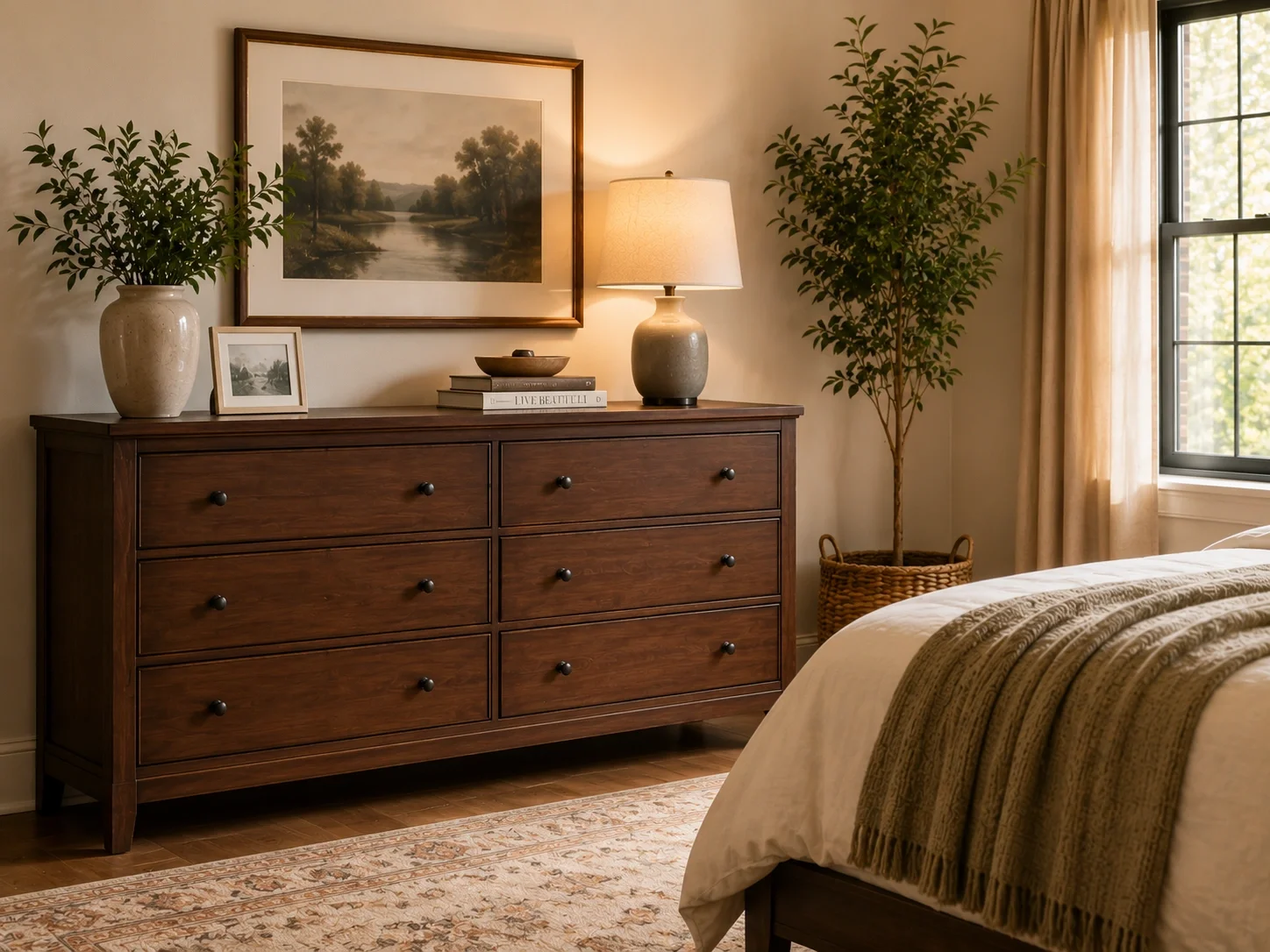
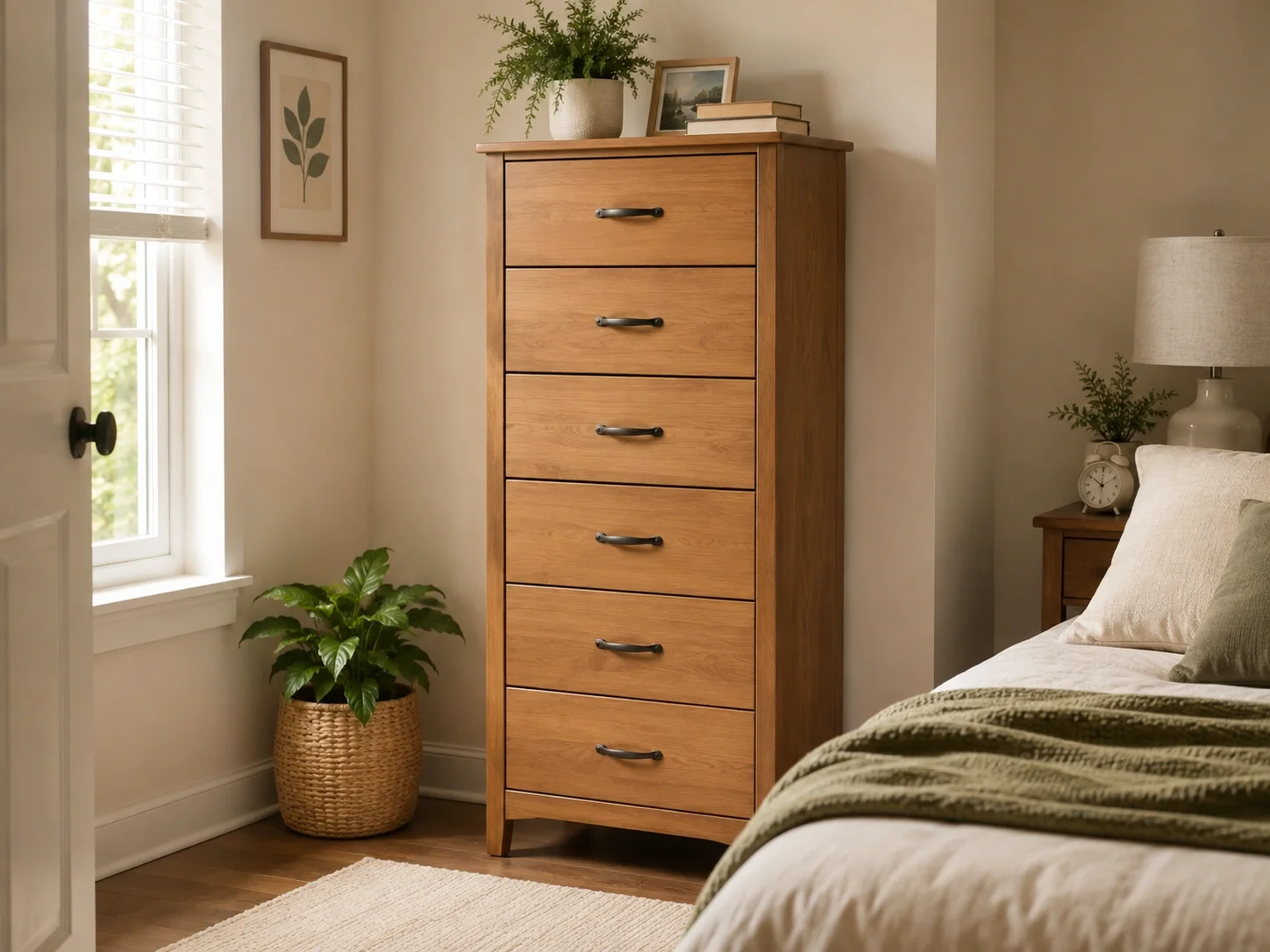
Before you start comparing products, it's important to understand the main categories of dressers available. Here are the most common types you'll encounter:
Standard/Horizontal Dressers
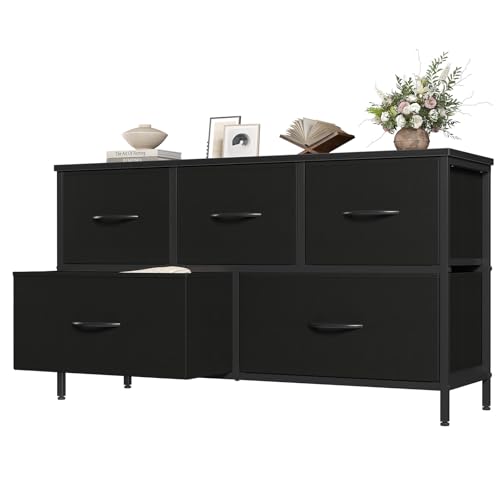
These are the most common type — wide and low, typically 48–64 inches wide with 6–9 drawers arranged in columns. They provide generous storage and double as a surface for decor, lamps, or a TV. If you're unsure where to start, a wide dresser or standard 6-drawer dresser is a safe, versatile choice.
Tall Dressers / Chest of Drawers
Tall dressers (also called chests of drawers) are narrow and vertical, perfect for smaller bedrooms or as a secondary storage piece. They typically have 5–7 drawers stacked vertically. Check out tall dressers and tallboy chests for options.
Specialty Dressers
Beyond the basics, there are specialized options like nursery dressers (often with changing table toppers), dressers with mirrors, and dressers designed for closets. These serve specific purposes and are worth exploring if your needs go beyond standard bedroom storage.
Step 2: Measure Your Space and Determine the Right Size
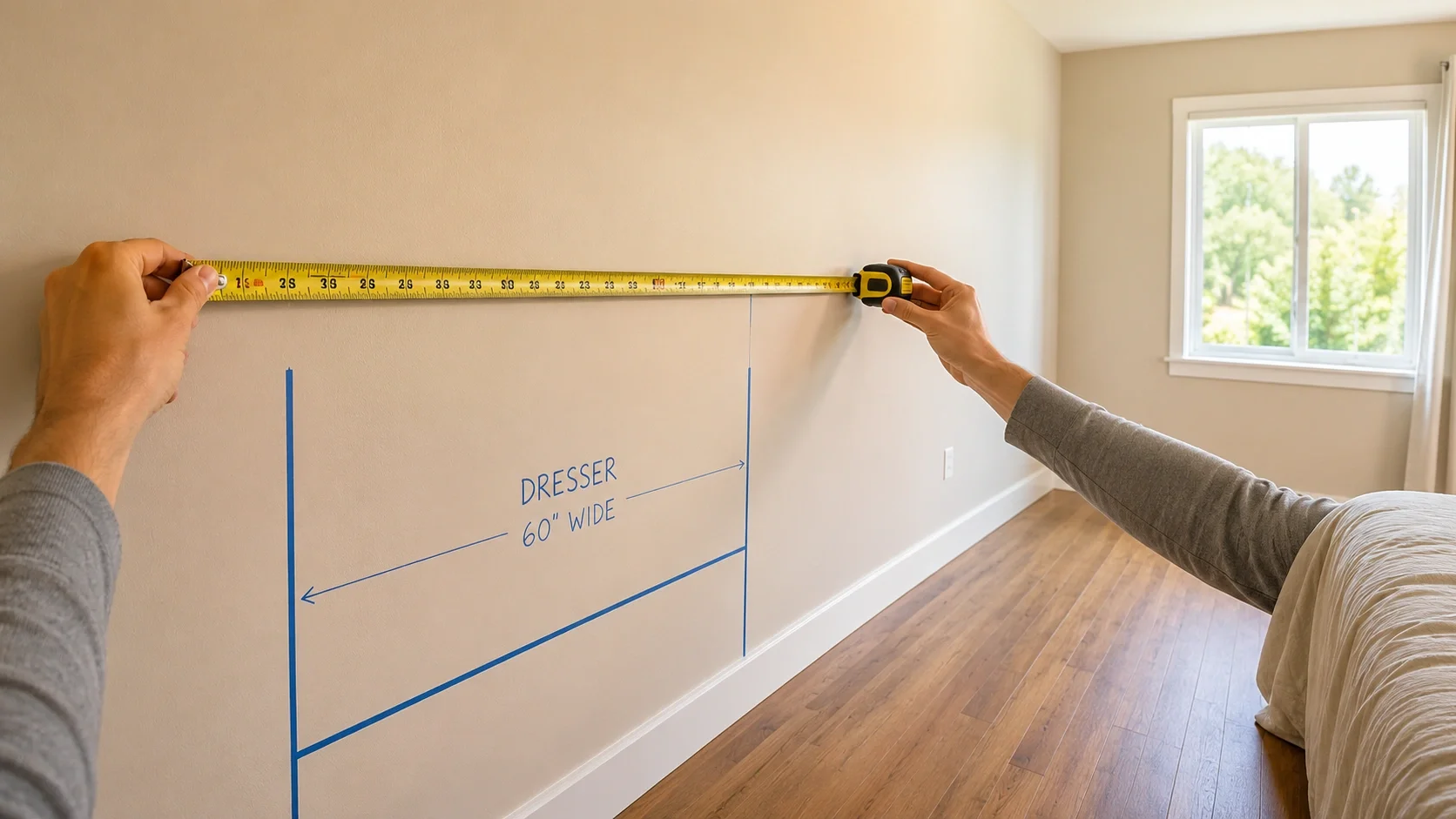
One of the most common beginner mistakes is buying a dresser that's too big or too small for the room. Before you fall in love with a piece online, grab a measuring tape and follow these steps:
- Measure your available wall space: Decide where the dresser will go and measure the width, height, and depth available. Leave at least 24–30 inches of walking space in front.
- Consider door and drawer clearance: Make sure drawers can fully open without hitting walls, doors, or other furniture.
- Think about height: Standard dressers are 30–34 inches tall. If you plan to use the top for a TV or as a changing station, height matters.
- Account for delivery: Measure doorways, hallways, and stairwells to ensure the dresser can actually get into your room.
For a deep dive into dimensions, consult our dresser size guide. If you're working with limited space, explore small dressers or dressers for small spaces.
Step 3: Choose the Right Material for Your Lifestyle and Budget
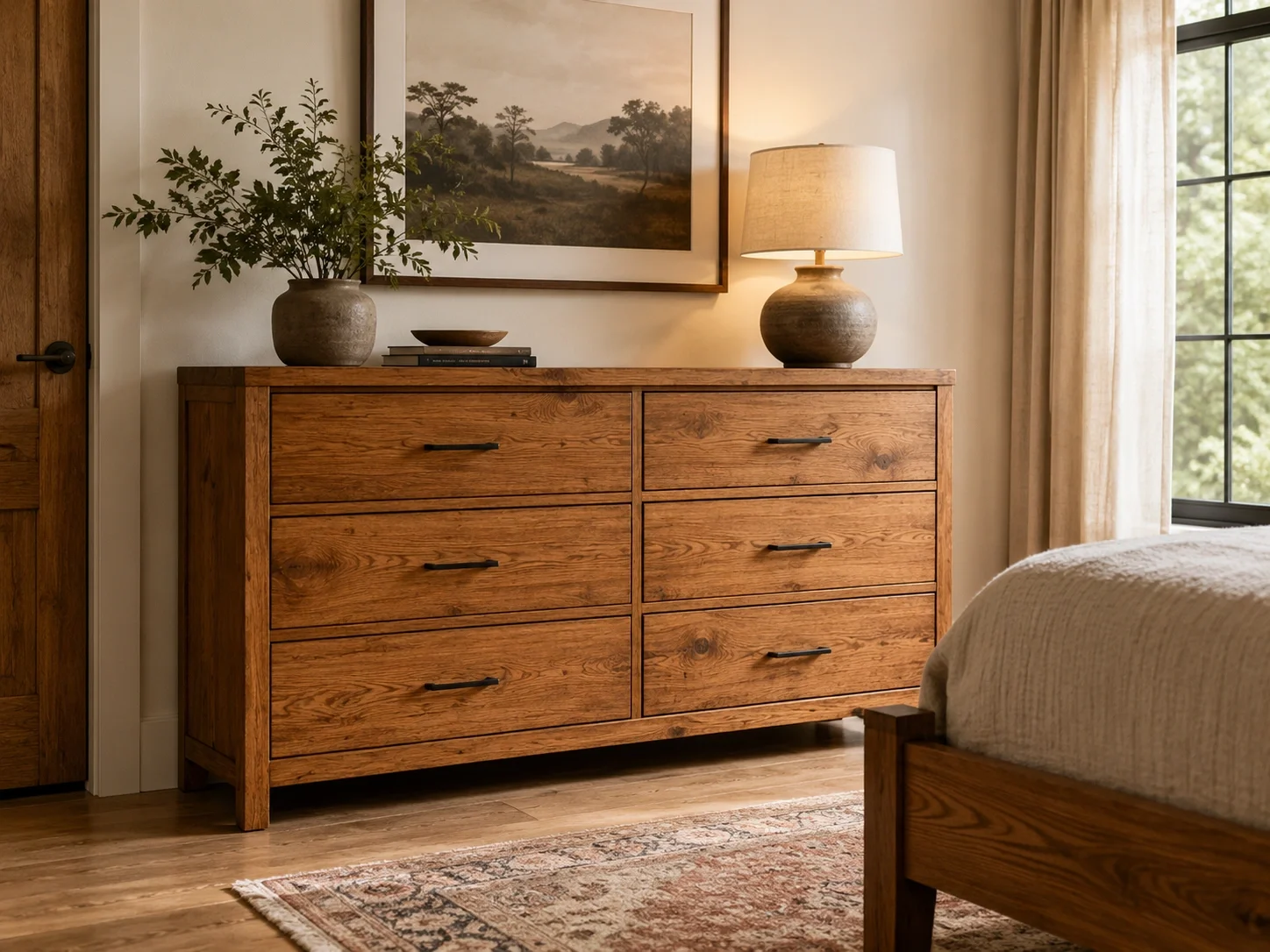

The material of your dresser affects its durability, appearance, and price. Here's a quick breakdown for beginners:
- Solid wood (oak, walnut, pine, maple): The most durable and expensive option. Oak dressers and walnut dressers are timeless choices. Expect to pay $800+ for quality pieces.
- Engineered wood (MDF/particleboard with veneer or laminate): The most common and affordable option. Prices range from $250–$800. See our solid wood vs engineered comparison for details.
- Mixed materials (metal, rattan, glass): Adds visual interest. Rattan dressers are trendy for modern and boho spaces.
Not sure which material fits your needs? Our materials and finishes hub covers everything from white dressers to natural wood finishes.
Step 4: Set a Realistic Budget Before You Shop
Dresser prices vary dramatically based on size, material, brand, and features. Here's what you can expect to pay in the current market:
- Budget range: $250–$600 — Laminate or engineered wood dressers. Good for temporary setups or guest rooms.
- Mid-range: $600–$1,500 — Better quality veneers, soft-close drawers, and stylish designs. The sweet spot for most buyers.
- Premium: $1,500–$4,000+ — Solid wood, designer brands, and custom finishes. Investment pieces that last decades.
Need help planning your budget? Our dresser budget guide breaks down costs by category. For quality insights, check out dresser quality guide to understand what you're paying for.
Step 5: Understand Drawer Configurations
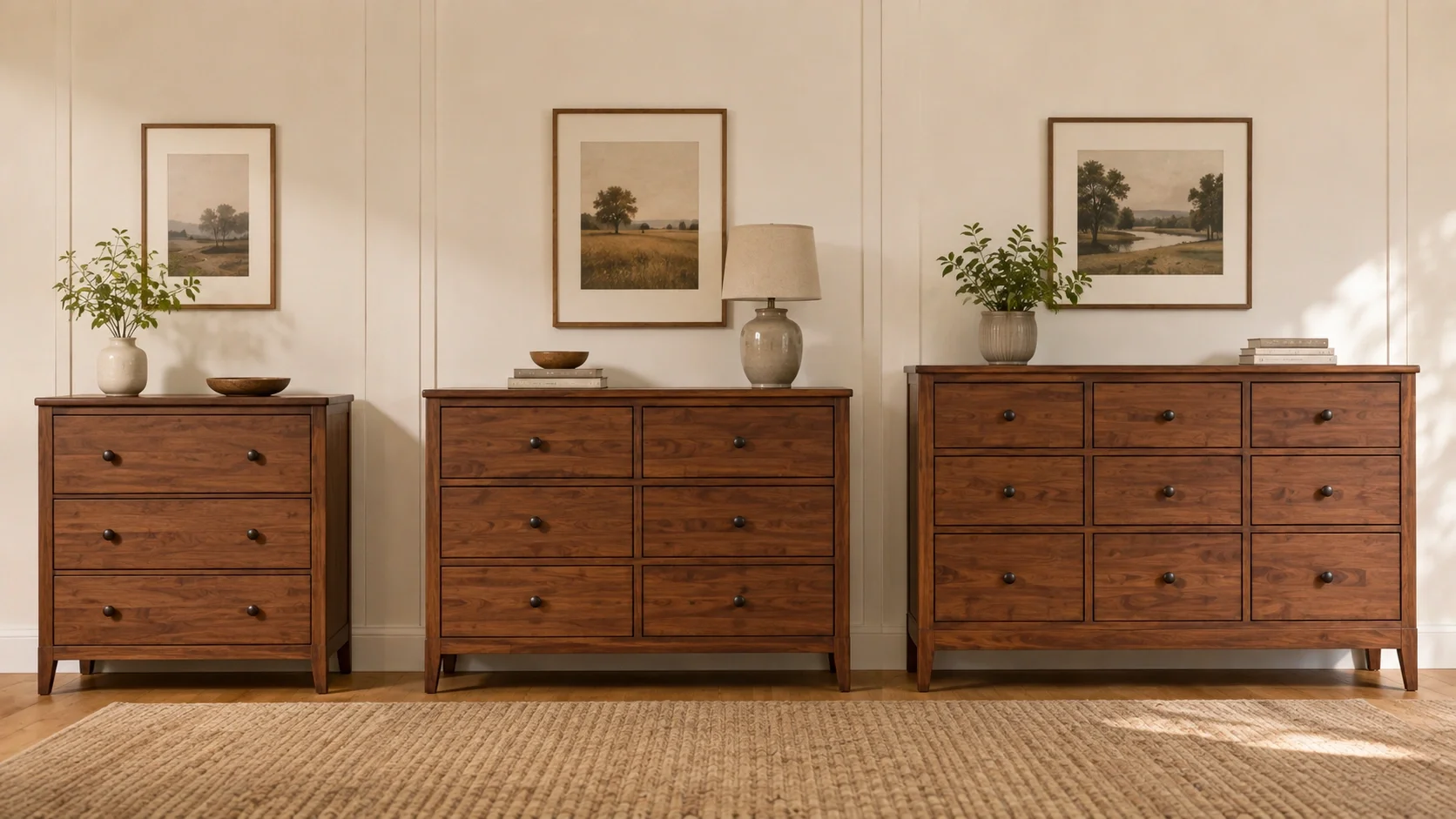
Drawer count and layout affect both functionality and aesthetics. Here's a quick primer:
- 3-drawer dressers: Compact and minimalist. Great for small spaces or as a secondary piece.
- 4-drawer dressers: A step up, offering a bit more flexibility.
- 5-drawer dressers: Popular for master bedrooms — balanced storage and footprint.
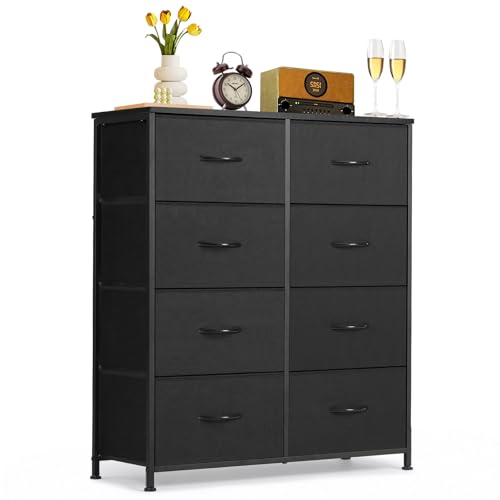
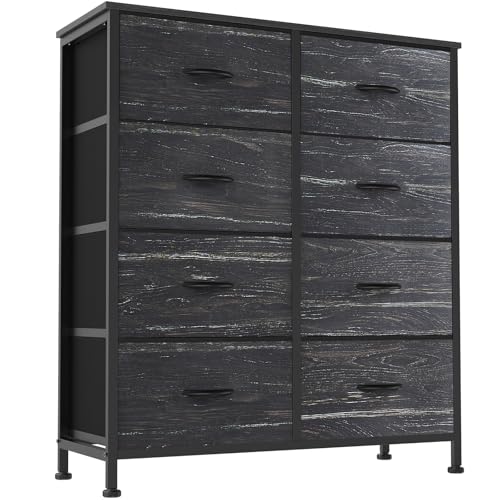
- 6-drawer dressers: The most common configuration for standard horizontal dressers.
- 9-drawer dressers: Maximum storage for large wardrobes or shared spaces.
Think about what you'll store. Bulky sweaters need deeper drawers; socks and accessories do fine in shallow ones. A mix of drawer sizes often works best.
Step 6: Choose a Style That Fits Your Bedroom
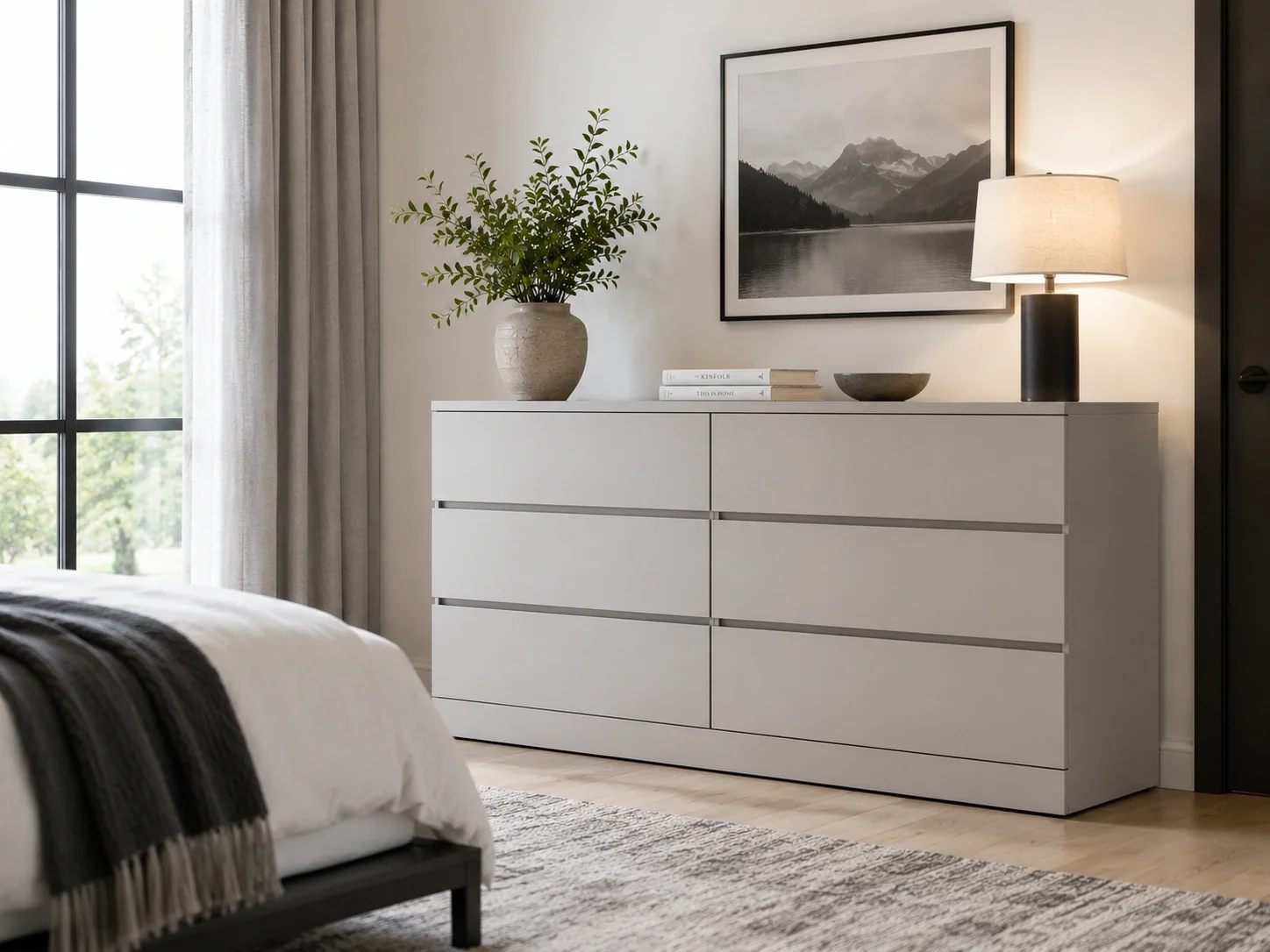
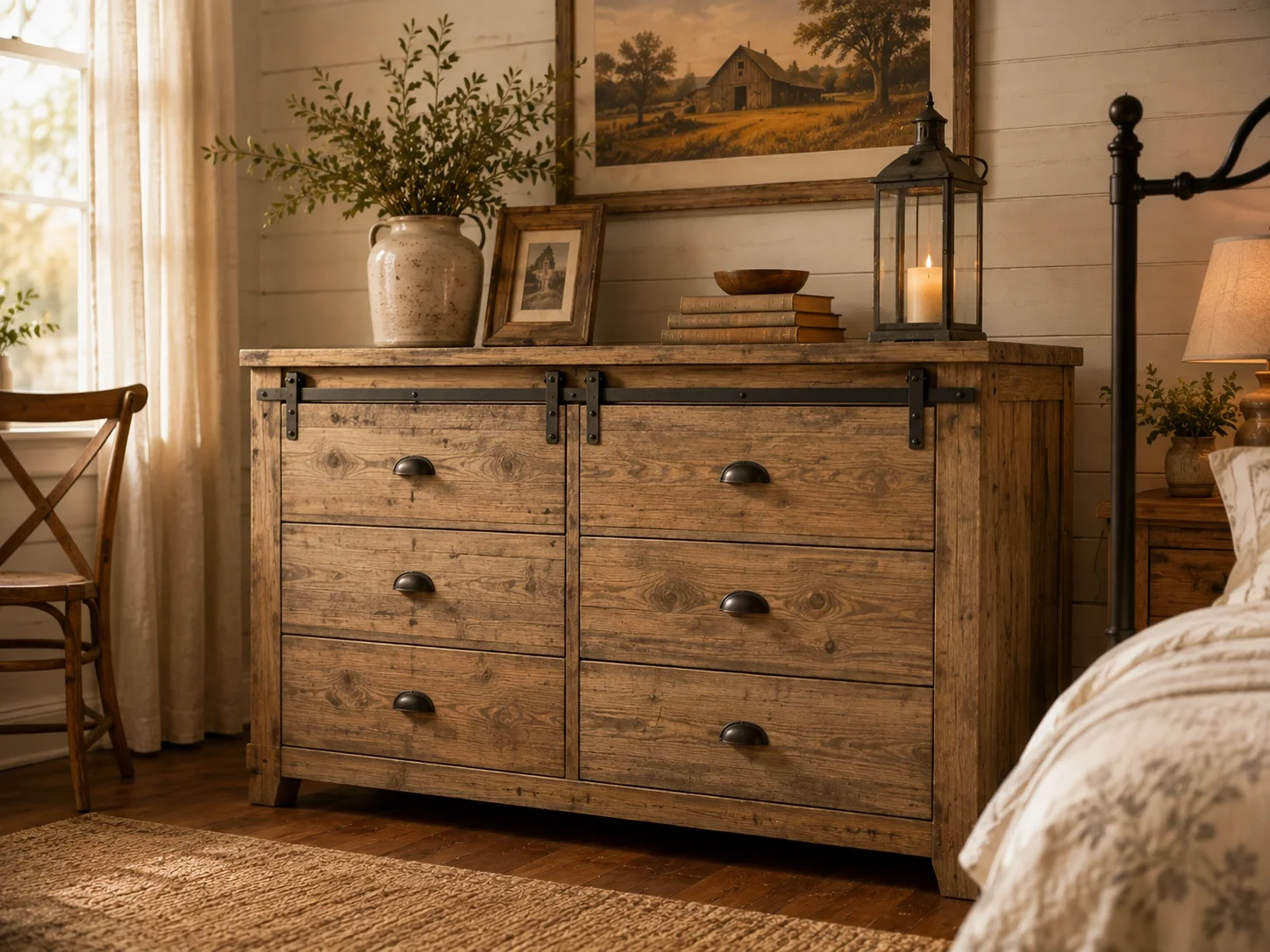
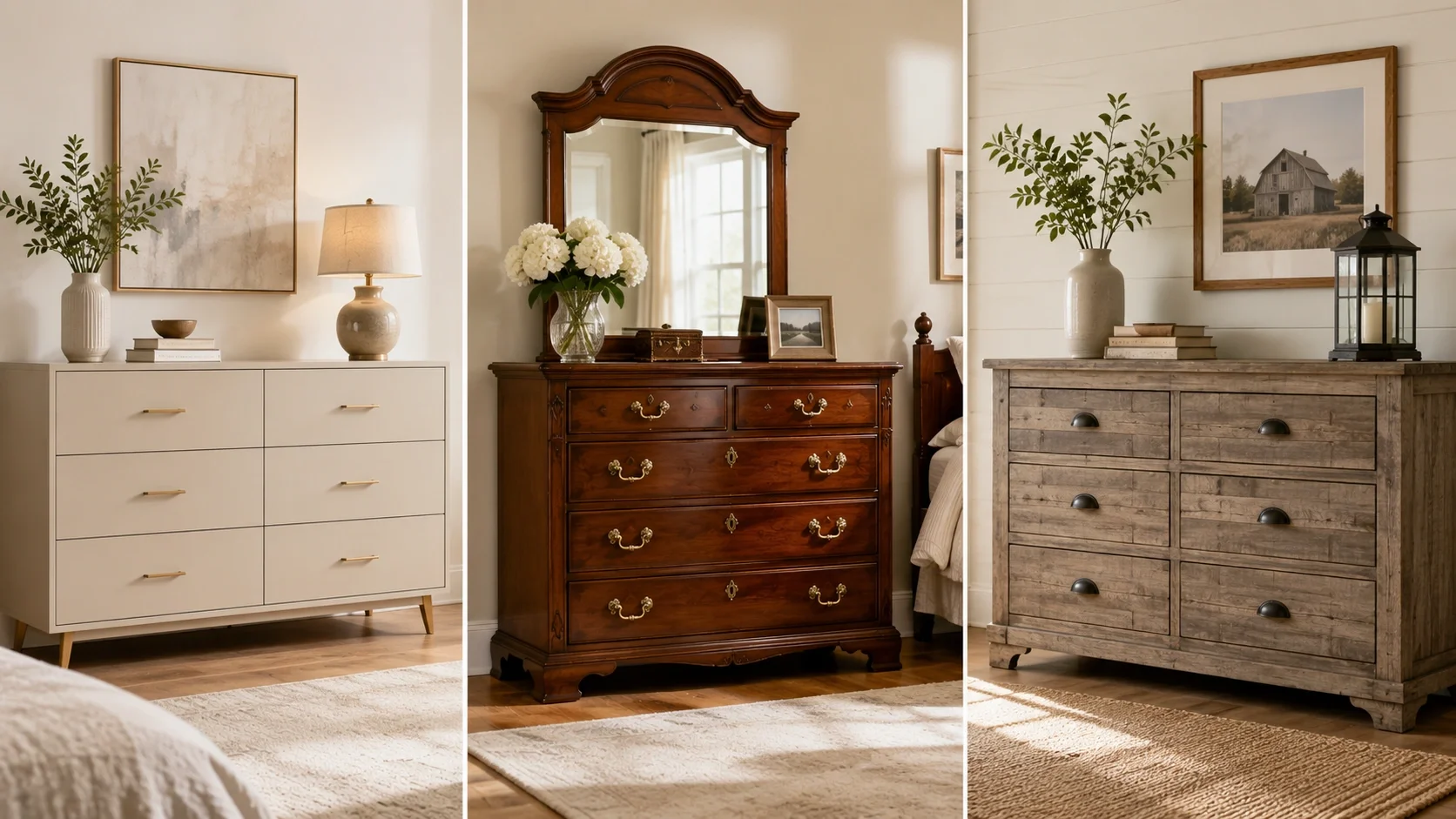
Your dresser should complement your bedroom's overall aesthetic. Here are the most popular styles to consider:
- Modern dressers: Clean lines, minimal hardware, neutral colors. Perfect for contemporary spaces.
- Mid-century dressers: Tapered legs, warm wood tones, retro-inspired design.
- Farmhouse dressers: Rustic finishes, distressed wood, and cozy vibes.
- Rustic dressers: Natural wood textures and rugged charm.
- Vintage dressers: Antique-inspired details and timeless appeal.
Browse our room ideas section for inspiration on how different styles work in real bedrooms.
Step 7: Plan for Assembly and Delivery
Many budget and mid-range dressers ship flat-packed and require assembly. Here's what to expect:
- Assembly time: Budget 1–3 hours for most dressers. Enlist a helper for larger pieces.
- Tools needed: Usually a screwdriver and Allen wrench (often included). A power drill speeds things up.
- Delivery options: Check if the retailer offers "white glove" delivery (includes setup and packaging removal) or curbside only.
- Inspect immediately: Open the box and check for damage within 24–48 hours of delivery.
If you're buying a pre-assembled solid wood dresser, confirm the delivery service will bring it into your room — many won't navigate stairs without an extra fee.
Your Dresser Shopping Checklist
✓ Before You Buy, Confirm These Details:
- Measurements fit your space (width, depth, height, and clearance)
- Drawer configuration matches your storage needs
- Material and construction quality align with your budget
- Style complements your bedroom decor
- Delivery and assembly plan is clear
- Return policy and warranty are acceptable
- Product reviews are mostly positive
- Price includes all taxes and fees
Once you've checked all these boxes, you're ready to make your purchase! For a deeper dive into any topic, explore our complete buying guides or start with the ultimate dresser buying guide.
Ready to Find Your First Dresser?
You're now equipped with the foundational knowledge to shop confidently. Whether you're looking for a compact dresser for a studio apartment or a spacious dresser for a master suite, the right piece is out there.
Below, we've curated a selection of beginner-friendly dressers across various styles and price points. Each recommendation balances quality, value, and timeless design — perfect for your first purchase.